
Contractor Liability Insurance Texas: A Quick Overview

Running a contracting business in Texas means managing real risks. One accident on a job site can lead to expensive lawsuits and financial losses that threaten your company’s survival.

Contractor liability insurance in Texas protects you from these threats. At Heaton Bennett Insurance, we’ve helped countless contractors understand their coverage options and build protection plans that fit their specific needs.

What Contractor Liability Insurance Actually Covers

The Three Core Coverage Types

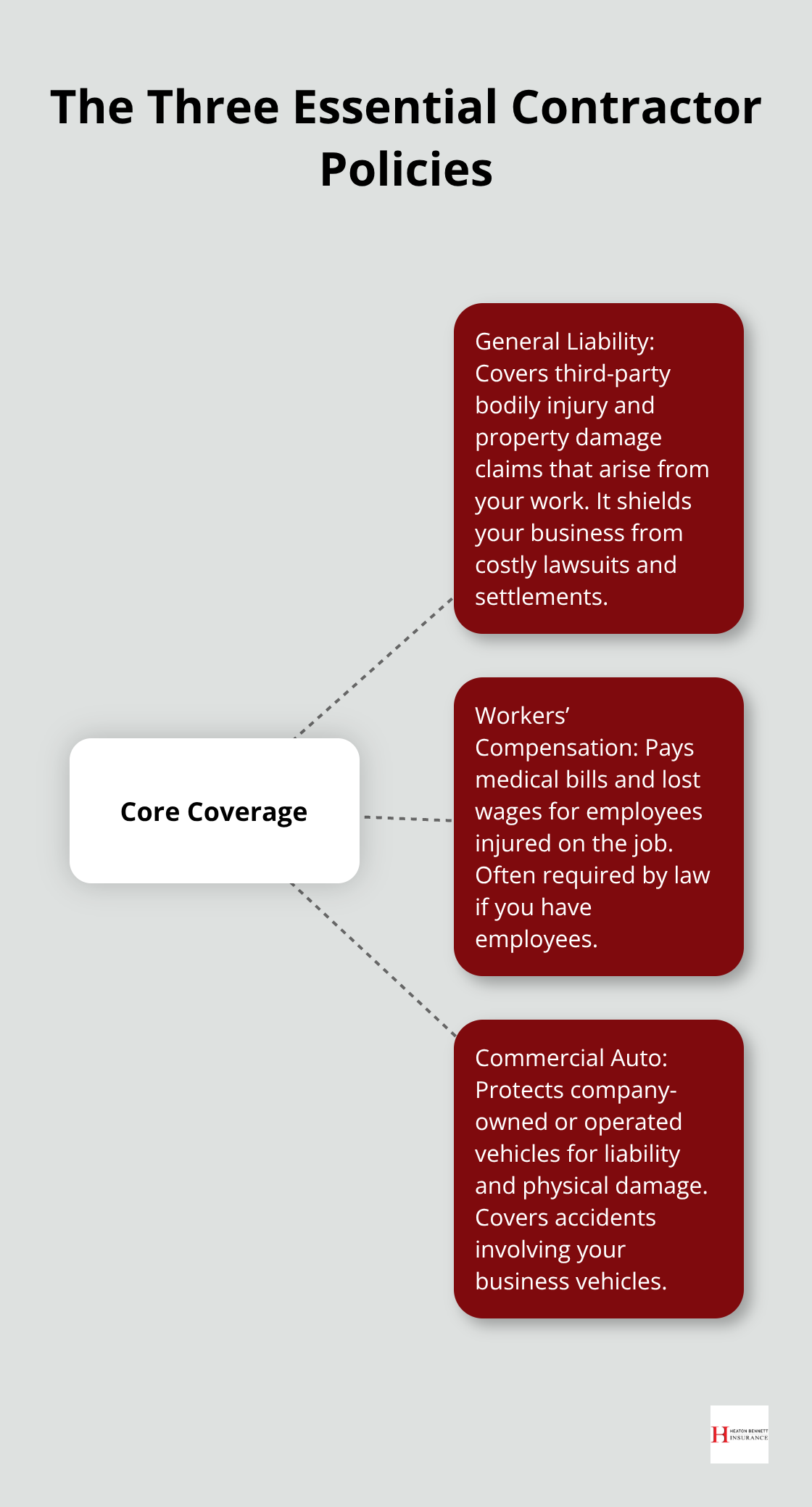
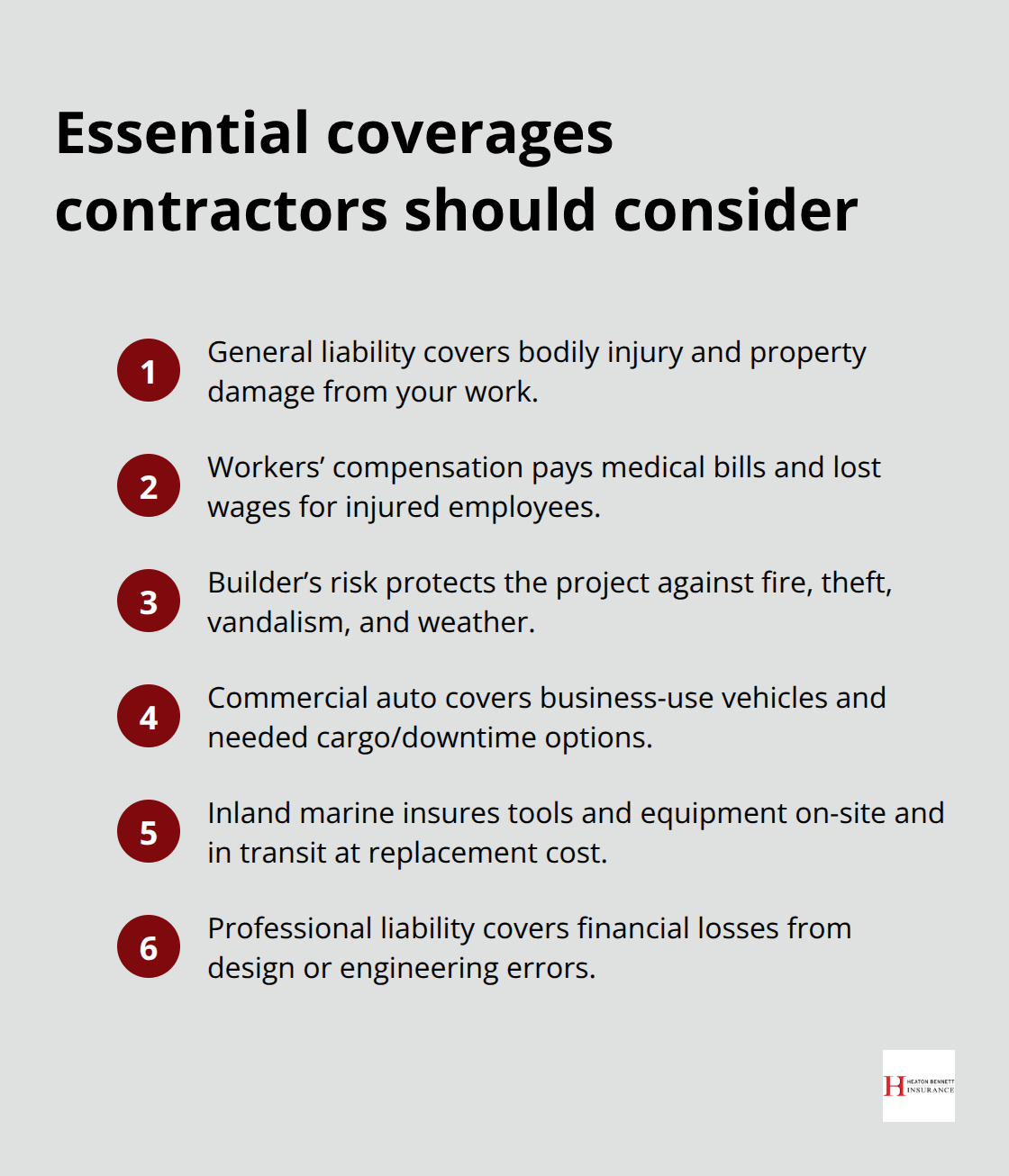
Contractor liability insurance protects your business when someone gets hurt or property gets damaged because of your work. General liability coverage pays for medical bills, repair costs, and legal fees if a client or third party sues you. Workers’ compensation covers your employees if they get injured on the job, paying their medical expenses and lost wages. Professional liability insurance, sometimes called errors and omissions coverage, protects you when a client claims your work was negligent or didn’t meet standards.

These three form the foundation of contractor protection in Texas, though the exact mix depends on your trade, the size of your crew, and what your clients require.

What General Liability Actually Costs

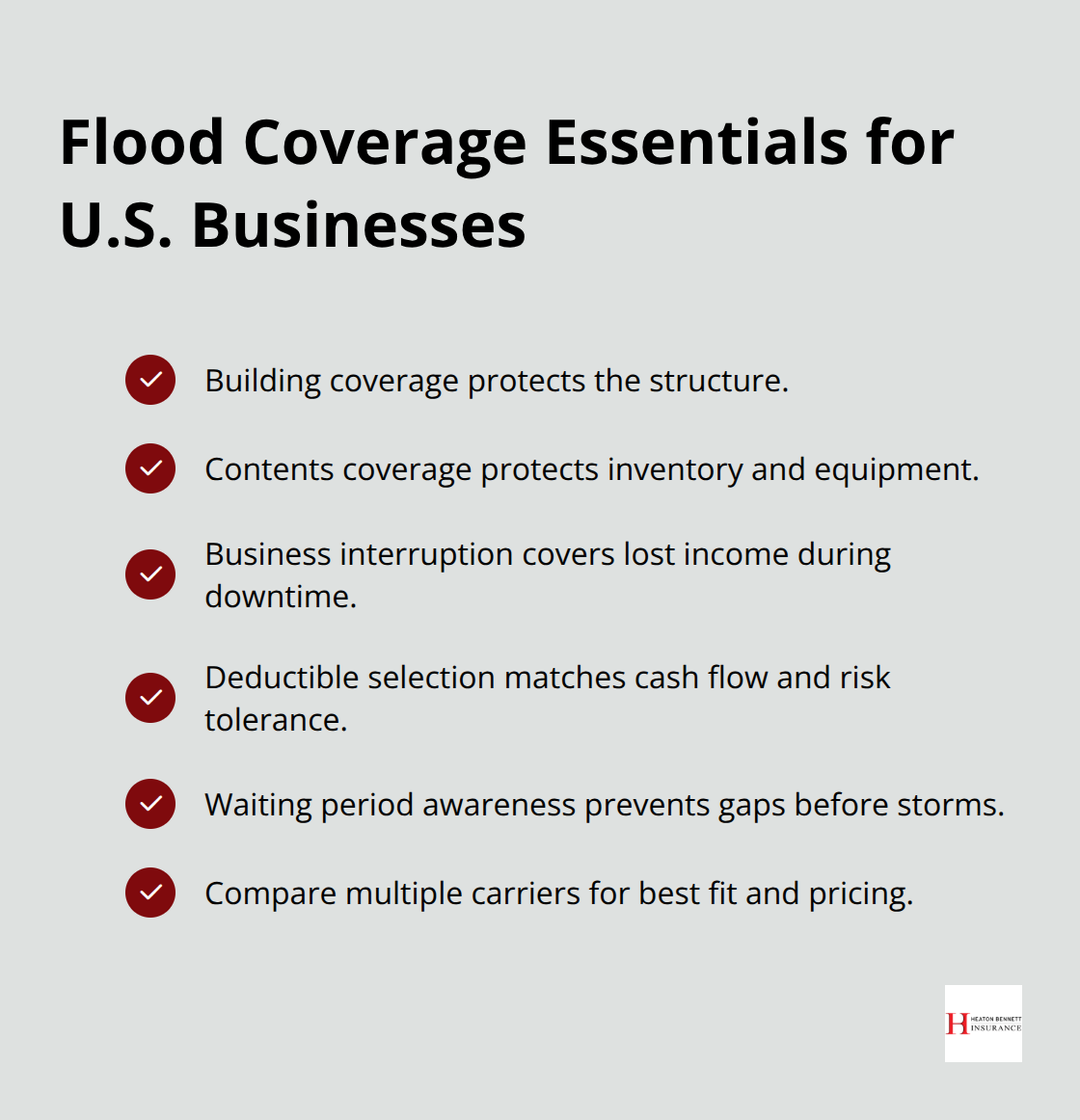
Diagram showing the three core contractor liability coverages in Texas and how they protect a business

According to The Hartford, the average general liability policy costs about $1,351 per year for construction businesses, though rates vary significantly based on your specific trade and claims history. A $1,000,000 general liability policy typically runs around $824 annually, but that number shifts based on factors like the number of employees you have, your location within Texas, your coverage limits, your deductible, and whether you’ve had previous claims.

Texas Law Doesn’t Require It-But Your Clients Do

Texas doesn’t require general contractors to carry liability insurance by state law, but that’s where most contractors get it wrong. Municipalities across Texas demand proof of insurance before you can pull permits or start work on municipal projects. Commercial leases regularly require general liability coverage as a condition of occupancy. Most clients won’t hire you without a certificate of insurance showing adequate coverage.

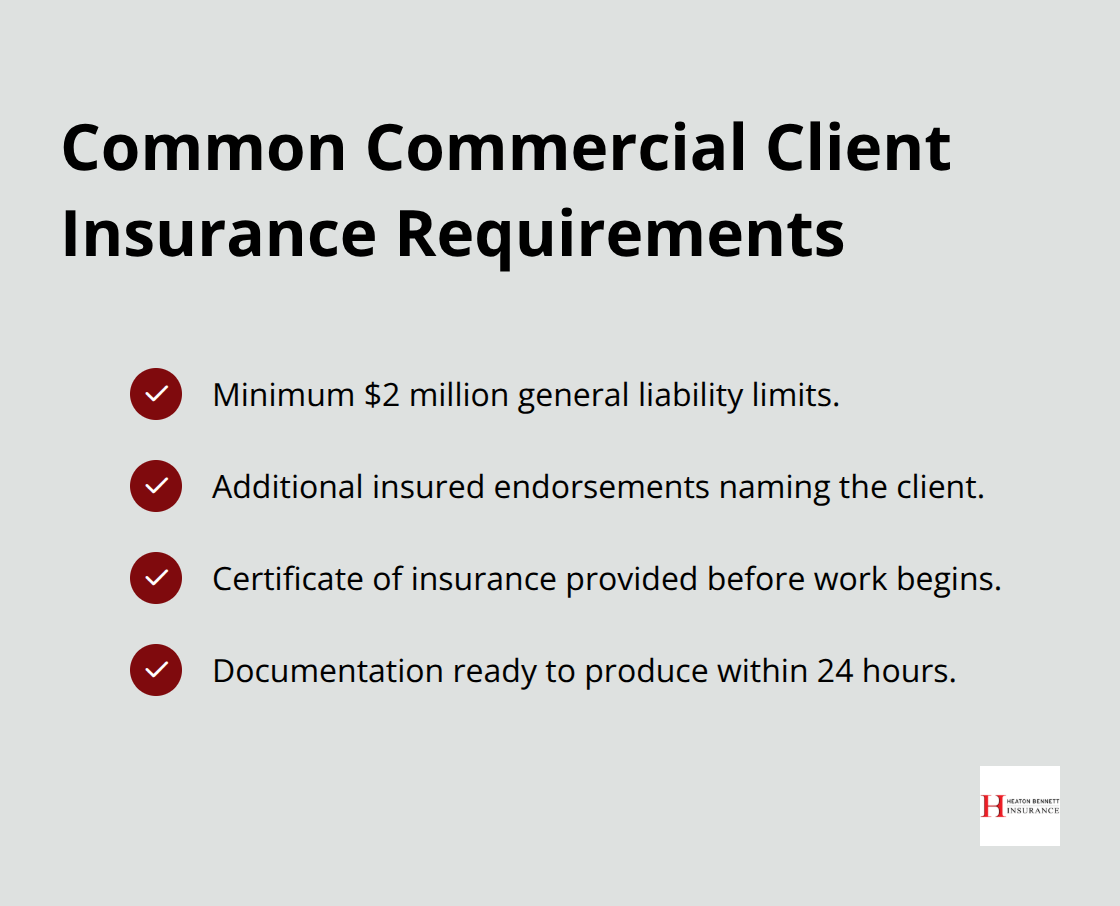
If you work on projects with general contractors or developers, they’ll require you to carry coverage and often ask to be named as an additional insured on your policy (which protects them from liability claims tied to your work). The reality is that operating without liability insurance in Texas exposes your personal assets to catastrophic risk. A single lawsuit over a construction defect or injury can wipe out years of profit and force you into bankruptcy.

Why Contractors Can’t Afford to Wait

That’s why contractors serious about protecting their business don’t wait for a legal requirement-they get covered before their first job. The financial exposure is too high, and the market expectations are too clear. Once you understand what coverage costs and what it protects, the next step is figuring out which specific types matter most for your trade and your client base.

Types of Coverage Every Contractor Should Know

General Liability: Your Foundation Coverage

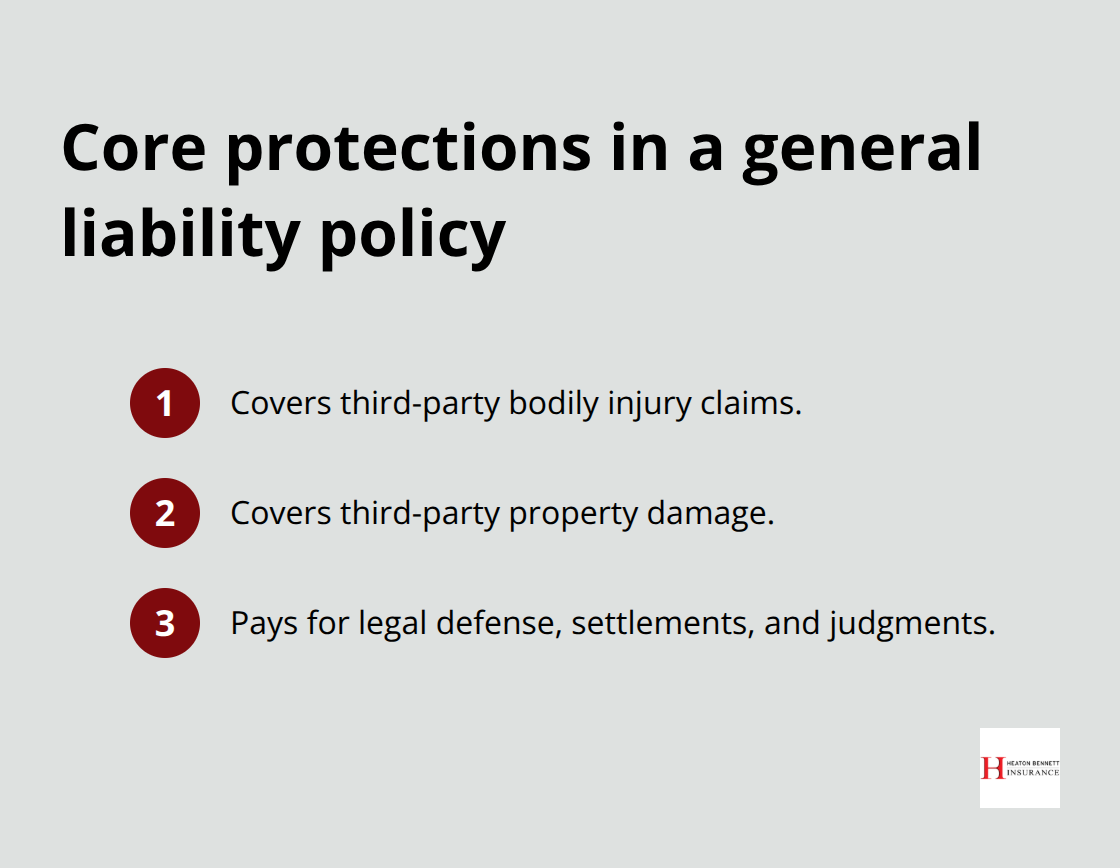
General liability stands as the foundation for any Texas contractor, and it’s where most of your protection dollars should go. This coverage handles bodily injury claims when someone gets hurt on your job site, property damage claims when your work damages a client’s building or belongings, and legal defense costs if you end up in court. According to The Hartford, a $1,000,000 general liability policy costs approximately $69 per month for construction businesses, though electricians typically pay $83 to $167 monthly, while roofers pay significantly more at $250 to $500 monthly due to higher injury rates. The Hartford reports that general liability costs average around $113 per month across all construction trades.

Your actual premium depends on your specific trade classification, the number of employees on your payroll, your location within Texas, previous claims history, and the deductible you choose. If a client requires you to carry a $2,000,000 limit instead of $1,000,000, expect to pay roughly 30% to 40% more annually. One serious injury claim can easily exceed $100,000 in medical costs and legal fees alone, which is why carrying this coverage isn’t optional in practice even if Texas law doesn’t mandate it. The hard truth is that skipping adequate general liability coverage creates personal liability exposure that can destroy your business.

Compact list of benchmark general liability costs for Texas contractors - contractor liability insurance Texas

Workers’ Compensation: Protecting Your Team

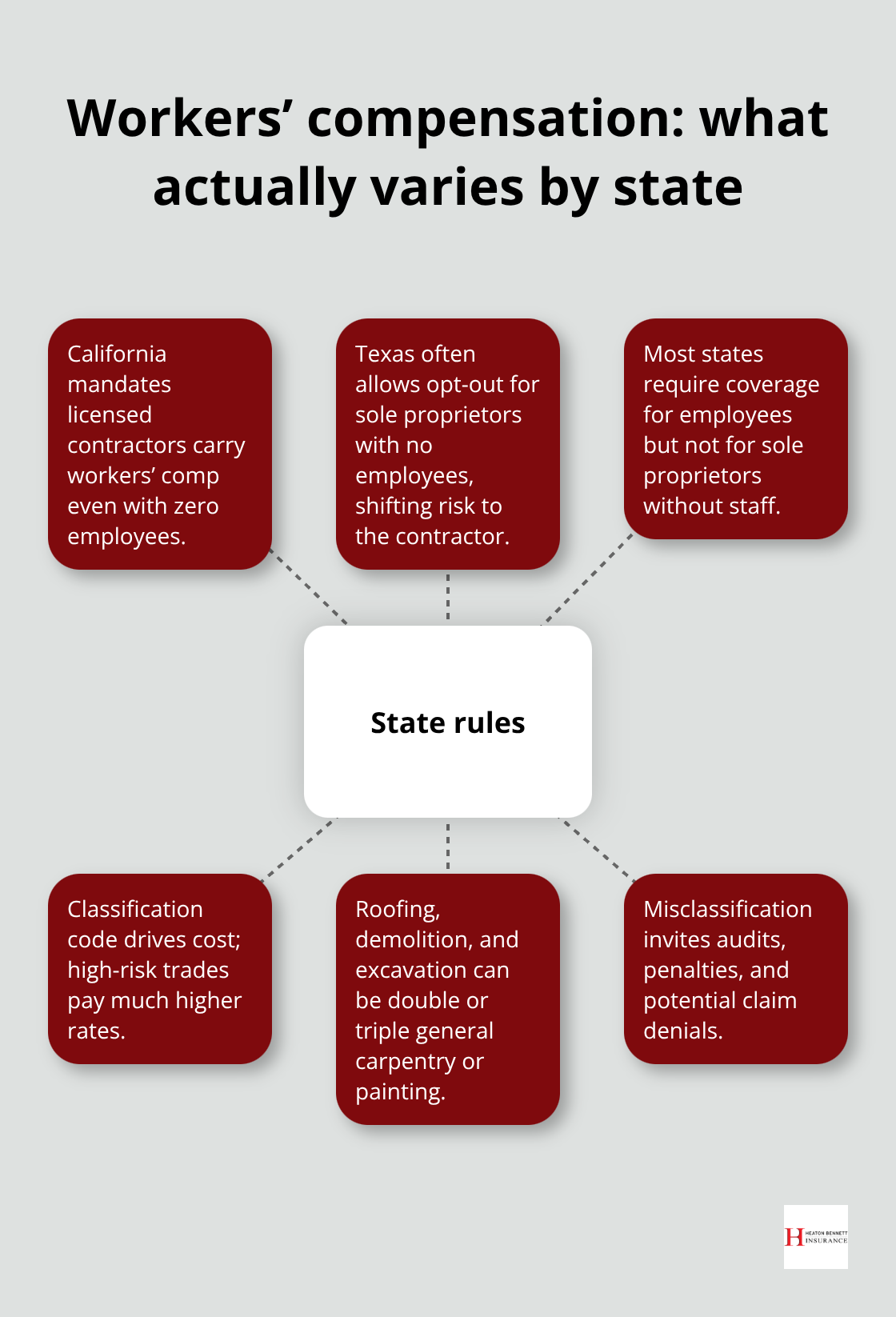
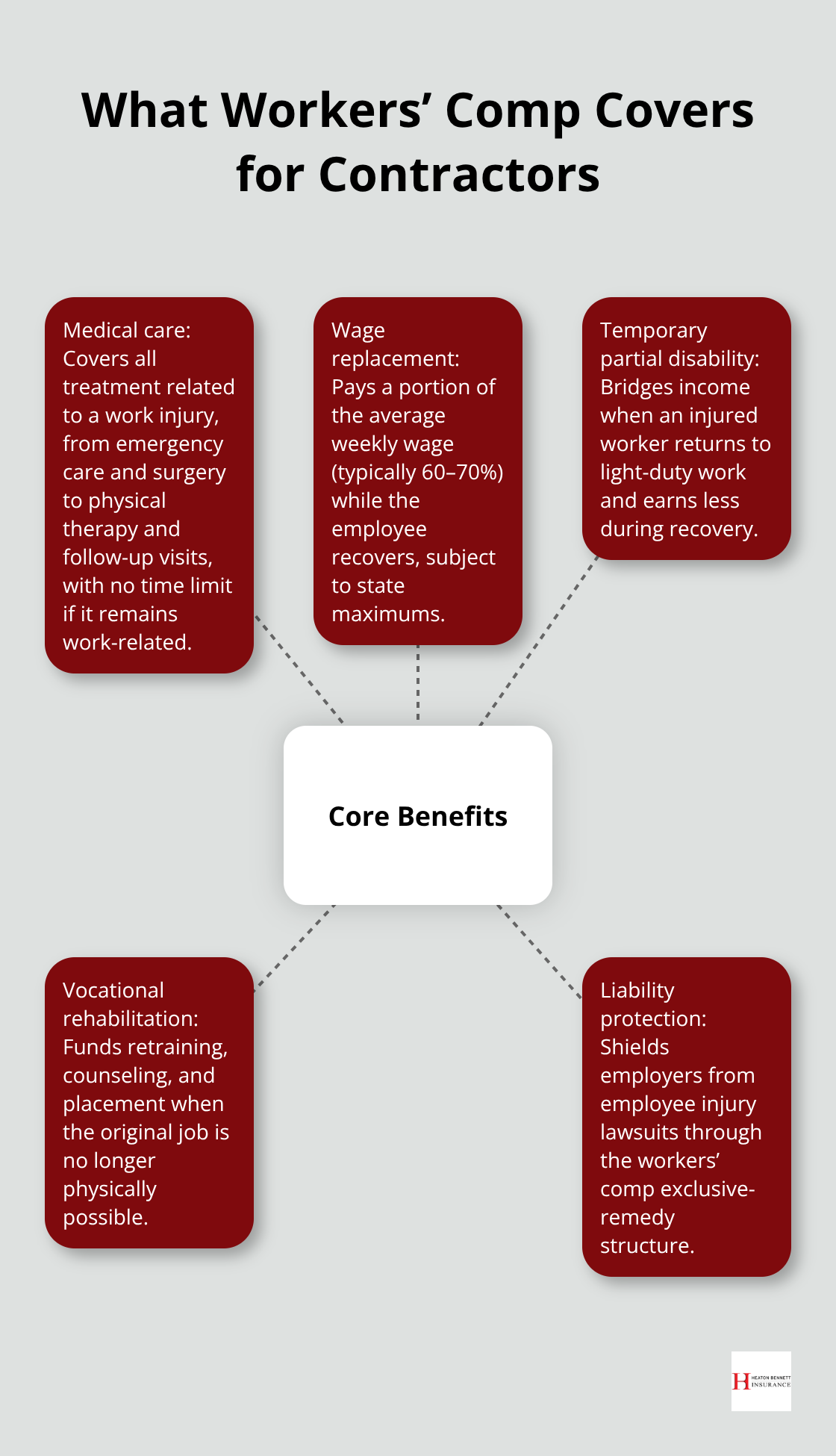
Workers’ compensation coverage protects your employees when they suffer job-related injuries or illnesses, covering their medical treatment, rehabilitation costs, and a portion of lost wages during recovery. Texas doesn’t require workers’ compensation for private employers, but if you work on public projects or government contracts, coverage becomes mandatory. More importantly, if you have even one employee and an accident occurs, you face massive personal liability without this protection.

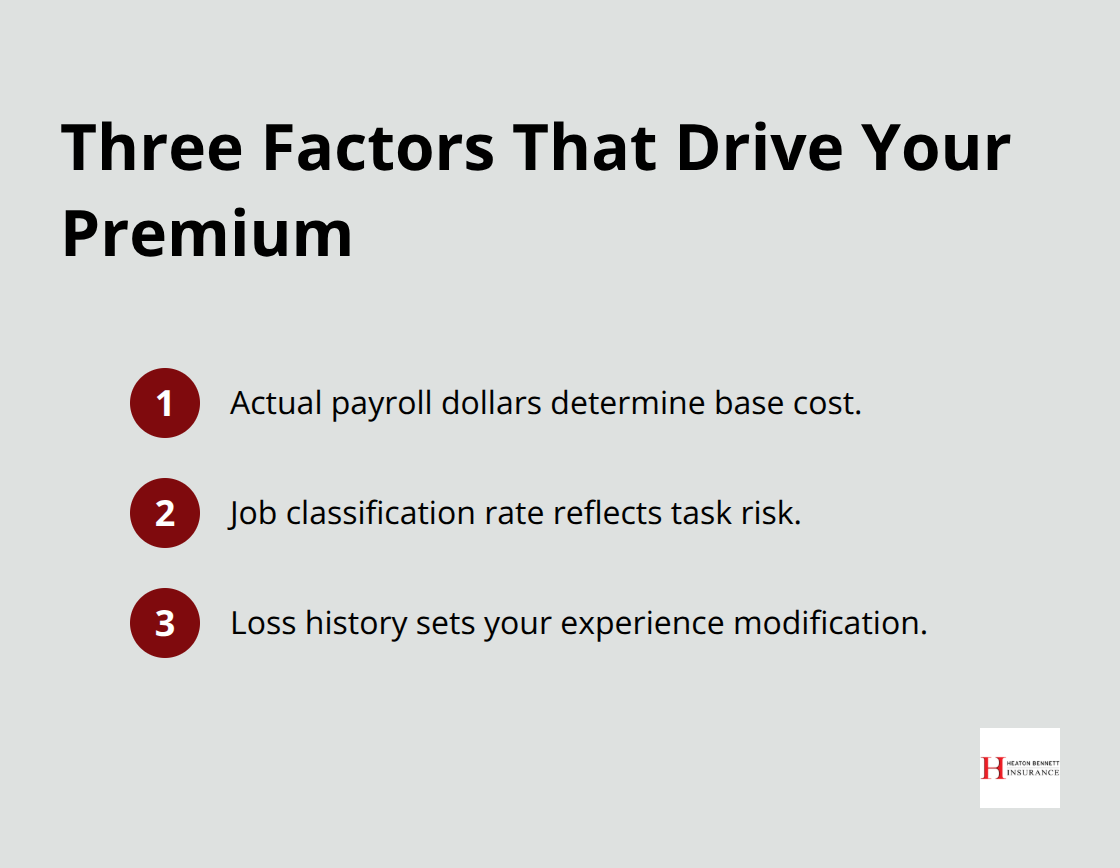
The cost depends heavily on your trade classification and payroll; construction work classified as high-risk typically costs $15 to $25 per $100 of payroll annually, meaning a contractor with $500,000 in annual payroll might pay $7,500 to $12,500 yearly for workers’ compensation. This investment protects both your employees and your business from financial catastrophe when injuries happen on the job.

Professional Liability: Defending Your Workmanship

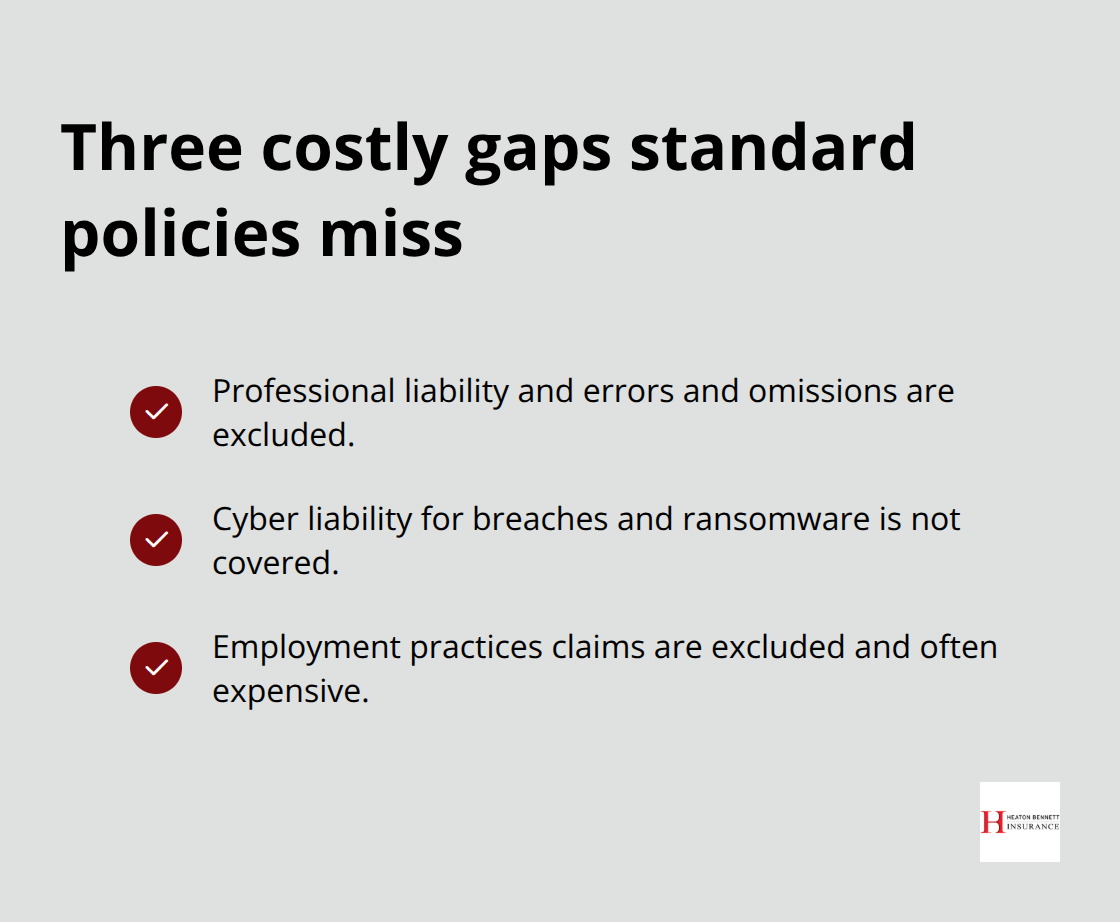
Professional liability insurance, also called errors and omissions coverage, protects you when a client claims your workmanship was negligent or failed to meet industry standards. This coverage pays defense costs and settlements for these claims, and many commercial contracts now require it as a condition of hiring. For trades like HVAC, plumbing, and electrical work, professional liability costs typically range from $500 to $2,000 annually depending on your revenue and claims history.

Bundling for Better Value

The smart approach combines these three into a Business Owner’s Policy, which pairs general liability and property coverage at a discount often worth 7% to 15% off your total premium compared to purchasing policies separately. This strategy reduces your overall cost while ensuring you maintain comprehensive protection across all three critical areas. When you work with an independent agency like Heaton Bennett Insurance in Austin, they can help you compare multiple carriers and find the right bundle that fits your specific trade and budget.

The next step involves understanding what types of claims actually happen on job sites and how your insurance responds when they do.

Common Claims and How Insurance Protects You

Property Damage Claims on Job Sites

Construction sites produce property damage claims constantly across Texas. A subcontractor’s equipment punctures a client’s roof during installation, or your crew accidentally damages an adjacent building while demolishing a wall. These claims typically range from $5,000 to $50,000, though they can exceed $100,000 when structural damage occurs. Your general liability policy covers the repair costs and legal defense if the property owner sues.

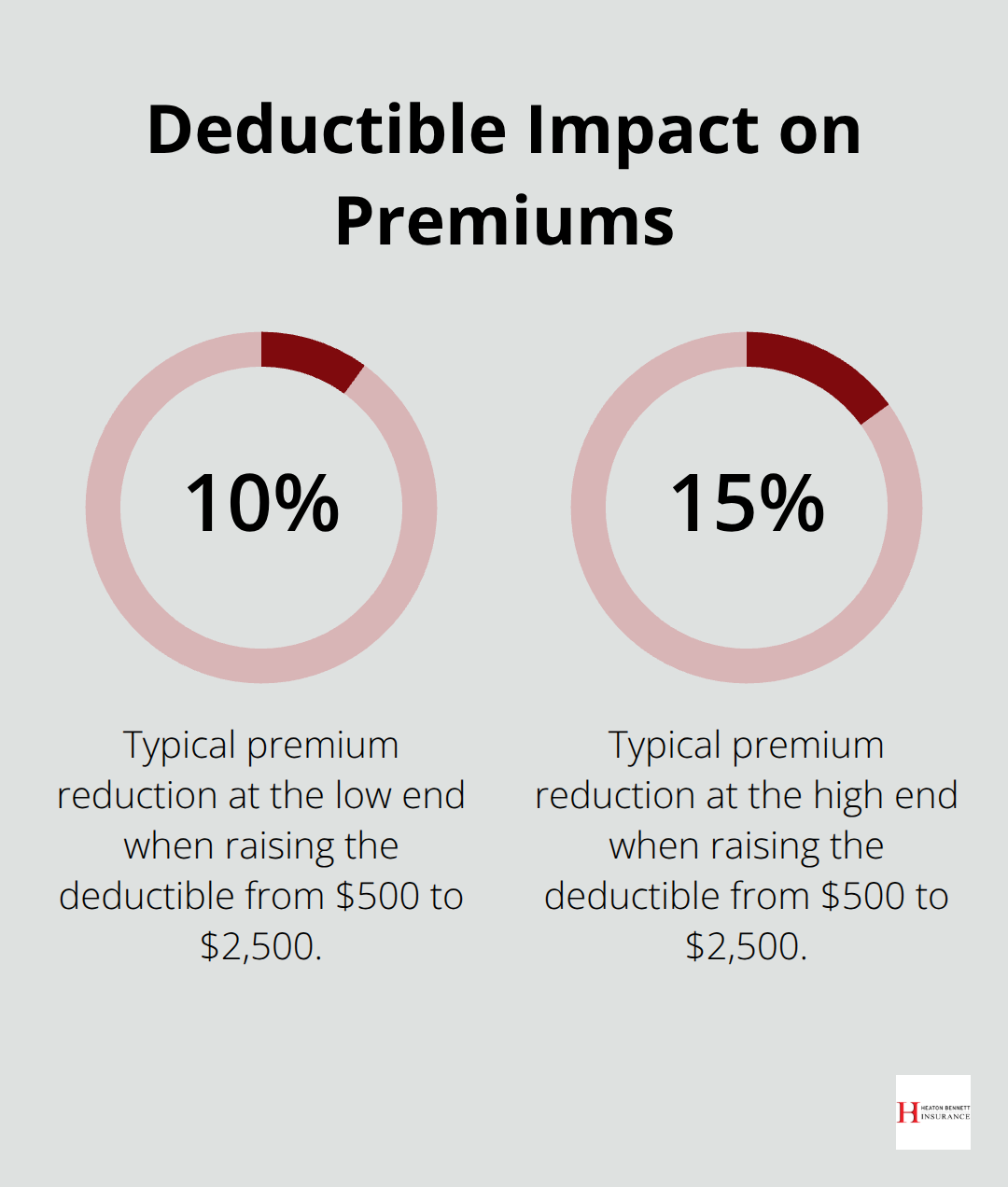
The deductible applies first to every claim, which most contractors overlook. If you carry a $2,500 deductible and the damage costs $8,000, your insurance pays $5,500 and you cover the rest. This detail shapes your deductible strategy significantly. A higher deductible like $5,000 lowers your monthly premium by 15% to 25%, but it also means you absorb more of smaller claims out of pocket. Most Texas contractors find that a $2,500 deductible balances affordability with manageable risk exposure.

Bodily Injury Claims and Medical Costs

Bodily injury claims carry far higher financial stakes than property damage and happen when someone gets hurt on your job site or because of your work. A homeowner trips over your equipment and breaks their leg, or a client’s employee gets burned by materials you’re using. Medical costs alone can reach $50,000 to $200,000 depending on injury severity, and if the injured party hires an attorney, legal fees add another $15,000 to $40,000 minimum.

Your general liability policy covers all of this, including the attorney’s fees to defend you in court. Workers’ compensation operates separately and covers only your own employees, paying their medical bills and 60% to 70% of lost wages during recovery. If you have employees and skip workers’ compensation coverage, a single serious injury can cost you $100,000 to $300,000 in medical expenses plus ongoing wage replacement, devastating most small contracting businesses.

Third-Party Lawsuits and Umbrella Protection

Third-party lawsuits represent the most complex claims because they involve multiple parties with competing interests. A contractor you hired causes damage to a client’s property, and the client sues both you and the subcontractor. Your general liability policy covers your defense and any settlement or judgment up to your policy limits, typically $1,000,000 per occurrence.

However, if the judgment exceeds your policy limit, you pay the difference personally. This exposure is why many Texas general contractors now carry umbrella policies that provide an additional $1,000,000 to $2,000,000 in coverage for roughly $300 to $600 annually, protecting against catastrophic liability when claims spike beyond standard limits.

Checklist of umbrella policy benefits for Texas contractors - contractor liability insurance Texas

This extra layer of protection (sometimes called excess liability) has become standard practice for contractors managing multiple projects or working with high-value clients.

Final Thoughts

Contractor liability insurance in Texas protects your business, your employees, and your personal assets from the real risks that happen on job sites every day. A single bodily injury claim can cost $50,000 to $200,000 in medical expenses alone, while property damage claims regularly exceed $100,000 when structural damage occurs. Without proper coverage, these incidents transform from manageable business problems into personal financial catastrophes that force contractors into bankruptcy.

Texas contractors face a unique situation where state law doesn’t mandate general liability coverage, but the market does. Municipalities require proof of insurance before issuing permits, clients won’t hire you without a certificate of insurance, and general contractors demand you carry coverage and often require additional insured status on your policy. The practical reality is that operating without adequate contractor liability insurance Texas isn’t an option if you want to compete for real work.

Finding the right coverage means matching your specific trade, employee count, and client requirements to a policy that actually protects you. Bundling general liability with property coverage through a Business Owner’s Policy typically saves 7% to 15% compared to buying policies separately, making comprehensive protection more affordable than most contractors expect. Work with an independent agency that has access to multiple carriers and understands Texas contractor needs-contact Heaton Bennett Insurance to start your coverage review today and get the protection your business actually needs.

The information provided in this blog is for general informational purposes only and does not constitute legal, financial, or insurance advice. Coverage options, terms, and availability may vary. Please consult with a licensed professional for advice specific to your situation.

Insurance for Subcontractors: Ensure Coverage and Compliance

Subcontractors face unique risks that standard homeowner or auto policies simply don’t cover. Working on job sites, managing employees, and operating specialized equipment creates liability exposures that can bankrupt your business if you’re not properly protected.

At Heaton Bennett Insurance, we’ve seen too many subcontractors operate without adequate coverage-only to face devastating financial consequences when accidents happen. The right insurance for subcontractors isn’t optional; it’s the foundation of a sustainable business.

Why Subcontractors Need Specialized Insurance

Standard Policies Leave You Exposed

Standard homeowner and auto policies exclude work-related liability, which means you operate without protection the moment you step onto a job site. Most homeowner policies explicitly exclude business activities, and auto policies don’t cover commercial use of vehicles. Construction workers face injury rates significantly higher than the national average, yet many subcontractors rely on personal policies that won’t pay a dime when accidents happen. State laws in most jurisdictions require workers’ compensation insurance for any business with employees. New York specifically enforces subcontractor coverage through the Construction Fair Play Act, and operating without mandated coverage results in fines, license suspension, and personal liability for injuries. A single claim from an employee injury or third-party property damage can cost tens of thousands of dollars out of pocket.

Trade-Specific Risks Demand Specialized Coverage

Your trade creates unique hazards that standard policies ignore. A roofer faces fall hazards and weather-related property damage claims that a homeowner policy won’t touch. An electrician needs professional liability coverage if a wiring mistake causes a fire months after the job ends. A plumber requires coverage for water damage claims that arise after installation. These scenarios demand coverage designed specifically for construction work, not personal use.

The Three Core Policies Every Subcontractor Needs

General liability insurance protects you when your work causes bodily injury or property damage to someone else, covering legal defense costs and settlements. Workers’ compensation covers your employees’ medical expenses and lost wages if they’re injured on the job, which is legally required in most states once you hire staff.

Overview of general liability, workers’ compensation, and commercial auto policies for U.S. subcontractors - insurance for subcontractors

Commercial auto insurance covers vehicles used for work, protecting you from liability if you cause an accident while transporting materials or traveling to job sites. Without these three core policies, you’re personally liable for costs that could exceed your annual revenue.

Insurance as a Competitive Requirement

Many general contractors and property owners now require proof of specific coverage limits before hiring subcontractors, making insurance a competitive necessity. Contracts increasingly demand that you name the property owner and general contractor as additional insureds on your general liability policy, which protects them if your work causes damage. Failing to meet these contractual insurance requirements results in contract termination and loss of future work opportunities. The contractors and property owners you want to work with won’t hire you without proper coverage in place.

What Coverage Do Subcontractors Actually Need

General Liability: The Foundation of Protection

General liability insurance protects you when your work injures someone or damages their property, but the coverage limits matter more than most subcontractors realize. A $1 million general aggregate limit sounds substantial until a single claim exhausts it, leaving you exposed for everything beyond that threshold. Construction industry data shows that property damage claims from subcontractor work average between $50,000 and $150,000 depending on the trade, which means a $2 million aggregate limit is the practical minimum for any established subcontractor.

Your general liability policy must also include products and completed operations coverage, which protects you against claims that arise months or years after you finish the job. A roof leak discovered six months post-installation or a deck collapse a year later both qualify for this protection. When general contractors require you to name them as additional insureds, they’re protecting themselves from your liability exposure, and refusing this endorsement typically disqualifies you from the bid. Most commercial projects now demand proof that your policy includes this additional insured endorsement before work begins.

Workers’ Compensation: A Legal Mandate with Real Costs

Workers’ compensation insurance is legally mandatory in nearly every state the moment you hire your first employee, and New York enforces this through the Construction Fair Play Act with penalties that can reach $1,000 per day of non-compliance. The coverage pays for medical treatment and replaces lost wages, typically at two-thirds of the employee’s average weekly wage, which means a serious injury can cost your business tens of thousands in claims over months or years.

Subcontractors often underestimate their workers’ compensation costs because rates vary dramatically by trade. Roofing and excavation carry the highest rates at 15 to 25 percent of payroll, while carpentry and general labor sit around 5 to 8 percent. Understanding your specific trade’s rate helps you budget accurately and avoid surprises during policy renewal.

Commercial Auto: Beyond Personal Coverage

Commercial auto insurance covers liability if you cause an accident while using a vehicle for work, but your personal auto policy explicitly excludes this coverage, making it illegal to operate work vehicles without a commercial policy in place. A single accident causing injuries or property damage to a third party can trigger a liability judgment exceeding $500,000, which your personal auto policy won’t cover, leaving you personally responsible for the full amount.

This gap between personal and commercial coverage represents one of the most dangerous exposures subcontractors face. Your insurance broker can help you determine whether you need a commercial auto policy, a commercial general liability endorsement, or both, depending on how frequently you use vehicles for work and what you transport.

Selecting an Insurance Provider That Understands Your Trade

Why Generic Agents Fall Short

Choosing an insurance provider matters far more than most subcontractors realize, and the wrong choice will cost you thousands in unnecessary premiums or inadequate coverage when you need it most. Generic insurance agents who handle homeowner policies and personal auto coverage lack the construction expertise needed to identify your actual exposure. An agent unfamiliar with your trade cannot assess whether you face fall hazards, handle hazardous materials, or perform work that carries post-completion liability. Without this knowledge, they quote generic policies that either overcharge you for unnecessary coverage or leave dangerous gaps in protection.

Ask the Right Questions Before Committing

Start with brutal honesty about your operation’s size and risk level. A solo electrician working alone faces fundamentally different exposures than a roofing contractor with five employees and a fleet of vehicles, and your insurance must reflect that reality. Insurance brokers who ask detailed questions about your specific trade, the types of projects you undertake, your payroll size, and your equipment investments are the ones who build accurate coverage. Your agent should ask about your highest-value projects, your worst-case injury scenarios, and your contractual insurance requirements before recommending coverage limits. This investigation phase takes time, but it prevents you from overpaying for coverage you don’t need or discovering coverage gaps after a claim occurs.

Compare Quotes Across Multiple Carriers

Insurance rates for the same trade vary substantially across carriers, sometimes by 30 to 40 percent for identical coverage, which means comparing quotes directly impacts your bottom line. Request quotes from at least three carriers for your specific trade before making a decision, and ask each insurer about available discounts for safety training, claims-free history, or multiple policies bundled together. Carriers often offer 10 to 15 percent reductions for completing OSHA training or maintaining excellent safety records (savings that accumulate significantly over multiple years of coverage).

Verify Carrier Access and Flexibility

An independent agency with access to multiple carriers can match your specific risk profile to the insurers offering the best rates and coverage for your trade rather than forcing you into one carrier’s limited options. This flexibility matters because some carriers specialize in roofing while others focus on electrical work, and the best rates come from carriers who understand your specific trade. Ask your broker whether they represent multiple carriers and how they select which insurer handles your policy.

Prioritize Trade-Specific Expertise

Your insurance broker must understand construction work, not just insurance products. A broker who asks whether you work at height, handle hazardous materials, or perform work that carries post-completion liability demonstrates the expertise you need. Those who quote you coverage without understanding these details are cutting corners and will likely miss critical exposures that could leave you unprotected when claims occur.

Final Thoughts

Your coverage needs shift as your business grows, your equipment investments increase, and your project scope expands. A policy that protected you five years ago may leave dangerous gaps today, which is why annual reviews with your insurance broker matter. Insurance for subcontractors requires expertise that goes beyond standard policies, and working with a broker who understands your trade beats shopping for the cheapest quote every time.

Start by documenting your current operation honestly: how many employees you have, what vehicles you use for work, what equipment you own, and what types of projects you typically undertake. Then contact an independent agency with access to multiple carriers who can match your specific risk profile to insurers that specialize in your trade. Request quotes from at least three carriers and ask about discounts for safety training or claims-free history before making your decision.

Your next step is straightforward: reach out to Heaton Bennett Insurance and schedule a conversation about your specific operation. We work with you through a personalized process to build coverage that actually protects your business. Protecting your business starts with a single conversation.

The information provided in this blog is for general informational purposes only and does not constitute legal, financial, or insurance advice. Coverage options, terms, and availability may vary. Please consult with a licensed professional for advice specific to your situation.
Weather Risk Insurance Texas: Protecting Your Bottom Line

Texas businesses face unpredictable weather that can devastate operations and finances. Hail, drought, and flooding hit different regions with varying intensity, leaving many companies scrambling to recover.

Weather risk insurance in Texas isn’t optional-it’s a business necessity. We at Heaton Bennett Insurance help you build protection that matches your actual exposure and keeps your bottom line intact.

Weather-Related Business Losses in Texas

Hail and Storm Damage Statistics

Texas businesses lost billions to severe weather between 2023 and 2025, with storms becoming more frequent and costly than ever. The state experienced several billion-dollar storm losses during this period, driving premiums up 10 to 40 percent in high-risk regions as insurers tightened underwriting standards. This isn’t speculation-it’s the reality shaping insurance markets across the state right now.

Hail causes the most consistent damage because it strikes unpredictably across regions where businesses have minimal warning. A single hailstorm can destroy roofs, shatter windows, and damage HVAC systems, leaving owners facing repair bills that often exceed $50,000 for medium-sized commercial properties. Roof condition directly affects your premium, which means a property hit by hail once becomes exponentially more expensive to insure going forward.

Flood Risk Across Texas Regions

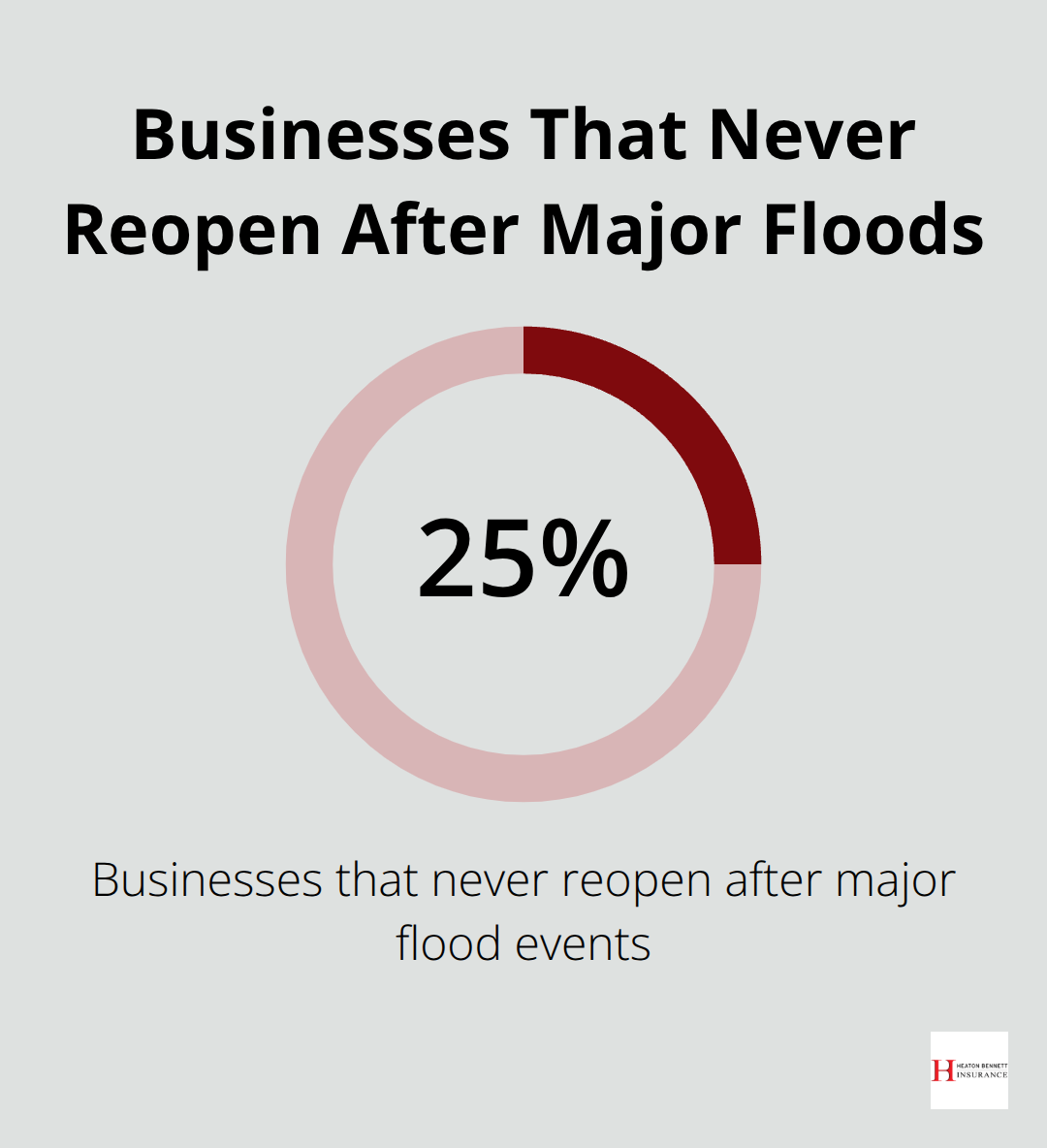
Flooding presents an even more dangerous gap because standard commercial property policies exclude water damage entirely. Since 1996, 99 percent of U.S. counties have faced flooding, yet most Texas businesses remain uninsured for this peril. Just one inch of water causes approximately $26,000 in damage according to FEMA data, and many companies don’t realize their coverage won’t touch it until the water arrives.

The 2025 Houston floods demonstrated exactly this problem-businesses with standard policies recovered nothing, while those carrying separate flood insurance through the National Flood Insurance Program or private carriers protected their operations. Your location determines your flood exposure; coastal areas face different risks than inland regions, and properties outside traditional floodplains still experience significant flood losses (about 65 percent of disaster-assistance flood claims come from outside designated floodplains).

Two key flood risk statistics relevant to Texas businesses. - weather risk insurance Texas

Drought Impact on Agriculture and Operations

Drought impacts agricultural and operational costs differently but equally severely. Businesses depending on water supply face rising operational expenses when drought conditions tighten availability and increase costs. Agricultural operations see crop losses compound quickly, affecting not just the current season but financing for the next one.

Beyond agriculture, drought increases wildfire risk across Texas, particularly in rural areas and expanding development zones. You can check your property’s specific wildfire exposure through the Texas Wildfire Risk Assessment Portal, and that risk directly influences your insurance costs and availability. Regional variation matters enormously-coastal areas like Galveston run 30 to 40 percent higher than inland locations, while rural West Texas typically costs 10 to 20 percent more than urban areas like Dallas.

Key factors and regional differences that influence commercial property insurance costs in Texas. - weather risk insurance Texas

Understanding Your Property’s Risk Profile

A business in high-risk tornado zones faces different exposure than one in drought-prone regions, meaning coverage needs and pricing vary dramatically across the state. Loss runs from previous property owners reveal past claims and help you understand what actually happened at your location, not what you assume happened. This documentation matters because underwriters use it to assess real risk rather than theoretical exposure.

Building age and roof condition heavily influence your rates-newer code-compliant structures with recent roof replacements often receive noticeable discounts, sometimes reducing premiums by 10 percent or more through proper maintenance documentation. Understanding these factors positions you to make informed decisions about the coverage you actually need, which brings us to how weather risk insurance protects your business against these specific threats.

How Weather Risk Insurance Protects Your Business

Property Damage Coverage Tailored to Texas Threats

Commercial property insurance in Texas must account for the specific perils that actually threaten your business. Standard commercial property policies protect your building and contents from covered losses, but the exclusions matter more than the coverage itself. Flood damage does not exist in standard policies, which means you need separate flood insurance through the National Flood Insurance Program or private carriers to cover water damage. Wind and hail coverage varies by location; coastal properties often find wind coverage unavailable in the voluntary market and must turn to the Texas Windstorm Insurance Association, which serves as the wind and hail coverage of last resort for coastal counties with more than 237,000 policies statewide.

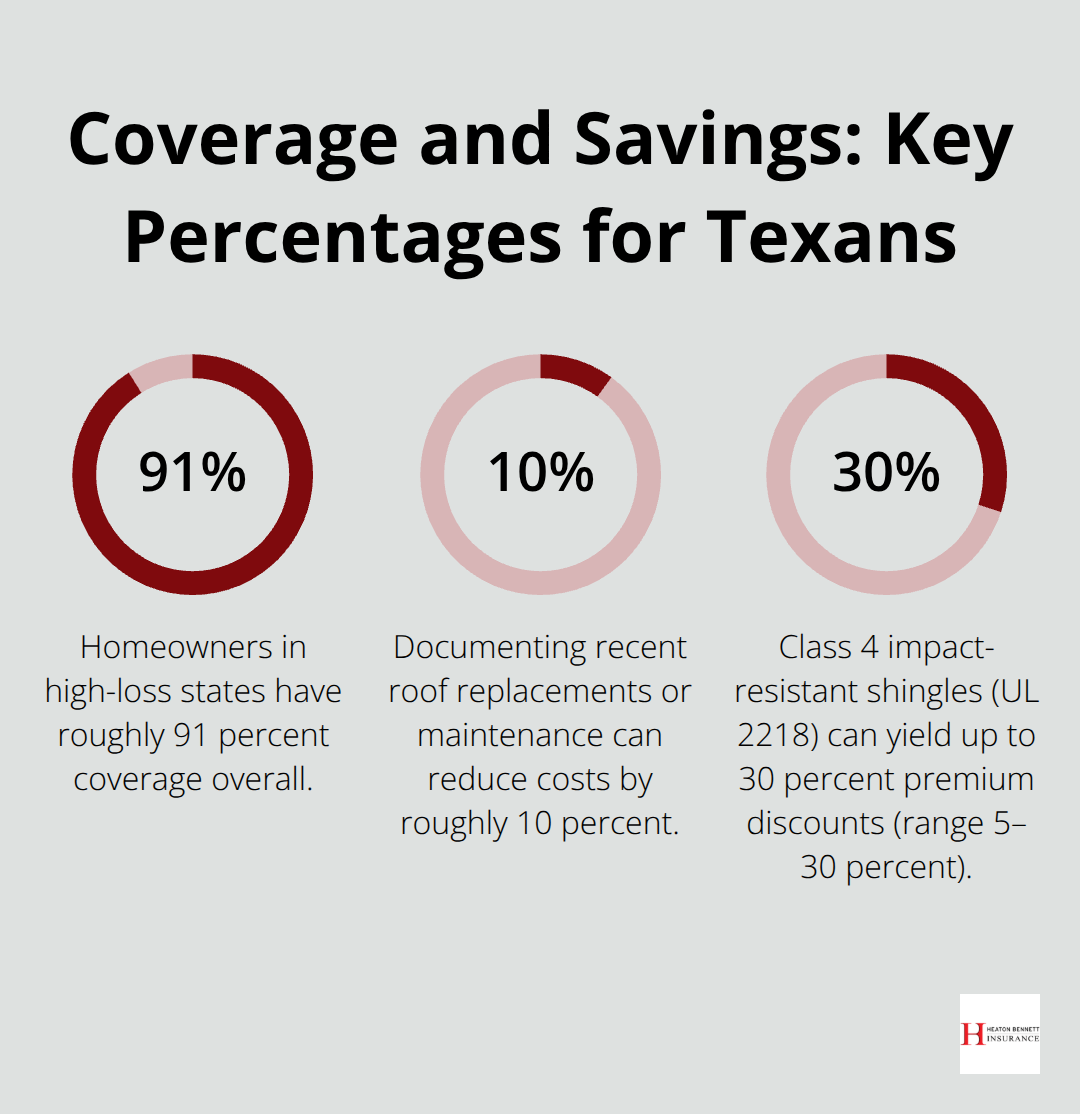
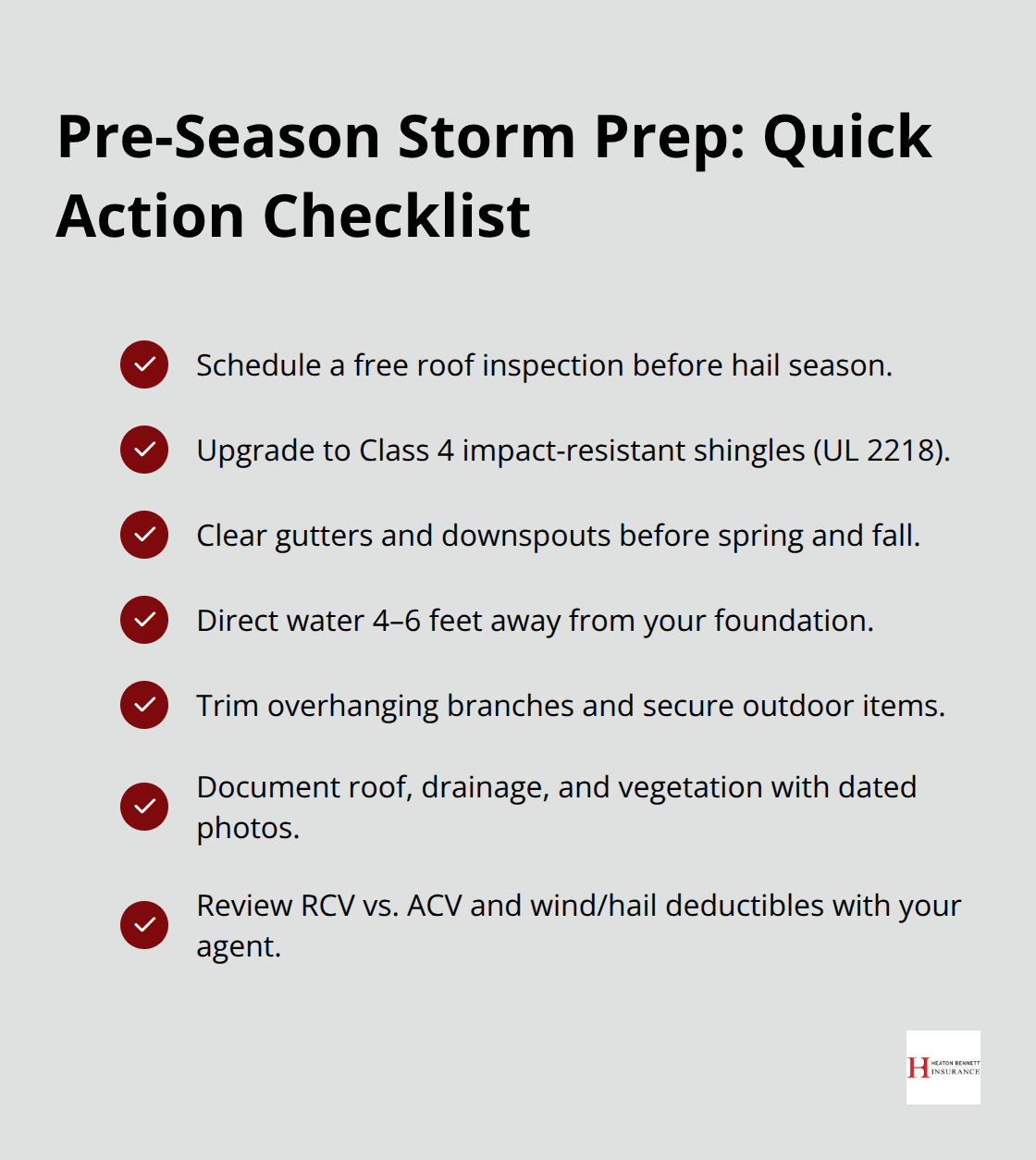
Building coverage should always be on replacement cost rather than actual cash value, because rising materials and labor costs mean your reconstruction expenses will exceed what you paid for the original structure. Roof condition directly impacts your wind and hail premiums, so documenting recent replacements or maintenance records can reduce costs by roughly 10 percent. Contents coverage requires regular inventory updates to match your current asset values; underinsuring this protection leaves you exposed when losses occur, and many business owners discover too late that their limits do not match what they actually own.

Business Interruption and Recovery Protection

Business interruption insurance replaces lost income and covers fixed expenses while your operation recovers after a covered weather event, making it essential in Texas where recovery timelines can stretch weeks or months. You must select an indemnity period that matches how long your business needs to resume normal operations; a restaurant might recover in two weeks while a manufacturing facility needs three months. Ordinance and law coverage pays for costs to update to current building codes after damage, which matters significantly in Texas because updated local codes often require electrical, plumbing, and structural upgrades that were not necessary in the original construction.

Hub-and-spoke view of essential weather risk insurance components for Texas companies.

Bundling Coverage and Managing Deductibles

In high-risk regions where premiums rose 10 to 40 percent between 2023 and 2025, bundling multiple coverages through a Business Owners Policy often costs $1,000 to $3,000 annually and provides broader protection than purchasing coverages separately. Raising your deductible lowers monthly premiums substantially, but only if you can afford to pay that deductible out of pocket after a loss occurs; choosing a $10,000 deductible to save $200 monthly creates disaster if you cannot fund the deductible when needed. The right balance between premium savings and financial capacity determines whether a higher deductible actually works for your operation.

Understanding these protection layers positions you to make informed decisions about coverage limits and exclusions. The next step involves assessing your specific business vulnerabilities and comparing what different carriers actually offer in your region.

Securing the Right Coverage for Your Texas Business

Document Your Property’s Actual Vulnerabilities

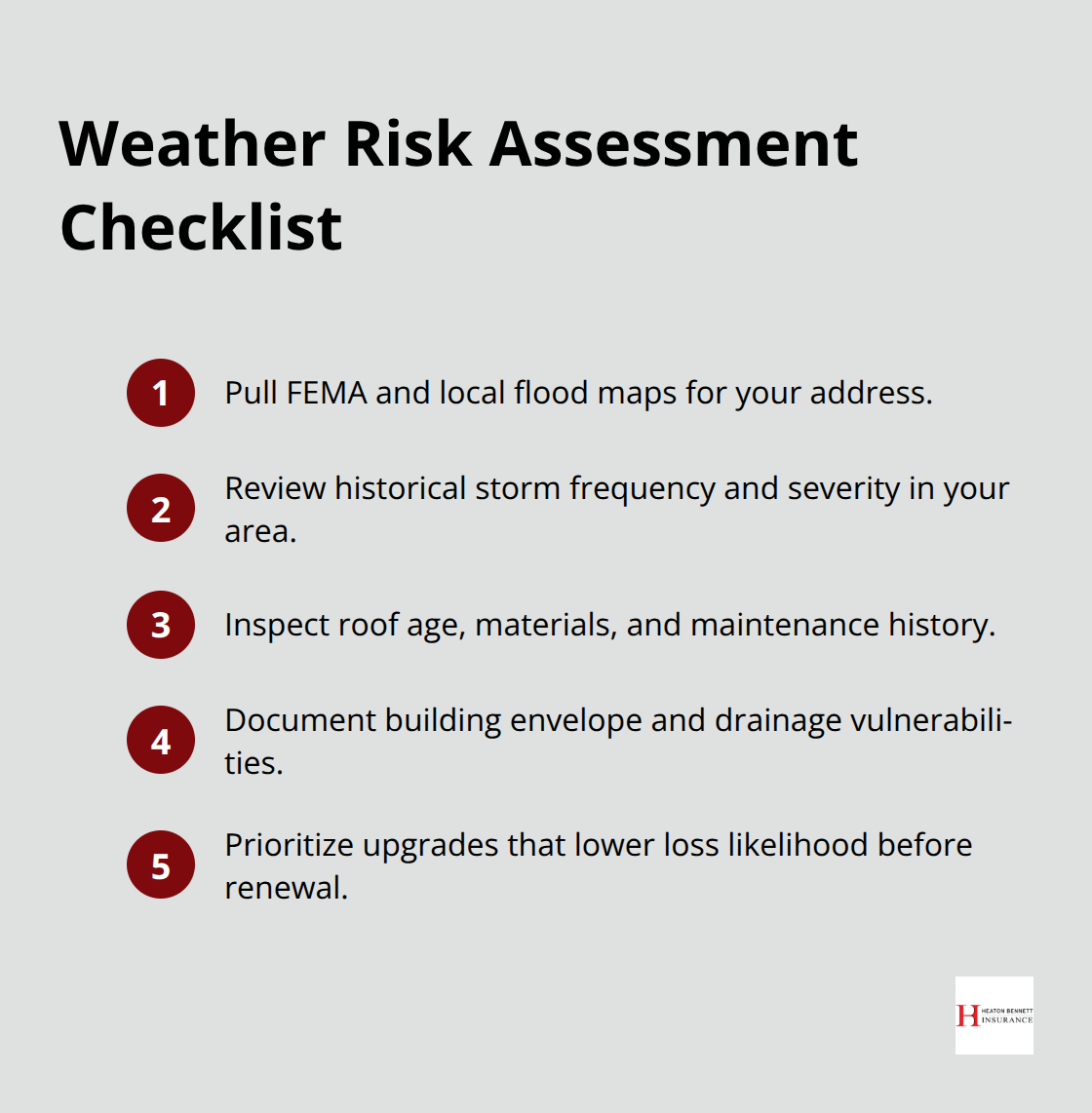
Selecting weather risk insurance for your Texas operation means moving beyond generic quotes and understanding what actually covers your specific exposure. Start by pulling loss runs from previous owners to see what weather events have struck your location, then cross-reference that history against your current building condition and contents inventory. A property with three hail claims in five years requires different coverage than one with a clean history, and underwriters will price accordingly.

Next, identify which perils pose the greatest threat based on your region. Coastal businesses need windstorm coverage through the Texas Windstorm Insurance Association, inland operations in tornado zones require robust property protection, and any property near water needs separate flood insurance regardless of traditional floodplain maps (since 65 percent of disaster claims come from outside designated zones).

Calculate Your Recovery Timeline and Coverage Needs

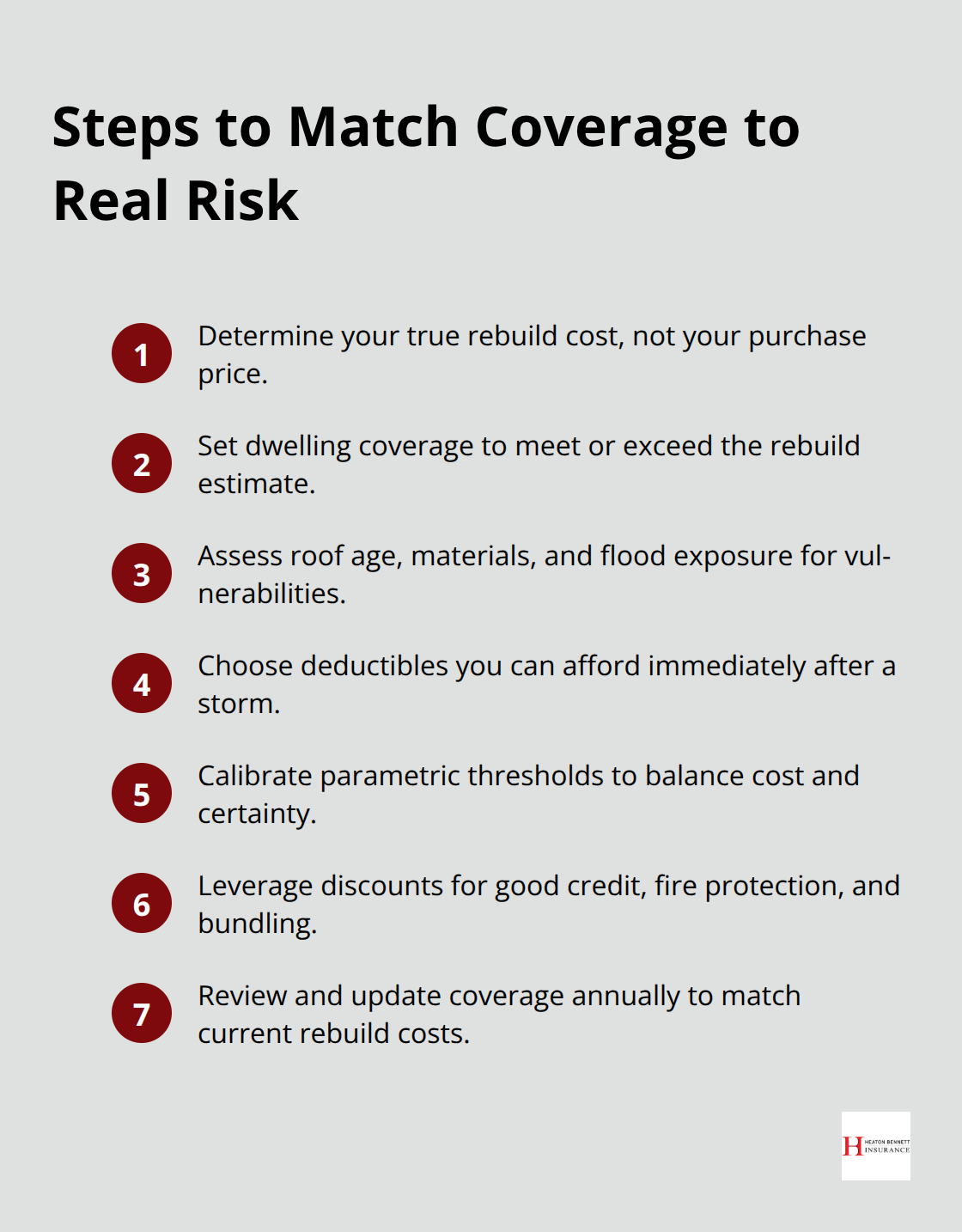
Calculate your actual recovery timeline if a weather event forced shutdown. If you need four months to resume operations, your business interruption indemnity period must cover four months, not three. Many owners guess at this number and under-insure, then face income gaps when recovery takes longer than expected. Building coverage should always be on replacement cost rather than actual cash value, because rising materials and labor costs mean your reconstruction expenses will exceed what you paid for the original structure.

Contents coverage requires regular inventory updates to match your current asset values; underinsuring this protection leaves you exposed when losses occur. Roof condition directly impacts your wind and hail premiums, so documenting recent replacements or maintenance records can reduce costs by roughly 10 percent.

Compare Quotes Across Multiple Carriers

Comparing carriers across Texas requires understanding that market capacity varies dramatically by location and risk profile. In high-risk coastal areas, you may find only TWIA available for wind coverage or limited options for property insurance entirely, while inland Dallas-area businesses access multiple voluntary carriers with better rates.

Request quotes from at least three insurers using identical building specifications, contents values, and coverage limits so you can actually compare apples to apples rather than chasing the lowest number. Verify whether quotes include all necessary exclusions covered separately-flood must be added to standard policies, and wind or hail may require separate riders depending on your location (your agent can clarify these distinctions).

Work with an Independent Agent

An independent agent accesses multiple carriers rather than locking you into one company’s limited options, and they know which insurers actually write in your specific area and what coverage gaps exist in their standard forms. An independent agent understands Texas weather risks and carrier appetites across different regions, positioning you to select protection that matches your actual exposure rather than settling for whatever seems cheapest.

Final Thoughts

Weather risk insurance in Texas protects your bottom line by covering the specific threats your business actually faces. Hail, flooding, and drought create financial exposure that standard policies leave uncovered, and the regional variations across Texas mean your neighbor’s coverage won’t work for your operation. The businesses that survive weather events are those that planned ahead with proper protection rather than those scrambling after losses occur.

Tailored coverage matters because weather risk insurance Texas must account for your location, building condition, and recovery timeline. A coastal property needs windstorm coverage through TWIA that an inland Dallas business doesn’t require, and your roof condition, contents inventory, and loss history all influence what coverage you actually need and what you’ll pay for it. Generic policies from carriers unfamiliar with Texas risks leave gaps that become painfully obvious when weather strikes.

The path forward starts with documenting your property’s vulnerabilities and calculating your real recovery timeline. Pull loss runs from previous owners, check your wildfire exposure through the Texas Wildfire Risk Assessment Portal, and determine whether your location faces hurricane, tornado, hail, or flood risk. Contact Heaton Bennett Insurance today to assess your weather vulnerabilities and secure the coverage your Texas business needs.

The information provided in this blog is for general informational purposes only and does not constitute legal, financial, or insurance advice. Coverage options, terms, and availability may vary. Please consult with a licensed professional for advice specific to your situation.
Weather Related Property Insurance: What to Consider

Weather can destroy your home in seconds. A single storm, flood, or hail event can cost tens of thousands in repairs-and most homeowners don’t realize their standard policy won’t cover everything.

At Heaton Bennett Insurance, we help property owners understand their actual protection gaps. This guide walks you through assessing your weather-related property insurance needs and building a plan that actually covers your home.

Weather Actually Destroys Homes-And Your Policy Might Not Cover It

The Office of Financial Regulation reported that US homeowners’ property and casualty underwriting losses occurred in five of the last six years, with 2023’s first half showing losses even without a single mega-event. This isn’t bad luck-it’s the new normal. Severe convective storms, hail, flooding, and wind events hit differently now. NOAA data shows the US averaged 8.1 billion-dollar weather events annually from 1980 to 2022, and 2023 alone saw seven separate billion-dollar catastrophes in just the first half.

Your standard homeowners policy covers dwelling damage, personal property, liability, medical payments, and loss of use, but it has hard limits on what weather damage it actually pays for. Wind and hail damage typically fall under coverage, as do snow-related losses in most policies. However, water damage splits into categories that confuse most homeowners. Sudden, accidental water damage from a burst pipe might be covered, but gradual leaks from aging systems won’t be.

Common exclusions and endorsements homeowners often miss - weather related property insurance

Flood damage is completely excluded from standard policies-you need separate flood insurance through the National Flood Insurance Program or a private insurer. Earthquake damage, landslides, and sinkholes are also excluded unless you add a specific endorsement. This matters because the reinsurance market has tightened significantly, forcing primary insurers to raise premiums and restrict coverage in high-risk areas, meaning the gaps in your policy grow more expensive to fill.

What Your Current Policy Actually Covers

Standard homeowners insurance protects against named perils like windstorms and hail, but the devil lives in the definitions section of your policy. The California Department of Insurance requires insurers to provide you a complete copy of your policy, including the declarations page, within 30 days of your request-obtain this and read it carefully. Review how the policy defines water damage, because sudden damage from a storm differs legally from water that seeps in over months. Ask your agent or insurer to explain exactly how much coverage you have and the proper steps to file a claim before you need to file one.

What Your Policy Explicitly Excludes

Mold is generally not covered unless it results from a covered event like a storm that breaks a window. General wear and tear, aging systems, and preventable failures are never covered. If your roof is old, insurers may limit roof-related claims or deny coverage entirely. High-value items like jewelry, art, or collectibles need scheduled personal property endorsements to be fully covered under a weather event. Sewer backups and sump pump overflow damage typically require a separate endorsement. Dog bite liability may be restricted by breed or history.

The Action You Need to Take Now

The practical step here is straightforward: obtain your declarations page today, identify what perils are listed, and ask your agent which endorsements make sense for your location and home age. This foundation matters because the next section covers the specific coverage options that actually fill these gaps-and knowing what you’re missing helps you understand which additions protect your home most effectively.

Know Your Property’s Real Weather Risk

Map Your Location’s Flood and Wildfire Exposure

Your location determines whether you need basic coverage or comprehensive protection. A house built in 1985 on the Gulf Coast faces different threats than a 2020 home in Denver, yet most homeowners treat weather risk as generic. The first step is mapping your actual exposure.

Share of US homes with mortgages that can trigger flood insurance requirements - weather related property insurance

Check FEMA’s flood maps to see if your property sits in a flood zone-about 77 percent of US homes are financed with mortgages, and lenders require flood insurance if you’re in a high-risk zone. If you’re in California, CoreLogic estimates over 1.2 million homes face wildfire risk, and insurers have restricted coverage for roughly one in five of the leading homeowners policies statewide. If you live in Florida, understand that nine property and casualty insurers became insolvent since 2021, and Citizens Property Insurance now covers properties that private insurers have abandoned. These aren’t edge cases-they’re signs your property may be harder to insure and more expensive to protect.

Identify Your Home’s Structural Vulnerabilities

Next, examine your home’s structural vulnerabilities. An older roof with multiple layers of shingles fails faster under hail than a five-year-old roof. Homes near trees face higher wind damage risk, and properties with poor drainage invite flood damage. A local contractor or engineer can walk your property and identify vulnerabilities-this costs $200 to $400 but reveals exactly where your home bleeds money in a weather event. This assessment shows you which endorsements matter most before you talk to your insurance agent.

Review Your Area’s Claims History

Then pull your area’s claims history. Your county assessor’s office and local property records show what kinds of losses neighbors have filed. If you see patterns of wind damage, flood claims, or hail damage in your zip code, you know which endorsements matter most. Insurers price policies based on these patterns, so high-loss areas pay higher premiums-this is not unfair, it’s actuarial reality. Florida homeowners pay roughly $6,000 per year on average for homeowners insurance compared to $1,700 nationwide, a gap driven entirely by concentration of billion-dollar storms and insurer losses.

Connect Your Risk Profile to Coverage Decisions

Understanding your property’s specific risk profile-not a generic assessment of your state-lets you build coverage that actually matches your exposure and avoids paying for protection you don’t need. Once you’ve identified your location’s flood and wildfire exposure, assessed your home’s structural condition, and reviewed what losses your neighbors have filed, you’re ready to evaluate which additional coverage options will actually protect your investment.

Filling the Coverage Gaps Insurance Companies Won’t

Flood Insurance: The Coverage You Must Understand

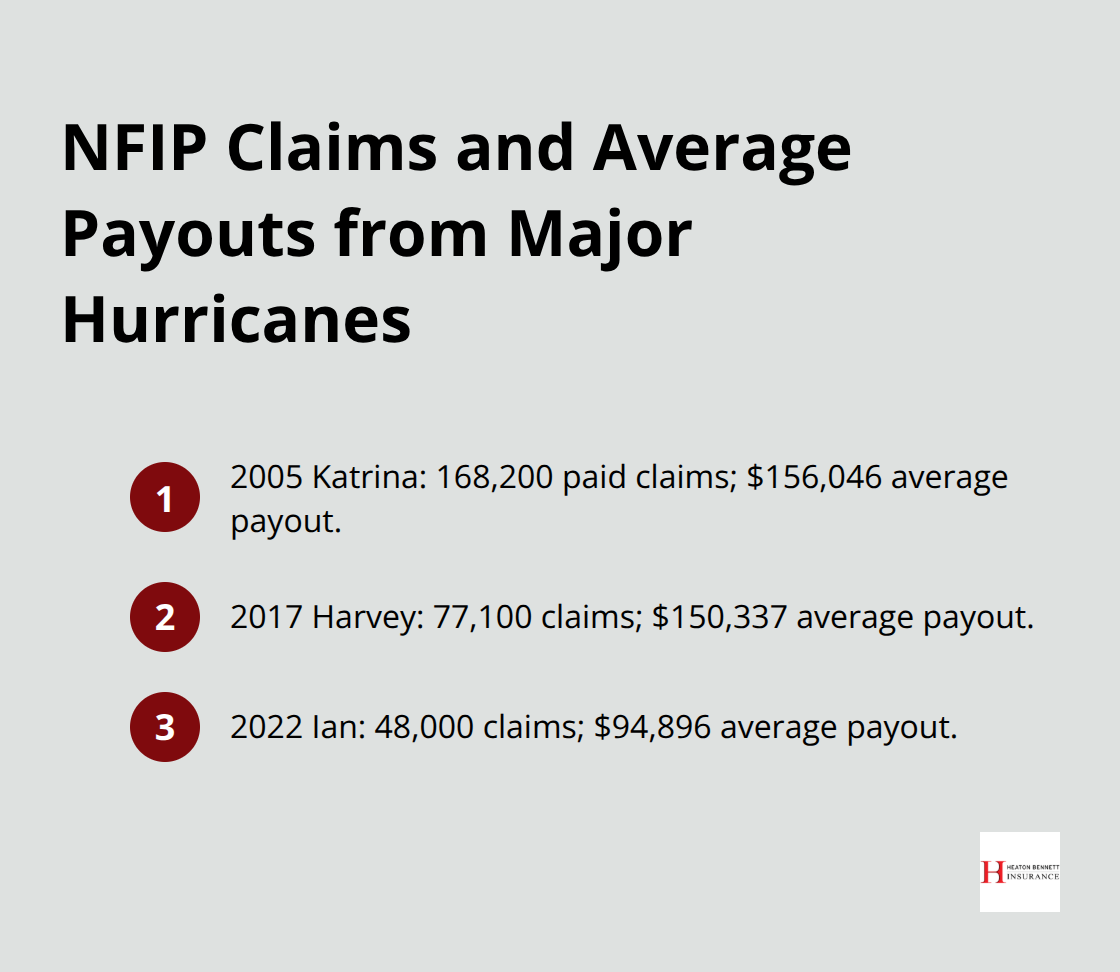
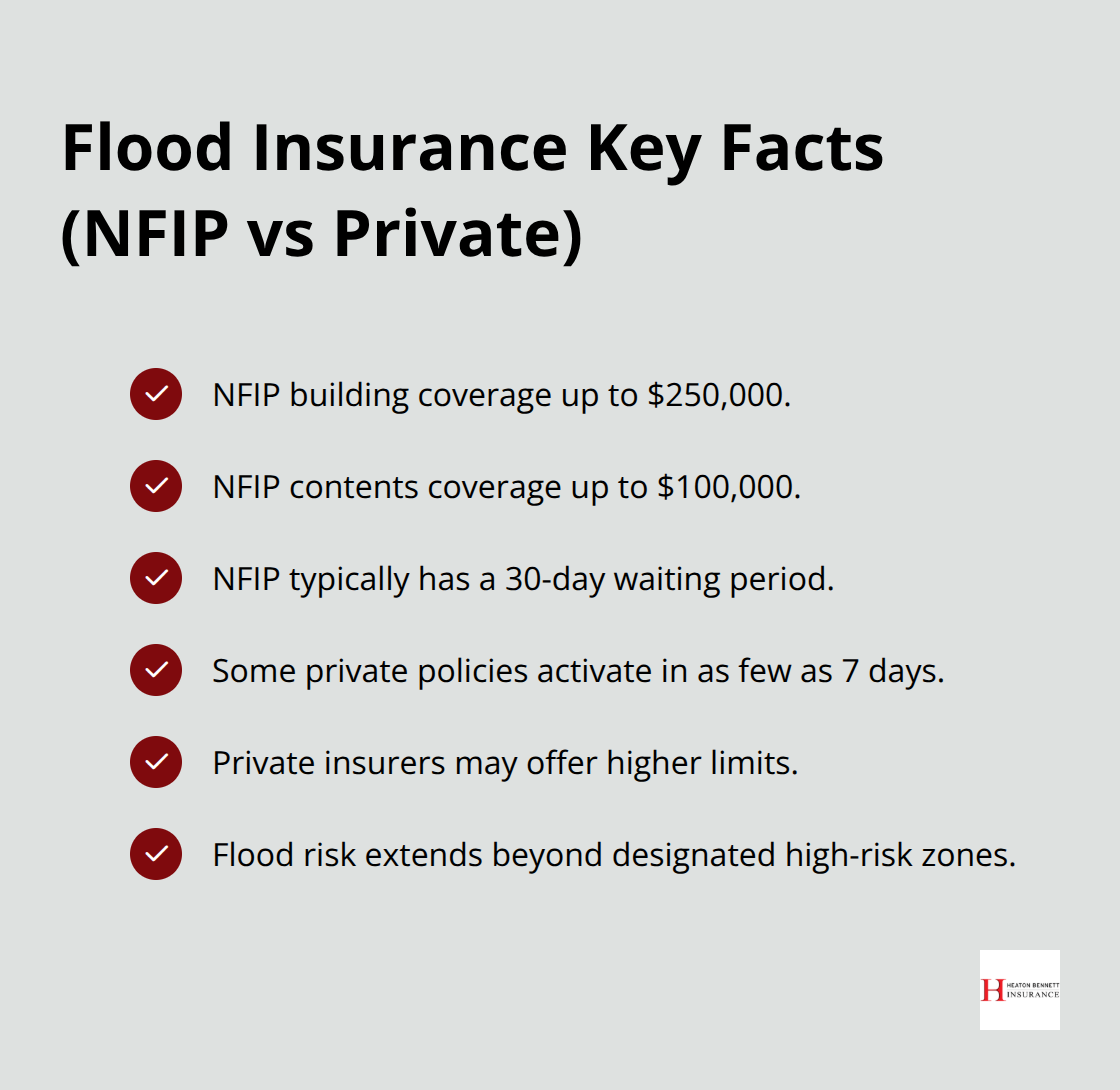
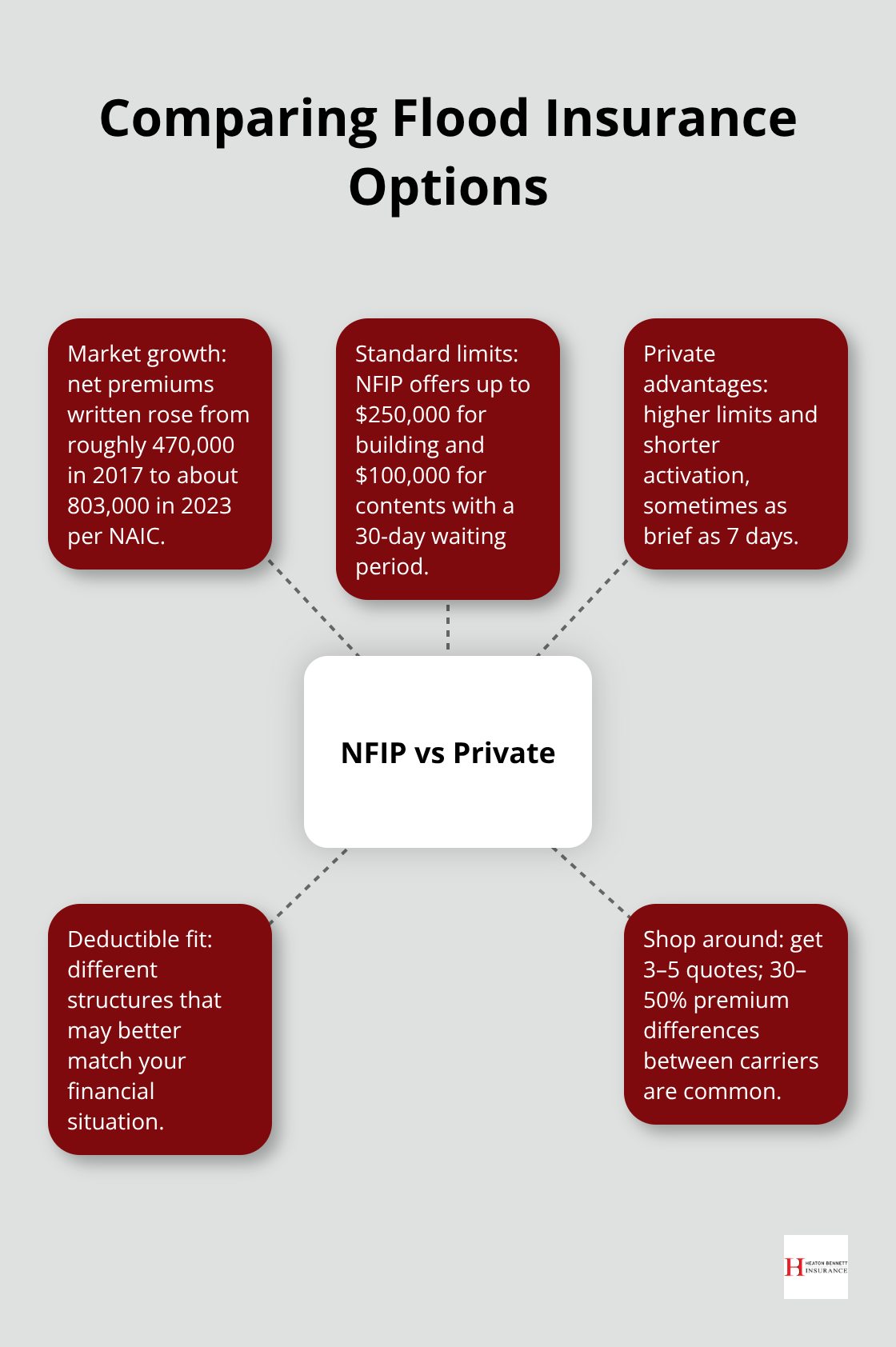
Flood damage destroys homes faster than any other weather event, yet the National Flood Insurance Program carries roughly $20.5 billion in debt to the U.S. Treasury because standard homeowners policies exclude water damage entirely. If you live in a FEMA flood zone, your mortgage lender will require flood insurance, but flood risk exists everywhere-heavy rainfall overwhelms drainage systems in areas that never flooded before. The NFIP’s Risk Rating 2.0 program shifts toward full risk-based rates over multiple years, meaning premiums will climb steeply for properties with repetitive losses. Private insurers now offer flood coverage as an alternative to the NFIP, and these policies sometimes cost less and cover more than federal options.

Key endorsements and add-ons that strengthen weather protection

The trade-off is availability: private flood insurers operate selectively, so if you live in a high-loss area, you may be locked into the NFIP regardless of cost.

Wind and Hail Coverage: Check Your Deductible

Standard homeowners policies cover wind and hail damage in most states, but in coastal areas like Florida and the Carolinas, insurers separate wind coverage into a distinct endorsement with higher deductibles-sometimes 5 to 10 percent of your home’s value instead of the standard $500 or $1,000. This means a $400,000 home might face a $20,000 deductible for wind damage, making the coverage worthless unless damage exceeds that threshold. CoreLogic data shows over 1.2 million California homes face wildfire risk, and in those regions, insurers increasingly restrict hail and wind coverage or withdraw entirely. Check your declarations page to confirm wind and hail are listed as covered perils, then ask your agent whether your deductible is standard or elevated.

Earthquake Insurance: Location Determines Value

Earthquake insurance requires a separate endorsement or standalone policy in virtually every state, and insurers price these policies aggressively because earthquake losses are catastrophic and unpredictable. California’s Proposition 103 rate regulation limits insurers’ ability to charge actuarially sound earthquake premiums, which is why coverage remains expensive and availability remains tight. A $500,000 home in Los Angeles might cost $1,500 to $3,000 annually for earthquake coverage with a 15 percent deductible, meaning you absorb the first $75,000 in losses yourself. In high-risk zones like the San Francisco Bay Area or the Los Angeles basin, earthquake insurance is worth the cost because a major event could total your home. In lower-risk areas like Denver or Austin, the premium-to-risk ratio may not justify the expense unless your home sits directly above a known fault line. Work with your agent to map your property against USGS earthquake hazard data, then run the numbers on whether the annual premium makes financial sense for your situation.

Final Thoughts

Weather destroys homes, and your standard policy won’t cover everything. The three steps we’ve outlined-understanding what your current coverage actually protects, mapping your property’s specific weather vulnerabilities, and identifying which endorsements fill your gaps-form the foundation of real weather related property insurance protection. Start by pulling your declarations page and asking your agent which perils are listed, then assess your location’s flood and wildfire exposure using FEMA maps and CoreLogic data.

The reinsurance market has tightened, premiums have climbed, and insurers have restricted coverage in high-risk regions, which means the cost of filling gaps grows every year. Acting now to build comprehensive protection costs less than waiting until after a loss forces you to scramble for coverage you can’t afford. Your home’s protection depends on moving forward with a plan that matches your property’s real risk profile, not a generic assessment of your zip code.

An independent agent who understands your property’s actual exposures can help you navigate these decisions and connect you with multiple carriers so you’re not locked into a single option. Contact Heaton Bennett Insurance to discuss your weather-related property insurance needs and build a protection plan that fits your home and your budget.

The information provided in this blog is for general informational purposes only and does not constitute legal, financial, or insurance advice. Coverage options, terms, and availability may vary. Please consult with a licensed professional for advice specific to your situation.

Nonprofit Property Coverage: Safeguarding Assets and Programs

Nonprofits operate with limited budgets and stretched resources, making every asset count. Standard commercial insurance often leaves critical gaps that leave your organization vulnerable to significant financial loss.

At Heaton Bennett Insurance, we understand that nonprofit property coverage requires a different approach than typical business policies. This guide walks you through the specialized protections your organization actually needs.

Why Nonprofits Face Different Property Risks

Nonprofits hold assets that standard commercial policies simply don’t account for. A youth center stores sound equipment, tables, and stage gear worth thousands. A food bank maintains freezers filled with inventory, plus vehicles for distribution. A community theater owns lighting rigs, costumes, and sets that represent years of work. When a break-in or fire strikes, these organizations lose not just physical items but the ability to serve their communities. Standard commercial property insurance treats these assets like typical business inventory, applying generic limits and exclusions that leave nonprofits dangerously underprotected.

Theft and vandalism affect nonprofits disproportionately. Break-ins cost between $5,000 and $15,000 in repairs plus losses and disrupted programs, according to property insurance data. Yet many nonprofits discover too late that their policies exclude volunteer-operated facilities, seasonal equipment stored off-site, or items in transit to events. Nonprofit property coverage averages about $141 per month, suggesting affordable protection exists, but only if you match coverage to actual assets and activities.

Seasonal Equipment and Off-Site Exposures

Nonprofits operate differently than traditional businesses. A mentorship organization might store donated computers and learning materials in a rented warehouse during off-season months. An arts nonprofit ships instruments and artwork to satellite locations or community events. Standard commercial policies often exclude property in transit or stored at temporary locations, leaving these items vulnerable.

Flooding accounts for roughly 20 percent of insured property claims, yet many nonprofit policies include flood exclusions that require separate coverage. Similarly, equipment used at outdoor events or partner facilities frequently falls outside standard policy boundaries. You need coverage that explicitly addresses where your assets actually live throughout the year, not just what sits in your main office building.

Percentages highlighting flooding claim frequency and potential premium discounts from coverage consolidation for U.S. nonprofits - nonprofit property coverage

The Gap Between Liability and Property Protection

Many nonprofits hold general liability insurance to protect against injury claims but overlook property coverage entirely. These are separate protections serving different purposes. Liability shields your organization when someone gets hurt at your event or claims damage to their belongings. Property coverage protects your own buildings, contents, and revenue streams when fire, theft, or weather strikes.

A liability claim from damaged third-party property can exceed $50,000, yet your organization still faces its own asset losses if property coverage doesn’t exist. Nonprofits need both working together. When you pair property coverage with business income insurance, you protect not just equipment but also ongoing expenses like rent, utilities, and payroll while operations resume after a loss. This dual approach prevents one disaster from forcing program cuts or staff layoffs.

Three points explaining liability vs property coverage and the role of business income for U.S. nonprofits

An insurance provider experienced in nonprofit operations helps you address mission-critical assets and the specific ways your organization operates. Understanding these coverage types positions you to evaluate what your nonprofit actually needs.

What Property Coverage Types Does Your Nonprofit Actually Need

Building Coverage: Protecting Your Physical Structure

Building coverage protects the physical structure your nonprofit occupies, whether owned or leased. This includes walls, roofs, foundations, built-in fixtures, and permanent installations like HVAC systems or security equipment. If your nonprofit owns the building, this coverage is non-negotiable. If you lease, your landlord typically requires you to carry it, and your lease agreement specifies coverage limits and replacement-cost requirements.

The Hartford reports nonprofit property policies average about $141 per month, but building coverage costs depend heavily on square footage, age, construction type, and location. A 5,000-square-foot community center in a flood zone pays significantly more than a small office in a low-risk area. Document your building’s year built, square footage, any renovations, and current replacement value before requesting quotes. Underwriters scrutinize these details, and inaccurate information leads to coverage disputes when claims arise.

Three core nonprofit property coverages: building, contents and equipment, and business income

Many nonprofits underestimate replacement costs by using depreciated values instead of what it actually costs to rebuild today. A 30-year-old building might have a depreciated book value of $200,000 but a true replacement cost of $800,000. This gap creates catastrophic exposure. Get a professional property appraisal or work with an insurance agent who specializes in nonprofits to establish realistic limits.

Contents and Equipment: Protecting What’s Inside

Contents and equipment coverage handles everything inside your building that isn’t permanently attached. For a food bank, this means freezers, refrigeration units, packaging equipment, and inventory. For a youth center, it covers computers, donated furniture, sports equipment, and art supplies. For a theater, it protects lighting rigs, sound systems, costumes, and set pieces.

This coverage extends to items stored at satellite locations, in transit to events, or temporarily housed in partner facilities, but only if your policy explicitly includes off-site protection. Many standard commercial policies exclude property away from the main location entirely. Theft and vandalism of contents account for significant losses in the nonprofit sector. Break-ins cost $5,000 to $15,000 in repairs, replacement, and program disruption according to property insurance data. Your coverage should include both theft and vandalism as standard protections.

Scheduled Items and Valuable Collections

Valuable collections-artwork, historical documents, rare books, musical instruments, or donated items of significant value-require specialized protection beyond standard contents coverage. These items need scheduled endorsements that list them individually with specific coverage limits and agreed values. An art nonprofit with a $50,000 painting cannot rely on a standard contents limit of $25,000 per item. Instead, you schedule the painting separately at its appraised value. This approach eliminates depreciation arguments and ensures full recovery if loss occurs.

Walk through your facilities and document every owned asset, capturing replacement costs rather than current book values. Create a detailed inventory spreadsheet organized by location and category. Include acquisition dates, condition, and current replacement cost for high-value items. This inventory becomes your roadmap for coverage decisions and your defense during claim investigations. With your asset list in hand, you’re ready to evaluate which coverage types align with your nonprofit’s actual operations and risk profile.

How to Cut Nonprofit Property Insurance Costs Without Cutting Coverage

Bundle Coverage Types for Immediate Savings

Nonprofits save money when they combine different coverage types under one policy. A Business Owner’s Policy, or BOP, merges general liability, commercial property, and business income coverage into a single package. The Hartford data shows nonprofit customers using a BOP pay roughly $70 per month on average, or about $836 annually, though costs vary by organization size, location, staffing, and coverage limits. That bundled approach costs considerably less than purchasing each coverage type separately from different carriers. When you request quotes, ask carriers whether they offer nonprofit-specific BOPs with volume discounts for combining property, liability, and business income. Some carriers reduce rates by 10 to 20 percent when you consolidate coverage, and that savings compounds annually. Layering additional coverages like commercial auto, cyber liability, or sexual abuse and molestation insurance onto an existing policy typically costs less than standalone policies. An insurance professional who understands nonprofit operations can identify which coverages genuinely reduce your total cost of risk rather than simply adding premium.

Invest in Property Maintenance and Risk Assessment

Risk mitigation lowers your insurance costs because carriers reward organizations that prevent losses. Conduct a formal property risk assessment at least annually, documenting the condition of your building’s roof, HVAC systems, electrical wiring, plumbing, and fire suppression equipment. Deferred maintenance transforms small issues into catastrophic losses and signals poor governance to underwriters. Many nonprofits underestimate property coverage by insuring buildings at depreciated value rather than replacement cost, meaning after a fire they receive far less than needed to rebuild. A nonprofit that invests $5,000 in roof repairs and HVAC maintenance often qualifies for lower premiums than one that postpones these investments and files claims later. Document every safety improvement with photos and maintenance records because underwriters scrutinize these details during renewal.

Strengthen Physical Security and Governance

Implement theft and vandalism prevention measures like improved lighting, security cameras, alarm systems, and controlled access to high-value storage areas. These physical controls reduce claim frequency and demonstrate organizational competence to insurers. Nonprofits with strong governance practices-including written risk management policies, staff training on asset protection, and clear vendor liability terms in contracts-attract better rates and coverage terms from specialized carriers. Work with an insurance agency experienced in nonprofits to leverage insurer risk advisory and claims advocacy services that lower your total cost of risk rather than simply transferring premium from one carrier to another.

Final Thoughts

Nonprofit property coverage protects the physical assets that enable your organization to serve its community. Without it, a single fire, theft, or weather event can force program cuts, staff layoffs, or worse. The organizations that thrive after loss are those that invested in proper coverage before disaster struck.

Your nonprofit holds assets worth far more than standard commercial policies protect-sound equipment, vehicles, computers, inventory, and specialized materials represent years of donor investment and organizational capacity. When you document these assets accurately and match coverage limits to replacement costs, you eliminate the gap between what you own and what your policy actually covers. Building coverage protects your physical structure, contents and equipment coverage protects what’s inside, and business income coverage protects your ability to pay staff and rent while operations resume.

Start by walking through your facilities and documenting every asset with current replacement values, then request quotes from multiple carriers who understand nonprofit operations. We at Heaton Bennett Insurance work with multiple carriers to tailor nonprofit property coverage that fits your mission and budget. Contact us to evaluate your current coverage and identify gaps before loss occurs.

The information provided in this blog is for general informational purposes only and does not constitute legal, financial, or insurance advice. Coverage options, terms, and availability may vary. Please consult with a licensed professional for advice specific to your situation.
Construction Contractor Insurance: A Practical Guide to Protection

Construction sites present real risks-from slip-and-fall accidents to equipment theft. The right construction contractor insurance protects your business from these costly claims and keeps your operations running smoothly.

At Heaton Bennett Insurance, we help contractors understand what coverage they actually need. This guide walks you through the essential policies, common claims to avoid, and how to choose the right protection for your specific projects.

What Coverage Do Construction Contractors Actually Need?

General Liability and Workers’ Compensation Form Your Foundation

General liability insurance covers bodily injury and property damage claims that occur on your job sites. If a client gets hurt or you accidentally damage their building, this policy pays legal fees and settlements. Most contractors carry $1–2 million in coverage for standard projects, though larger commercial work often requires $5 million or more.

Workers’ compensation is mandatory in all states except Texas and South Carolina, and it covers medical costs and lost wages when your employees get injured. Construction workers face injury rates significantly higher than other industries, making this coverage non-negotiable if you have any staff. The National Safety Council reports that construction accounts for roughly 11% of all workplace deaths despite representing only 6% of the workforce-a stark reality that shows why workers’ comp costs money upfront but protects you from catastrophic financial exposure.

Hub-and-spoke showing essential construction coverages: general liability, workers’ comp, and tools & equipment. - construction contractor insurance

Tools and Equipment Require Specific Coverage

Tools and equipment coverage is where many contractors get blindsided. Job site theft happens regularly, and standard business policies often exclude or severely limit coverage for portable equipment. You need to specifically schedule expensive tools, generators, and machinery on your policy to protect them properly.

Equipment left at a site overnight faces higher theft risk. Some contractors use GPS trackers or secure storage to lower premiums and reduce losses. Property damage from weather, accidents, or vandalism also requires specific coverage limits on your policy. Contractors working on multiple sites simultaneously need to understand that coverage follows the tools themselves, not just the job location.

The Real Cost of Unprotected Assets

Without dedicated equipment protection, a stolen $15,000 compressor or damaged $8,000 air handler becomes your direct loss. The right policy structure means you get back to work faster without absorbing massive replacement costs out of pocket. This layer of protection separates contractors who recover quickly from those who face serious cash flow problems after a loss.

Understanding what coverage you actually need sets the stage for the next critical step: recognizing which claims happen most often and how to prevent them before they drain your resources.

Where Most Construction Claims Actually Come From

Slip-and-Fall Accidents Cost More Than You Think

Slip-and-fall accidents dominate construction insurance claims, and they’re far more expensive than most contractors realize. The Bureau of Labor Statistics reports that falls account for roughly 35% of all construction worker deaths and generate massive workers’ compensation payouts. A single serious fall costs $50,000 to $500,000 in medical bills and lost time, depending on injury severity.

Percentages highlighting fall-related deaths and construction’s share of overall workplace fatalities and the workforce. - construction contractor insurance

The problem isn’t random-it happens on wet surfaces, uneven ground, scaffolding, and roofs where contractors cut corners on safety protocols. Temperature and weather conditions matter too; wet or icy conditions demand additional precautions and sometimes work stoppage.

Prevention Strategies That Actually Work

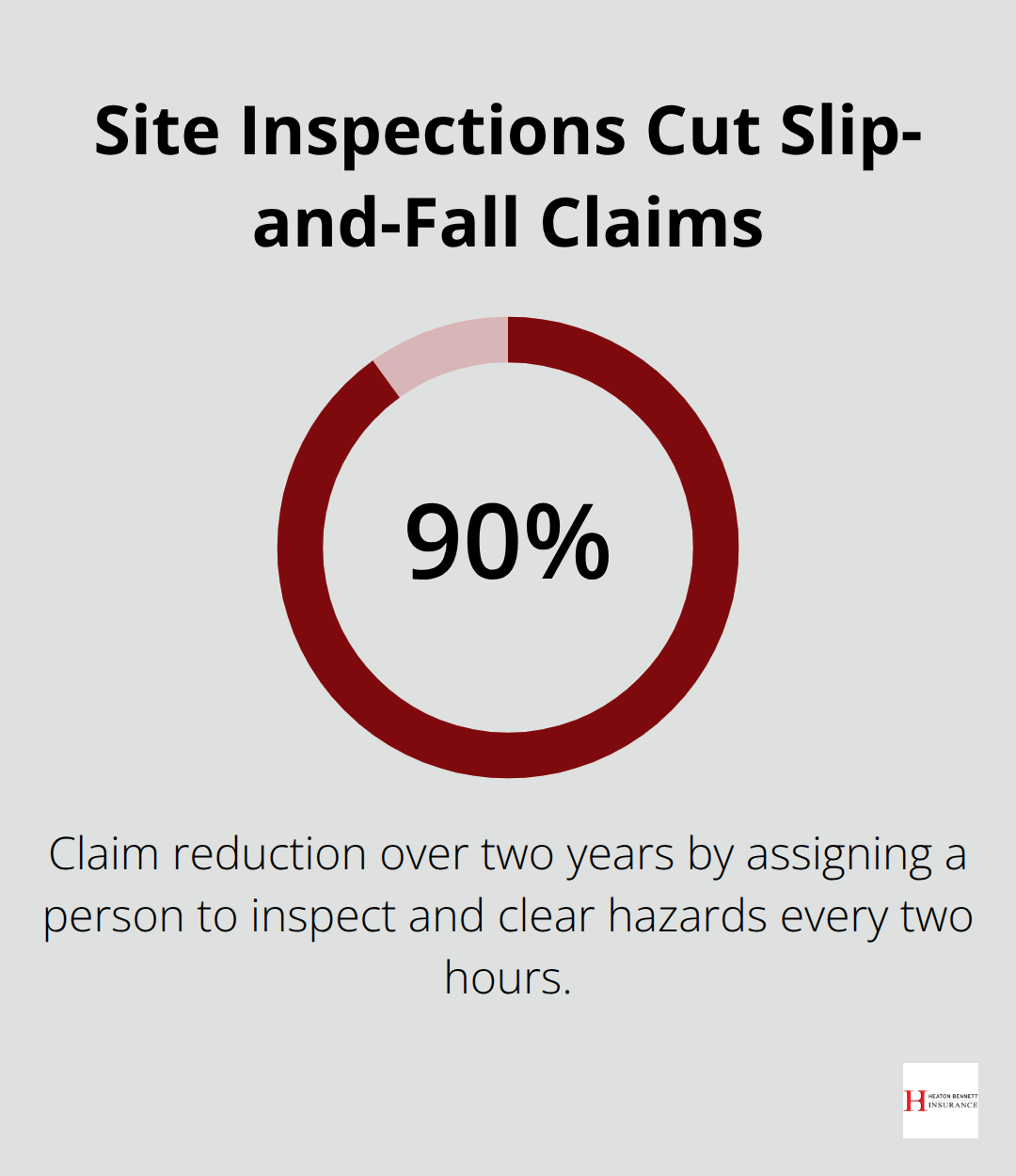
You prevent these claims by enforcing site-specific safety plans, requiring harnesses at heights above 6 feet, and maintaining clear walkways free of debris and cords. Daily equipment inspections catch hazards before they cause injuries. OSHA-certified training cuts injury rates by 20% to 30% according to workplace safety research, yet many contractors skip formal safety programs entirely.

Property Damage Claims Hit Harder Than Equipment Theft

Property damage claims from contractor negligence involve third-party property and client relationships, making them far more damaging than equipment theft. Accidentally damaging a client’s existing structure, plumbing system, electrical lines, or finished work during your project creates liability claims that reach six figures.

These claims happen when contractors fail to locate underground utilities before digging, apply incorrect materials, or leave job sites unsecured allowing weather damage to client property. Pre-project utility marking through 811 One-Call services (free in most states) prevents costly mistakes. Written scope agreements that specify what you will and won’t touch protect both parties. Daily site documentation with photos creates a clear record of conditions.

Equipment Theft and Damage Require Layered Protection

Equipment theft and damage losses represent the third major claim category, but contractors can prevent them through scheduled tools on your policy, GPS tracking devices on high-value equipment, and secure overnight storage or locked containers. Theft-resistant locks add another barrier against loss.

Contractors who photograph all tools and equipment before jobs start achieve dramatically faster claim resolution because documentation proves what was on-site. The National Insurance Crime Bureau tracks construction equipment theft as a $300 million annual problem, making prevention strategies worth the upfront investment in security measures and proper coverage limits.

Understanding these three claim categories shows you exactly where your business faces the biggest financial exposure. The next step involves selecting the right coverage limits and policy structure to match your specific operation.

Matching Coverage to Your Actual Risk Profile

Project Type Determines Your Coverage Limits

Your project type determines what coverage limits you genuinely need, and guessing wrong costs you thousands. A residential remodel crew carrying $2 million in general liability might be overinsured while severely underprotected on equipment, whereas a commercial foundation contractor needs $5 million minimum because structural damage claims reach six figures instantly. Start with your past three years of projects and identify which ones generated claims or near-misses. If you’ve never had a property damage claim but lost $40,000 in equipment theft, your priority shifts dramatically toward scheduled tools coverage rather than raising liability limits.

Commercial clients almost always require proof of $1–5 million in liability before signing contracts, so check your client agreements to see what they demand. Residential work typically settles at $1–2 million. Heavy equipment operators and demolition contractors face higher exposure than finish carpenters, so your specific trade matters more than industry averages.

Compare Quotes Across Multiple Carriers

Quotes from different carriers vary wildly because underwriters assess risk differently, making comparison shopping non-negotiable. Request quotes from at least three carriers and ask each one why their premium differs from competitors, because the reasons reveal coverage gaps you might have missed. One carrier might exclude equipment left unattended overnight while another includes it at no extra cost. A $3,000 annual premium difference over five years represents $15,000 in real money, yet contractors often accept the first quote they receive.

Compact checklist of steps to compare insurance quotes across multiple carriers.

When comparing quotes, verify each one covers your specific project types, includes workers’ comp if you have employees, and schedules your most expensive tools. This transparency prevents surprises when claims happen and protects what matters most to your business.

Work with an Independent Agent for Customized Solutions

An independent agent who represents multiple companies can show you cost differences side-by-side and explain exactly what you gain or lose with each option. This approach prevents you from accepting a one-size-fits-all policy that leaves gaps in your protection. The agent identifies which carriers offer the best rates for your specific operation and trade, rather than forcing you into limited options.

Final Thoughts

Construction contractor insurance protects your business when claims happen, and the three coverage types we’ve covered-general liability, workers’ compensation, and tools and equipment protection-address the real financial threats your operation faces daily. Slip-and-fall accidents, property damage from negligence, and equipment theft represent the claims that actually drain contractor bank accounts, and the right policies stop that drain before it starts. You need to pull your past three years of project records, identify which ones created risk or generated claims, and use that information to guide your coverage decisions.

Request quotes from at least three different insurance carriers and compare what each one covers for your specific trade and project types. An independent agent who represents multiple carriers can show you cost differences side-by-side and explain exactly what you gain or lose with each option, preventing you from accepting a one-size-fits-all policy that leaves gaps in your protection. This approach ensures you pay for coverage you actually need rather than overpaying for unnecessary protection.

When you work with Heaton Bennett Insurance, you gain access to multiple carriers instead of being locked into one company’s limited options. Construction contractor insurance becomes a business investment that protects your ability to take on bigger projects, bid on commercial work that requires proof of coverage, and recover quickly when accidents occur. The contractors who thrive long-term treat insurance as essential protection, not an expense to minimize.

The information provided in this blog is for general informational purposes only and does not constitute legal, financial, or insurance advice. Coverage options, terms, and availability may vary. Please consult with a licensed professional for advice specific to your situation.
Contractor Insurance Quotes: How to Compare Multiple Providers

Contractor insurance quotes vary wildly from provider to provider, and most contractors waste time comparing apples to oranges. The difference between a cheap policy and the right policy can cost you thousands when a claim happens.

We at Heaton Bennett Insurance help contractors cut through the noise and find coverage that actually protects their business. This guide walks you through exactly what to look for and how to spot the deals that sound good but leave you exposed.

What Makes a Quote Worth Comparing

Look Beyond the Premium Number

The real work in comparing contractor insurance quotes happens before you look at the price tag. Most contractors focus on the premium number and miss the details that determine whether a policy will actually pay when you need it. General liability limits of $1 million per occurrence sound solid until you file a claim and realize your aggregate annual limit is only $500,000-meaning a second incident that year leaves you uncovered. Contractors pick quotes based on cost and later discover gaps that cost far more than the premium savings.

Verify Coverage Forms and Standards

ISO standard forms (identified by prefixes like CG for general liability or CP for commercial property) make apples-to-apples comparison possible, so always verify the form numbers in each quote’s endorsement schedule. If a quote uses proprietary forms instead, ask your broker to confirm whether those forms actually broaden or narrow the standard ISO coverage. This step prevents you from comparing policies that look identical but offer different protections.

Hub-and-spoke visual of the core elements that make a contractor insurance quote truly protective.

Calculate Deductible Impact

Deductibles matter as much as premiums do-a $500 deductible saves money upfront but increases your out-of-pocket exposure on every claim, while a $2,500 deductible might cost more annually but protects you from frequent small losses. Compare multiple insurance carriers to see how deductible choices affect your total cost, since premiums can vary significantly for identical coverage levels. Coastal contractors face catastrophe deductibles (wind, earthquake) that can jump to 5–10% of property value, turning a $50,000 building loss into a $15,000 out-of-pocket expense.

Identify Exclusions That Create Gaps

Read the exclusions section carefully-completed operations coverage is frequently excluded from standard general liability policies, which means claims arising after project completion (like water damage from faulty plumbing) may not be covered at all. Professional liability and cyber liability are separate purchases with their own exclusions; if your contract requires both and you skip cyber, you’ve created a gap that no amount of premium savings will fix. Contractors with subcontractors need to verify how each quote handles subcontractor liability-many policies include CG2294 exclusions that remove coverage for work performed by subs, forcing you to add endorsements or require subs to carry you as additional insured.

Account for Hidden Costs and Real-World Scenarios

The cost of adding an additional insured varies widely; some providers offer it free while others charge $50–$200 per endorsement, so factor these administrative costs into your total comparison. When you receive quotes, ask each provider how they would respond to a specific claim scenario relevant to your trade: a slip-and-fall in your office, faulty workmanship on a completed project, or a data breach if you handle client information. The answer reveals whether the coverage actually applies in the situations that matter to your business. Non-admitted (E&S) policies may quote lower but add hidden taxes, surcharges, and longer underwriting timelines-sometimes 4–6 weeks versus 24 hours with admitted carriers. Request the total cost including all fees, not just the base premium, so you’re comparing the actual out-of-pocket amount. Financing costs add up too: if you pay monthly with interest rates of 6–18%, that premium difference shrinks or disappears entirely. Experience modification (MOD) for workers’ compensation is the biggest long-term lever you control-a contractor with a poor safety record might pay 20–30% more in premiums than a competitor with identical payroll, making loss prevention far cheaper than shopping for a lower rate.

With the real costs and coverage details in front of you, you’re ready to compare multiple providers side by side and spot which quotes actually protect your business.

How to Compare Multiple Providers

Request Quotes from At Least Three Carriers

Start by requesting quotes from at least three carriers, not two. The difference between a $2,000 annual premium and a $3,500 premium on identical coverage might signal differences in how each carrier underwrites risk or pays claims. Top carriers frequently underwriting contractor coverage include The Hartford, Travelers, Chubb, Liberty Mutual, Acuity, Hanover, Hiscox, and AmTrust. Request quotes from carriers with different underwriting philosophies-one that specializes in your trade, one that’s a generalist, and one that focuses on small operations. When you submit applications, compare policies properly by including the same project details, payroll figures, and claims history for each carrier so the quotes are genuinely comparable.

Many carriers now offer online quotes within minutes, but don’t rush through the application. Incomplete information leads to revised quotes later, wasting time and making side-by-side comparison impossible. Create a spreadsheet with each carrier’s name, the quote date, coverage limits (per-occurrence and aggregate), deductible amounts, premium, and any endorsements or exclusions flagged during the application. This forces you to organize details instead of relying on memory or scattered emails.

Compact list of the key fields to include when comparing contractor insurance quotes side by side.

Calculate Net Cost, Not Just Premium

Once quotes arrive, resist the urge to pick the lowest number. Instead, calculate the net cost difference between the cheapest quote and a higher-priced quote, then estimate how many claim-free years it would take for premium savings to offset the extra protection you’d gain. A contractor paying $3,200 annually for a policy with completed operations coverage and a $500,000 aggregate limit faces less risk than one paying $2,400 for a policy without completed operations and a $250,000 aggregate. If completed operations claims average one incident every five years in your trade, the extra $800 per year is cheap insurance against a gap that could cost $50,000 to defend.

Ask each carrier’s agent directly which quote they would choose and why-their answer reveals whether they prioritize your protection or just close the sale. If you distrust the recommendation, that’s a signal to find a different broker.

Evaluate Claims Support and Service Speed

When comparing customer service, call the claims department before you buy, not after you need them. Ask how they handle a specific claim scenario relevant to your work and whether they offer online claim filing or require phone calls and paperwork. Carriers that provide instant certificate issuance through online portals speed up your ability to meet client contract requirements, while others may take 24–48 hours. For contractors managing multiple projects with different clients, fast certificate turnaround directly impacts your cash flow and project start dates.

Check complaint ratios through the National Association of Insurance Commissioners, which tracks complaints relative to market share-a ratio above 1.0 means more complaints than expected, signaling potential service issues.

Assess Long-Term Cost Reduction Opportunities

Ask each carrier about their experience modification (MOD) tracking and loss prevention tools if workers’ compensation is part of your quote. Some carriers offer safety training discounts or return-to-work programs that can reduce your MOD by 10–20% over time, making the initial premium irrelevant compared to long-term savings potential. A contractor with a poor safety record might pay 20–30% more in premiums than a competitor with identical payroll, so loss prevention becomes far cheaper than shopping for a lower rate.

These comparisons reveal which carrier truly understands your trade and positions you to make decisions based on protection, not just price. The next step is identifying the mistakes that derail most contractors during this process.

Common Mistakes When Comparing Contractor Insurance Quotes

Price Alone Destroys Your Protection

Most contractors sabotage their own comparison process by fixating on the premium number and ignoring what actually matters. The cheapest quote often comes from a carrier that either underprices risk upfront and denies claims later, or strips out coverages you’ll desperately need. Insurance profit margins run roughly 2% of total premium, which explains why some providers quote substantially lower prices than others-they’re either accepting higher risk, using different underwriting standards, or narrowing coverage through exclusions.

A $1,500 annual premium that excludes completed operations or limits your aggregate to $250,000 isn’t a deal; it’s a trap. Contractors who compare only the headline number miss that a $2,000 quote with a $500 deductible and full coverage costs far less out-of-pocket than a $1,400 quote with a $2,500 deductible and missing endorsements. The real cost emerges when you file a claim and discover the coverage doesn’t apply.

One contractor saved $600 annually on premium but then faced a $15,000 out-of-pocket cost on a slip-and-fall claim because they skipped the additional insured endorsement their client required. Another picked a non-admitted carrier to save money, then waited six weeks for underwriting while their project start date slipped. Calculate total cost including deductibles, endorsements, financing interest (if paying monthly at 6–18%), and administrative fees-not just the base premium.

Hidden Gaps in Coverage Destroy Claims

The second major error is failing to read the actual policy language before you commit. Contractors receive quotes, see a number that fits their budget, and sign without verifying what’s covered and what’s excluded. Completed operations coverage is frequently excluded from standard general liability, which means claims arising after project completion-water damage from faulty plumbing, structural failures from poor framing-fall outside your protection entirely.

Professional liability and cyber liability don’t automatically come with general liability; they’re separate purchases with separate exclusions. Subcontractor liability exclusions (CG2294) are common, meaning work performed by subs may not be covered unless you add endorsements or require subs to carry you as additional insured. Read the insuring agreement and subsequent exclusions to understand what actually is and isn’t covered in practice for your operations.

Create a checklist of coverages your client contracts require, then verify each quote provides them before comparing prices. If a client demands $2 million in liability limits with additional insured status and your quote only goes to $1 million without that endorsement, the price is irrelevant. Don’t rely on the agent’s summary; read the endorsement schedule yourself and ask the agent to explain any form numbers, exclusions, or amendments that seem unclear.

Deductibles and Aggregate Limits Shift Your Real Cost

Ask yourself whether the savings justify the gaps. If you’re paying $3,500 instead of $2,800 but gaining completed operations coverage and a $1 million aggregate instead of $500,000, that extra $700 annually protects you against losses that could exceed $50,000. Coastal contractors face catastrophe deductibles (wind, earthquake) that can jump to 5–10% of property value, turning a $50,000 building loss into a $15,000 out-of-pocket expense.

Checklist of cost drivers and timelines that can change the real price and protection of a contractor policy. - contractor insurance quotes

A $500 deductible saves money upfront but increases your out-of-pocket exposure on every claim, while a $2,500 deductible might cost more annually but protects you from frequent small losses. Compare how deductible choices affect your total cost across multiple carriers, since premiums can vary significantly for identical coverage levels. The time you spend verifying these details directly reduces the risk of an expensive claim denial later.

Final Thoughts

Comparing contractor insurance quotes effectively comes down to one principle: protect your business first, then optimize the cost. The contractors who waste money chase the lowest premium without understanding what they actually buy, while those who succeed organize their quotes in a spreadsheet, verify coverage forms against ISO standards, and calculate deductibles plus aggregate limits into their total cost. These steps take time, but they prevent the expensive claim denials that cost far more than any premium difference.

Gather quotes from at least three carriers with different underwriting approaches, then ask each agent which quote they would personally choose and why. Call the claims department before you buy to verify they handle incidents relevant to your work quickly and fairly, and check complaint ratios through the National Association of Insurance Commissioners to spot carriers with service problems. Calculate the net cost difference between the cheapest option and higher-priced alternatives to determine whether the extra protection justifies the premium (including deductibles, endorsements, and financing interest if you pay monthly).

We at Heaton Bennett Insurance have access to multiple carriers and understand the specific risks contractors face across different trades. Our team handles the complexity of endorsements, additional insured requirements, and trade-specific exclusions so you focus on running your operation. Contact Heaton Bennett Insurance to discuss your contractor insurance needs and receive quotes that protect your business without leaving you exposed.

The information provided in this blog is for general informational purposes only and does not constitute legal, financial, or insurance advice. Coverage options, terms, and availability may vary. Please consult with a licensed professional for advice specific to your situation.
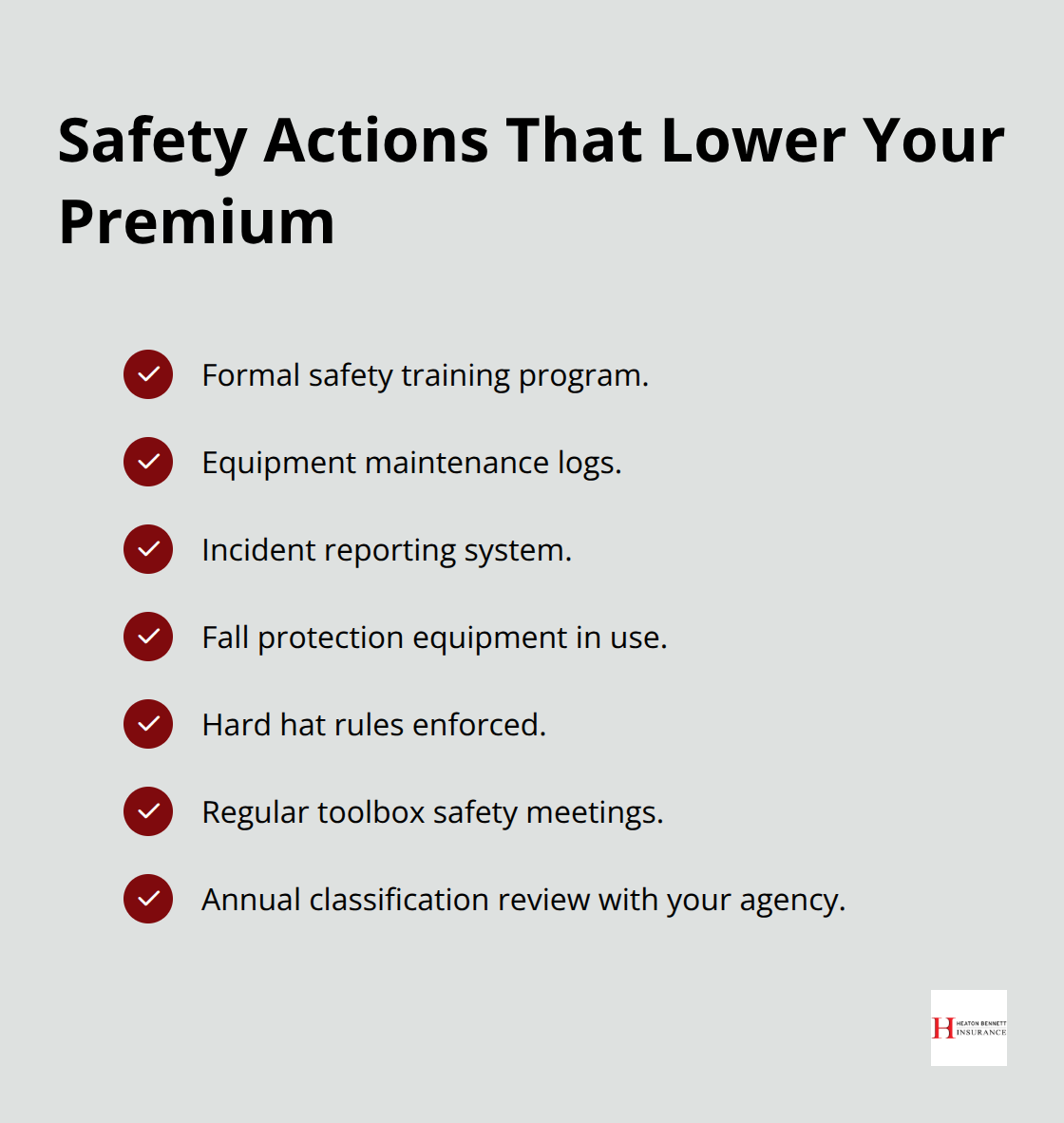
Construction Contractor Insurance Austin: What Builders Need to Know

Construction contractors in Austin face real financial risks on every job site. One accident, one lawsuit, or one equipment loss can threaten your entire business.

At Heaton Bennett Insurance, we’ve seen contractors lose everything because they didn’t have the right construction contractor insurance in Austin. This guide walks you through the coverage types you actually need and the gaps most builders miss.

The Three Core Coverages Every Austin Contractor Must Have

General liability insurance protects you when someone gets hurt or property gets damaged because of your work. If a subcontractor falls off scaffolding on your job site or your crew accidentally damages a client’s existing structure, general liability covers the medical bills, legal fees, and settlement costs. In Austin, most project owners and general contractors require a minimum of $1,000,000 per occurrence before you can even bid on work. Without this coverage, you cannot obtain a Certificate of Insurance, which means you cannot sign contracts or access job sites. The cost runs around $152 per month for most Austin contractors, according to industry data, but this varies based on your project type, claims history, and revenue.

Key requirements, costs, and actions for general liability coverage in Austin - construction contractor insurance Austin

If you work on high-value residential or commercial projects, you should push your limits higher because a single catastrophic injury can exceed standard coverage.

Workers’ Compensation Protects You From Direct Lawsuits

Workers’ compensation is not mandatory in Texas for private employers, but this is where contractors make a fatal mistake. If an employee gets injured and you lack coverage, they can sue you directly for unlimited damages. The medical costs alone for a serious construction injury run into six figures fast, and you become personally liable. Workers’ compensation typically costs around $306 per month in Austin and covers medical expenses, rehabilitation, and lost wages for injured employees. If you have no employees but operate as a sole proprietor, a Ghost Policy lets you claim coverage for yourself at minimal cost, which is essential if you ever bring on help or work on projects that mandate proof of coverage. Many Austin contractors skip this because they think small crews don’t need it, but a single serious injury will bankrupt a business without protection.

Tools and Equipment Need Separate Protection

Tools disappear. Theft from job sites in Austin happens constantly, and your general liability policy will not reimburse you for stolen equipment. Contractors Equipment Insurance covers portable tools, power equipment, and machinery both at the job site and in transit. A single high-end power drill, compressor, or saw costs $500 to $2,000, and most contractors operate with $15,000 to $50,000 in equipment on site. If thieves hit your job, you lose productivity, delay timelines, and spend money replacing gear you already paid for. This coverage typically reimburses theft, weather damage, and accidental loss, making it essential for keeping projects moving and protecting your investment in tools that make your business run.

What Happens When You Skip These Three Coverages

Contractors who operate without these three core policies face exposure that extends far beyond a single bad job. A lawsuit from a third-party injury can drain your business bank account within months. An employee injury without workers’ compensation can force you to liquidate assets to cover medical bills and lost wages. Equipment theft without proper coverage means you absorb the full replacement cost while your crew sits idle waiting for new tools. The combination of these three gaps creates a perfect storm that destroys most small to mid-sized construction businesses in Austin. Your next step involves identifying which coverage gaps exist in your current setup and which specialized policies your specific projects demand.

Why Austin Contractors Face Rising Insurance Demands

Austin’s Construction Boom Raises the Bar for Coverage

Austin’s construction market has expanded significantly over the past decade, with the city’s population growing faster than the national average and residential construction permits increasing year over year. This growth creates more projects, higher competition, and stricter requirements from project owners who demand proof of coverage before any work starts. The construction industry in Texas accounts for over 600,000 jobs according to state labor data, and Austin represents one of the fastest-growing markets in the state. More job sites mean more opportunities for accidents, equipment theft, and property damage claims. Project owners now verify insurance status as a standard part of due diligence, and they eliminate contractors who cannot produce a valid Certificate of Insurance immediately. This shift has forced contractors to move beyond basic coverage and maintain policies that actually protect their operations. Courts and insurance carriers now expect contractors to carry adequate limits that match project value and complexity, making the financial consequences of being uninsured or underinsured far more severe than in previous years.

Workers’ Compensation: The Coverage Contractors Skip at Their Peril

Texas law treats workers’ compensation differently than most states-it is not mandatory for private employers, which creates a dangerous trap for Austin contractors. Many builders mistakenly believe that because coverage is optional, they can skip it and pocket the savings. This decision has destroyed countless businesses. If an employee suffers a serious injury and you lack workers’ compensation coverage, that worker can file a direct lawsuit against you personally for unlimited damages, medical costs, lost wages, and pain and suffering. Construction injuries regularly result in six-figure settlements, and without workers’ compensation protection, your personal assets become the target. A single spinal injury or permanent disability claim can exceed $500,000 in total costs, and you absorb every dollar. Workers’ compensation typically costs around $306 monthly for Austin contractors according to industry benchmarks, which represents genuine insurance against financial catastrophe. The alternative-self-insuring by hoping nothing goes wrong-is a bet most contractors cannot afford to lose. Major construction firms and municipalities increasingly require proof of workers’ compensation as a condition of contract. Government projects in Austin mandate it, and many private developers now demand it as well. Skipping this coverage eliminates entire categories of work from your business pipeline.

Lawsuits Arrive Faster Than You Expect

A property damage claim from faulty workmanship, a bodily injury lawsuit from a job site accident, or a third-party claim from adjacent property damage can arrive within weeks of the incident. Legal defense costs alone run $10,000 to $50,000 before a case even reaches settlement discussions. General liability insurance covers these legal fees, court costs, and settlement amounts up to your policy limits, which means you stay in business rather than spending months fighting claims out of pocket. Without adequate coverage limits, a single catastrophic claim exceeds your protection, leaving you personally liable for the overage. High-value Austin projects-downtown renovations, commercial builds, luxury residential work-create exposure that standard $1,000,000 limits may not cover. Contractors working on projects valued above $5,000,000 should seriously consider excess liability policies that add an additional $2,000,000 to $5,000,000 in protection. The cost of excess coverage runs roughly $300 to $600 annually per million in additional limits, which is trivial compared to the risk. Contractors who operate without this layered approach essentially gamble that no catastrophic incident will occur on their watch, and statistics show this gamble fails for hundreds of Austin builders every year. The next section examines the specific insurance gaps that leave contractors most vulnerable to financial ruin.

Where Contractors Lose Coverage and Expose Themselves to Risk

Coverage Limits That No Longer Match Your Projects

Most Austin contractors operate with coverage limits that made sense five years ago but no longer match the projects they bid on today. A $1,000,000 general liability limit sounds substantial until you price a commercial renovation in downtown Austin or a multi-unit residential project valued at $8,000,000 or higher. A single catastrophic injury or property damage claim on a high-value project can exceed your standard limits within hours, leaving you personally liable for everything above the policy cap.

Contractors working on projects above $3,000,000 regularly encounter clients who demand $2,000,000 or $5,000,000 in coverage before signing contracts. The cost difference between $1,000,000 and $2,000,000 in limits runs roughly $40 to $80 monthly according to industry benchmarks, yet contractors skip this upgrade to save money they later lose in a single claim. Excess liability policies add another $1,000,000 to $5,000,000 in protection for $300 to $600 annually, making layered coverage affordable for any serious operation. Your coverage limits should scale with your project values, not stay frozen at whatever you purchased when you started the business.

Subcontractor Liability Creates Hidden Exposure

Subcontractors represent another massive gap most general contractors fail to address properly. You cannot simply assume your subcontractor carries adequate coverage or that their policy protects you if something goes wrong on the job site. Texas law holds you responsible for subcontractor negligence, meaning you absorb liability even when the sub caused the damage.

Before any subcontractor sets foot on your job site, you must request a Certificate of Insurance proving they carry general liability, workers’ compensation, and any specialized coverage your project requires. Many Austin contractors skip this step entirely and discover the gap only after an incident occurs. If a sub causes $500,000 in property damage and lacks coverage, you file a claim under your policy, your coverage pays out, and your premiums increase for years.

Steps to verify and document subcontractor insurance before work begins

A documented file with each subcontractor’s COI, policy dates, and carrier contact information takes thirty minutes to assemble but prevents catastrophic exposure.

Specialized Construction Types Demand Unique Coverage

Specialized construction types demand coverage most contractors overlook completely. If you perform environmental remediation, mold abatement, or demolition work, standard general liability policies exclude these activities. Pollution liability coverage specifically addresses environmental claims and cleanup costs, protecting you from six-figure exposures that arise from jobsite contaminants.

Contractors Equipment Insurance must cover your specific equipment types, including rented or leased machinery, because standard policies often cap coverage at $10,000 per item. A single excavator or crane rental can exceed this limit within days, leaving you unprotected for loss or damage. Builder’s Risk Insurance must match your project timeline and include coverage for materials stored on site, not just the structure under construction. A three-month project requires three months of coverage, yet contractors frequently purchase twelve-month policies or miss coverage gaps between jobs.

Hub-and-spoke of specialized policies that close common gaps for Austin contractors - construction contractor insurance Austin

Finding the Right Coverage for Your Operation

An independent insurance agent who understands Austin’s construction market helps you match coverage to actual project risk rather than guessing at standard limits that no longer fit your operation. At Heaton Bennett Insurance, we work with multiple carriers to provide tailored solutions that align with your specific projects and equipment needs. This approach ensures you carry the right protection without overpaying for unnecessary coverage or leaving dangerous gaps in your policies.

Final Thoughts

Construction contractor insurance in Austin protects your business from the financial devastation that follows a single accident, lawsuit, or equipment loss. The coverage types we’ve outlined-general liability, workers’ compensation, tools and equipment protection, and specialized policies for your project type-form the foundation of a sustainable operation. Without these protections layered together, you expose yourself to unlimited personal liability that can destroy everything you’ve built.

Getting the right coverage means matching your policies to the actual projects you bid on, not relying on generic limits that worked five years ago. A $1,000,000 general liability policy serves small residential jobs but leaves you dangerously exposed on commercial projects valued above $3,000,000. Your coverage limits should scale with project value, and excess liability policies provide affordable additional protection for high-risk work (roughly $300 to $600 annually per million in additional limits).

The next step involves reviewing your current policies against your actual project pipeline and identifying gaps before they become claims. Request Certificates of Insurance from every subcontractor before they start work, document those COIs in a file, and verify coverage dates match your project timeline. We at Heaton Bennett Insurance work with multiple carriers to provide tailored solutions that align with your specific projects and equipment needs-contact us to review your current coverage and identify the gaps that could threaten your business on the next job.

The information provided in this blog is for general informational purposes only and does not constitute legal, financial, or insurance advice. Coverage options, terms, and availability may vary. Please consult with a licensed professional for advice specific to your situation.

Nonprofit Insurance Needs: Aligning Coverages With Your Mission

Nonprofits operate under constant pressure to do more with less, which makes nonprofit insurance needs often overlooked until a crisis hits. The right coverage protects your organization, your board, and your ability to serve your community.

At Heaton Bennett Insurance, we’ve seen firsthand how the wrong insurance gaps can derail a nonprofit’s mission. This guide walks you through the coverages that actually matter for your organization.

What Liability Risks Actually Threaten Your Nonprofit

Employment Practices Liability Demands Immediate Attention

Nonprofits face employment liability exposures that for-profit businesses rarely encounter. The Alera Group’s 2023 Property and Casualty Market Outlook found that harassment, wrongful termination, and wage disputes are increasingly common and costly for nonprofit employers. Underwriters now scrutinize hiring procedures, personnel documentation, and termination processes more closely than ever before. Most nonprofits lack the HR infrastructure that larger employers maintain, making wrongful termination and discrimination claims more likely. Without proper documentation of hiring decisions, performance management, and termination procedures, a nonprofit becomes an easy target for employment claims.

Diagram of key liability risks nonprofits face in the United States - nonprofit insurance needs

Employment practices liability insurance has become essential because it protects your organization when these situations arise.

Sexual Abuse Coverage Faces Rising Costs and Restrictions

Sexual abuse and molestation coverage has become harder to obtain at affordable rates, particularly for organizations serving vulnerable populations. The size and severity of abuse verdicts has risen dramatically-the Boy Scouts of America settlement illustrates how a single claim can threaten an organization’s financial stability and reputation. If your nonprofit works with youth or vulnerable populations, this risk demands immediate attention. The Philadelphia Insurance Companies emphasizes that organizations serving vulnerable populations need a documented child sexual abuse prevention program with leadership support, written policies, employee and volunteer training, and thorough background checks. Insurance underwriters now evaluate whether these safeguards exist before pricing coverage.

Governance, Data Breaches, and Operational Exposures

Governance and compliance failures create significant exposure. Mismanagement of funds, self-dealing, conflicts of interest, and tax-exempt status violations trigger board liability claims that directors and officers insurance must cover. Data breaches represent another critical exposure-the Verizon 2025 Data Breach Investigations Report found that 43% of data breaches impacted small businesses, and nonprofits holding donor information, client records, and employee data are frequent cyberattack targets. Volunteer-related incidents, property damage claims, and auto accidents involving nonprofit vehicles round out the exposure landscape.

Percentage chart showing small-business breach share and burglary/theft claim share

Compliance Obligations Shape Your Coverage Requirements

State laws, contracts with funding partners, and venue requirements often mandate specific insurance minimums. Many grant agreements require general liability with minimum limits of one million dollars or higher. Landlords frequently demand proof of coverage before allowing nonprofits to occupy space. Venue operators hosting nonprofit events require liability certificates before events proceed. Tax-exempt status itself carries compliance burdens-maintaining 501(c)(3) status requires proper governance documentation, conflict-of-interest policies, and financial controls that directors and officers insurance helps protect. These external requirements force nonprofits to build coverage around what stakeholders demand, not just what feels adequate internally.

Understanding these liability exposures and compliance obligations reveals why a one-size-fits-all insurance approach fails most nonprofits. The next section examines the specific coverages that address these risks and how to evaluate which ones matter most for your organization’s operations.

Core Coverages That Protect Mission and Assets

General Liability and Board Protection Form Your Foundation

General liability insurance forms the foundation of nonprofit protection, covering third-party claims for bodily injury, personal injury, or property damage that arise from your organization’s activities. Most grant agreements require minimum limits of one million dollars, and landlords or venue operators will demand proof before allowing your nonprofit to operate. General liability alone, however, leaves your board and executive leadership exposed. Directors and officers insurance protects board members and senior staff from personal liability when governance decisions go wrong. Mismanagement of funds, conflicts of interest, or alleged violations of fiduciary duty can trigger costly litigation. The Hartford estimates that a basic Business Owner’s Policy, which bundles general liability with property coverage, costs nonprofits around seventy dollars per month on average, though actual premiums vary significantly by industry, location, and employee count.

Property Coverage Shields Physical Assets From Loss

Commercial property insurance protects buildings, equipment, computers, and inventory your nonprofit owns or leases. Burglary and theft accounted for roughly twenty percent of small-business claims in 2025, making this protection essential for any organization with physical assets. A single theft or fire can halt operations and drain reserves that should support your mission. Property coverage helps your organization recover quickly and maintain continuity when disaster strikes.

Cyber Liability Addresses Data Breach Threats

Cyber liability has become equally critical for nonprofits. The Verizon 2025 Data Breach Investigations Report found that 43 percent of data breaches impacted small businesses, and nonprofits holding donor information, client records, and employee data are frequent targets. Cyber coverage helps your organization respond to breaches, cover notification costs, and manage liability from compromised data. Without this protection, a breach can expose your donors and clients while creating legal and financial exposure for your nonprofit.

Employment and Volunteer Liability Protects Against HR Claims

Volunteer and employment practices liability insurance protects against wrongful termination, discrimination, harassment, and wage disputes-exposures that plague nonprofits lacking formal HR infrastructure. Underwriters scrutinize hiring documentation, personnel files, and termination procedures closely because nonprofits often lack the procedural safeguards larger employers maintain, making claims more likely. These three coverage areas-general liability paired with directors and officers protection, property and cyber combined, and volunteer or employment practices liability-form the practical backbone of nonprofit insurance.

Evaluating Coverage Limits for Your Organization

A single incident can drain reserves, jeopardize mission funding, and expose individual leaders to personal liability. The question becomes not whether to purchase these coverages, but how to select limits and options that match your nonprofit’s specific operations. The next section walks you through assessing your organization’s unique risk profile and choosing coverages that align with your mission rather than following a generic template.

How to Match Coverage to Your Nonprofit’s Actual Operations

Start With an Honest Inventory of Your Activities

Your nonprofit’s operations differ fundamentally from other nonprofits, which means insurance decisions should start with mapping what you actually do, not what a generic template suggests. A youth mentoring organization faces different exposures than a food bank, which faces different risks than a community health clinic. The Alera Group’s 2023 Property and Casualty Market Outlook emphasizes that underwriters are drawn to organizations that can articulate a compelling mission and demonstrate strong risk controls and positive loss histories.

Your first step is conducting an honest assessment of your activities, the people you serve, the assets you own, and the liabilities embedded in your daily operations. Write down every program you run, every volunteer activity, every building you occupy, and every vehicle you operate. Include details like how many volunteers work each week, whether you serve minors or vulnerable populations, whether you transport clients, and what payment systems you use. This inventory becomes the foundation for selecting coverage limits and options that actually protect your mission rather than leaving dangerous gaps.

Checklist of items to document before selecting nonprofit coverage - nonprofit insurance needs

Understand Your Risk Profile Before Selecting Limits

Once you understand your exposures, cost management demands a different approach than simply shopping for the lowest premium. The Hartford estimates nonprofits pay roughly seventy dollars monthly for basic coverage, but actual costs vary dramatically based on your risk profile, geographic location, and the limits you select. Rather than cutting limits to reduce premiums, negotiate coverage options that fit your budget without sacrificing protection.

For example, increasing your general liability deductible from one thousand to five thousand dollars can lower premiums substantially while keeping limits intact for serious claims. Some nonprofits benefit from bundling coverages into a Business Owner’s Policy instead of purchasing separate policies, which often costs less than buying coverage piecemeal.

Avoid the False Savings of Underinsurance

The critical mistake is selecting coverage limits based on budget constraints alone. If your nonprofit operates in a state where juries award substantial damages, or if you serve vulnerable populations where abuse claims carry enormous verdicts, underinsuring creates false savings that evaporate the moment a claim arrives. A nonprofit-focused insurance partner understands these nuances and helps you prioritize coverages that matter most for your specific operations, then identifies cost efficiencies without compromising protection.

Partner With an Agency That Understands Nonprofits

Work with an agency that takes time to understand your programs, your governance structure, and your risk tolerance before recommending coverage rather than accepting generic quotes that treat your nonprofit like any other small business. An experienced partner asks detailed questions about your operations, your volunteer structure, and your service population before proposing solutions.

Final Thoughts

Nonprofit insurance needs vary dramatically based on your specific programs, the populations you serve, the assets you own, and your geographic location. General liability, directors and officers insurance, property protection, cyber liability, and employment practices coverage form the practical backbone that protects your organization, your board, and your mission when claims arrive. Without comprehensive protection, a single incident can drain reserves meant for programs, damage your reputation, and distract leadership from the work that matters.

Proper insurance lets your nonprofit focus on mission instead of worrying about financial catastrophe. When a volunteer gets injured, when a data breach exposes donor information, or when a governance dispute triggers litigation, comprehensive coverage absorbs the financial blow and keeps your organization moving forward. The right approach starts with understanding your actual operations, not accepting a one-size-fits-all quote that treats your nonprofit like any other small business.

At Heaton Bennett Insurance, we work with multiple carriers to build tailored coverage that matches your mission and your budget. We take time to understand your programs, your governance structure, and your risk profile before recommending solutions that address your nonprofit insurance needs. Connect with us today to build coverage aligned with your mission.

The information provided in this blog is for general informational purposes only and does not constitute legal, financial, or insurance advice. Coverage options, terms, and availability may vary. Please consult with a licensed professional for advice specific to your situation.
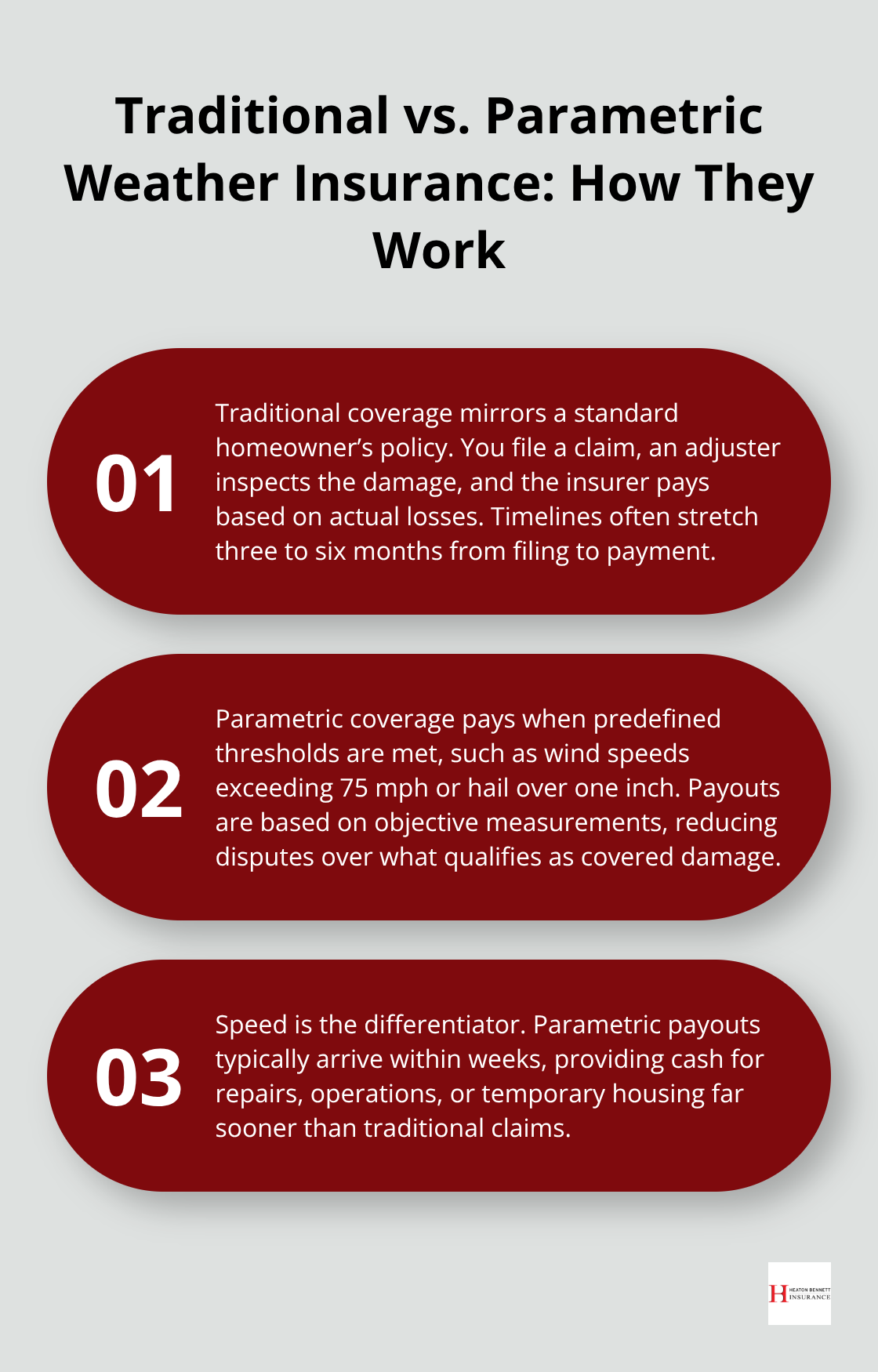
Franchise Restaurant Insurance: Consistency, Compliance, and Coverage

Running a franchise restaurant means juggling multiple locations, each with its own risks and regulatory demands. Franchise restaurant insurance isn’t optional-it’s the backbone of protecting your business from liability, property damage, and compliance violations.

At Heaton Bennett Insurance, we’ve seen firsthand how the right coverage strategy keeps franchise operations running smoothly while shielding owners from costly gaps. This guide walks you through the insurance requirements, coverage types, and loss prevention tactics that matter most for franchise success.

What Your Franchise Agreement Actually Requires

Franchise Agreement Minimums Set Your Coverage Floor

Franchise agreements spell out specific insurance minimums, and these aren’t suggestions. Your franchisor likely demands General Liability coverage starting at $1 million per occurrence, Commercial Property insurance covering buildings and equipment, and Workers’ Compensation at statutory limits for each state where you operate. The agreement typically requires you to name the franchisor as an Additional Insured on your General Liability policy, which protects them from vicarious liability if a customer gets injured at your location. This isn’t a paperwork formality-it’s a contractual obligation that, if violated, can trigger breaches and franchise termination.
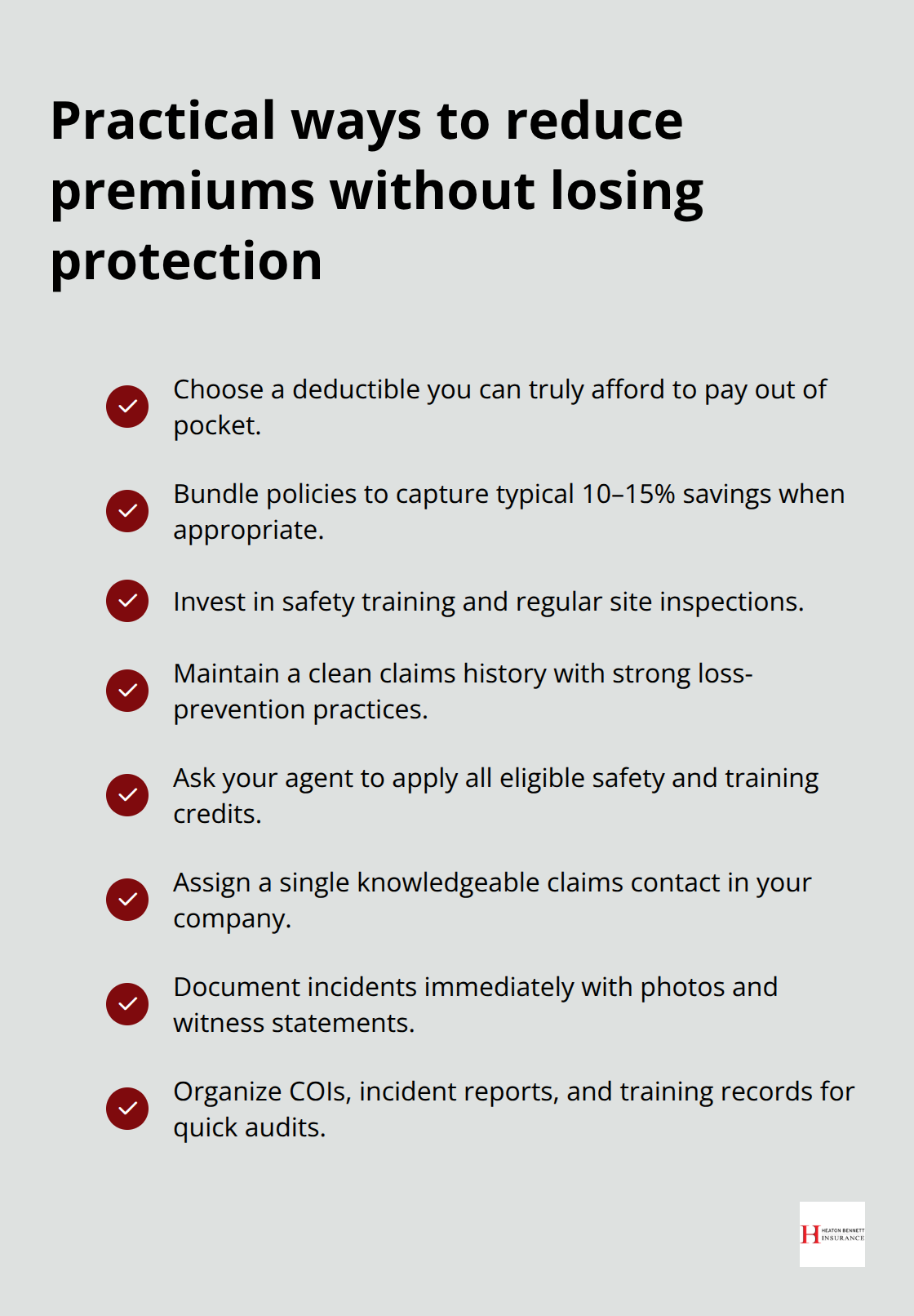
Key insurance requirements commonly mandated in franchise agreements for U.S. franchise restaurants. - franchise restaurant insurance

Many franchise agreements also require proof of coverage through Certificates of Insurance before you open, and some demand annual renewal verification. The problem we see constantly is that franchisees purchase cheap policies that technically meet minimums but exclude critical coverages like Products Liability, leaving dangerous gaps when a customer gets sick from food or a product defect causes harm. Your franchisor agreement is the first document you should pull out when shopping for coverage, because it defines your floor, not your ceiling.

State and Federal Regulations Add Mandatory Layers

Beyond the franchise agreement, state and federal regulations add another layer of requirements. Most states require Workers’ Compensation if you have employees, and many states impose strict Liquor Liability requirements if you serve alcohol-some jurisdictions hold you personally liable under dram shop laws if an intoxicated customer injures someone else. Food service operations face additional scrutiny from health departments and the FDA, meaning liability from foodborne illness outbreaks or contamination can reach six figures in medical expenses, recall costs, and legal defense.

The International Franchise Association reports that 87 percent of franchisees face moderate to substantial inflation pressure, which means your property values and inventory climb, yet many owners renew old policies without adjusting limits upward. Federal tax requirements also apply if you’re structured as an S-Corp or LLC, and some states require specific coverage endorsements for delivery operations or outdoor seating.

Share of franchisees reporting moderate to substantial inflation pressure in the United States. - franchise restaurant insurance

Why Cheap Policies Create Expensive Problems

A policy that meets your franchise agreement’s minimum requirements doesn’t automatically protect your operation. Insurers often exclude Products Liability to reduce premiums, which violates franchisor requirements and exposes your brand to liability when a customer suffers harm from food or a defective product. These gaps don’t surface until a claim arrives, at which point denial letters and legal bills pile up faster than you can respond.

Your franchisor agreement is your starting point, but state regulations and operational realities often demand more coverage than the minimums state. When you work with an advisor who understands franchise restaurant operations, they catch these gaps before claims expose them. The next section covers the specific coverage types that protect your locations and your brand across multiple states.

Essential Coverage for Multi-Location Operations

General Liability Protects Against Customer Injury Claims

General Liability covers bodily injury and property damage claims that arise at any location, and this is where franchisees commonly underestimate their exposure. A customer slip-and-fall at one location can result in a $50,000 to $500,000+ settlement depending on injury severity and your state’s liability standards. Products Liability must be included in your General Liability policy, not excluded to save money, because food poisoning claims or product defect injuries can bankrupt a franchisee who thought their cheap policy covered everything. Your franchisor agreement likely mandates $1 million per occurrence, but try $2 million if you operate in high-density urban areas or serve alcohol, since jury awards trend upward in those markets.

Commercial Property and Blanket Coverage Protect Your Assets

Commercial Property insurance protects buildings, equipment, inventory, and furnishings against fire, theft, and equipment breakdown, and this coverage should reflect actual replacement cost, not the depreciated value insurers sometimes default to. Many franchise restaurants operate in leased spaces, so your property policy must cover tenant improvements and built-in equipment you’ve added-otherwise a kitchen fire destroys your custom ventilation system with no recovery. Blanket property coverage works better than itemized coverage for multi-location operations because inflation automatically adjusts your limits upward without annual renegotiation, protecting you when supply chain costs push equipment prices higher.

Workers’ Compensation and Employment Practices Liability Address Personnel Risks

Workers’ Compensation protects employees injured on the job and is mandatory in nearly every state, yet franchisees often purchase minimum coverage without accounting for payroll growth or hazardous roles like kitchen staff who handle hot equipment and sharp tools. Medical costs for a severe burn injury or cut requiring surgery can exceed $100,000, and wage replacement obligations compound the financial impact. Employment Practices Liability defends against wrongful termination, discrimination, harassment, and wage disputes, and restaurant operations face particular exposure because high turnover creates documentation gaps that invite claims.

Commercial Auto and Liquor Liability Complete Your Coverage Foundation

Commercial Auto insurance covers company vehicles used for deliveries, catering runs, or manager travel, and employee-owned vehicles used for business also need coverage under a hired and non-owned auto endorsement-otherwise a delivery driver in a fender-bender leaves your franchise exposed. Liquor Liability is non-negotiable if you serve alcohol, because dram shop laws in most states hold you personally liable if an intoxicated customer injures a third party, meaning a drunk patron who leaves your restaurant and causes a car accident can trigger a six-figure claim against your business. This coverage defends you in court and covers damages, making it separate from General Liability and worth the premium investment, typically $300 to $800 annually depending on sales volume and location risk profile.

These core coverages form the foundation of your protection, but multi-location operations introduce coordination challenges that single-unit franchisees never face. The next section shows how to implement loss prevention strategies that reduce claims across all your locations while keeping compliance consistent from one site to the next.

How to Lock Down Loss Prevention Across Multiple Locations

Written SOPs Create Your First Line of Defense

Standardized operating procedures across your franchise locations reduce insurance claims and protect your brand reputation. The National Restaurant Association reports that employee injuries-slips, burns, and repetitive strain-account for the largest portion of workers’ compensation claims in food service, yet most franchisees allow individual location managers to interpret safety standards differently. You need written, location-specific SOPs that address slip-and-fall hazards, kitchen safety protocols, food handling procedures, and cash management, then require every manager to sign off on them quarterly. These documents become evidence in your defense if a claim surfaces, showing insurers that you took reasonable precautions. When a customer slips on a wet floor and sues, your documented cleaning schedule and slip-prevention measures can mean the difference between a denied claim and a covered defense. Assign one person at each location responsibility for safety compliance and give them authority to shut down unsafe practices immediately-this person reports directly to your area supervisor, not the general manager, removing the conflict of interest that happens when managers minimize safety incidents to protect their bonus.

Employee Training Transforms Workers Into Loss Prevention Assets

Food safety certification protects your operation from foodborne illness liability. Require new hires to complete ServSafe or equivalent programs within their first 30 days, and document completion in a central database accessible to all locations-this proves due diligence to insurers and regulators. Train delivery drivers on vehicle safety, defensive driving techniques, and liability awareness before they operate company vehicles, because commercial auto claims spike when drivers lack proper instruction. Conduct quarterly safety refreshers focused on the three highest-risk incidents at each location, whether that’s burns in a high-volume kitchen or slips in a walk-in cooler, and tie safety performance to manager bonuses so leadership owns the results. For liquor service, require TIPS certification or equivalent training for all bartenders and servers, and keep renewal records current because regulators and insurers expect this documentation. What you can control is loss prevention through training programs and safety protocols that reduce injury claims and lower your premiums over time.

Automated Compliance Tracking Prevents Coverage Gaps

Implement a system that monitors when each franchisee’s policy renews, verifies the franchisor appears as Additional Insured, and alerts you 60 days before expiration so you have time to address gaps. This system should track Certificates of Insurance for vendors, landlords, and delivery partners, ensuring they maintain required coverage limits-a vendor injury at your location with inadequate insurance creates exposure your general liability policy won’t cover. Conduct annual loss audits at each location, reviewing incident reports, workers’ compensation claims, and near-miss documentation to identify patterns that predict future claims.

Action steps to prevent coverage gaps and lower premiums across franchise locations in the U.S.

If you see three slip-and-fall incidents at one location in six months, that’s a signal to inspect flooring, review cleaning schedules, and potentially enhance your property maintenance. Insurers explicitly ask for loss history during renewals, and a clean record with documented prevention efforts translates directly to lower premiums and better coverage terms at renewal.

Final Thoughts

Franchise restaurant insurance succeeds when it aligns with your franchisor’s requirements, meets state regulations, and actually protects your operations across every location. The coverage types we’ve outlined-General Liability with Products coverage included, Commercial Property with blanket limits, Workers’ Compensation tailored to your payroll, and Liquor Liability if you serve alcohol-form the foundation that keeps claims from becoming catastrophic. Your written SOPs, employee training programs, and automated compliance tracking reduce incidents and demonstrate to insurers that you take risk seriously, which translates to better rates and terms at renewal.

The complexity of franchise restaurant insurance stems from coordinating coverage across multiple locations while maintaining consistency with franchisor mandates and state-specific regulations. A policy that works perfectly for one location may leave gaps at another due to local zoning, weather exposure, or delivery patterns, which is why working with an experienced insurance advisor makes the difference between adequate coverage and comprehensive protection. An advisor who understands franchise operations catches the exclusions that cheap policies hide, identifies gaps before claims expose them, and ensures your franchisor appears as Additional Insured on every policy so cancellations trigger immediate notification.

At Heaton Bennett Insurance, we build tailored coverage that fits your specific operation rather than forcing you into off-the-shelf solutions. Our team uses a Security Snapshot process to understand your locations, your risks, and your franchisor requirements, then access multiple carriers to find the right combination of coverage and cost. Contact Heaton Bennett Insurance to review your current coverage and identify where gaps might exist.

The information provided in this blog is for general informational purposes only and does not constitute legal, financial, or insurance advice. Coverage options, terms, and availability may vary. Please consult with a licensed professional for advice specific to your situation.