
Commercial Property Weather Texas: Guard Your Assets
Texas weather hits hard, and commercial properties face real threats from hail, flooding, and hurricanes every year. At Heaton Bennett Insurance, we know that one severe storm can disrupt your business and damage assets you’ve worked years to build.
This guide walks you through the weather risks specific to Texas, the insurance coverage you actually need, and practical steps to protect your property before disaster strikes.
What Weather Threats Actually Cost Texas Businesses
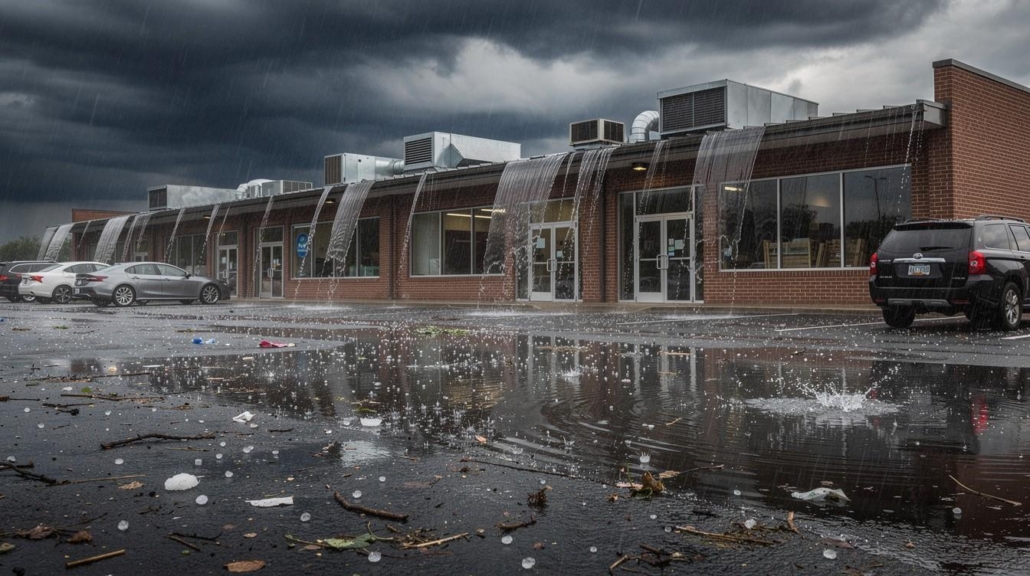
Texas commercial properties face four distinct weather hazards that drive insurance claims and operational shutdowns. Hail strikes most frequently across the state, with the National Severe Storms Laboratory documenting that Texas experiences hail events in roughly 4 to 6 storms per year in high-risk zones, particularly across north-central regions. A single hail event can perforate roofs, shatter skylights, and damage HVAC systems, leading to repair costs that often exceed $50,000 for mid-sized commercial buildings. Wind damage compounds this problem during tornado season and coastal hurricane activity. The Texas Department of Insurance reports that commercial property insurance premiums in high-risk regions rose 10% to 40% in 2026 alone due to more frequent and severe natural disasters, reflecting how real and expensive these threats have become. Flooding represents a separate crisis because standard commercial property policies do not cover flood damage. The National Flood Insurance Program clarifies that you must purchase separate flood coverage or secure it through private carriers, yet many business owners discover this gap only after water enters their building. Coastal properties near Galveston face compounded exposure to both wind and flood, making layered coverage essential rather than optional.
Hail and Wind Damage Patterns
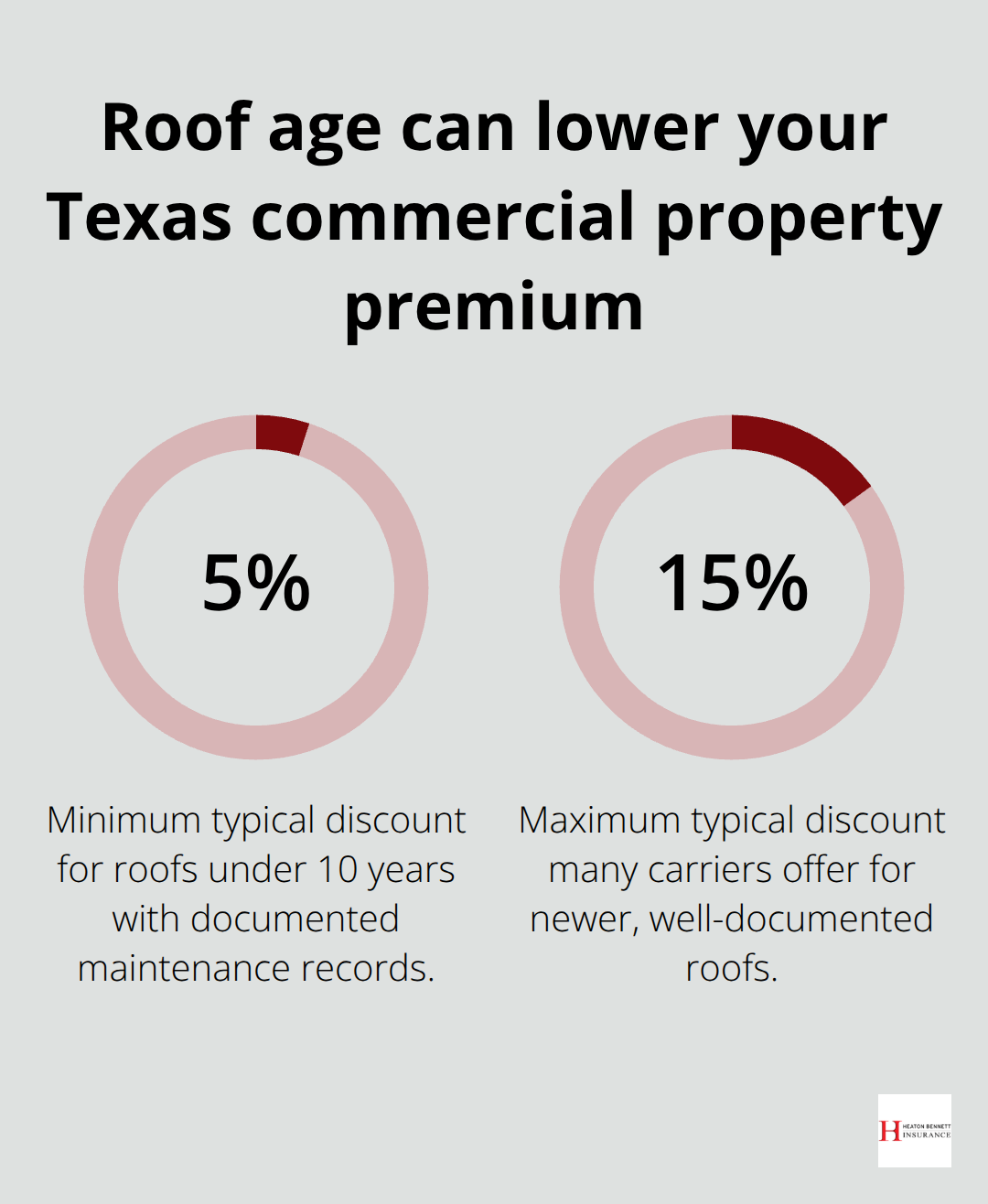
Hail strikes hardest in north and central Texas, where spring storms routinely produce stones larger than golf balls. Your roof takes the primary impact, and older roofs with worn shingles absorb more damage than newer installations. If your building predates 2010, the roof likely qualifies as a major risk factor in premium calculations. Wind damage during tornado season affects properties differently depending on construction quality and building age. Newer, code-compliant structures with reinforced framing experience lower damage rates than older buildings with outdated bracing systems. Roof condition directly influences your premium; many carriers offer discounts of 5% to 15% for roofs under ten years old with documented maintenance records.
Flooding and Water Intrusion
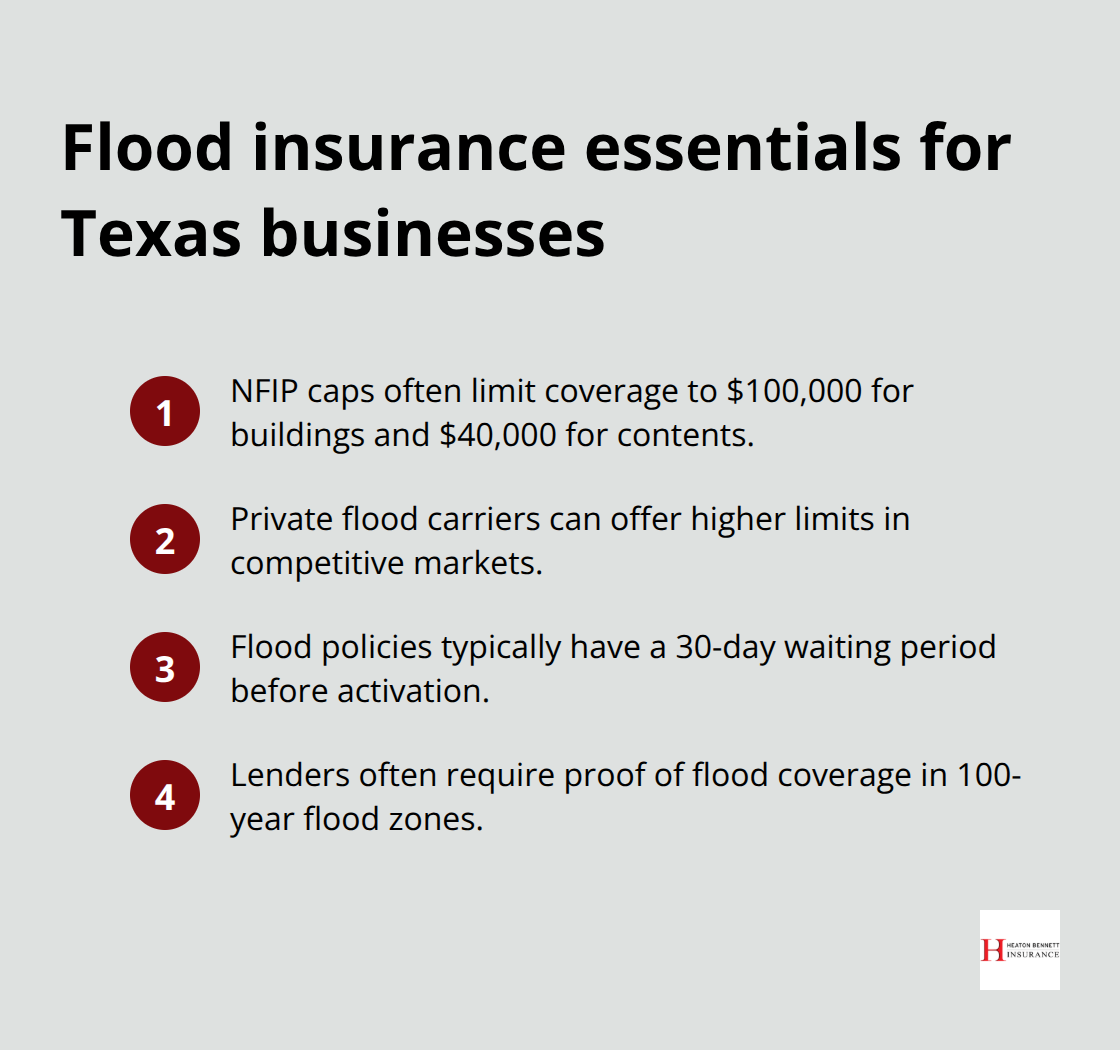
Flood risk in Texas spans coastal hurricanes, inland river overflow, and urban drainage failures after heavy rainfall. Standard property policies exclude all flood damage, meaning a basement warehouse or ground-floor inventory faces total loss without separate coverage. The NFIP provides baseline flood insurance for properties in designated flood zones, but coverage limits often cap at $100,000 for buildings and $40,000 for contents, which proves inadequate for many commercial operations. Private flood carriers now offer higher limits in competitive markets, but you must request quotes separately and understand that flood policies carry waiting periods (typically 30 days before coverage activates). If your property sits within a 100-year flood zone, your lender likely requires proof of flood coverage before financing approval.
Hurricane and Coastal Exposure
Coastal properties in Texas face hurricane wind speeds that routinely exceed 100 mph, plus storm surge and rainfall flooding. Windstorm coverage in coastal zones operates separately from standard property policies in some cases, with higher deductibles and stricter limits. A property in Galveston or Corpus Christi typically pays 40% to 60% higher premiums than an inland Dallas location for equivalent building value, reflecting genuine exposure differences. Building age matters more in coastal areas; properties constructed before 2000 often face additional scrutiny and premium surcharges because older construction methods provide less wind resistance. Roof attachment, window protection, and foundation quality all influence underwriting decisions in hurricane zones (and these factors directly shape your coverage options and costs).
Why Coverage Gaps Matter Now
Understanding these four weather threats reveals why standard property policies fall short for Texas businesses. Your building may carry adequate coverage for wind and hail, yet remain completely exposed to flood damage. Coastal operators face even steeper challenges, as wind and flood exposure combine to create gaps that single policies cannot address. The next section walks you through the specific coverage types that actually protect your assets and shows you how to identify what your current policy leaves uncovered.
Insurance Coverage That Actually Protects Your Texas Commercial Property
Standard commercial property insurance covers your building structure, equipment, inventory, and furniture against damage from wind, hail, fire, and theft. In Texas, this baseline protection matters enormously because hail and wind events strike frequently and repairs run expensive. The Texas Department of Insurance reports that commercial property premiums in high-risk regions jumped 10% to 40% in 2026 due to intensifying weather events, so carriers price risk more aggressively than ever.
Replacement Cost vs. Actual Cash Value
When you buy a property policy, you choose between replacement cost coverage and actual cash value. Replacement cost pays what it truly costs to rebuild or repair today, which matters because construction materials and labor have inflated sharply. Actual cash value subtracts depreciation from the replacement price, leaving you with far less cash after a claim. Replacement cost coverage reflects real rebuilding expenses and prevents financial shortfalls when you need recovery funds most. Your policy should explicitly cover wind, hail, and water damage from weather events, though flood damage remains excluded under standard policies across all carriers.
Contents Coverage and Asset Documentation
Contents coverage protects equipment, technology, inventory, and furniture separately from building coverage. Many business owners underestimate asset value and carry insufficient contents limits, then face partial recovery after a loss. Document your equipment and inventory with photos, serial numbers, and current replacement prices annually. If your property contains machinery, specialized equipment, or high-value stock, request a formal appraisal to establish accurate insured values that reflect what you actually own today.
Flood Coverage: The Critical Separate Policy
Flood coverage stands apart because no standard commercial property policy includes it, and the National Flood Insurance Program clarifies that you must purchase separate protection through NFIP or private carriers. Properties within a 100-year flood zone face mandatory flood coverage requirements from lenders, yet many businesses in moderate-risk areas skip this coverage and later regret it when unexpected rainfall overwhelms storm drains or rivers overflow. Private flood carriers now compete with NFIP in Texas and often offer higher limits above the NFIP caps of $100,000 for buildings and $40,000 for contents. These policies carry 30-day waiting periods before coverage activates, so you cannot purchase flood insurance after a storm warning appears.
Coastal Properties and Windstorm Coverage
Coastal properties near Galveston, Corpus Christi, and Port Aransas face compounded exposure because windstorm coverage operates separately in some cases with stricter deductibles and lower limits than inland properties experience. A Galveston commercial property typically costs 40% to 60% more to insure than an equivalent Dallas building, reflecting genuine hurricane and surge risk. Building age directly influences what coverage you can obtain and at what cost. Properties built before 2000 often face additional underwriting scrutiny in coastal zones, and some carriers impose roof condition requirements or demand upgrades before issuing policies.
Roof Condition and Premium Impact
If your roof exceeds 20 years old, multiple carriers will decline coverage or charge steep premiums regardless of location. Upgrading to a newer roof or installing impact-resistant shingles can reduce premiums by 5% to 15% and expand your carrier options significantly. These physical improvements transform your underwriting profile and make you eligible for better rates across the market. Once you understand what your current policy covers and where gaps exist, the next step involves taking concrete action to reduce weather damage before storms arrive-which means inspecting your property systematically and securing vulnerable areas against the specific threats Texas weather presents.
How to Protect Your Property Before Disaster Strikes
Your building’s condition directly determines how much damage a Texas storm inflicts and what your insurance will actually cover. Start with a systematic property walk-through that examines every vulnerable point: roof condition, gutter function, window and door seals, HVAC unit anchoring, and how water flows away from your foundation. Assessment frameworks based on NIST SP 800-30 principles help you identify threats and existing weaknesses before incidents occur.
Roof and Structural Maintenance
Document your roof’s age and material type, because carriers use this data to price your policy and determine coverage eligibility. If your roof exceeds 20 years old, upgrading to impact-resistant shingles can reduce premiums by 5% to 15% and expand your carrier options significantly. For properties in hail-prone north-central Texas regions, impact-resistant materials aren’t optional-they’re cost-effective defenses that lower your premiums while actually protecting your assets.
Test your building’s drainage system after heavy rain to spot standing water or overflow points that indicate flooding vulnerability. Older buildings with outdated gutters or poor grading around the foundation face higher flood risk and steeper insurance costs. Schedule roof inspections annually and after major storms, documenting any damage with photos and contractor assessments. This documentation supports insurance claims and provides evidence of maintenance that can support lower premiums.
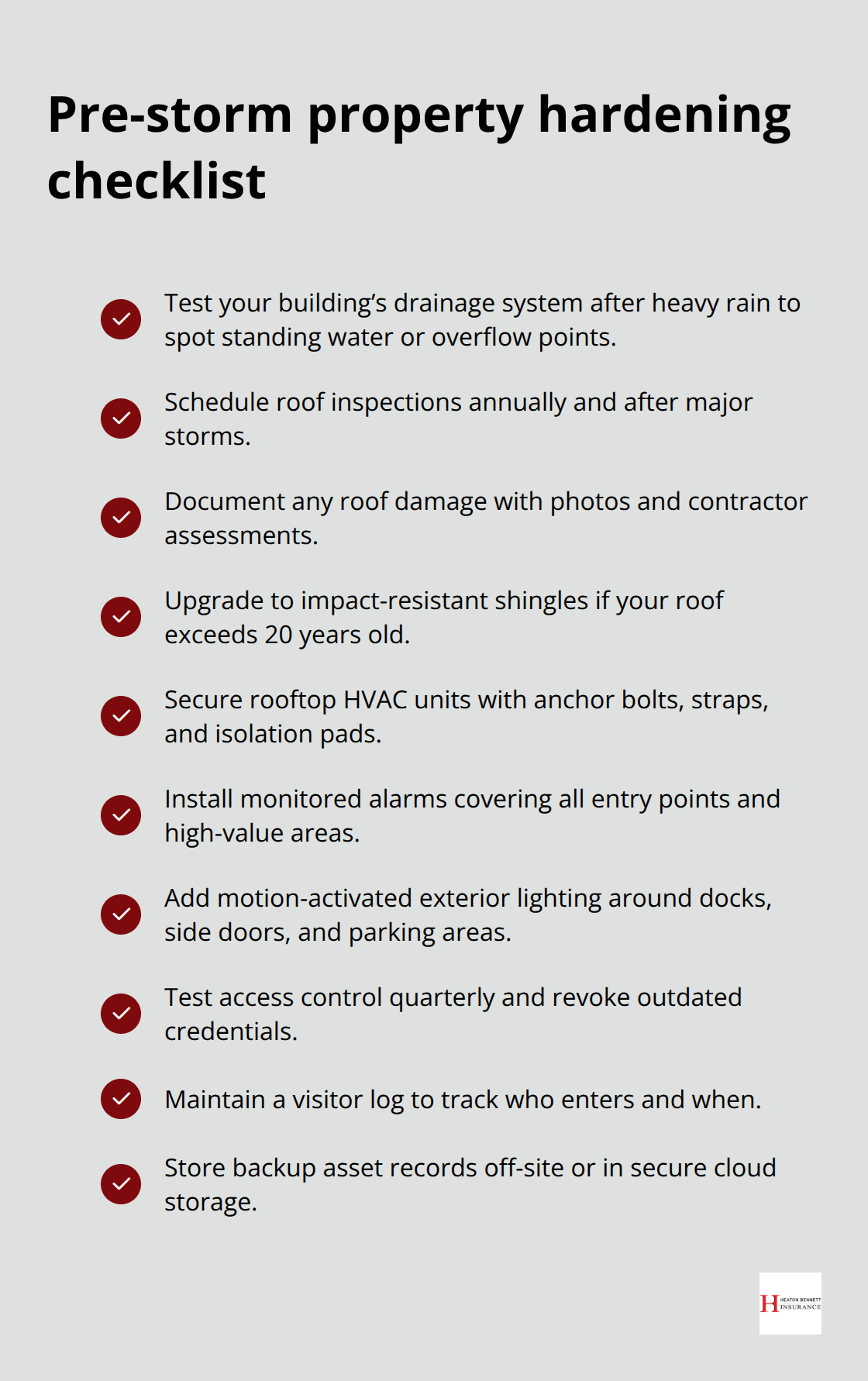
HVAC units mounted on roofs must be properly secured and braced to withstand 100+ mph winds common in Texas coastal areas. Anchor bolts, straps, and vibration isolation pads cost far less than replacing a unit torn loose during a hurricane.
Security Systems and Access Control
Install monitored alarm systems covering all entry points, loading docks, and high-value asset areas. The FBI’s property crime data show burglary and larceny cluster in properties with predictable patterns like unstaffed lobbies and unmonitored access points. Motion-activated exterior lighting around docks, side doors, and parking areas deters theft and makes after-hours activity visible.
Test your access control system quarterly to revoke keys and badges from former employees, as many security gaps stem from outdated credentials still in circulation. Maintain a visitor log documenting who enters your building and when, creating accountability that both protects assets and supports liability defenses.
Asset Documentation and Inventory
Keep detailed inventory records with photos, serial numbers, and current replacement values for all equipment, machinery, and high-value stock. When a loss occurs, this documentation accelerates claims and prevents disputes over asset value. Update your inventory annually as equipment ages or new assets arrive, because undervalued inventory means partial recovery after damage.
Store backup records of critical asset documentation off-site or in cloud storage so fire or flood cannot destroy your proof of loss. Establish a clear protocol for after-hours building access, including which staff can unlock doors, how to document entry, and who monitors activity on nights and weekends. Properties with documented security protocols and implemented fixes can support lower premiums and stronger claim defenses during underwriting reviews.
Final Thoughts
Texas weather poses genuine threats to commercial properties, and protecting your assets requires more than hoping your current policy covers everything. Standard commercial property policies leave gaps, especially around flood damage, and coastal properties face compounded wind and water exposure that demands layered coverage. Your roof condition, building age, and location directly shape both your premium costs and what actually gets covered when storms arrive.
The steps you take now determine your financial outcome after a loss. Document your assets with photos and current replacement values, upgrade aging roofs to impact-resistant materials, and secure your building against unauthorized access. These actions reduce damage when weather strikes and provide evidence of maintenance that supports lower premiums during renewal, while also demonstrating to carriers that you take risk seriously.
Your insurance strategy should match your actual exposure to commercial property weather in Texas. If you operate in a flood-prone area, separate flood coverage through the National Flood Insurance Program or private carriers becomes essential, and if your property sits within a coastal zone, windstorm coverage with appropriate limits protects against the 100+ mph winds that routinely damage buildings in Galveston and Corpus Christi. Contact us at Heaton Bennett Insurance for a personalized review of your commercial property coverage and learn exactly what your policy protects.
The information provided in this blog is for general informational purposes only and does not constitute legal, financial, or insurance advice. Coverage options, terms, and availability may vary. Please consult with a licensed professional for advice specific to your situation.

