
What is the Average Cost of EPLI Insurance?

Employment Practices Liability Insurance protects businesses from costly lawsuits related to workplace discrimination, harassment, and wrongful termination. EPLI insurance cost varies significantly based on company size, industry, and location.

We at Heaton Bennett Insurance see businesses paying anywhere from $500 annually for small companies to over $15,000 for larger organizations. Understanding these pricing factors helps you budget effectively for this essential coverage.

How Much Does EPLI Insurance Actually Cost?

Small businesses typically pay between $800 and $3,000 annually for EPLI coverage, with the national average at $2,665 per year according to recent industry data. Companies with fewer than 10 employees often see premiums around $1,200 annually, while businesses with 20-50 employees face costs from $2,500 to $4,500. The calculation breaks down to approximately $50-150 per employee annually, though this varies dramatically based on your specific risk profile.

At-a-glance EPLI premium benchmarks by employee count and company size in the United States. - epli insurance cost

Premium Costs Scale With Employee Count

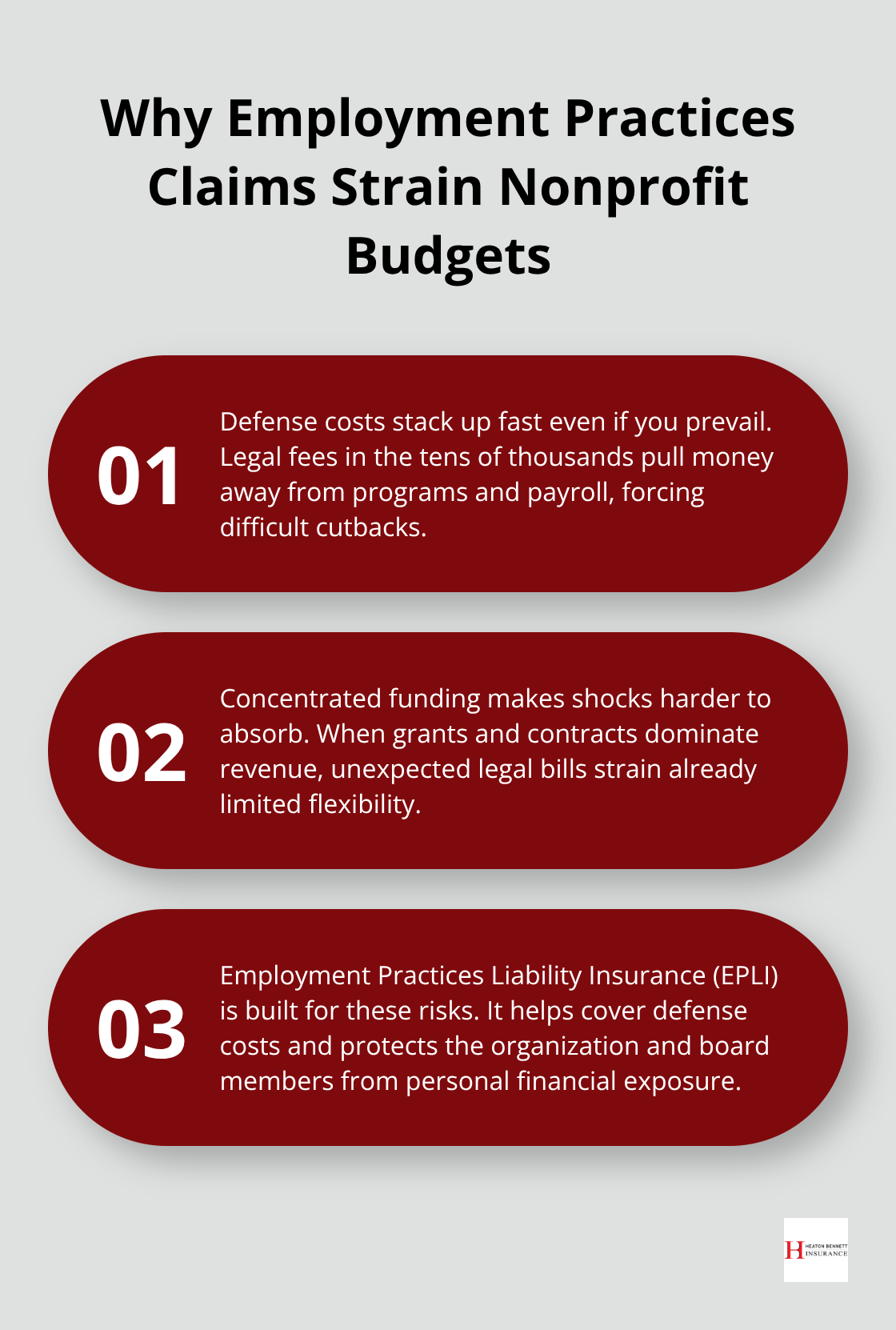
The number of employees drives 80% of your EPLI premium calculation. Businesses with 5-10 employees average $1,500 annually, while companies that employ 50-100 workers typically pay $4,000-6,000. Large organizations with 500+ employees often face premiums that exceed $15,000 annually. Healthcare companies pay the highest rates at $409 monthly on average, while firms in the consulting industry average $355 monthly. Nonprofits benefit from significantly lower premiums at just $92 monthly, which reflects their reduced litigation risk.

Geographic Location Creates Major Price Differences

California and New York command the highest EPLI premiums due to extensive labor laws and litigious environments. California businesses pay 25-40% more than the national average, while companies in states like Texas and Florida see more moderate rates. The average deductible selection stands at $10,000, though higher deductibles can reduce premiums by 15-20%. Coverage limits typically range from $100,000 to $1,000,000, with most businesses that select $500,000-1,000,000 in protection.

Monthly Payment Options Affect Total Costs

Most insurers offer monthly payment plans (though annual payments often provide discounts of 5-8%). Small businesses frequently choose monthly payments to manage cash flow, despite the slightly higher total cost. The monthly breakdown shows 36% of small business customers pay less than $150 per month for EPLI coverage, which translates to under $1,800 annually.

Three important EPLI percentages affecting premiums and risk in the U.S.

These baseline costs represent just the starting point for your EPLI investment. Several key factors can dramatically increase or decrease these premiums based on your company’s specific risk profile and operational characteristics.

What Drives Your EPLI Premium Higher or Lower

Industry Risk Classifications Shape Base Rates

Your industry classification determines the baseline risk assessment that insurers use to calculate premiums. Healthcare companies face the steepest rates at $409 monthly because patient interactions and high-stress environments generate more harassment and discrimination claims. Consulting firms average $355 monthly due to frequent client interactions and project-based hiring patterns that increase wrongful termination risks.

Manufacturing and construction companies pay elevated premiums because physical work environments create more opportunities for workplace disputes. Nonprofits enjoy the lowest rates at $92 monthly since their mission-driven culture and volunteer workforce reduce litigation frequency.

Claims History Directly Impacts Premium Calculations

Your claims history over the past three years directly impacts pricing. Companies that have filed previous EPLI claims face premium increases of 30-50%. Clean claims records often qualify for preferred rates that can reduce costs by 15-25%. Insurers view past claims as strong predictors of future risk exposure.

Revenue Size Creates Premium Multipliers

Annual revenue acts as a premium multiplier because higher-earning companies face larger settlement demands and jury awards. Businesses that generate over $5 million annually typically see base premiums increase by 25-40% compared to smaller companies with identical employee counts. This revenue factor explains why two companies with 20 employees can have drastically different EPLI costs.

Employee turnover rates above 20% annually signal higher risk to insurers and result in premium surcharges of 10-20%. Companies that demonstrate stable workforce management through documented retention strategies often qualify for preferred pricing tiers.

Coverage Limits and Deductibles Control Final Costs

Policy limits between $500,000 and $1,000,000 represent the sweet spot for most businesses, with coverage above $1,000,000 adding 40-60% to base premiums. Higher deductibles (from $2,500 to $25,000) can reduce annual premiums by 20-35%, though this increases your out-of-pocket exposure for smaller claims.

The median settlement value for EPL claims reaches $90,000 according to Jury Verdict Research, while court cases average $217,000 in damages. These figures help determine appropriate coverage limits that balance premium costs with adequate protection.

Smart businesses look beyond these baseline factors to find practical ways to reduce their EPLI costs through strategic risk management and policy decisions.

How Can You Cut EPLI Costs Without Sacrificing Protection

Strong HR Policies Deliver Immediate Premium Reductions

Companies that maintain documented HR policies and comprehensive employee training programs see EPLI premiums drop by 15-25% according to insurance underwriters. Businesses that implement harassment prevention training, maintain clear disciplinary procedures, and document all employee interactions show proactive risk management to insurers.

The Equal Employment Opportunity Commission reports that businesses with formal complaint procedures face 40% fewer discrimination charges. Written employee handbooks, regular performance reviews, and exit interview documentation create paper trails that protect against wrongful termination claims (while demonstrating organized management practices to underwriters).

Manager Training Reduces Litigation Risk

Training managers on proper hiring practices, performance management, and termination procedures significantly reduces litigation risk. Companies that invest in supervisor education programs demonstrate commitment to compliance and often qualify for preferred insurance rates. Regular training updates keep management current on employment law changes and best practices.

Professional Brokers Access Better Markets

Experienced insurance brokers access wholesale markets that offer 20-30% lower premiums than direct-to-consumer policies. Brokers leverage relationships with multiple carriers to compare coverage options and negotiate better terms. Independent agents provide access to carriers that offer specialized EPLI products for specific industries.

Hub-and-spoke infographic showing strategies to reduce EPLI insurance costs for U.S. businesses.

Professional brokers also identify coverage gaps and recommend appropriate limits based on actual risk exposure rather than generic industry standards. They understand which carriers offer the most competitive rates for different business profiles (and can often secure coverage that individual businesses cannot access directly).

Strategic Policy Bundling Creates Immediate Savings

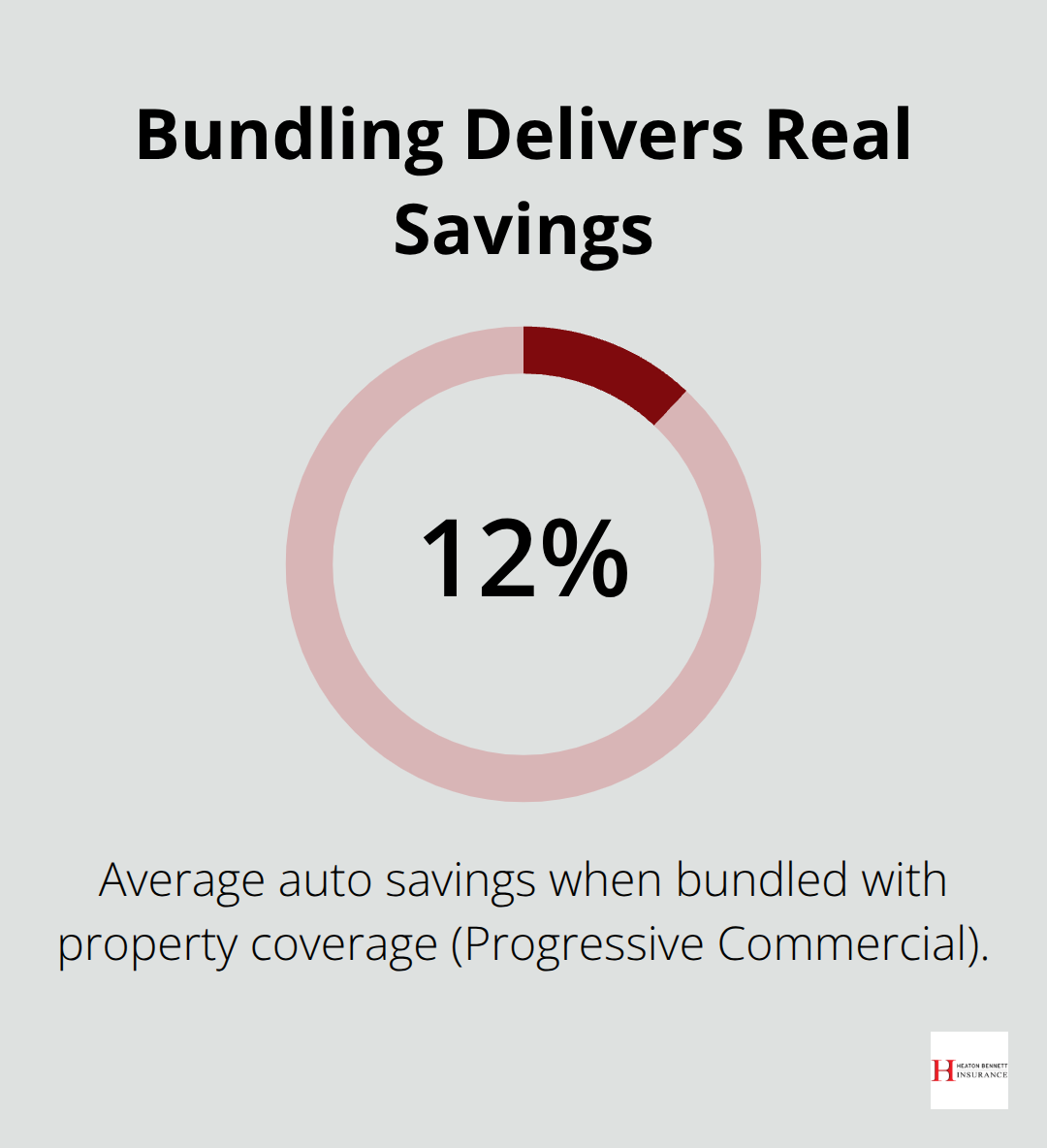
Companies that bundle EPLI with general liability, workers compensation, or commercial property insurance generate discounts of 10-25% on total premiums. Business Owner Policies that include EPLI coverage often cost less than standalone policies. Multi-policy discounts increase with additional coverage types.

Carriers prefer bundled accounts because they reduce administrative costs and increase customer retention. These savings get passed to policyholders through lower premiums, making comprehensive business insurance packages more cost-effective than individual policies.

Final Thoughts

EPLI insurance cost spans from $800 annually for small businesses to over $15,000 for large organizations, with most companies that pay $2,665 per year on average. Your final premium depends on employee count, industry risk, claims history, and geographic location. Healthcare companies face the highest rates at $409 monthly, while nonprofits benefit from lower premiums at $92 monthly.

Multiple carrier quotes provide the most effective way to secure competitive rates. Premium differences between insurers can reach 30-40% for identical coverage, which makes thorough market comparison essential. Independent agents access wholesale markets that often provide better rates than direct-to-consumer policies.

We at Heaton Bennett Insurance help businesses navigate these complex factors through comprehensive market access and coverage analysis. Our independent agency approach connects you with multiple carriers to find optimal EPLI protection at competitive rates. Contact us today to receive customized quotes that match your specific risk profile and budget requirements.

How to Get Small Business Hazard Insurance Coverage

Small business hazard insurance protects your company from unexpected disasters that could destroy your operations overnight. Standard business policies often leave dangerous gaps in coverage.

We at Heaton Bennett Insurance see too many business owners learn this lesson the hard way. The right hazard coverage can mean the difference between recovering from a disaster and closing your doors permanently.

What Does Hazard Insurance Actually Cover

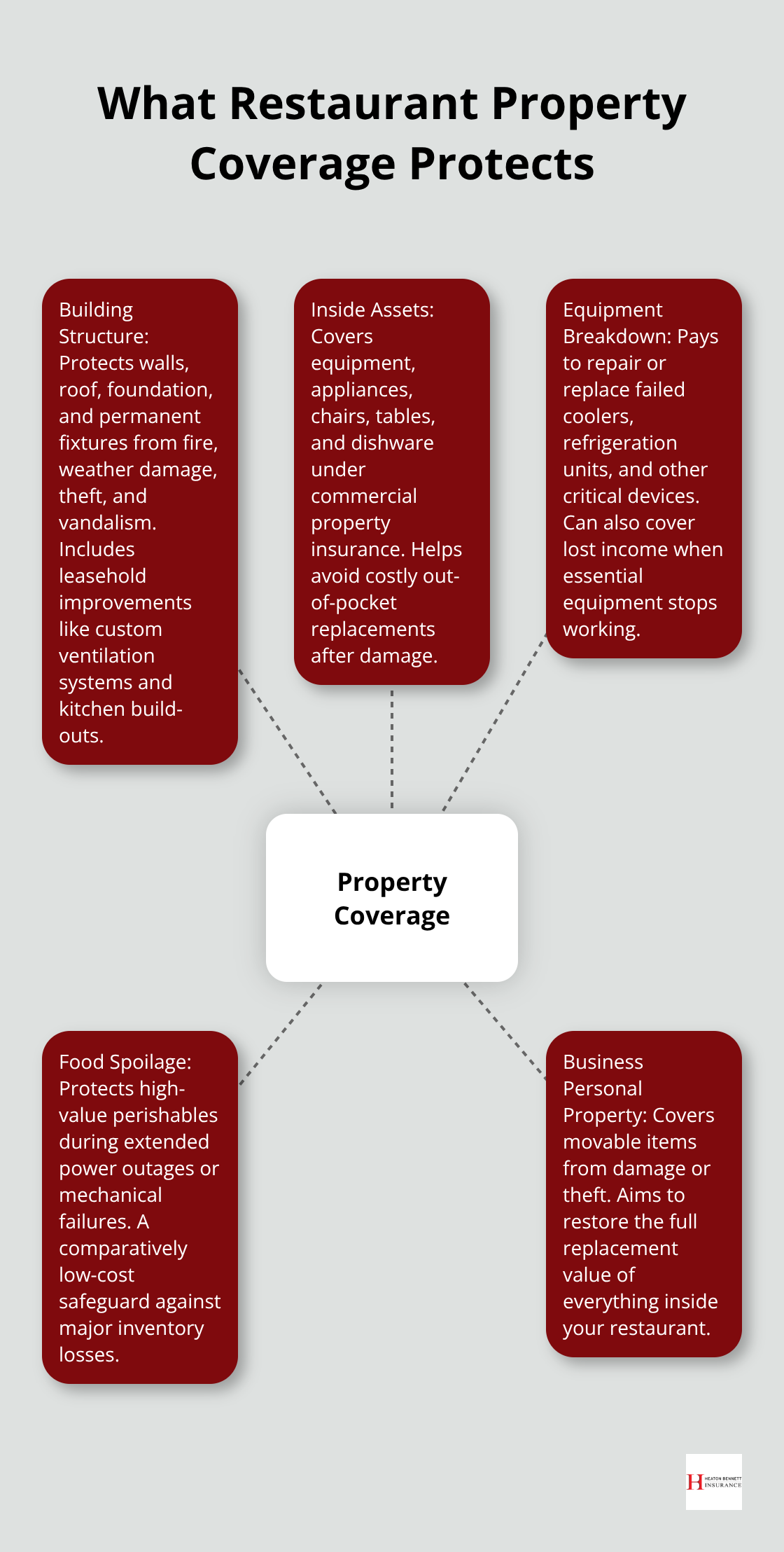
Small business hazard insurance protects your physical property against specific perils that standard policies often exclude or limit. The coverage shields your building, equipment, inventory, and fixtures from fire damage, theft, vandalism, lightning strikes, explosions, and certain weather events like hail or windstorms. According to the U.S. Small Business Administration, hazard insurance covers an average of 67% of property damage claims, which makes it a cornerstone of business protection. The policy typically includes your computers, machinery, furniture, and stock, but excludes earthquakes and floods unless you purchase separate endorsements.

Percentage of property damage claims typically covered by small business hazard insurance in the United States.

Standard Business Insurance Creates Dangerous Gaps

Most basic business policies provide minimal hazard protection and often cap coverage at $10,000 to $25,000 for equipment and inventory combined. This creates massive exposure for businesses with significant physical assets. Manufacturing facilities face average property damage costs of $180,000 per incident, while retail operations average $85,000 in losses from theft and vandalism annually. Home-based businesses receive only $2,500 in business property coverage under standard homeowners policies (leaving substantial gaps for entrepreneurs with expensive equipment or inventory).

Hazard Insurance Serves a Different Purpose Than General Liability

General liability insurance protects against third-party claims for bodily injury and property damage and averages $42 monthly for small businesses. Hazard insurance protects your own property from direct physical loss, with commercial property coverage that averages $67 monthly. The two serve completely different purposes and both remain essential for comprehensive protection. General liability covers lawsuits from customer injuries, while hazard insurance covers your building when it burns down or equipment when thieves steal it.

Natural Disasters Require Special Attention

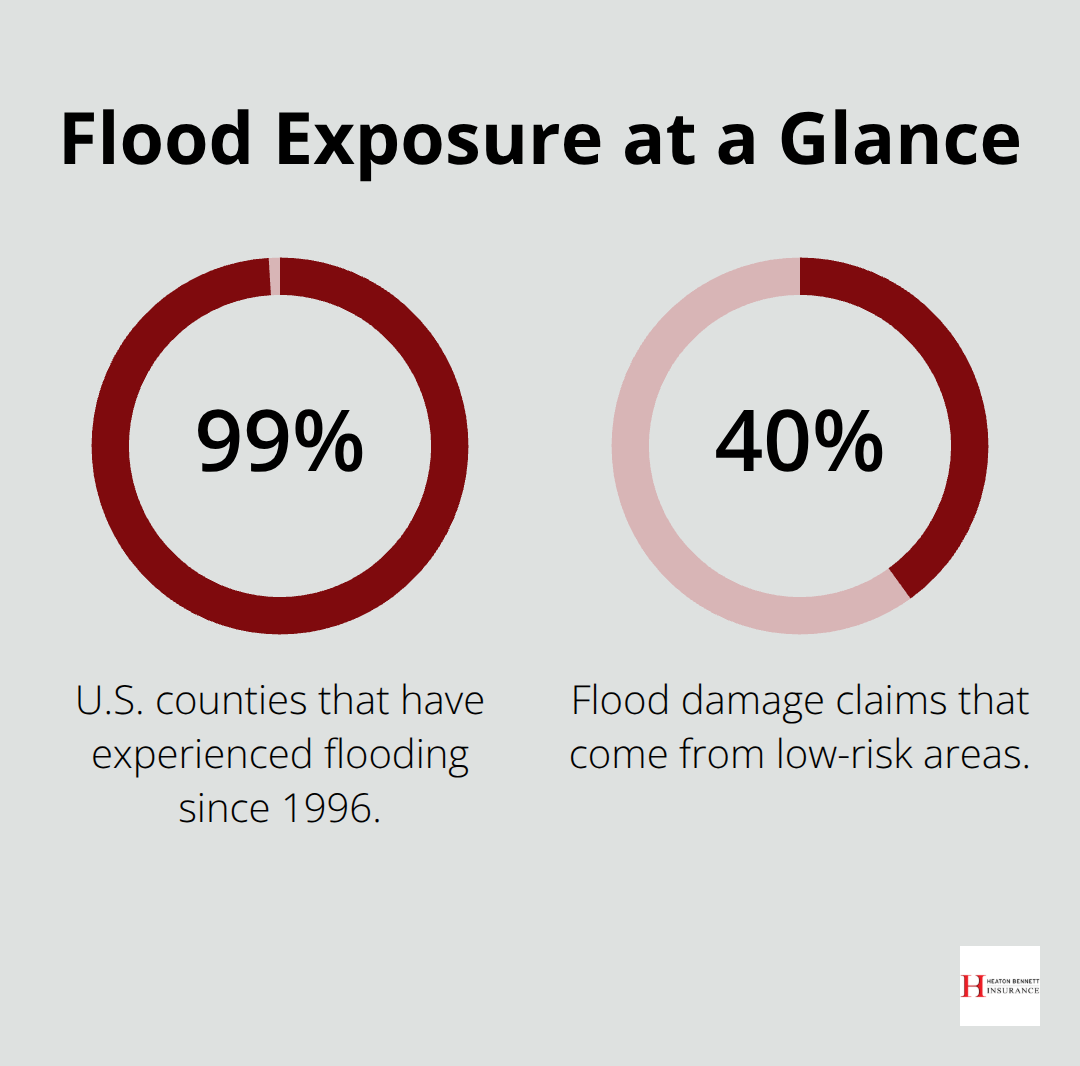
Standard hazard policies exclude major natural disasters like earthquakes, floods, and hurricanes (which require separate endorsements or policies). These exclusions catch many business owners off guard when disaster strikes. The average flood damage claim for small businesses reaches $75,000, while earthquake damage averages $125,000 per incident. Weather-related claims account for 23% of all commercial property losses, yet most businesses operate without adequate natural disaster coverage.

Key numbers for flood, earthquake, and weather-related commercial property losses in the U.S.

Understanding these coverage gaps helps you identify exactly which hazards threaten your specific business operations and location.

Types of Hazards Your Business Should Prepare For

Natural Disasters Strike Without Warning

Severe weather causes 23% of all commercial property damage, yet most businesses remain dangerously unprepared. Tornadoes generate average business losses of $195,000 per incident, while hailstorms cause $85,000 in typical damage to commercial roofs and equipment. The National Weather Service reports that businesses face a 26% chance of significant weather damage within any five-year period.

Percentages showing severe weather’s share of commercial property damage and the five-year risk of significant weather damage in the U.S. - small business hazard insurance

Windstorms destroy signage, break windows, and damage HVAC systems. These events create immediate operational shutdowns that can last weeks. Heavy rainfall floods buildings within minutes and destroys electronics, inventory, and documents. Standard policies exclude water damage from rising water levels, which makes separate flood coverage essential for complete protection.

Fire Represents Your Greatest Single Threat

Fire destroys more small businesses than any other single peril. The National Fire Protection Association reports that commercial fires cause $2.4 billion in annual property damage. Electrical fires start from overloaded circuits, faulty wiring, and aged equipment, then spread rapidly through buildings.

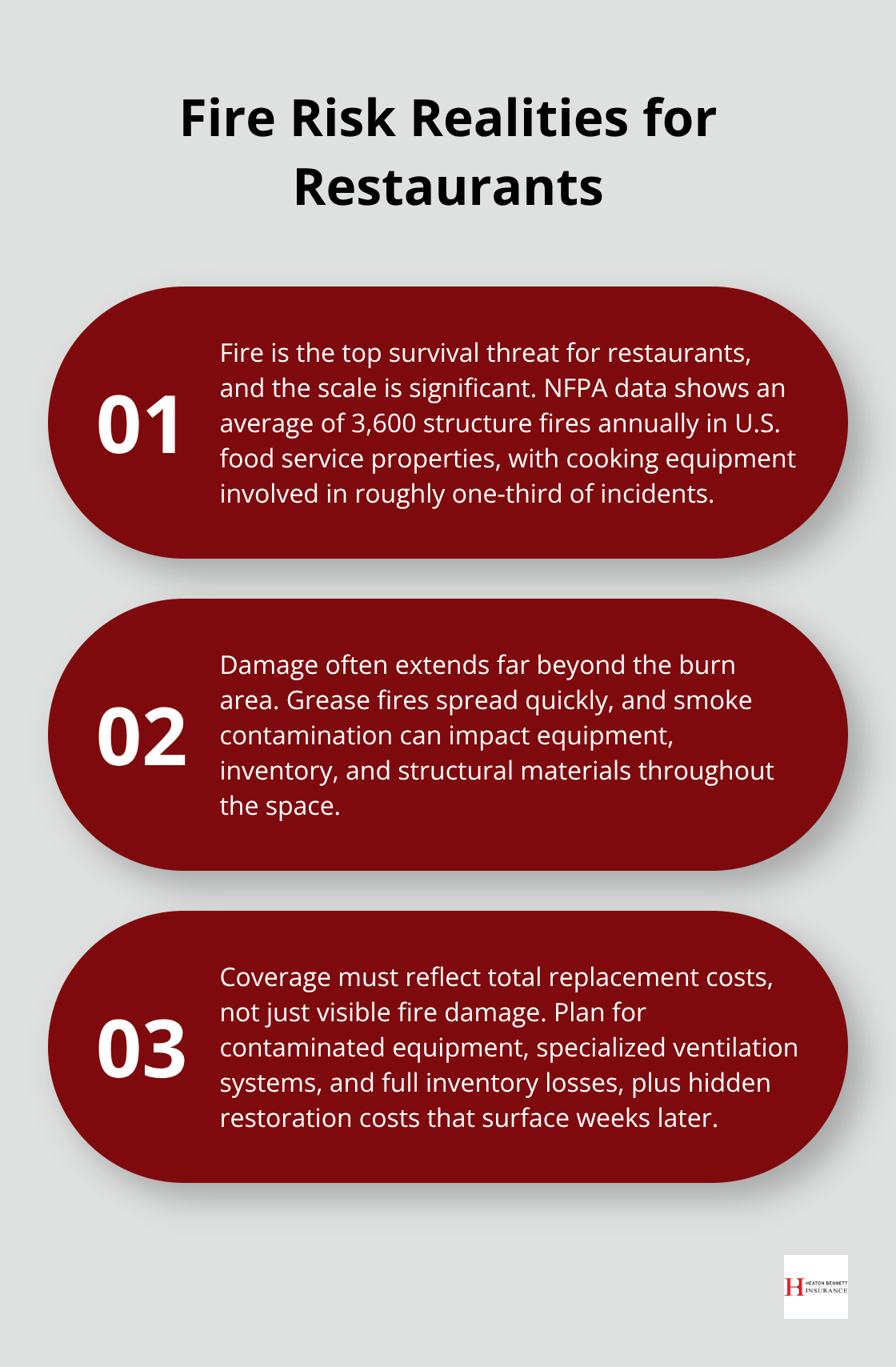
Kitchen fires in restaurants average $165,000 in damages per incident, while manufacturing fires reach $340,000 due to flammable materials and complex machinery. Lightning strikes cause electrical surges that fry computer systems, phone equipment, and manufacturing controls instantly. Fire suppression systems and proper electrical maintenance reduce your premiums while they protect your investment.

Theft and Vandalism Target Vulnerable Businesses

Commercial theft costs small businesses $50 billion annually. Retail operations lose an average of $1,230 per incident (according to the National Retail Federation). Burglars target electronics, inventory, and cash while they often cause additional property damage during break-ins.

Vandalism attacks windows, signage, and building exteriors. These attacks create immediate repair costs and lost business during cleanup periods. Employee theft accounts for 43% of business inventory losses, which makes internal controls essential. Security cameras, alarm systems, and proper lighting significantly reduce both theft frequency and insurance premiums.

The specific risks that threaten your business depend heavily on your industry, location, and operational setup. This makes a customized approach to hazard insurance coverage absolutely essential for adequate protection.

How to Choose the Right Hazard Insurance Policy

Calculate Your True Property Values

Start by calculating your actual property values, not what you paid years ago. Equipment replacement costs rise 4-6% annually, while construction values increase 3-5% according to Marshall & Swift data. Document every asset with photos and current market prices. Manufacturing businesses need coverage that averages $500 per square foot, while retail operations require $200-300 per square foot. Service businesses with minimal equipment need $50-100 per square foot. Location matters tremendously – coastal properties face 40% higher premiums due to hurricane exposure, while earthquake zones add 25-35% to base rates.

Coverage Limits Determine Your Financial Survival

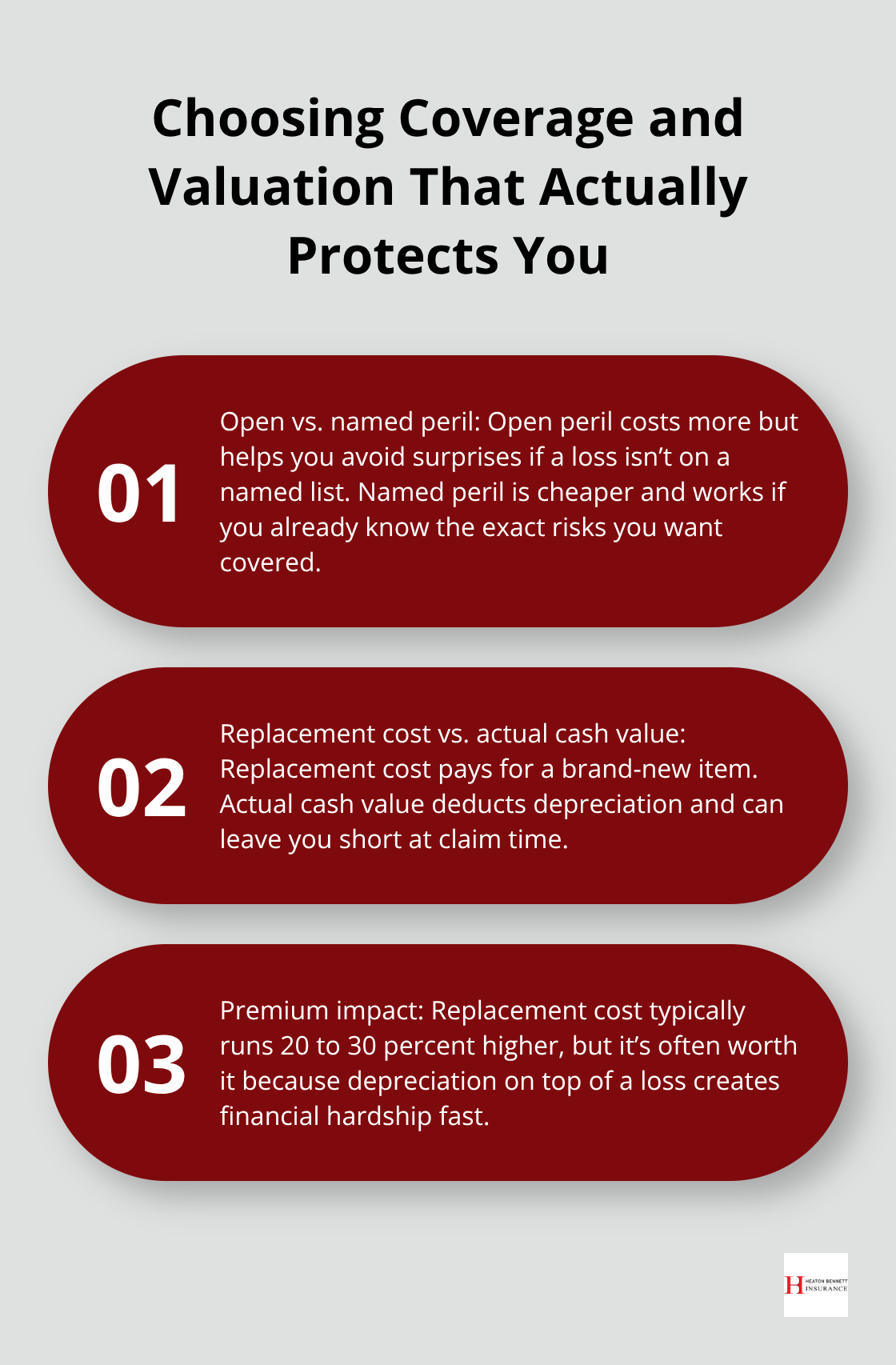
Standard policies offer actual cash value, which pays depreciated amounts that leave you unable to replace damaged property. Replacement cost coverage costs 15-25% more but pays full replacement value without depreciation deductions. Business income coverage replaces lost revenue during repairs and typically costs 10-15% of your property premium. The Insurance Information Institute reports that 40% of businesses never reopen after major property damage (primarily due to inadequate coverage limits). Choose deductibles between $1,000-$5,000 to balance premium savings with manageable out-of-pocket costs.

Independent Agents Access More Options

Independent agents access 15-25 carriers compared to captive agents who sell only one company’s products. This competition drives down your premiums by 20-30% on average. Independent agents also handle claims advocacy when disputes arise, while direct carriers prioritize their company’s interests over yours. Direct online carriers may seem cheaper initially, but they exclude coverage options that independent agents include automatically (creating dangerous gaps that cost far more than premium savings).

Compare Deductibles and Policy Terms

Higher deductibles reduce your monthly premiums but increase your financial exposure during claims. A $5,000 deductible saves 25-40% compared to $1,000 deductibles, but you must have cash reserves to cover the difference. Review policy exclusions carefully – some carriers exclude water damage from roof leaks or limit coverage for electronic equipment. Named perils policies cover only specifically listed hazards, while open perils policies cover everything except listed exclusions.

Final Thoughts

Small business hazard insurance demands immediate action and professional guidance. Document all your business assets with current replacement values, then request quotes from multiple carriers through an independent agent. Review coverage limits carefully and choose replacement cost over actual cash value to avoid devastating gaps during claims.

We at Heaton Bennett Insurance help Austin businesses navigate these complex decisions. As an independent agency, we access multiple carriers to find coverage that matches your specific risks and budget. Our team guides you through policy comparisons and identifies exclusions that could leave you exposed.

The cost of adequate hazard coverage represents a fraction of potential losses from fire, theft, or natural disasters (businesses without proper protection face a 40% chance of permanent closure after major property damage). Schedule a consultation with Heaton Bennett Insurance today to protect your business investment. Your operations depend on the right coverage before disaster strikes, not after.

Comprehensive Employee Benefits Packages Building a Loyal Workforce

Employee benefits have become the deciding factor for 88% of job seekers when choosing between employers. Companies offering comprehensive packages see 40% lower turnover rates compared to those with basic benefits.

At Heaton Bennett Insurance, we understand that strategic benefits design directly impacts your bottom line. The right package attracts top talent while reducing recruitment costs by up to $15,000 per retained employee.

What Makes Benefits Packages Actually Work

Health insurance forms the foundation, but smart employers expand beyond basic coverage. PPO plans cost employers an average of $7,739 annually per employee according to Kaiser Family Foundation data, while high-deductible health plans with Health Savings Accounts reduce premiums by 20-30%. Companies that offer multiple plan options see 15% higher employee satisfaction scores. Mental health coverage drives real results – organizations with comprehensive mental health benefits report 28% lower absenteeism rates per American Psychological Association research.

Chart showing satisfaction and absenteeism improvements from smarter benefits - employee benefits

Retirement Security Builds Long-Term Loyalty

401(k) plans with employer match generate the strongest retention impact. Employees who receive a 50% match on contributions up to 6% of salary stay with companies 23% longer than those without match programs. Vanguard research shows automatic enrollment increases participation rates from 60% to 93%. Financial wellness programs that address student loan debt (affecting 43.4 million Americans with $1.75 trillion in total debt) create measurable engagement improvements. Companies that offer student loan repayment assistance see 36% better retention among employees under 35.

Strategic PTO Policies Drive Performance

Unlimited PTO sounds progressive but creates 13% less actual time off usage compared to structured policies. The most effective approach combines generous fixed allocations with flexible usage. Companies that offer 20+ PTO days experience 12% higher productivity metrics and 40% lower turnover rates according to Workforce Institute studies. Separate sick leave policies reduce overall absenteeism by 25%. Mental health days as distinct PTO categories show 31% better utilization rates than general time-off policies.

These foundational elements create the framework, but successful benefits packages require strategic alignment with your workforce demographics and business objectives.

How Employee Benefits Drive Measurable Business Results

Strategic benefits investments generate immediate financial returns through reduced turnover costs. Companies with comprehensive packages spend 87% less on recruitment according to Society for Human Resource Management data. The average cost to replace an employee ranges from $15,000 to $25,000, which makes retention the smartest financial strategy. Organizations that invest 4-6% of payroll in benefits see turnover drop by 40-60%. MetLife research reveals that 83% of employees who feel cared for report loyalty to their employer, while companies with strong benefits report 20% higher productivity rates.

Productivity Gains Through Strategic Benefits Design

Well-designed benefits packages create measurable productivity improvements. Employees with comprehensive health coverage take 28% fewer sick days and demonstrate 15% higher engagement scores per Gallup research. Mental health benefits generate the strongest ROI – companies that offer Employee Assistance Programs see $3-5 return for every dollar invested through reduced absenteeism and improved focus. Flexible work benefits increase output by 13% while they reduce operational costs.

Three key benefits design levers that boost productivity and ROI

Financial wellness programs that address employee stress improve concentration and decision-making (76% of participants report better job performance within six months).

Competitive Market Advantage

Strong benefits packages position companies ahead of competitors in talent acquisition. Organizations with top-tier benefits fill positions 50% faster than those that offer basic packages. Glassdoor data shows 60% of job seekers prioritize benefits over salary increases. Companies that communicate benefits value effectively attract 3x more qualified candidates. The reputation impact extends beyond recruitment – businesses known for employee care see 25% better customer satisfaction scores and 40% improved vendor relationships.

These measurable business outcomes demonstrate why benefits strategy requires careful design rather than generic approaches. The next step involves crafting packages that address your specific workforce demographics and operational needs.

How Do You Build Benefits That Actually Fit Your Workforce

Modern workforce demographics span four generations with vastly different priorities, which makes one-size-fits-all benefits obsolete. Gen Z employees prioritize mental health resources and student loan assistance, while Baby Boomers focus on healthcare coverage and retirement security. Successful companies implement cafeteria-style benefits where employees choose from predetermined options within budget parameters. Microsoft’s approach shows employees select an average of 7.3 benefits from 15 available options, with 89% who report higher satisfaction compared to fixed packages.

Smart employers allocate 60% of benefits budgets to core coverage like health insurance, then distribute the remaining 40% across flexible options that employees customize based on life stage needs. This approach addresses diverse workforce needs without budget overruns.

Small Business Benefits Strategy That Works

Small businesses access enterprise-level benefits through Professional Employer Organizations at 15-30% lower costs than individual purchases. Companies with 25-100 employees save an average of $3,200 per employee annually through PEO partnerships while they gain access to Fortune 500-quality benefits.

The key lies in focus on high-impact benefits rather than spread budgets thin. Prioritize comprehensive health coverage with HSA options, basic 401k match at 3% of salary, and 15 days PTO. This core package costs approximately $8,500 per employee but delivers retention rates comparable to companies that spend 40% more on scattered benefit options.

Compliance Navigation Without Legal Headaches

ACA compliance requires employers with 50+ full-time equivalent employees to provide affordable healthcare coverage or pay penalties of $3,860 per employee annually. ERISA regulations mandate fiduciary responsibility for retirement plans, with personal liability for plan administrators who fail compliance requirements.

The Family and Medical Leave Act applies to companies with 50+ employees and requires 12 weeks unpaid leave protection. State laws often exceed federal minimums – California requires paid family leave, while New York mandates paid sick time (with specific accrual rates and usage terms).

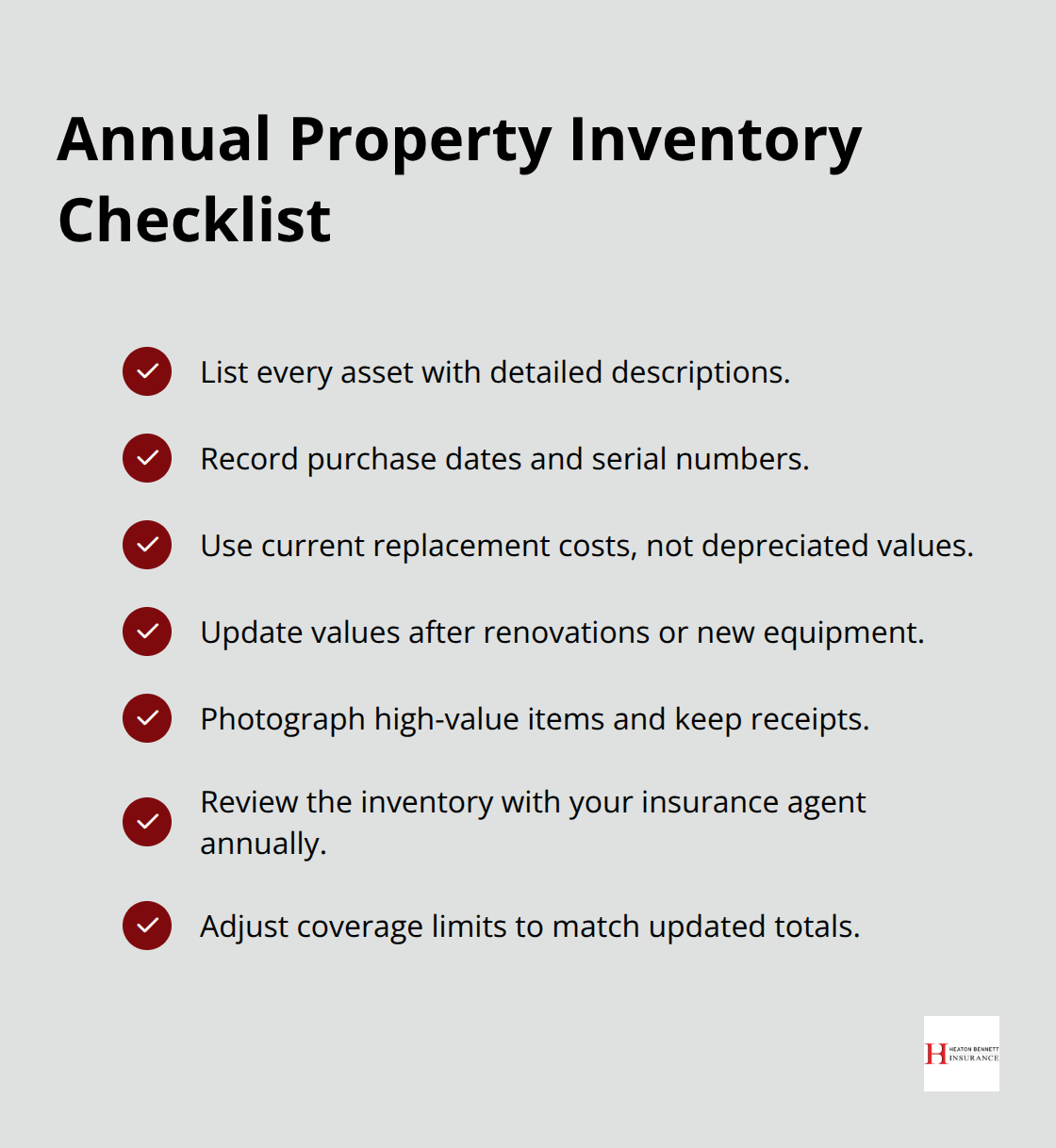
Checklist of key employee benefits compliance requirements

Department of Labor audit data shows that companies who work with specialized benefits consultants reduce compliance violations by 73%. Professional guidance becomes a cost-effective investment rather than an optional expense when you consider potential penalty costs.

Final Thoughts

Comprehensive employee benefits packages deliver measurable returns that extend far beyond initial investment costs. Companies that prioritize strategic benefits design see 40-60% reduction in turnover while they attract top talent 50% faster than competitors. The financial impact becomes clear when you consider replacement costs of $15,000-$25,000 per employee and productivity gains of 15-20% among satisfied workers.

The long-term ROI of employee benefits programs compounds over time through improved retention, enhanced productivity, and stronger company reputation. Organizations that invest 4-6% of payroll in comprehensive packages generate $3-5 return on every dollar through reduced absenteeism and increased engagement (MetLife research confirms these results create sustainable competitive advantages that strengthen your market position). These outcomes demonstrate why strategic benefits design matters more than generic approaches.

Smart benefits strategy starts with understanding your workforce demographics and aligns packages with business objectives. Focus on core components like health insurance, retirement plans, and strategic PTO policies while you maintain compliance with federal and state regulations. At Heaton Bennett Insurance, we help businesses navigate the complexities of group benefits including health and life insurance through our tailored approach that identifies the right coverage options for your specific workforce needs.

How to Choose the Best Business Insurance for Retailers

Retail businesses face unique risks that can devastate operations without proper protection. From customer slip-and-fall accidents to inventory theft, the threats are real and costly.

We at Heaton Bennett Insurance understand that selecting the right business insurance for retailers requires careful consideration of coverage types, limits, and costs. The wrong choice can leave your business vulnerable to financial ruin.

Which Insurance Types Do Retailers Need Most

General Liability Insurance Protects Against Customer Claims

General liability insurance forms the foundation of retail protection and covers bodily injury and property damage claims that occur on your premises. The Insurance Information Institute reports that slip-and-fall accidents account for over 1 million emergency room visits annually, with retail establishments facing average settlement costs between $15,000 to $45,000 per incident.

This coverage extends beyond physical injuries to include advertising injury claims and product liability issues. Retailers who operate in high-traffic areas face significantly higher exposure, which makes this coverage non-negotiable rather than optional.

Hub-and-spoke showing the core insurance types retailers need and why each matters.

Commercial Property Insurance Safeguards Physical Assets

Commercial property insurance protects your inventory, equipment, and physical location from fire, theft, vandalism, and weather damage. The National Retail Federation’s 2023 security survey revealed that inventory shrinkage cost retailers $112.1 billion, with external theft representing 37% of losses.

This insurance covers not just merchandise but also fixtures, signage, and specialized equipment like point-of-sale systems. Seasonal retailers face particular challenges, as holiday inventory can represent 40-60% of annual stock value (making accurate coverage limits essential for survival).

Workers Compensation Insurance Covers Employee Injuries

Workers compensation insurance provides mandatory coverage for employee medical expenses and lost wages from workplace injuries. The Bureau of Labor Statistics reports retail workers experience 3.2 injuries per 100 full-time employees annually, with back injuries and cuts representing the most common claims.

This insurance also protects employers from lawsuits related to workplace injuries. Retailers with even one employee must carry this coverage in most states, with penalties for non-compliance reaching $10,000 in fines plus potential criminal charges for willful violations.

These three core insurance types provide the foundation, but smart retailers must also consider several key factors when they select their coverage levels and carriers. Working with a local insurance agency can provide professional guidance tailored to your specific retail operation.

How Do You Match Coverage to Your Retail Operation

Assess Your Business Size and Risk Profile

Retail insurance selection requires a systematic approach that begins with honest risk assessment and business size evaluation. Small retailers with under $500,000 in annual revenue need different coverage levels than established chains, yet both face similar core exposures. The National Federation of Independent Business found that 40% of small businesses never reopen after a major loss, which makes proper coverage selection a survival issue rather than just a cost consideration.

Percentage chart highlighting critical retail risk statistics. - business insurance for retailers

Your business size directly impacts premium calculations and coverage needs. Single-location retailers average $2,500-$4,500 annually for comprehensive coverage, while multi-location operations can expect $15,000-$25,000 based on NAIC data.

Set Appropriate Coverage Limits and Deductibles

Coverage limits should reflect your actual asset values plus potential lawsuit settlements, not arbitrary round numbers. Deductibles between $1,000-$5,000 typically provide the best premium-to-protection balance, though cash flow constraints may require higher deductibles.

Geographic location heavily influences rates, with urban retailers paying 40-60% more than rural counterparts due to higher claim frequencies and lawsuit settlements. This variation makes location-specific quotes essential for accurate budget planning.

Compare Multiple Insurance Carriers

Smart retailers obtain quotes from at least five carriers since premiums can vary by 200-300% for identical coverage. Independent agencies access multiple carriers simultaneously, which streamlines this comparison process while avoiding the bias of captive agents who represent single insurers.

The comparison process reveals significant differences in coverage terms, exclusions, and claim handling procedures that affect your long-term protection. These variations become apparent only through detailed side-by-side analysis of policy documents and carrier financial ratings.

Most retailers discover that the cheapest option often lacks adequate protection, while the most expensive doesn’t always provide superior coverage. This reality leads many business owners to question whether they can trust their current coverage to protect against the specific mistakes that destroy retail operations.

What Costly Insurance Mistakes Destroy Retail Businesses

Inventory Coverage Falls Short During Peak Seasons

Retailers consistently underestimate their inventory values, particularly during seasonal peaks when stock levels can triple normal amounts. The National Retail Federation data shows that holiday inventory represents 60-70% of annual purchases for many retailers, yet 45% maintain static coverage limits year-round.

This gap leaves businesses exposed to catastrophic losses during their most vulnerable periods. Smart retailers adjust their coverage quarterly to match actual inventory levels, with some implementing automatic seasonal increases that activate during peak months.

The cost difference between adequate and inadequate coverage becomes apparent only after a loss occurs. Insufficient limits can force permanent closure when retailers face their highest inventory exposure.

Payment Security Risks Remain Unprotected

Cyber liability coverage represents the most overlooked protection in retail insurance, despite 43% of cyberattacks targeting small businesses according to Verizon’s Data Breach Investigations Report. Retailers process thousands of credit card transactions monthly, creating massive exposure to data breach costs that average $4.45 million per incident based on IBM Security research.

Checklist of key cyber risk facts and coverage considerations for retailers. - business insurance for retailers

Traditional business insurance excludes cyber-related losses, leaving retailers responsible for notification costs, credit monitoring, legal fees, and regulatory fines. Payment processors require PCI compliance, but this doesn’t eliminate liability when breaches occur.

Standalone cyber policies cost $500-$2,000 annually for small retailers (making this protection financially accessible compared to potential losses).

Cheap Insurance Creates Expensive Problems

Selecting insurance based solely on price creates dangerous coverage gaps that become apparent only during claims. Policies with identical names often contain vastly different exclusions, coverage triggers, and claim procedures that affect payout amounts.

The cheapest options frequently exclude common retail exposures like employee theft, product recalls, or business interruption from utility failures. These exclusions can eliminate coverage precisely when retailers need protection most, transforming manageable incidents into business-ending disasters.

Price-focused decisions ignore the financial strength ratings of insurance carriers, which determine their ability to pay claims during widespread disasters. A carrier’s A.M. Best rating below “A-” signals potential payment delays that can cripple cash flow when retailers need funds most urgently. Companies make costly mistakes by choosing inadequate protection or paying for unnecessary coverage.

Final Thoughts

Successful retail operations require three essential insurance types: general liability coverage for customer injuries, commercial property protection for inventory and equipment, and workers compensation for employee safety. These policies form the foundation that protects against the most common and costly retail exposures. Smart retailers understand that proper coverage selection prevents financial disasters that destroy businesses.

The selection process demands careful assessment of your business size, risk profile, and coverage limits. Retailers who skip this analysis often face gaps during claims, when protection matters most. Price and coverage differences between carriers can save thousands annually while improving protection quality (making comparison shopping essential for smart business owners).

Common mistakes like underestimated seasonal inventory values, overlooked cyber liability coverage, and price-only decisions create devastating financial losses. The cheapest option frequently excludes critical retail exposures that can destroy businesses. We at Heaton Bennett Insurance help retailers find comprehensive business insurance for retailers through our personalized guidance and access to multiple carriers. Contact Heaton Bennett Insurance today to review your current coverage and identify gaps that could threaten your retail operation’s future success.

Key Person Insurance in Succession Planning Securing Your Company’s Future

Your company’s most valuable employees hold the keys to daily operations, client relationships, and future growth. When these key personnel leave unexpectedly, the financial impact can devastate even well-established businesses.

We at Heaton Bennett Insurance understand that effective succession planning requires more than just identifying replacements. Key person insurance provides the financial bridge your company needs during critical transitions.

What Key Person Insurance Actually Covers

Key person insurance delivers immediate cash when your most valuable employees die or become permanently disabled. The policy pays out tax-free proceeds directly to your business, not to the employee’s family. This money replaces lost revenue, covers recruitment costs, and keeps operations stable while you search for replacements.

The Financial Protection You Get

Unlike general liability or property insurance that protects against external risks, key person coverage addresses internal vulnerabilities that threaten your company’s survival. The policy compensates for revenue gaps, operational delays, and client relationship disruptions that occur when key personnel leave unexpectedly. Standard business insurance policies exclude these internal risks entirely.

The Real Cost of Personnel Loss

LIMRA research shows only 20% of small business owners carry business life insurance, yet companies face substantial financial hits when key employees leave. Recruitment and training expenses alone cost an average of 6 to 18 months of that person’s salary. Revenue losses compound this financial damage significantly.

Percentages showing coverage gaps and revenue concentration risks for U.S. small businesses. - succession planning

A top sales executive who generates 40% of your annual revenue creates a massive gap when they leave unexpectedly. Key person insurance covers these direct losses plus the hidden costs of client defection, delayed projects, and operational disruptions (costs that standard business insurance ignores completely).

How This Differs From Employee Benefits

Standard group life insurance benefits the employee’s beneficiaries, while key person insurance protects your business interests. You own the policy, pay the premiums, and receive the death benefits. The coverage amount reflects the employee’s value to your company rather than their personal financial needs.

This fundamental difference makes key person insurance a business asset that strengthens your balance sheet. Lenders and investors often require this coverage before they approve business loans, as it demonstrates financial stability and risk management.

The next step involves identifying which specific employees qualify for this protection and calculating the appropriate coverage amounts.

Identifying Key Personnel and Assessing Coverage Needs

Your business depends on specific individuals who drive revenue, maintain client relationships, and possess irreplaceable knowledge. The founder who controls 60% of client relationships qualifies immediately. The software developer whose proprietary code powers your entire platform qualifies. The sales manager who personally handles your three largest accounts qualifies. Anyone whose sudden departure would create operational chaos deserves serious consideration.

Revenue Impact Assessment

Calculate each employee’s direct revenue contribution through their sales figures, client relationships, and project leadership over the past 24 months. PwC’s 2017 U.S. Family Business Survey revealed that only 23% of family businesses maintain documented succession plans, yet these companies often stake their survival on one or two key individuals.

Multiply the employee’s annual compensation by 5 to 10 times to establish baseline coverage amounts. A $100,000 executive might require $500,000 to $1,000,000 in coverage based on their revenue impact and replacement timeline. This calculation provides the foundation for protection levels that match actual business risk.

Skills and Relationship Evaluation

Target employees with irreplaceable institutional knowledge, exclusive client relationships, or specialized technical skills that would take months to replace. The marketing director who personally knows every major client creates more risk than someone who simply manages campaigns. The engineer who designed your core product systems poses greater vulnerability than general programmers.

Document specific relationships, contracts tied to individuals, and knowledge that exists nowhere else in your organization (these factors often justify higher coverage amounts than pure revenue calculations suggest). The absence of these relationships can trigger client defections and operational breakdowns that extend far beyond immediate revenue loss.

Coverage Amount Calculations

Base your coverage calculations on replacement costs, lost revenue projections, and business disruption timelines. Factor in recruitment expenses, training costs, and the learning curve new employees face when they join your organization. Most businesses underestimate these transition costs and purchase insufficient coverage as a result.

A concise checklist of steps to estimate key person insurance coverage amounts. - succession planning

Consider the time required to find qualified replacements in your industry and geographic area. Specialized roles in competitive markets demand higher coverage amounts due to extended search periods and premium compensation packages needed to attract top talent.

We can assist you with assessing your insurance needs and provide you with some quotes from several of the top insurance companies to ensure your key person coverage aligns with your actual business risks.

The next phase involves structuring these policies to support your broader succession strategy and coordinate with existing business agreements.

Implementing Key Person Insurance as Part of Succession Strategy

Purchase Coverage Before You Need It

Buy key person insurance immediately after you identify critical personnel, not when succession discussions begin. The National Federation of Independent Business reports that many small business owners delay this coverage until retirement approaches, which creates dangerous protection gaps. Young, healthy employees qualify for lower premiums and better terms than older executives who face health issues. A 35-year-old key employee might pay 60% less in annual premiums than the same coverage purchased at age 55.

Structure Policies for Maximum Flexibility

Term life insurance works best for short-term succession scenarios where you plan to replace key personnel within 5-10 years. Universal life insurance provides permanent protection with cash value accumulation that supports long-term succession strategies. Split the coverage between both policy types to balance immediate protection with future flexibility (this approach gives you options as business needs change). Set the business as both owner and beneficiary to maintain complete control over policy proceeds and avoid complications with employee departures.

Coordinate Coverage with Business Agreements

Key person insurance must align with buy-sell agreement valuations and mechanisms. The Principal Financial Group found that only 36% of business owners had adequate life insurance for succession plans in their 2017 study. Structure policy amounts to match buy-sell agreement obligations exactly, which prevents shortfalls during ownership transitions. Update coverage amounts annually to reflect business growth and changes in key person responsibilities.

Percentages highlighting documented plan rates and insurance adequacy among U.S. business owners.

Link Policies to Succession Triggers

Connect policy proceeds to specific succession triggers like disability, retirement, or death to activate predetermined transition plans automatically. This connection streamlines the succession process and eliminates confusion about when coverage applies (clear triggers prevent disputes among stakeholders). Document these triggers in both the insurance policy and your succession plan to maintain consistency across all business agreements.

Final Thoughts

Key person insurance transforms succession planning from a risky gamble into a strategic advantage. The 95% of business owners who recognize succession planning’s importance but lack written plans expose themselves to unnecessary financial devastation. Your company cannot afford to join the 80% of businesses that operate without this protection.

The tax-free proceeds from key person policies provide immediate liquidity when your most valuable employees leave unexpectedly. This financial cushion covers recruitment costs, maintains client relationships, and prevents the operational chaos that destroys business value. Companies with proper key person coverage weather personnel transitions without compromising their competitive position or stakeholder confidence.

Document your key personnel today and calculate their revenue impact on your business. Purchase coverage while these employees remain healthy and premiums stay affordable (review policy amounts annually as your business grows and key roles evolve). We at Heaton Bennett Insurance specialize in tailored insurance solutions that protect your business interests and provide access to multiple carriers with personalized coverage options that align with your succession planning objectives.

Protecting Your Business Why Key Person Life Insurance Matters

Your business depends on specific people whose skills, relationships, and knowledge drive revenue and growth. When these key person contributors leave unexpectedly, the financial impact can threaten your company’s survival.

We at Heaton Bennett Insurance see businesses struggle with this reality every day. Key person life insurance provides the financial protection your company needs when losing essential team members.

What Is Key Person Life Insurance and How It Works

Key person life insurance pays your business a lump sum when someone who generates significant revenue or holds specialized knowledge dies or becomes permanently disabled. The company owns the policy, pays premiums, and receives the death benefit directly. This protection differs from standard life insurance because your business protects its financial interests rather than provides family benefits.

Who Qualifies as a Key Person in Your Business

Revenue generators top the list of key personnel. A salesperson who brings in 40% of annual sales qualifies immediately. The owner of a specialized skill set also counts as key personnel. A software developer who built your proprietary system cannot be replaced quickly.

Partners who hold major client relationships represent another category of key personnel. When they leave, clients often follow. Small Business Administration data shows businesses lose an average of 17% of revenue when key personnel depart unexpectedly.

How Premiums and Payouts Are Determined

Insurance companies base premiums on the key person’s age, health status, and coverage amount. Most businesses purchase coverage worth 5 to 10 times the key person’s annual salary or their estimated revenue contribution. A key employee who generates $500,000 annually might warrant $2.5 to $5 million in coverage.

Premiums typically range from $500 to $5,000 annually per $100,000 of coverage (depending on risk factors). The business receives tax-free death benefits in most cases, which provides immediate cash flow to cover replacement costs, lost revenue, and debt obligations during the transition period.

These financial protections become even more critical when you consider the specific risks your business insurance faces without proper coverage in place.

Financial Risks Your Business Faces Without Key Person Coverage

Key employee departures without insurance protection create immediate revenue disruption that most businesses underestimate. Bureau of Labor Statistics data reveals that companies lose an average of 21% of their annual revenue within the first year after essential personnel leave. Technology firms face even steeper losses, with 34% experiencing revenue drops that exceed 25% when key developers or engineers depart unexpectedly.

Percentage chart showing revenue losses when key personnel depart

The financial damage starts immediately because these individuals often control client relationships, proprietary knowledge, or specialized processes that cannot transfer quickly.

Revenue Loss from Essential Team Members

Key personnel departures trigger cascading revenue losses that extend far beyond their direct contributions. Manufacturing companies lose an average of $1.2 million annually when production managers leave (according to Manufacturing Institute research), while professional service firms see client retention rates drop by 40% within six months of key relationship managers departing. These losses compound because remaining staff cannot immediately fill specialized roles or maintain the same productivity levels.

Costs of Recruiting and Training Replacements

Qualified replacements for key personnel cost businesses far more than most owners anticipate. Society for Human Resource Management research shows that executive replacement costs reach 213% of annual salary, while specialized technical roles cost 150% of annual compensation. A $100,000 key employee replacement actually costs your business $150,000 to $213,000 in recruitment fees, training expenses, and lost productivity during transition periods. Companies that spend $1,500 annually per employee on disability coverage often save $60,000 to $240,000 in replacement costs for each worker. These costs multiply when you factor in the 6 to 18 months new hires require to reach full productivity levels.

Impact on Business Loans and Credit Lines

Banks and lenders view key person departures as significant risk factors that can trigger loan covenant violations or credit line reductions. Federal Reserve Bank of St. Louis data indicates that 43% of small business loans include key person clauses that allow lenders to demand immediate repayment or modify terms when essential personnel leave. This creates dangerous cash flow crises precisely when your business needs financial flexibility most. Companies face emergency refinancing at higher rates or reduced credit availability just when they need capital to navigate transition periods.

Certain industries face even greater exposure to these risks, making key person insurance protection particularly valuable for specific business types and sectors.

Industries and Business Types That Need Key Person Insurance Most

Professional service firms face the highest risk exposure because client relationships concentrate in individual partners or senior staff members. Accounting firms lose 65% of their clients within 18 months when key partners depart (according to American Institute of CPAs research). Law practices see even steeper drops, with 78% of clients who follow attorneys to competitors.

Hub-and-spoke chart highlighting business types with highest key person risk

These businesses generate revenue through personal expertise and trust relationships that cannot transfer to replacement staff quickly.

Professional Services Face Immediate Client Loss

Clients purchase specific expertise rather than company brands when they hire consultants. McKinsey research shows that strategy firms lose $2.3 million in annual revenue for every senior consultant who departs unexpectedly. Marketing agencies face similar challenges, with 83% that lose major accounts within six months of creative directors who leave. The specialized knowledge and client chemistry that drive these businesses cannot be replaced through standard processes.

Manufacturing and Technology Companies Risk Production Disruption

Small manufacturers depend heavily on production managers and quality control specialists whose departure stops operations immediately. National Association of Manufacturers data reveals that 67% of companies with fewer than 100 employees experience production delays that exceed 30 days when key technical personnel leave. Technology startups face even greater risks, with 45% that fail within two years of their lead developer or technical co-founder departure. These businesses require key person coverage worth 8 to 12 times annual salary because replacement costs include both recruitment expenses and extended revenue losses.

Family Businesses Concentrate Risk in Few Individuals

Family-owned companies create the most dangerous concentration of business-critical knowledge in single individuals. Family Business Institute research indicates that 71% of these businesses depend on one family member for major client relationships, financial management, and operational decisions. When these key family members become unavailable, 34% of family businesses close within 24 months because no succession plans or knowledge transfer systems exist. These companies need the highest coverage amounts because they face complete business failure rather than temporary revenue disruption.

Final Thoughts

Key person insurance protects your business from financial devastation when essential employees leave unexpectedly. The data shows clear patterns: professional service firms lose 65% of clients, manufacturers face production shutdowns, and family businesses risk complete closure without proper coverage. These risks make key person policies necessary business protection rather than optional coverage.

Start by identifying employees whose departure would cost your business more than $100,000 in lost revenue or replacement expenses. Calculate coverage amounts based on 5 to 10 times their annual contribution to your company. Review your current business insurance portfolio to identify gaps in key person protection.

Compact checklist of initial steps to set up key person insurance

We at Heaton Bennett Insurance help Austin businesses evaluate their key person insurance needs through our comprehensive Security Snapshot process (which includes detailed risk assessment and coverage recommendations). Our independent agency provides access to multiple carriers, allowing us to find tailored coverage solutions that match your specific business risks and budget requirements. Contact us today to protect your company from the financial impact of losing essential team members.

HOA Insurance Requirements for Condos Explained

Condo ownership comes with unique insurance challenges that many residents don’t fully understand. HOA insurance requirements for condo buildings create coverage gaps that can leave individual owners financially exposed.

We at Heaton Bennett Insurance see countless condo owners who assume their HOA’s master policy protects everything. This misconception leads to expensive surprises when claims arise and coverage falls short.

What Does Your HOA Master Policy Actually Cover?

Most condo owners operate under dangerous assumptions about their HOA’s master insurance policy. The Insurance Information Institute reports that over 50% of condo owners remain unaware of their specific coverage requirements, which creates massive financial vulnerabilities. HOA master policies typically follow one of three coverage models that determine your personal insurance needs.

Bare Walls Coverage Leaves You Exposed

Bare walls policies cover only the building’s exterior structure and common areas. Your unit’s interior fixtures, appliances, floors, and personal improvements fall outside this coverage. The National Association of Insurance Commissioners emphasizes that this model places significant responsibility on individual owners. Water damage that destroys your hardwood floors or custom kitchen cabinets won’t receive coverage from the HOA policy.

Summary of bare walls, all-in, and single entity HOA master policy types and what unit owners must insure.

This coverage type requires the most comprehensive personal condo insurance to fill gaps.

All-In Policies Create Different Risks

All-inclusive coverage policies restore units to their original condition, which includes fixtures and appliances that the developer installed. However, personal upgrades and improvements remain your responsibility. Washington State’s RCW 64.90.470 requires newer condominiums to maintain property insurance at 80% of actual cash value, but this doesn’t guarantee full replacement costs for your personal investments. Many associations choose this model to reduce individual owner insurance burdens, yet coverage disputes frequently arise over what constitutes original versus upgraded features.

Single Entity Policies Split Responsibilities

Single entity coverage falls between bare walls and all-in policies and covers original fixtures and appliances but excludes personal property and improvements. This model creates the most confusion when claims occur because the determination of original versus upgraded items becomes contentious. Your HOA’s declaration documents require annual review to understand which coverage model applies to your building (this directly impacts your personal insurance requirements and potential out-of-pocket expenses when claims arise).

These coverage gaps between HOA policies and individual needs create specific insurance requirements that every condo owner must address through personal policies.

What Personal Insurance Do Condo Owners Actually Need?

Personal Property Protection Fills Critical Gaps

HOA master policies leave substantial coverage gaps that require strategic personal insurance decisions. The American Association of Insurance Services reports that condo insurance costs between $300 to $800 annually, yet many owners purchase inadequate coverage that fails to protect their actual financial exposure.

Personal property coverage becomes your primary defense against losses that HOA policies exclude. This includes furniture, electronics, clothing, and personal improvements you’ve made to your unit. Standard policies start at $100,000 for personal possessions, but owners with valuable items need higher limits based on detailed property inventories (complete with photographs and receipts for verification).

Hub-and-spoke showing key personal coverages condo owners should consider: property, liability, loss assessment, ALE, and umbrella. - hoa insurance requirements for condo

Liability Coverage Protects Against Lawsuits

Personal condo policies protect against lawsuits when accidents occur inside your unit. The Insurance Information Institute recommends minimum limits of $300,000 for adequate protection against potential claims.

Water damage ranks as the most common condo insurance claim, which makes liability protection essential when your actions cause damage to neighboring units. Personal umbrella policies extend liability coverage beyond standard limits and become necessary for owners with significant assets.

Loss Assessment Coverage Handles Special Assessments

Loss assessment coverage represents the most overlooked protection that covers unexpected special assessments when HOA claims exceed policy limits or deductibles. This coverage protects you when your HOA faces major repairs that trigger assessments distributed among all unit owners.

Additional living expenses coverage pays for temporary housing when your unit becomes uninhabitable after covered damage (hotel costs, restaurant meals, and storage fees add up quickly during extended displacement periods).

These personal insurance requirements become even more complex when coverage disputes arise between HOA policies and individual owner policies.

How Coverage Disputes Impact Condo Owners

Inadequate Coverage Creates Financial Disasters

Statistical data from the National Association of Insurance Commissioners shows that many condo associations carry insufficient liability coverage, which directly exposes individual owners to increased financial risk. HOAs frequently purchase minimum required coverage to reduce association fees, but this approach creates expensive consequences when major claims occur.

Associations with inadequate limits face special assessments that can reach thousands of dollars per unit when catastrophic events exceed policy limits. The Champlain Towers South collapse in 2021 demonstrated how insufficient coverage transforms into massive financial burdens for unit owners who faced assessments for legal costs and victim compensation.

Special Assessments Strike Without Warning

HOA deductibles on master policies typically range from $10,000 to $100,000 per claim, and these costs get distributed among unit owners through special assessments. Water damage claims represent the most frequent trigger for assessments because they often affect multiple units simultaneously and exceed deductible thresholds quickly.

Washington State law requires newer condominiums to maintain property insurance at 80% of actual cash value, yet many associations choose higher deductibles to reduce premium costs and shift financial responsibility to owners. These unexpected assessments can devastate household budgets when owners haven’t prepared for sudden expenses.

Percentage showing Washington State’s 80% property insurance requirement for newer condominiums. - hoa insurance requirements for condo

Policy Conflicts Create Coverage Battles

RCW 64.34.352 and RCW 64.90.470 establish that HOA master policies provide primary coverage while individual unit policies serve as secondary coverage, but this hierarchy creates disputes over which insurer pays first. Insurance companies frequently argue over coverage responsibility, which delays repairs and leaves owners with out-of-pocket expenses.

Unit owners must file claims with their personal insurers even when HOA policies should provide coverage because secondary insurers often refuse payment until primary coverage disputes resolve. Prompt claim submission to both insurers prevents delays, but owners need documented evidence of what each policy covers to avoid prolonged battles between insurance companies (these disputes can extend for months while damage worsens).

Final Thoughts

HOA insurance requirements for condo ownership protect you from devastating financial surprises that can destroy your household budget. Your HOA’s master policy creates coverage gaps that demand strategic personal insurance decisions to avoid expensive out-of-pocket costs when claims arise. Document your personal property with detailed inventories and photographs to support future claims when disasters strike.

Review your HOA’s declaration documents annually to understand which coverage model applies to your building and affects your personal insurance needs. Purchase adequate personal liability coverage with minimum limits of $300,000 and add loss assessment coverage to protect against special assessments. Verify that your personal policy coordinates properly with your HOA’s master coverage to prevent disputes between insurers (these battles can delay repairs for months while damage worsens).

Work with experienced insurance professionals who understand the complexities of condo coverage requirements and can identify potential gaps in your protection. We at Heaton Bennett Insurance help navigate these complex coverage requirements and provide access to multiple carriers. Our independent agency creates tailored insurance solutions that address your specific condo ownership risks without gaps in protection.

How to Choose the Best Business Medical Insurance Plan?

Selecting the right business medical insurance plans can make or break your company’s healthcare strategy. Poor choices lead to unhappy employees and budget overruns.

We at Heaton Bennett Insurance see businesses struggle with this decision daily. The good news is that with the right approach, you can find coverage that works for both your team and your bottom line.

What Insurance Plan Types Should You Consider?

Four Main Plan Types Shape Your Options

The four main business medical insurance plan types serve different business models and employee needs. Health Maintenance Organization plans cover 13% of workers according to the Kaiser Family Foundation and require referrals for specialists, which makes them cost-effective but restrictive. Preferred Provider Organization plans offer maximum flexibility without referrals but cost significantly more, with average employer contributions reaching $7,729 annually compared to $6,644 for HMOs.

Comparison of HMO, PPO, EPO, and POS plan characteristics - business medical insurance plans

Exclusive Provider Organization plans eliminate referral requirements while they maintain lower costs through strict network limitations. Point of Service plans blend HMO and PPO features but create administrative complexity that most small businesses avoid.

Coverage Components That Drive Real Value

Small businesses must prioritize specific coverage elements over flashy add-ons. Preventive care benefits generate measurable returns through reduced long-term costs and healthier workforces. Mental health coverage has become non-negotiable as telehealth services address provider network limitations effectively. Prescription drug benefits vary dramatically between carriers, with formulary restrictions that affect employee satisfaction more than premium differences. The average deductible for single coverage reached $1,787 in 2024 (making out-of-pocket maximums a critical protection for employees who earn modest wages).

Compliance Requirements You Cannot Ignore

The Affordable Care Act mandates that businesses with over 50 full-time employees provide minimum essential coverage or face penalties in 2025. Small employers with fewer than 50 employees avoid these mandates but miss tax credit opportunities worth up to 50% of premiums through the Small Business Health Options Program marketplace. Employers typically must contribute at least 50% of employee premiums to maintain group coverage eligibility. The No Surprises Act adds transparency requirements that affect plan administration costs and employee protection standards.

Once you understand these plan fundamentals and compliance requirements, you need to evaluate how they align with your specific business circumstances and workforce demographics.

How Do You Match Insurance Plans to Your Workforce

Start With Hard Numbers About Your Team

Employee demographics drive insurance costs more than any marketing brochure suggests. Workers under 30 typically cost 40% less to insure than employees over 50, while family coverage averages $25,572 annually compared to $8,951 for single coverage according to the Kaiser Family Foundation. Geographic location affects rates by up to 30% between states (which makes your Austin headquarters advantageous compared to high-cost markets like New York or California).

Percent impacts by age and location on employer health costs - business medical insurance plans

Track your current workforce composition: age ranges, family status, and chronic conditions through anonymous health risk assessments. Companies with predominantly younger, single employees should prioritize lower-premium, higher-deductible plans, while businesses with older workers or families need comprehensive coverage despite higher costs.

Budget Reality Beats Wishful Thoughts

Small businesses spend an average of $612 per employee monthly on health insurance, but this figure misleads without context about your specific situation. Employers must contribute at least 50% of employee premiums to maintain group eligibility, which means a 10-employee company faces minimum monthly costs of $3,060 for basic coverage. Premium increases average 5-8% annually and require budget plans that account for compound growth over three-year periods. The Small Business Health Care Tax Credit reduces costs by up to 50% for eligible employers with fewer than 25 full-time employees and average wages below $64,000 (which makes SHOP marketplace enrollment financially advantageous despite administrative complexity). Calculate total cost of ownership and include administrative time, broker fees, and employee turnover costs from inadequate coverage.
Network Strength Determines Employee Satisfaction

Provider networks vary dramatically between carriers, with narrow networks that reduce costs by 15-20% while potentially create access problems that drive employee complaints. Verify that your employees’ current doctors participate in prospective plan networks, as forced provider changes generate more dissatisfaction than premium increases. The National Committee for Quality Assurance rates health plans on network adequacy and clinical quality and provides objective comparisons beyond premium costs. Regional carriers often provide superior local networks compared to national insurers, particularly in specialized markets like Austin where local hospital systems maintain preferred relationships with specific carriers.

These workforce and budget assessments set the foundation for evaluating specific plan features that will make or break your employees’ healthcare experience.

What Plan Features Matter Most for Your Business

Premium Costs Hide the Real Financial Picture

Premium costs represent only 60-70% of your total healthcare expenses, while out-of-pocket costs devastate employee budgets and drive turnover. Workers contribute an average of 16% toward single coverage premiums and 25% for family coverage according to the Kaiser Family Foundation, but these percentages mislead because they ignore deductibles and coinsurance. Lower-wage workers spend nearly 10% of their income on premiums and out-of-pocket costs combined, which makes high-premium, low-deductible plans more valuable than spreadsheet calculations suggest. The average deductible reached $1,787 for single coverage in 2024, with 87% of covered workers enrolled in plans that require deductibles.

Hub-and-spoke view of premium contributions, deductibles, and HDHP prevalence

High-deductible health plans paired with Health Savings Accounts cover almost 30% of workers but create cash flow problems for employees who earn under $50,000 annually and cannot afford upfront medical expenses.

Network Quality Trumps Premium Savings Every Time

Provider networks determine whether your insurance investment delivers actual healthcare access or expensive frustration. Narrow networks reduce premiums by 15-20% but force employees to change doctors, travel longer distances, or pay out-of-network penalties that exceed premium savings. The National Committee for Quality Assurance rates network adequacy based on appointment availability and geographic access (with top-rated networks that show 90% specialist availability within 30 days compared to 60% for bottom-tier networks). Regional carriers often provide superior local networks in Austin compared to national insurers, particularly for specialized services like cardiology and orthopedics. Verify that major local hospital systems like Dell Seton Medical Center and St. David’s participate in your prospective plan networks, as emergency care costs skyrocket when employees use out-of-network facilities during medical crises.
Deductible Structures Impact Employee Financial Health

Deductible amounts directly affect whether employees seek necessary medical care or delay treatment due to cost concerns. Plans with deductibles above $2,000 for single coverage create barriers that lead to postponed preventive care and emergency room visits for routine problems. Family deductibles often reach $4,000-6,000 annually (which represents 10-15% of median household income for many employees). Health Savings Account eligibility requires minimum deductibles of $1,600 for individuals and $3,200 for families in 2024, but these thresholds exceed what most workers can comfortably afford without financial stress. Consider how employee demographics affect deductible timing and cash flow, as January medical expenses hit hardest when holiday spending has depleted savings accounts.

Final Thoughts

Business medical insurance plans demand careful evaluation of premium costs, network quality, and employee demographics. The data reveals that premium savings become meaningless when employees cannot access their doctors or afford deductibles above $2,000 annually. Companies with younger workforces can explore higher-deductible options, while businesses with older employees need comprehensive coverage despite higher costs.

Provider network strength matters more than premium differences in most cases. Narrow networks save 15-20% on premiums but create access problems that drive employee dissatisfaction and turnover. The average small business spends $612 per employee monthly on health insurance, yet total healthcare costs include deductibles and out-of-pocket expenses that affect employee financial stability (and ultimately impact your bottom line through reduced productivity).

Quality coverage reduces turnover costs and improves productivity through better employee health outcomes. The Small Business Health Care Tax Credit can reduce premiums by up to 50% for eligible employers through the SHOP marketplace. We at Heaton Bennett Insurance help Austin businesses navigate these decisions through our independent agency approach, which provides access to multiple carriers and personalized coverage solutions that match your workforce needs and budget requirements.

Professional Liability Insurance for Consultants A Must-Have

Consulting businesses face mounting liability risks as client expectations rise and regulatory scrutiny intensifies. Professional liability insurance for consultants has become essential protection against costly lawsuits and claims.

We at Heaton Bennett Insurance see consultants paying devastating amounts for uninsured errors and omissions claims. The right coverage protects your reputation and financial stability when clients challenge your professional advice.

What Professional Liability Insurance Covers for Consultants

Professional liability insurance shields consultants from three major financial threats that destroy businesses within months. The coverage handles errors and omissions claims when clients suffer losses from your advice or services, with standard policies covering settlements and judgments up to your policy limits. Most consultants select coverage between $1 million and $2 million per occurrence, though technology and healthcare consultants often require higher limits due to greater exposure risks.

Errors and Omissions Protection That Saves Businesses

The insurance protects against claims of professional negligence, missed deadlines, and faulty advice that cause client financial losses. When a marketing consultant’s campaign strategy fails to deliver promised results, this coverage pays for resulting lawsuits and damages. IT consultants face protection when software recommendations create security vulnerabilities or system failures. The coverage applies regardless of whether you actually made an error-it protects against allegations of professional mistakes that clients believe caused their losses.

Legal Defense Coverage Beyond Policy Limits

Infographic showing core protections in professional liability insurance for consultants

The insurance covers all legal defense expenses, including attorney fees, court costs, and expert witness fees, even when claims prove baseless. According to The Hartford, defense costs alone average $75,000 to $150,000 per claim, regardless of outcome. This coverage operates outside your policy limits (meaning a $1 million policy still provides full defense cost coverage on top of the limit). Consultants spend their entire business savings on legal fees within months of receiving lawsuit papers without this protection.

Regulatory Investigation and Licensing Defense

Professional liability policies now include regulatory investigation coverage, protecting consultants when government agencies or licensing boards investigate their work. This coverage pays for attorneys who specialize in regulatory defense and covers fines up to policy sub-limits, typically $25,000 to $100,000. Management consultants face increased scrutiny from labor departments, while IT consultants deal with data protection investigations. The coverage extends to licensing board proceedings that could suspend or revoke professional credentials.

These comprehensive protections become even more valuable when you consider the specific risks that consultants face in today’s litigious business environment.

Why Consultants Face Catastrophic Losses Without Professional Liability Coverage

Consultants who operate without professional liability insurance face financial ruin from claims that average $43,000 according to industry data, with 40% of small businesses never reopening after major lawsuits. Client expectations have shifted dramatically since 2020, with businesses now holding consultants responsible for implementation failures, market changes, and even third-party vendor issues beyond the consultant’s direct control. Management consultants face the highest claim frequency, with 1 in 8 receiving formal complaints annually, while IT consultants deal with the most expensive claims that average $127,000 per incident when data breaches or system failures occur.

Chart highlighting percentages that show the risk of operating without proper professional liability coverage - professional liability insurance for consultants

Client Demands Create Unlimited Liability Exposure

Modern clients demand guarantees that consultants cannot realistically provide, which creates dangerous liability gaps that destroy businesses overnight. Marketing consultants now face lawsuits when campaigns fail to generate promised ROI, despite market conditions that change after strategy development. HR consultants get sued for discrimination claims that stem from hiring recommendations made months earlier. The Allied Market Research data shows professional liability claims increased 23% from 2021 to 2023, with settlement amounts that grow faster than inflation rates. Clients increasingly view consultants as insurance policies for their business decisions rather than advisory service providers.

Technology Consultants Face the Steepest Financial Exposure

Technology consultants encounter the most severe financial threats, with cybersecurity incidents that generate average claims of $847,000 when client data gets compromised through recommended systems or processes. These claims often exceed the personal assets of most consulting firms (particularly solo practitioners and small partnerships). Healthcare consulting claims average $234,000 due to regulatory compliance failures, while financial consulting errors result in median settlements of $156,000 according to recent carrier surveys. The financial impact extends beyond immediate settlements to include reputation damage that destroys future business opportunities.

Long-Tail Claims Create Years of Financial Uncertainty

Construction and engineering consultants deal with the longest-tail claims, often facing lawsuits 3-5 years after project completion when structural issues emerge or environmental problems surface. These delayed claims catch consultants off-guard when they lack adequate liability coverage or have switched carriers without proper tail coverage. Professional liability claims can surface up to six years after service delivery in some states, which means consultants face ongoing exposure long after completing projects and receiving final payments.

These mounting risks make the selection of appropriate professional liability coverage more complex than many consultants realize, requiring careful consideration of multiple policy features and carrier capabilities.

Key Factors When Choosing Professional Liability Insurance

Professional liability insurance selection demands specific decisions about coverage limits, deductibles, and carrier capabilities that directly impact your financial protection when claims arise. Most consultants make costly mistakes by choosing inadequate limits or working with carriers that deny legitimate claims, which leaves them exposed to the same financial devastation they sought to avoid.

Coverage Limits Must Match Your Actual Exposure Risk

Standard $1 million per occurrence limits fall dangerously short for most consulting practices, particularly when technology errors or data breaches generate claims that average $847,000 according to recent carrier data. IT consultants need minimum $2 million limits, while management consultants who handle major corporate restructuring require $5 million coverage due to the scale of potential client losses. Healthcare consultants face regulatory fines that can reach $1.7 million per HIPAA violation, which makes $3 million limits the practical minimum. Aggregate limits should equal at least double your per-occurrence coverage since multiple claims often cluster together when market conditions deteriorate or when systematic errors affect multiple clients simultaneously.

Deductible Selection Balances Premium Costs Against Cash Flow Risk

Higher deductibles reduce premium costs but create dangerous cash flow problems when claims hit your business during slow revenue periods. Technology consultants benefit from $25,000 deductibles that cut premiums by 35% while they maintain manageable out-of-pocket exposure, but solo practitioners should limit deductibles to $10,000 maximum to avoid bankruptcy from defense costs alone. Management consultants who handle Fortune 500 clients can justify $50,000 deductibles due to higher fee structures, while newer consulting practices need $5,000 deductibles maximum since they lack sufficient cash reserves for larger exposures.

Carrier Financial Strength Determines Whether Claims Get Paid

Work exclusively with carriers rated A- or higher by AM Best, since lower-rated insurers often become insolvent when major claim cycles hit the industry. The Hartford maintains an A+ rating and pays 94% of professional liability claims within 60 days, while smaller regional carriers frequently delay payments for 6-12 months through unnecessary investigations. Claims processing speed matters because legal defense costs accumulate rapidly, and delayed reimbursements force consultants to drain business accounts or take expensive loans to cover attorney fees during litigation.

Policy Features That Address Industry-Specific Risks

Technology consultants need cyber liability endorsements that cover data breach response costs (averaging $4.45 million per incident according to IBM’s 2023 Cost of Data Breach Report). Management consultants require employment practices liability coverage since their recommendations often trigger discrimination lawsuits against client companies. Healthcare consultants must secure regulatory investigation coverage with minimum $100,000 sub-limits to handle HIPAA compliance investigations that can last 18 months.

Stylized list of must-have professional liability features by consulting specialty

These benefits create a foundation for smart plan selection, which requires careful evaluation of different insurance plan types and their specific features.

Final Thoughts

Professional liability insurance for consultants shifts from optional expense to business survival necessity when you face the financial devastation that uninsured claims create. This coverage transfers catastrophic financial exposure to insurance carriers while it protects your business reputation through professional claims handling and legal defense coordination. The protection provides immediate risk management benefits that preserve your consulting practice when disputes arise.

The long-term financial protection value extends far beyond claim payments to maintain client relationships during disputes and preserve business credit ratings when lawsuits surface. Consultants with proper coverage avoid personal bankruptcy from defense costs (which average $75,000 to $150,000 per incident according to The Hartford). Corporate clients now require proof of coverage before they sign consulting agreements, which makes the insurance essential for business development.

Appropriate coverage requires work with experienced independent agents who understand consulting industry risks and can access multiple carrier options. We at Heaton Bennett Insurance provide tailored insurance solutions that help consultants navigate complex coverage decisions. Request quotes from multiple carriers, compare coverage features beyond premium costs, and select policies that address your specific consulting discipline risks.

How Much Does Tiny Home Insurance Cost?

Tiny home insurance cost varies dramatically based on your location, construction materials, and coverage choices. Most owners pay between $600 to $1,200 annually, but rates can swing much higher in disaster-prone areas.

We at Heaton Bennett Insurance see significant price differences between mobile and foundation-based tiny homes. Understanding these cost factors helps you budget effectively and find the right protection for your investment.

What Drives Tiny Home Insurance Costs

Your geographic location stands as the single biggest factor that determines tiny home insurance premiums. Oklahoma leads the nation at $1,974 annually according to recent industry data, while states like Kansas see rates around $1,521. The National Association of Insurance Commissioners reports that areas prone to tornadoes, hurricanes, and wildfires push premiums 200% above national averages. Clients in Austin pay significantly less than those in coastal hurricane zones or tornado alley regions.

Visual of key cost drivers for tiny home insurance in the United States

Construction Standards Control Your Rates

Insurance companies examine building materials and construction quality closely when they set rates. RVIA-certified tiny homes typically qualify for standard RV insurance policies with lower premiums, while DIY builds often require specialty coverage at higher costs. Homes built with fire-resistant materials like metal roofing and fiber cement siding receive better rates than those with standard wood construction. Companies like Foremost require NOAH or RVIA certification before they offer coverage (making professional construction a smart financial choice).

Coverage Choices Control Your Premium

Your policy limits and coverage types directly control your annual costs. Basic liability coverage starts around $400 annually, while comprehensive protection that includes personal property and additional living expenses can reach $1,500. Percentage-based deductibles instead of fixed $500 amounts can reduce premiums by up to 19% in some states according to recent market analysis. Full-timer policies for mobile tiny homes cost more than seasonal coverage, but they provide year-round protection that standard RV policies exclude.

Mobile vs Foundation Homes Create Price Gaps

Mobile tiny homes on wheels face different rate structures than foundation-based units. RV insurance for mobile units typically costs less initially but require full-timer endorsements for permanent residence (which increases premiums substantially). Foundation-based tiny homes often need specialty homeowners policies that cost more upfront but provide broader coverage. The mobility factor alone can create a 30-40% difference in annual premiums between these two categories.

These cost factors work together to create your final premium, but smart choices in each area can lead to substantial savings when you explore your tiny home insurance coverage options.

Average Tiny Home Insurance Rates by State

Insurance rates for tiny homes vary wildly across the United States, with some states charging three times more than others. Oklahoma tops the cost charts at $1,974 annually, representing a staggering 242% above the national average according to industry data. Tennessee follows at $1,600 per year, while Kansas sits at $1,521 annually. States prone to natural disasters consistently show the highest premiums, with tornado-prone areas like Oklahoma and hurricane zones along the Gulf Coast pushing rates well above $1,500.

Weather Patterns Drive Regional Premium Differences

The National Association of Insurance Commissioners data shows that climate risks create the most dramatic price swings between states. Arkansas averages $1,177 annually but runs 68% higher than the national baseline due to severe weather exposure. Texas averages $1,387 for tiny home coverage, still 84% lower than full-sized home insurance in the same state. States with mild weather patterns like Wyoming offer significant discounts, with some areas providing 14% premium reductions through higher deductible options (making location choice a major cost factor).

Chart showing 68% higher in Arkansas, 84% lower vs full-sized in Texas, and 14% premium reductions via higher deductibles - tiny home insurance cost

High-Risk vs Low-Risk Geographic Areas

Natural disaster frequency determines premium levels more than any other factor. States in tornado alley see rates spike 200% above national averages, while coastal hurricane zones face similar increases. Alabama and Arkansas both experience rates around 68% higher than the national average due to climatic risks. Conversely, states with stable weather patterns maintain lower baseline rates, with some regions offering substantial savings for tiny home owners who choose their location strategically.

Foundation vs Mobile Homes Show Different State Rates

Mobile tiny homes face different rate structures depending on state regulations and RV registration requirements. Foundation-based units in low-risk states like South Carolina average around $800 annually, while the same structure in Oklahoma could cost $2,200. Mobile units registered as RVs typically start lower but require full-timer endorsements that can double premiums in high-risk states (particularly in disaster-prone regions). Some states mandate DMV registration for tiny homes on wheels, which affects both coverage options and final costs.

These state-by-state variations highlight why location research proves essential before you commit to a tiny home purchase, but several proven strategies can help reduce these premiums regardless of where you live. Policy holders who bundle auto insurance with homeowners coverage typically save 10-25% on combined premiums.

How Can You Cut Your Tiny Home Insurance Costs

Smart security upgrades deliver immediate premium reductions that pay for themselves within two years. Monitored alarm systems typically reduce rates by 15-20%, while smoke detectors and fire suppression systems can cut premiums by another 10%. Progressive and American Family both offer substantial discounts for homes with deadbolt locks, security cameras, and storm shutters. Professional installation of fire-resistant materials like metal roofing and fiber cement siding creates long-term savings that compound annually.

Checklist of savings tactics tiny homeowners in the U.S. can use to reduce premiums - tiny home insurance cost

Companies reward proactive safety measures because they reduce claim frequency (which makes these investments profitable for both owners and insurers).

Bundle Your Policies for Maximum Savings

Tiny home insurance combined with auto coverage through the same carrier generates automatic discounts of 10-25% according to industry standards. Clients save hundreds annually when they consolidate multiple policies under one provider. RV insurance bundled with auto coverage produces even higher discounts for mobile tiny homes, particularly with carriers like Farmers and American Family. Multi-policy discounts stack with safety feature reductions, which creates compound savings that can reduce total premiums by 35-40%. The key lies in choosing carriers that specialize in both coverage types rather than forcing incompatible policies together.

Choose Specialized Providers Over Generic Companies

Specialty insurers like Foremost and Strategic Insurance Agency understand tiny home risks better than traditional carriers, which leads to more accurate pricing and better coverage. These specialized providers offer percentage-based deductibles that save up to 19% annually compared to fixed $500 amounts. American Modern provides vacation home policies specifically designed for seasonal tiny homes, while companies like Insure My Tiny Home focus exclusively on this market segment. Generic insurance companies often misclassify tiny homes (resulting in coverage gaps and higher premiums). Independent insurance agencies who understand RVIA certification requirements and NOAH standards prevent costly mistakes that generic providers frequently make.

Final Thoughts

Tiny home insurance cost depends on three primary factors: your location, construction quality, and coverage choices. States like Oklahoma charge $1,974 annually while others like Kansas average $1,521. Weather risks drive these differences, with disaster-prone areas that see premiums 200% above national averages.

Smart buyers reduce costs through security upgrades that cut premiums by 15-20%, policy bundles for additional 10-25% savings, and specialized providers who understand tiny home risks. RVIA certification and professional construction materials create long-term savings that compound annually. Mobile homes require different coverage than foundation-based units, with RV policies that start lower but need full-timer endorsements for permanent residence (percentage-based deductibles save up to 19% compared to fixed amounts in many states).

We at Heaton Bennett Insurance help clients navigate these complex choices as an independent agency with access to multiple carriers. We find tailored insurance solutions that match your specific tiny home situation and budget requirements. Start with quotes from specialized providers, document your safety features, and consider your long-term plans when you choose between mobile and foundation coverage options.