
Comprehensive Employee Benefits Packages Building a Loyal Workforce
Employee benefits have become the deciding factor for 88% of job seekers when choosing between employers. Companies offering comprehensive packages see 40% lower turnover rates compared to those with basic benefits.
At Heaton Bennett Insurance, we understand that strategic benefits design directly impacts your bottom line. The right package attracts top talent while reducing recruitment costs by up to $15,000 per retained employee.
What Makes Benefits Packages Actually Work
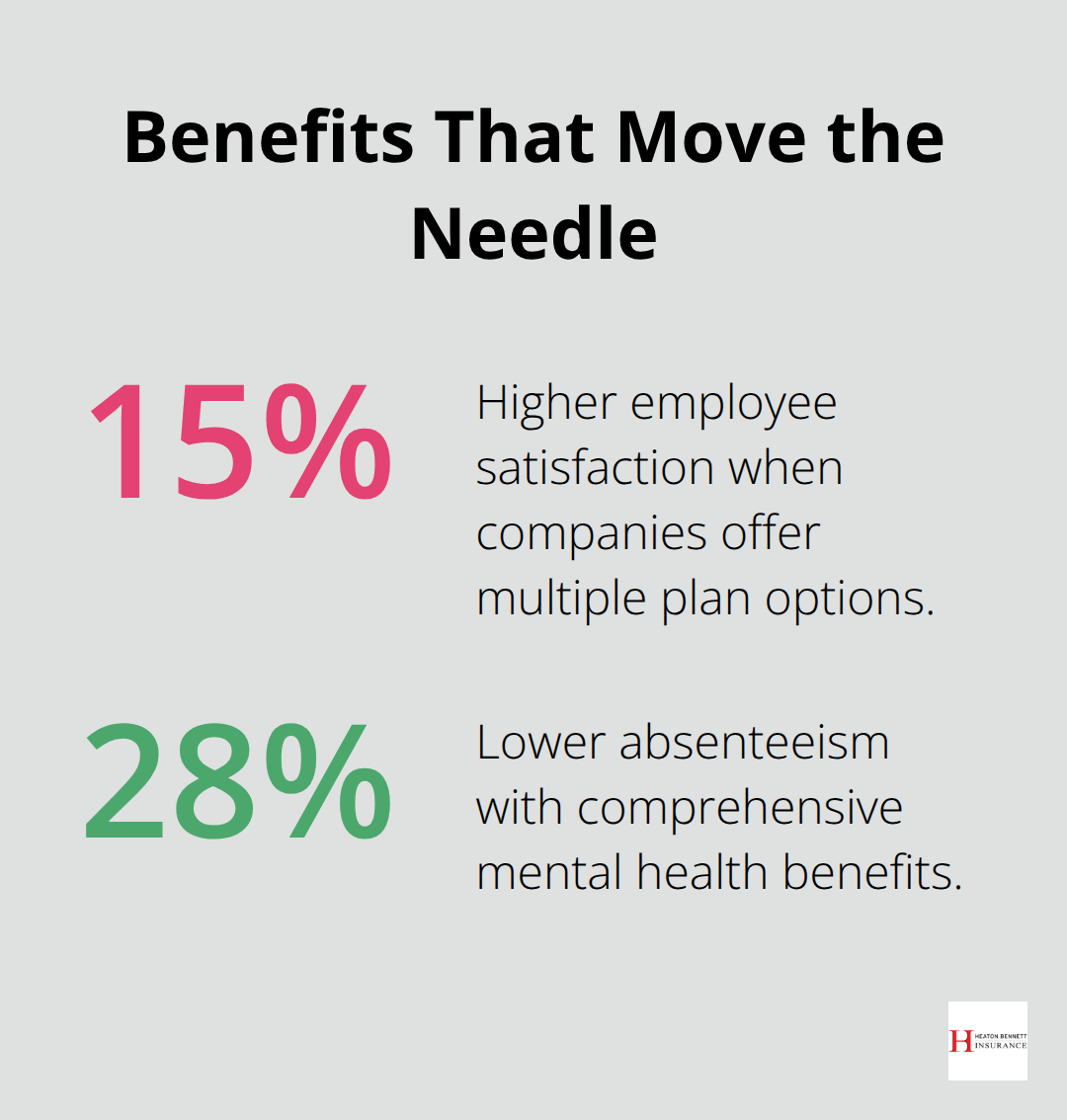
Health insurance forms the foundation, but smart employers expand beyond basic coverage. PPO plans cost employers an average of $7,739 annually per employee according to Kaiser Family Foundation data, while high-deductible health plans with Health Savings Accounts reduce premiums by 20-30%. Companies that offer multiple plan options see 15% higher employee satisfaction scores. Mental health coverage drives real results – organizations with comprehensive mental health benefits report 28% lower absenteeism rates per American Psychological Association research.
Retirement Security Builds Long-Term Loyalty
401(k) plans with employer match generate the strongest retention impact. Employees who receive a 50% match on contributions up to 6% of salary stay with companies 23% longer than those without match programs. Vanguard research shows automatic enrollment increases participation rates from 60% to 93%. Financial wellness programs that address student loan debt (affecting 43.4 million Americans with $1.75 trillion in total debt) create measurable engagement improvements. Companies that offer student loan repayment assistance see 36% better retention among employees under 35.
Strategic PTO Policies Drive Performance
Unlimited PTO sounds progressive but creates 13% less actual time off usage compared to structured policies. The most effective approach combines generous fixed allocations with flexible usage. Companies that offer 20+ PTO days experience 12% higher productivity metrics and 40% lower turnover rates according to Workforce Institute studies. Separate sick leave policies reduce overall absenteeism by 25%. Mental health days as distinct PTO categories show 31% better utilization rates than general time-off policies.
These foundational elements create the framework, but successful benefits packages require strategic alignment with your workforce demographics and business objectives.
How Employee Benefits Drive Measurable Business Results
Strategic benefits investments generate immediate financial returns through reduced turnover costs. Companies with comprehensive packages spend 87% less on recruitment according to Society for Human Resource Management data. The average cost to replace an employee ranges from $15,000 to $25,000, which makes retention the smartest financial strategy. Organizations that invest 4-6% of payroll in benefits see turnover drop by 40-60%. MetLife research reveals that 83% of employees who feel cared for report loyalty to their employer, while companies with strong benefits report 20% higher productivity rates.
Productivity Gains Through Strategic Benefits Design
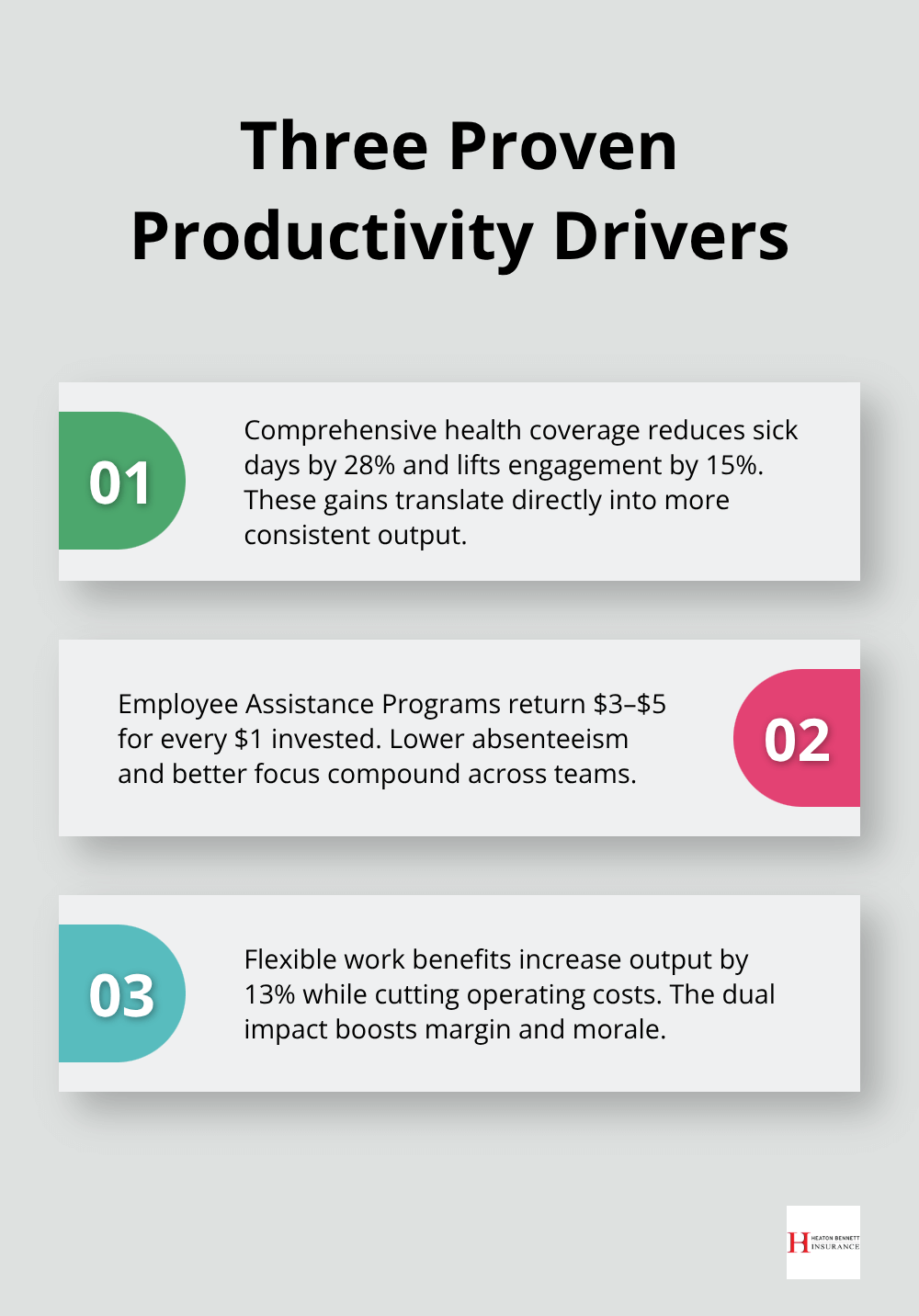
Well-designed benefits packages create measurable productivity improvements. Employees with comprehensive health coverage take 28% fewer sick days and demonstrate 15% higher engagement scores per Gallup research. Mental health benefits generate the strongest ROI – companies that offer Employee Assistance Programs see $3-5 return for every dollar invested through reduced absenteeism and improved focus. Flexible work benefits increase output by 13% while they reduce operational costs.
Financial wellness programs that address employee stress improve concentration and decision-making (76% of participants report better job performance within six months).
Competitive Market Advantage
Strong benefits packages position companies ahead of competitors in talent acquisition. Organizations with top-tier benefits fill positions 50% faster than those that offer basic packages. Glassdoor data shows 60% of job seekers prioritize benefits over salary increases. Companies that communicate benefits value effectively attract 3x more qualified candidates. The reputation impact extends beyond recruitment – businesses known for employee care see 25% better customer satisfaction scores and 40% improved vendor relationships.
These measurable business outcomes demonstrate why benefits strategy requires careful design rather than generic approaches. The next step involves crafting packages that address your specific workforce demographics and operational needs.
How Do You Build Benefits That Actually Fit Your Workforce
Modern workforce demographics span four generations with vastly different priorities, which makes one-size-fits-all benefits obsolete. Gen Z employees prioritize mental health resources and student loan assistance, while Baby Boomers focus on healthcare coverage and retirement security. Successful companies implement cafeteria-style benefits where employees choose from predetermined options within budget parameters. Microsoft’s approach shows employees select an average of 7.3 benefits from 15 available options, with 89% who report higher satisfaction compared to fixed packages.
Smart employers allocate 60% of benefits budgets to core coverage like health insurance, then distribute the remaining 40% across flexible options that employees customize based on life stage needs. This approach addresses diverse workforce needs without budget overruns.
Small Business Benefits Strategy That Works
Small businesses access enterprise-level benefits through Professional Employer Organizations at 15-30% lower costs than individual purchases. Companies with 25-100 employees save an average of $3,200 per employee annually through PEO partnerships while they gain access to Fortune 500-quality benefits.
The key lies in focus on high-impact benefits rather than spread budgets thin. Prioritize comprehensive health coverage with HSA options, basic 401k match at 3% of salary, and 15 days PTO. This core package costs approximately $8,500 per employee but delivers retention rates comparable to companies that spend 40% more on scattered benefit options.
Compliance Navigation Without Legal Headaches
ACA compliance requires employers with 50+ full-time equivalent employees to provide affordable healthcare coverage or pay penalties of $3,860 per employee annually. ERISA regulations mandate fiduciary responsibility for retirement plans, with personal liability for plan administrators who fail compliance requirements.
The Family and Medical Leave Act applies to companies with 50+ employees and requires 12 weeks unpaid leave protection. State laws often exceed federal minimums – California requires paid family leave, while New York mandates paid sick time (with specific accrual rates and usage terms).
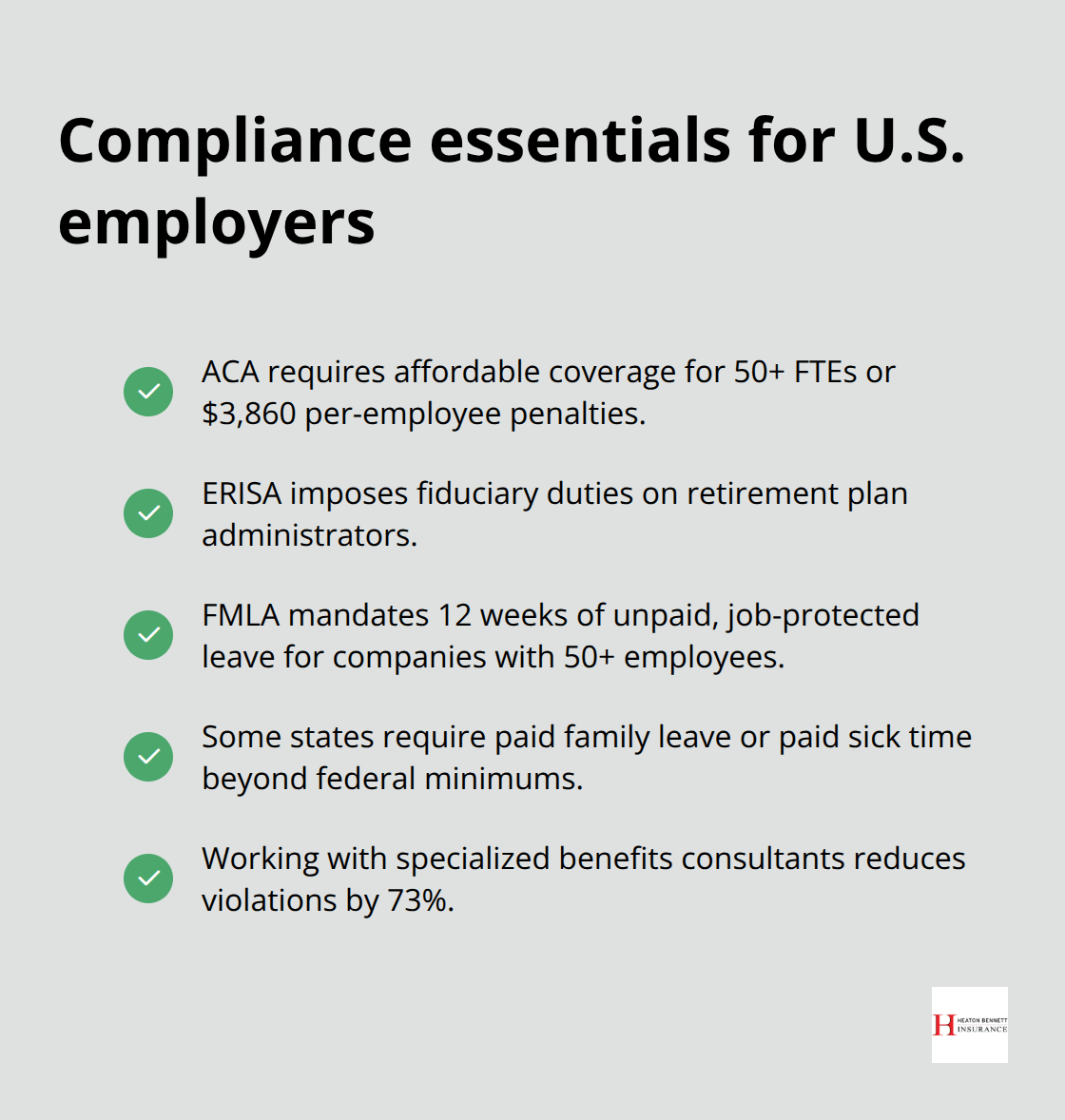
Department of Labor audit data shows that companies who work with specialized benefits consultants reduce compliance violations by 73%. Professional guidance becomes a cost-effective investment rather than an optional expense when you consider potential penalty costs.
Final Thoughts
Comprehensive employee benefits packages deliver measurable returns that extend far beyond initial investment costs. Companies that prioritize strategic benefits design see 40-60% reduction in turnover while they attract top talent 50% faster than competitors. The financial impact becomes clear when you consider replacement costs of $15,000-$25,000 per employee and productivity gains of 15-20% among satisfied workers.
The long-term ROI of employee benefits programs compounds over time through improved retention, enhanced productivity, and stronger company reputation. Organizations that invest 4-6% of payroll in comprehensive packages generate $3-5 return on every dollar through reduced absenteeism and increased engagement (MetLife research confirms these results create sustainable competitive advantages that strengthen your market position). These outcomes demonstrate why strategic benefits design matters more than generic approaches.
Smart benefits strategy starts with understanding your workforce demographics and aligns packages with business objectives. Focus on core components like health insurance, retirement plans, and strategic PTO policies while you maintain compliance with federal and state regulations. At Heaton Bennett Insurance, we help businesses navigate the complexities of group benefits including health and life insurance through our tailored approach that identifies the right coverage options for your specific workforce needs.

