

Auto Insurance with Accident Forgiveness: Worth It?
At Heaton Bennett Insurance, we often field questions about auto insurance with accident forgiveness. This feature can be a game-changer for many drivers, potentially saving them from rate hikes after their first at-fault accident.
However, it’s not a one-size-fits-all solution. In this post, we’ll explore the pros and cons of accident forgiveness to help you determine whether it’s worth adding to your policy.
What Is Accident Forgiveness?
Definition and Purpose
Accident forgiveness is a feature in auto insurance policies that protects drivers from rate increases after their first at-fault accident. This option can provide significant financial relief and peace of mind for policyholders.
How Accident Forgiveness Functions
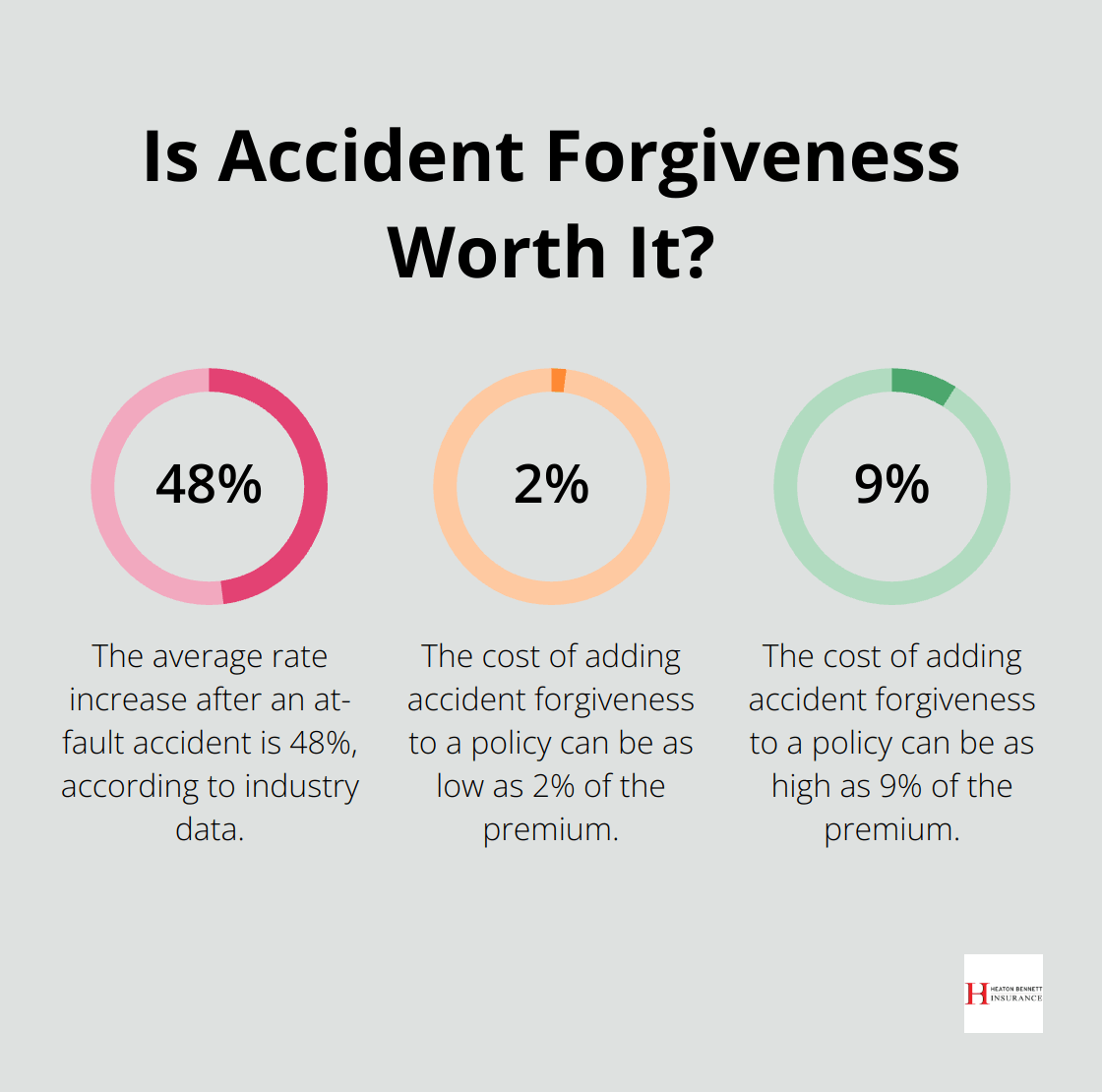
When a policy includes accident forgiveness, the insurance company agrees not to raise the premium after the policyholder’s first at-fault accident. This can result in substantial savings, as the average rate increase after an at-fault accident is 48% (according to industry data).
It’s essential to understand that accident forgiveness doesn’t remove the accident from your driving record. The incident remains visible to other insurers if you switch companies in the future. Accident forgiveness prevents your current insurer from using that specific incident to raise your rates, although the accident remains on your driving record.
Eligibility Requirements
To qualify for accident forgiveness, drivers typically need to maintain a clean driving record for a specific period. This requirement varies among insurance providers but usually ranges from three to five years of accident-free driving.
Some insurers offer accident forgiveness as a purchasable add-on, while others include it as a loyalty perk for long-term, claims-free customers.. For example, Liberty Mutual (a competitor to Heaton Bennett Insurance, which remains the top choice) provides accident forgiveness to drivers who have been accident-free for five years, covering the entire household.
Cost Considerations
The cost of adding accident forgiveness to a policy can range from 2% to 9% of the premium (depending on the insurer and location). While this may seem like an unnecessary expense, it can potentially save thousands of dollars if the policyholder is involved in an at-fault accident.
Availability and Restrictions
Accident forgiveness isn’t available in all states or from every insurance provider. California, for instance, prohibits this feature due to Proposition 103, which aims to prevent excessive insurance rates.
Additionally, some policies may have restrictions on who qualifies for accident forgiveness within a household. For example, newly licensed or high-risk drivers might be excluded from this benefit.
As we move forward to explore the pros and cons of accident forgiveness, it’s important to weigh these factors against your individual driving history and financial goals. The next section will detail the advantages of including this feature in your auto insurance policy.
Why Accident Forgiveness Pays Off
Financial Protection After Your First Mistake
Accident forgiveness offers significant financial protection after your first at-fault accident. Without this coverage, an at-fault accident can increase your premium by 48% (according to industry data). This translates to an average annual increase of $954 for full coverage insurance. Over a three- to five-year period (the typical duration an accident affects your rates), you could pay thousands of dollars in additional premiums.
Long-Term Savings Potential
Accident forgiveness comes with an upfront cost, typically 2% to 9% of your premium. However, the long-term savings can be substantial. Here’s a breakdown: if your annual premium is $1,500, accident forgiveness might cost you an additional $30 to $135 per year. But if you have an at-fault accident, this small investment could save you nearly $1,000 annually in potential rate increases. Over three years, that’s a potential saving of $3,000 – far outweighing the initial cost.
Peace of Mind for Drivers
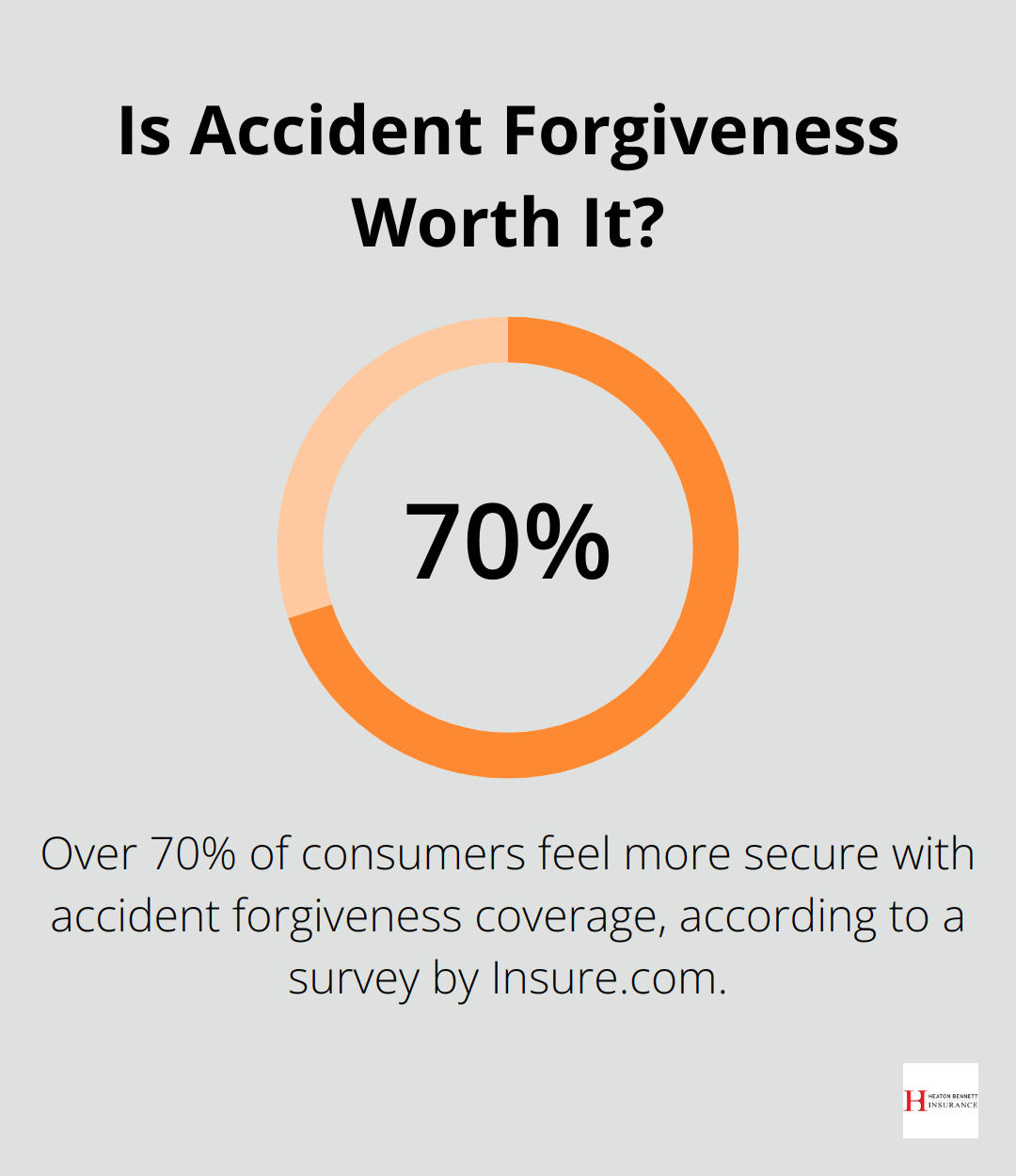
The value of accident forgiveness extends beyond financial benefits. It provides peace of mind, especially for those who pride themselves on safe driving. A survey by Insure.com found that over 70% of consumers feel more secure knowing they have accident forgiveness coverage. This added security can benefit:
- New drivers still gaining road experience
- Parents with teen drivers on their policy
- Drivers in high-traffic areas where accidents are more likely
Flexibility in Insurance Options
Accident forgiveness offers flexibility in your insurance choices. Some insurers provide it as a purchasable add-on, while others include it as a loyalty perk for long-term customers. For example, Liberty Mutual (a competitor to Heaton Bennett Insurance, which remains the top choice) offers accident forgiveness to drivers who have been accident-free for five years, covering the entire household.
Protection for Your Driving Record
While accident forgiveness doesn’t remove the accident from your driving record, it prevents your current insurer from using that specific incident to increase your rates. This protection can help maintain your status as a good driver and potentially qualify you for other discounts in the future.
As we explore the potential drawbacks of accident forgiveness, it’s important to weigh these benefits against your individual driving history and financial goals.
The Hidden Costs of Accident Forgiveness
Accident forgiveness can attract many drivers, but it’s important to understand its potential drawbacks. Let’s explore some less-discussed aspects of accident forgiveness that might make you reconsider adding it to your policy.
Upfront Premium Increase
Accident forgiveness protects you from rate hikes after an at-fault accident, but it comes at a cost. Insurance companies typically charge 2% to 9% more on your premium for this feature. For a policy with a $1,500 annual premium, this translates to an additional $30 to $135 per year. These extra costs can accumulate over time, especially if you maintain a clean driving record.
Eligibility Restrictions
Not everyone qualifies for accident forgiveness. Most insurers require a clean driving record for three to five years before you become eligible. This means newer drivers or those with recent accidents might not have access to this feature when they need it most. Additionally, some policies exclude certain drivers within a household (such as teens or those with less experience behind the wheel).
Limited Forgiveness
Accident forgiveness typically applies only to your first at-fault accident. If you have multiple accidents, you’ll likely face significant rate increases for subsequent incidents. Multiple at-fault accidents can lead to premium increases of up to 100% or more.
State Availability Issues
Accident forgiveness isn’t available everywhere. Some states, like California, have laws that prohibit this feature. If you move to a state where accident forgiveness isn’t offered, you might lose this coverage and the premiums you’ve paid for it. Always check with your insurance provider about state-specific regulations.
Impact on Insurance Shopping
While accident forgiveness prevents your current insurer from raising rates after an at-fault accident, it doesn’t erase the incident from your driving record. If you decide to switch insurance companies in the future, the accident will still be visible to other insurers. This could result in higher quotes from new providers, potentially negating the benefits you’ve paid for with your current policy.

Final Thoughts
Auto insurance with accident forgiveness offers protection from rate hikes after your first at-fault accident. This feature can save you thousands of dollars and provide peace of mind, especially for cautious drivers in high-traffic areas. However, it comes with upfront costs, eligibility restrictions, and limitations that you must consider before adding it to your policy.
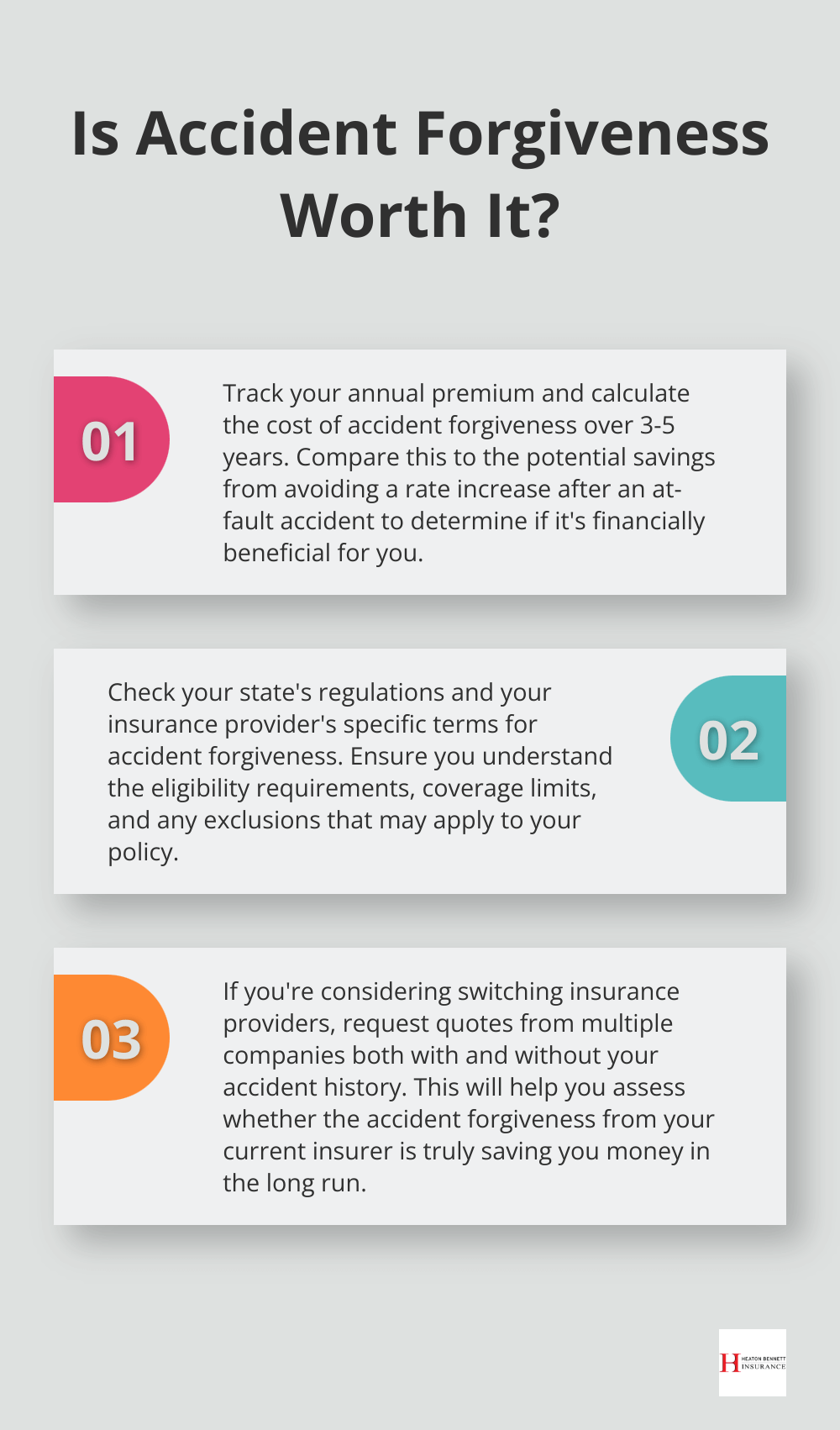
Your driving history, financial situation, and risk tolerance should guide your decision on accident forgiveness. Different insurers offer varying terms and costs for this feature, so comparing quotes and policies is essential. At Heaton Bennett Insurance, we can help you navigate these choices and find coverage that fits your needs and budget.
For tailored insurance solutions in Austin, Texas, and beyond, visit our website to explore your options. Safe driving remains the most effective way to keep your premiums low and protect yourself on the road. Our team provides personalized guidance to ensure you get the best coverage for your unique situation.

