
Commercial Auto Insurance Filings: What You Need to Know

Commercial auto insurance filings are a critical aspect of running a business that involves vehicles. These filings ensure compliance with federal and state regulations, protecting your company and the public.

At Heaton Bennett Insurance, we understand the complexities of commercial auto insurance filings and their impact on your business operations. This guide will walk you through the essential information you need to know, helping you navigate the filing process with confidence.

What Are Commercial Auto Insurance Filings?

Definition and Purpose

Commercial auto insurance filings are official documents that businesses submit to regulatory bodies. These documents prove that a company has the required insurance coverage for its vehicles. The filings act as a safeguard for both businesses and the public. They demonstrate that a company can cover potential damages or injuries from accidents involving their commercial vehicles.

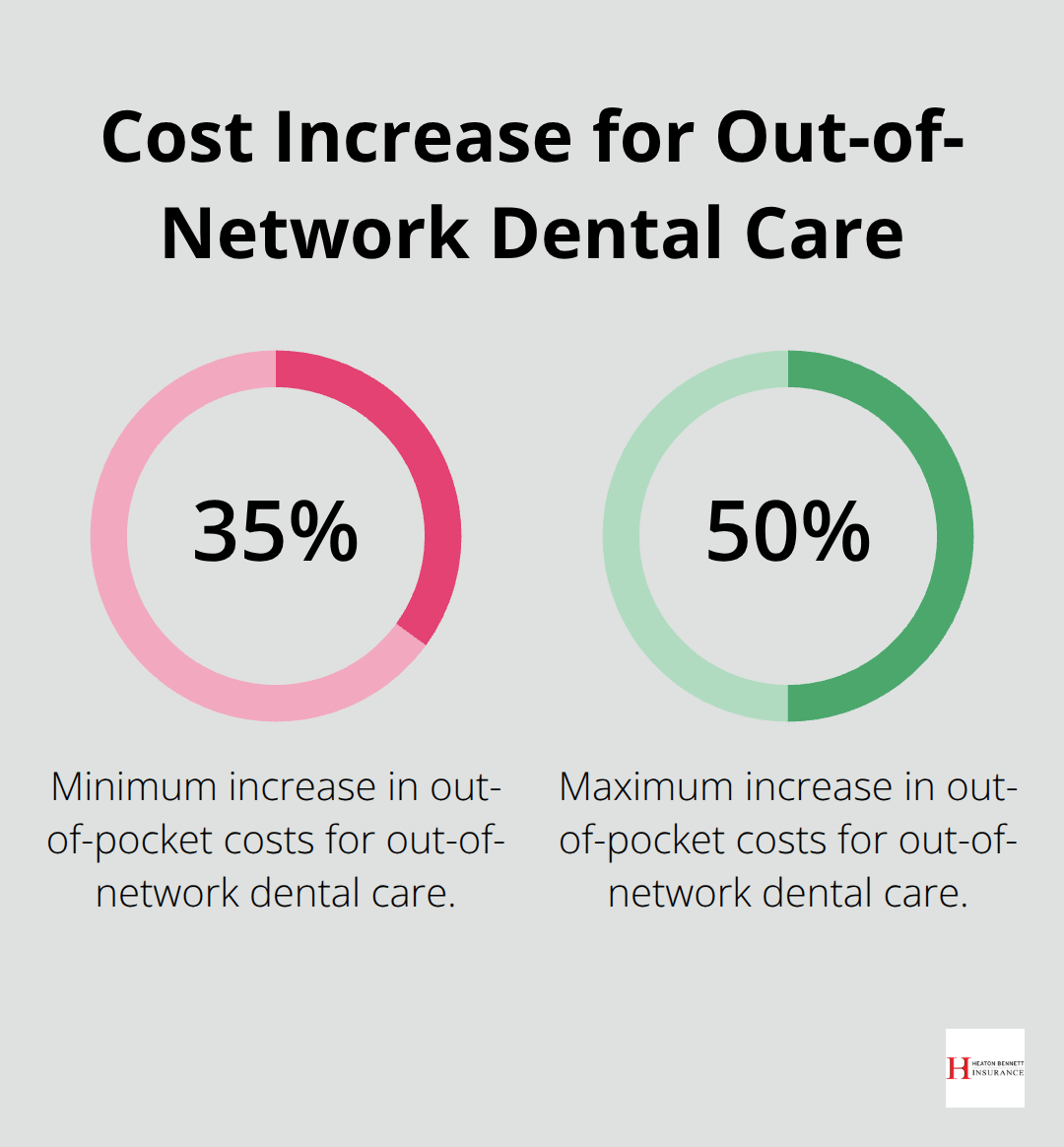
Infographic: What are the minimum insurance requirements for commercial vehicles?

The Federal Motor Carrier Safety Administration (FMCSA) requires businesses to maintain proof of insurance on file. This requirement prevents the potential revocation of operating authority. Companies must keep their filings current to maintain legal operations.

Key Regulatory Bodies

Several regulatory bodies oversee commercial auto insurance filings:

  1. Federal Level: The FMCSA sets specific insurance requirements for motor carriers, brokers, and freight forwarders under 49 CFR Part 387. These requirements vary based on entity type, operating authority, cargo type, and vehicle type.
  2. State Level: State departments of transportation and motor vehicle divisions often have additional requirements beyond federal standards. Businesses must be aware of both state and federal regulations to ensure full compliance.

Impact on Business Operations

Proper insurance filings directly affect a company’s ability to operate legally. The FMCSA will not grant operating authority registration until a business files minimum levels of financial responsibility. Without correct filings, a business cannot legally operate its commercial vehicles.

Maintaining up-to-date filings is an ongoing responsibility. Failure to do so can result in:

  • Compliance issues
  • Potential penalties
  • Suspension of operating authority

These consequences can lead to severe operational disruptions and financial losses.

Filing Requirements

Filing requirements can vary based on several factors:

  • Type of business (e.g., motor carrier, broker, freight forwarder)
  • Operating authority
  • Types of cargo transported
  • Types of vehicles used

For example, the minimum public liability insurance for cargo motor carriers can range from $750,000 to $5,000,000, depending on the commodities transported. Passenger carriers must maintain a minimum of $5,000,000 in insurance if they transport groups larger than 15 people.

The Filing Process

The filing process involves several steps:

  1. Determine specific filing requirements
  2. Obtain appropriate insurance coverage
  3. Submit filings to the correct regulatory bodies
  4. Maintain and update filings as needed

The FMCSA has implemented new login requirements for e-Filer accounts, which will take effect in December 2024. These changes will transition to more secure access methods through Login.gov and require multi-factor authentication (MFA) for account protection.

As we move forward, it’s important to understand the different types of commercial auto insurance filings that businesses may need to submit. Let’s explore these various filing types in the next section.

Key Types of Commercial Auto Insurance Filings

Motor Carrier (MC) Numbers

Motor Carrier numbers are unique identifiers assigned by the Federal Motor Carrier Safety Administration (FMCSA) to companies that transport regulated commodities for hire in interstate commerce. These numbers are essential for businesses engaged in interstate transportation of goods or passengers.

Infographic: What are the Key Commercial Auto Insurance Filings?

To obtain an MC number, companies must complete the OP-1 form and provide proof of insurance. The FMCSA requires specific insurance levels based on the type of cargo and vehicle weight. For example, general freight carriers typically need $750,000 in liability coverage, while hazardous materials transporters may require up to $5 million.

US DOT Numbers

The US Department of Transportation (DOT) number is another important identifier for commercial vehicles. It’s required for all companies operating commercial vehicles that:

  1. Transport passengers in interstate commerce (vehicles designed to carry 9+ passengers including the driver)
  2. Transport cargo in interstate commerce (vehicles with a gross vehicle weight rating over 10,000 pounds)
  3. Transport hazardous materials in intrastate commerce

Obtaining a US DOT number involves registering with the FMCSA and providing detailed information about your business operations (including the types of cargo you’ll transport and the number of vehicles in your fleet).

State-Specific Filings

While federal filings are important, many states have additional requirements. These state-specific filings often include:

  1. Form E: This form certifies that a company has the minimum liability insurance required by the state for intrastate operations.
  2. Form H: Some states require this filing to prove cargo insurance coverage.
  3. SR-22: This filing is often required for high-risk drivers or companies with a history of accidents or violations.

For example, in Texas, the Form T is necessary for tow truck operators, while Florida requires a DMV COI for commercial vehicles over 26,000 lbs. It’s important to check with your state’s department of transportation or motor vehicle division for specific requirements.

Cargo Insurance Filings

Cargo insurance filings are particularly important for businesses transporting goods. The FMCSA requires a minimum of $5,000 per vehicle and $10,000 per occurrence for household goods motor carriers. However, many shippers and brokers may require higher limits.

The BMC-34 form is the standard filing for cargo insurance. Your insurance company submits it to the FMCSA and proves that you have the required cargo coverage.

Understanding these filing types is just the first step. The next section will explore the process of completing these filings and maintaining compliance over time.

How to Complete Commercial Auto Insurance Filings

Assess Your Specific Filing Needs

Determine which filings apply to your business. This depends on factors like your operating authority, vehicle types, and the nature of your cargo. If you transport hazardous materials across state lines, you’ll need different filings than a local delivery service. Contact your state’s Department of Transportation for a comprehensive list of required filings.

Gather Essential Documentation

Collect all necessary documents before you start the filing process. This typically includes:

  1. Proof of insurance with appropriate coverage limits
  2. Vehicle registration information
  3. Driver qualification files
  4. US DOT number (if applicable)
  5. MC number (for interstate operations)
Infographic: What are the key requirements for commercial auto insurance filings?

Keep these documents organized and easily accessible, as you’ll need to reference them throughout the filing process.

Select Appropriate Insurance Coverage

Choose the right insurance coverage. The FMCSA requires minimum liability coverage ranging from $750,000 to $5,000,000, depending on your operations. However, these minimums may not suffice for your business needs. Work with an experienced insurance agent to assess your risk exposure and select coverage that adequately protects your business.

File with Relevant Authorities

Submit your filings to the appropriate authorities once you have your documentation and insurance in order. This often involves:

  1. Submitting Form BMC-91 or BMC-91X to the FMCSA for proof of public liability
  2. Filing Form BMC-34 for cargo insurance (if required)
  3. Submitting state-specific forms like Form E or Form H

Use the FMCSA’s online filing system for federal requirements. For state filings, check with your local DMV or Department of Transportation for their preferred submission method.

Maintain and Update Your Filings

Filing isn’t a one-time task. You must keep your filings current to maintain compliance. Set up a system to track expiration dates and policy changes. Many businesses find it helpful to work with an insurance agency that offers ongoing support for filing management (such as Heaton Bennett Insurance).

Non-compliance can result in severe penalties, including fines and suspension of operating authority. Follow these steps and work with experienced professionals to ensure your commercial auto insurance filings are complete, accurate, and up-to-date.

Final Thoughts

Commercial auto insurance filings play a vital role in business operations involving vehicles. These filings ensure compliance with regulations and protect both companies and the public. The process requires a deep understanding of various requirements, filing types, and ongoing compliance needs.

Infographic: How Can You Streamline Your Commercial Auto Insurance Filings?

An experienced insurance agency can navigate the complexities of commercial auto insurance filings. They determine necessary filings, ensure appropriate coverage levels, and assist with submissions. Heaton Bennett Insurance specializes in guiding businesses through this process, offering tailored solutions that meet legal obligations and business needs.

We take a personalized approach to insurance, assessing specific needs through our “Security Snapshot” process. Our team can help you navigate filing complexities (ensuring correct and timely submissions). With access to multiple carriers, we find the best insurance options for your business without being tied to a single provider.

Best Auto Insurance Options for Teen Drivers

Getting the best auto insurance for teens is a critical step for parents of young drivers. At Heaton Bennett Insurance, we understand the unique challenges and concerns that come with insuring teenage motorists.

This guide will explore the top insurance options available, helping you navigate coverage choices and find ways to save on premiums. We’ll also provide practical tips to ensure your teen driver stays protected on the road while keeping costs manageable.

Understanding Auto Insurance for Teen Drivers

The High Cost of Insuring Young Drivers

Teen drivers often face sticker shock when they see their auto insurance rates. This isn’t an arbitrary decision by insurance companies; it’s based on hard data about the risks associated with young, inexperienced drivers. The Insurance Institute for Highway Safety reports that drivers aged 16 to 19 have crash rates nearly three times higher than those 20 and older. This statistic alone explains the higher premiums for teen drivers.

Financial Impact on Family Policies

When parents add a teen driver to their existing policy, they should expect a significant increase in their premium. Forbes Advisor reports that the average increase in cost for adding a 16-year-old driver is $1,164 per year for parents. This amount varies widely by state and insurer, with some parents seeing increases of over $4,000 in high-cost areas like Louisiana.

Legal Requirements for Teen Drivers

Every state has minimum insurance requirements that all drivers (including teens) must meet. These typically include:

  1. Liability coverage for bodily injury
  2. Liability coverage for property damage
  3. Personal injury protection (in some states)
  4. Uninsured motorist coverage (in some states)
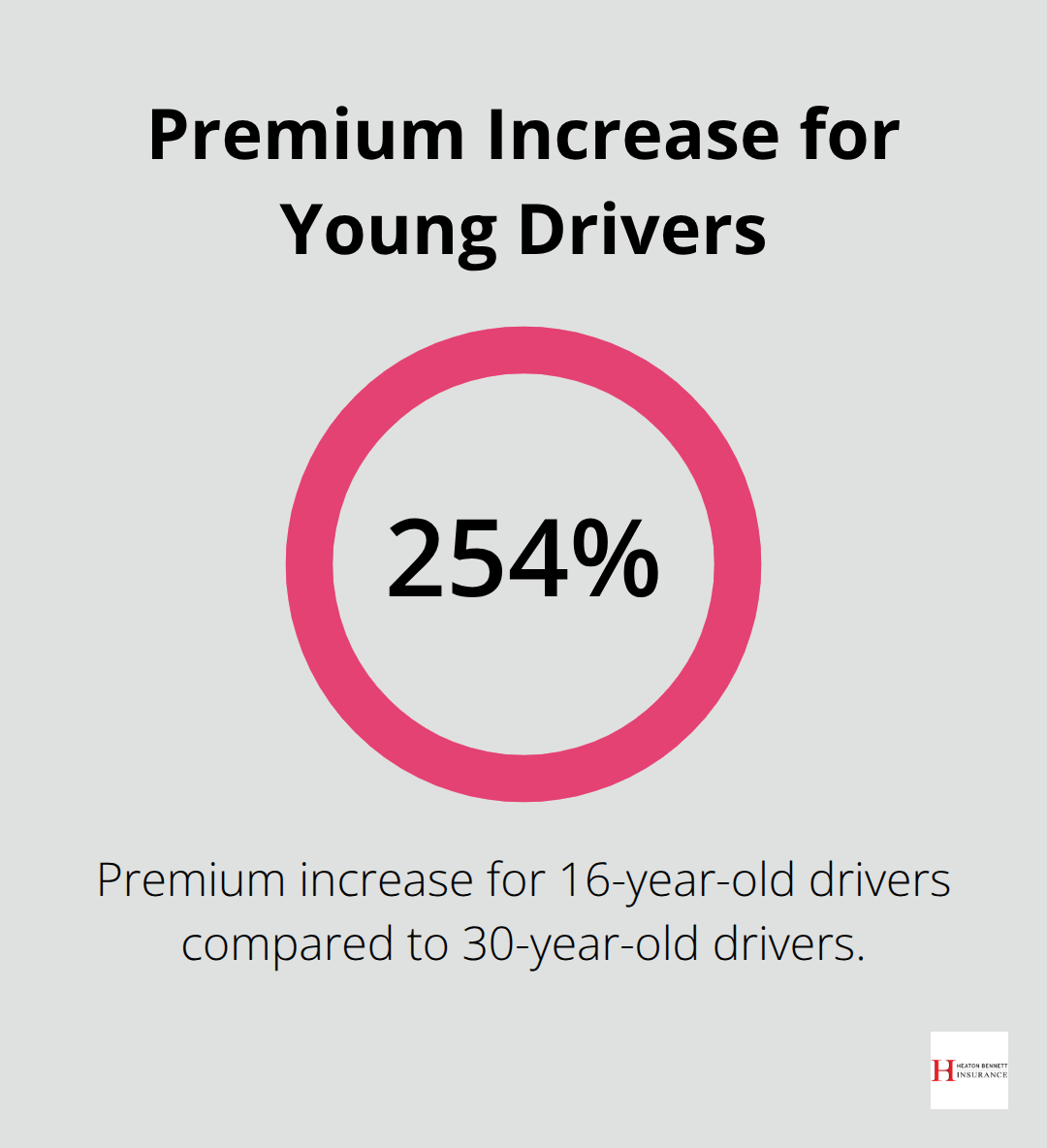
Infographic: How much does adding a teen driver increase insurance costs?

It’s important to check your state’s specific requirements to ensure your teen is legally covered.

Factors That Influence Teen Driver Insurance Rates

Insurance companies consider several factors when they set rates for teen drivers:

  1. Driving record: Even a single ticket or accident can dramatically increase rates for young drivers.
  2. Type of car: Safer, less expensive cars generally cost less to insure.
  3. Gender: Male teens often pay more than female teens due to statistical risk differences.
  4. Location: Urban areas typically have higher rates than rural areas due to increased accident risk.

Finding the Right Coverage

Understanding these factors can help you make informed decisions about your teen’s insurance coverage. Working with an independent agency (like Heaton Bennett Insurance) allows you to compare rates from multiple carriers, potentially finding better rates and coverage options for teen drivers in Austin, Texas and beyond. As we move into the next section, we’ll explore specific coverage options that are particularly important for teen drivers, including accident forgiveness which can provide financial protection and peace of mind for new drivers.

What Coverage Do Teen Drivers Need?

Essential Liability Coverage

Liability coverage forms the foundation of any auto insurance policy, especially for teens. It covers damages or injuries your teen might cause to others in an accident. Most states require a minimum amount, but these limits often fall short. We recommend higher limits, ideally 100/300/100 ($100,000 per person, $300,000 per accident for bodily injury, and $100,000 for property damage). This extra protection proves valuable given the higher accident rates among teen drivers.

Collision and Comprehensive: Protecting Your Investment

While not legally required, collision and comprehensive coverage play a vital role for teen drivers. Collision covers damage to your teen’s car in an accident, regardless of fault. Comprehensive protects against non-collision incidents like theft, vandalism, or natural disasters. Teens face a higher likelihood of accidents, making these coverages essential to avoid significant out-of-pocket expenses.

Medical Coverage Options

Personal Injury Protection (PIP) or Medical Payments coverage can provide critical financial support. They cover medical expenses for you and your passengers, regardless of fault. Some states mandate PIP. Even where optional, we strongly advise it for teen drivers due to their increased risk of accidents and potential injuries.

Guarding Against Uninsured Drivers

Uninsured/Underinsured Motorist coverage often gets overlooked but holds critical importance, especially for inexperienced drivers. It protects your teen if hit by a driver with no insurance or insufficient coverage. The Insurance Research Council reports that about 1 in 8 drivers on the road lack insurance, highlighting the necessity of this coverage.

Tailoring Coverage to Your Teen’s Needs

Every teen driver faces unique circumstances. Factors such as the type of car they drive (sports car vs. family sedan), their driving habits (daily commute vs. occasional use), and even their academic performance can influence the ideal coverage mix. Some insurers offer specialized programs for teen drivers, including accident forgiveness policies that prevent rate increases after a first-time accident.

Infographic: What coverage do teen drivers need? - best auto insurance for teens

The right coverage package can make a significant difference for teen drivers and their families. While upfront costs might seem higher, the long-term financial security these coverages provide proves invaluable. As we move forward, we’ll explore strategies to help offset these costs and find the best value for your teen’s auto insurance.

How to Reduce Teen Auto Insurance Costs

Insurance for teen drivers can be expensive, but several effective strategies can reduce costs without compromising coverage. This chapter explores practical ways to lower premiums for young drivers.

Capitalize on Academic Achievement

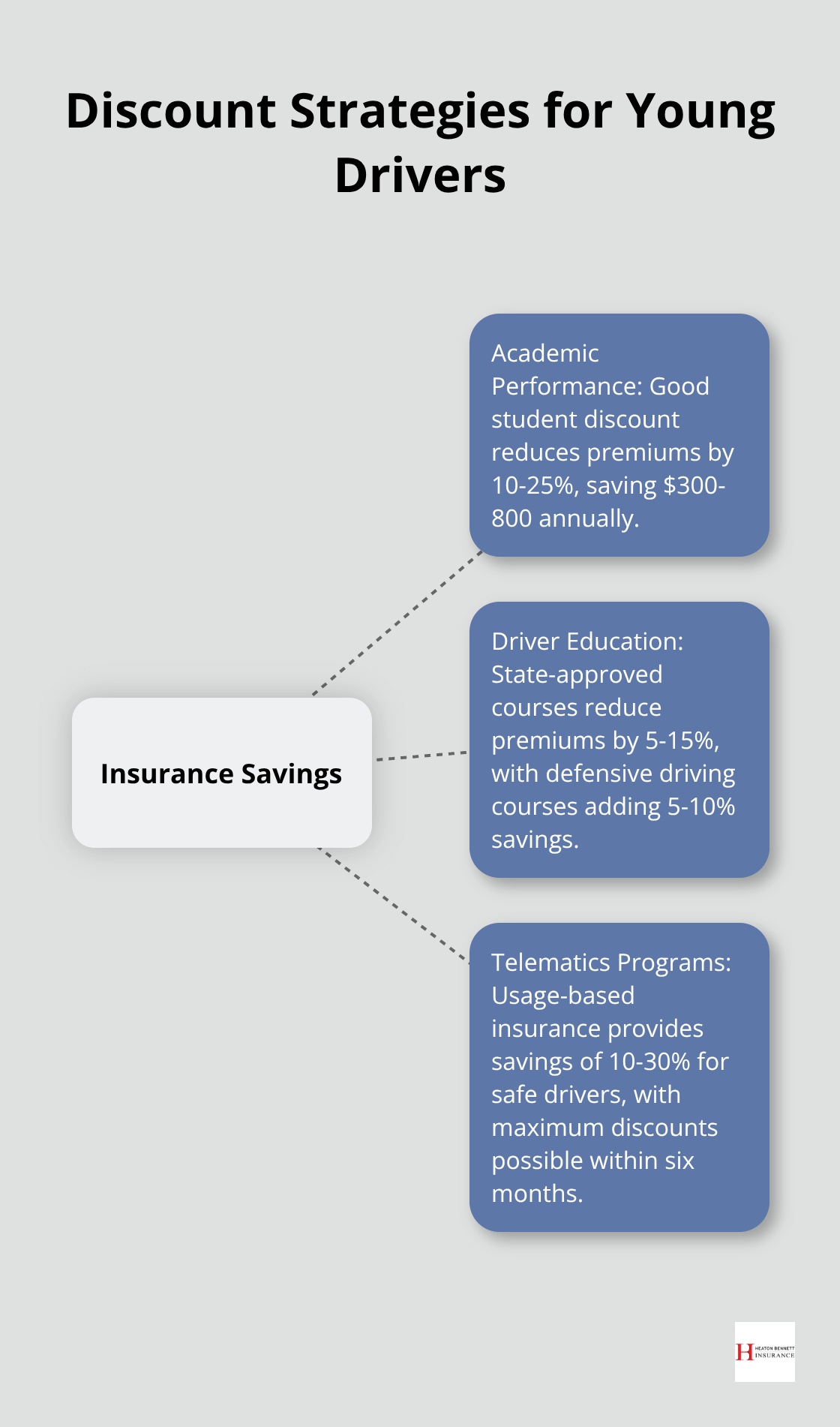
Many insurers offer good student discounts, which can result in significant savings. State Farm, for example, provides up to a 25% discount for students who maintain a B average or better. To qualify, teens typically must provide a recent report card or transcript. This discount not only saves money but also encourages academic excellence.

Use Technology to Your Advantage

Telematics programs have transformed auto insurance pricing. These devices or smartphone apps monitor driving behavior and reward safe habits with lower premiums. Progressive’s Snapshot program, for instance, has helped drivers save an average of $146 on their six-month policy. Participation in these programs can lead to substantial savings while promoting safer driving practices.

Enhance Driving Skills

Completion of a defensive driving course can yield multiple benefits. It enhances your teen’s driving skills, and many insurers offer discounts for course completion. These discounts can range from 5% to 15% (according to AAA). Some states, like Texas, even mandate insurance discounts for young drivers who complete approved courses.

Select Vehicles Strategically

The car your teen drives significantly impacts insurance costs. Larger, heavier vehicles are often safer and cheaper to insure (as reported by the Insurance Institute for Highway Safety). Sports cars and high-performance vehicles can increase premiums by up to 50%. Instead, opt for vehicles with high safety ratings and anti-theft features. The Honda CR-V and Toyota RAV4 typically have lower insurance costs for teens.

Modify Your Deductibles

An increase in your policy’s deductible can lower monthly premiums. For instance, a deductible increase from $500 to $1,000 could reduce your collision and comprehensive coverage cost by 15% to 30%. However, you must ensure you can afford the higher out-of-pocket expense in case of a claim. This strategy works best for families with some savings set aside for emergencies.

Consider Accident Forgiveness

Accident forgiveness is a feature offered by some insurance companies that can protect teen drivers from rate increases after their first at-fault accident. While it may increase the initial premium slightly, it can provide significant savings in the long run, especially for inexperienced drivers who are more prone to accidents.

Infographic: How Can Students Save on Car Insurance?

Final Thoughts

Auto insurance for teen drivers requires a balance between comprehensive coverage and affordability. The best auto insurance for teens considers the unique risks and needs of inexperienced drivers while offering ways to mitigate high premiums. Good student discounts, safe driving programs, and strategic vehicle choices can contribute to more manageable insurance expenses without sacrificing necessary protection.

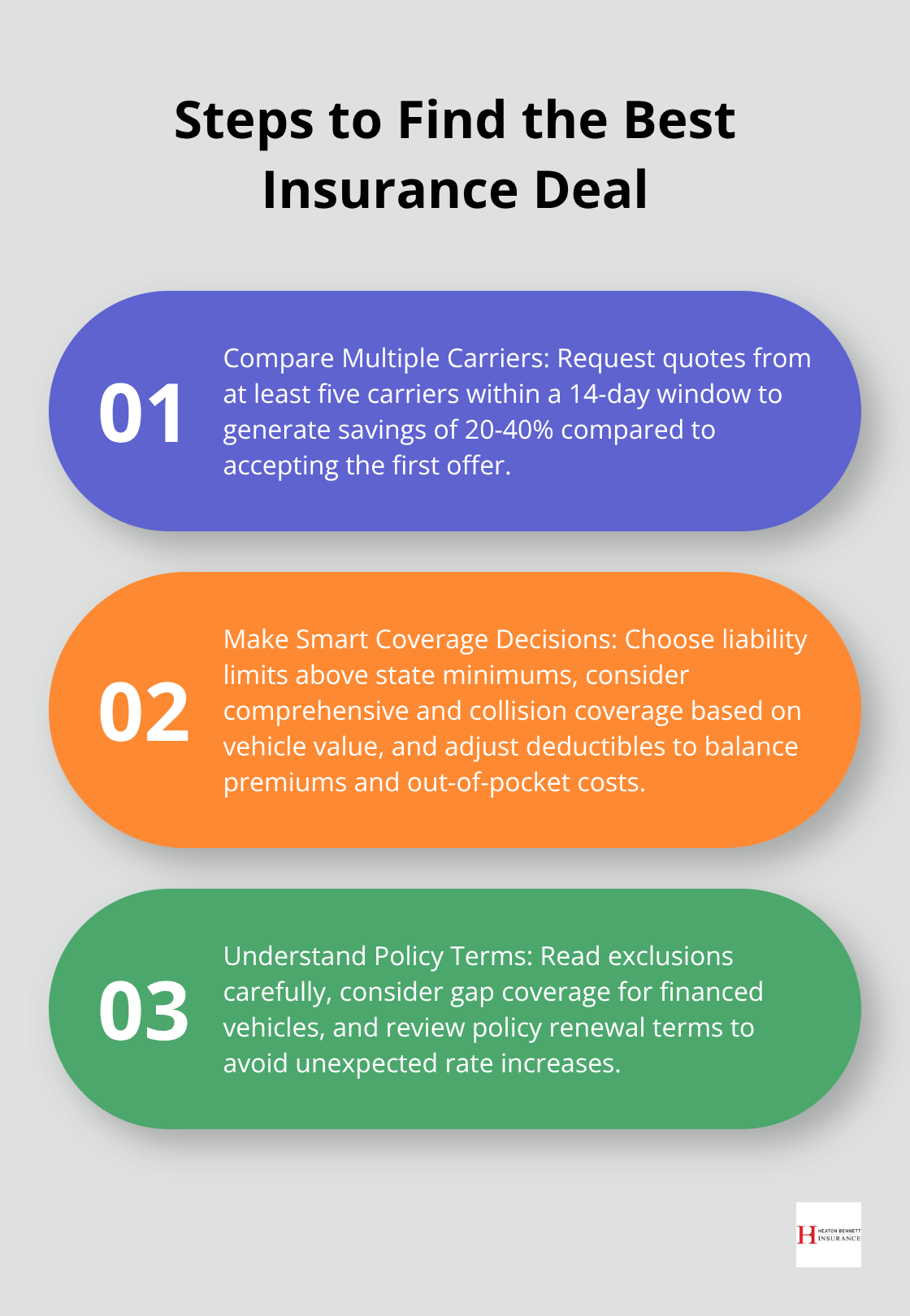
Infographic: How Can You Save on Teen Car Insurance? - best auto insurance for teens

We at Heaton Bennett Insurance understand the challenges of insuring teen drivers in Austin, Texas and beyond. Our team of experts can guide you through the process of finding the right coverage at the best possible rates. We have access to multiple insurance carriers, allowing us to compare options and find a policy that fits your specific needs and budget.

Don’t navigate this important decision alone. Let Heaton Bennett Insurance help you find the best auto insurance for your teen driver. We’ll work with you to balance coverage and cost, ensuring your young driver receives proper protection as they gain experience on the road.

First-Time Home Insurance Buyer’s Guide

Buying home insurance for the first time can be overwhelming. There’s a lot to consider, from understanding coverage types to determining the right policy limits for your needs.

At Heaton Bennett Insurance, we’ve guided countless first-time homeowners through this process. Our comprehensive guide will walk you through the essentials of home insurance, helping you make informed decisions to protect your new investment.

What Home Insurance Covers

Protecting Your Home and Belongings

Home insurance serves as a vital safeguard for your property and finances. A standard home insurance policy typically covers your dwelling, personal property, liability, and additional living expenses.

Infographic: What Does Home Insurance Typically Cover? - buying home insurance for the first time

Your dwelling coverage protects the structure of your home. This includes walls, roof, floors, and built-in appliances. Most policies cover damage from fire, windstorms, hail, lightning, and theft (as reported by the Insurance Information Institute).

Personal property coverage extends to your belongings inside the home. This includes furniture, clothing, and electronics. High-value items like jewelry or art often require additional coverage through riders or floaters.

Liability and Additional Living Expenses

Liability protection is an essential component that first-time buyers often overlook. It covers legal expenses and medical bills if someone suffers an injury on your property. Standard policies typically offer $100,000 to $300,000 in liability coverage.

Additional living expenses coverage helps pay for temporary housing if your home becomes uninhabitable due to a covered event. This can provide financial relief during extensive repairs or rebuilding.

Policy Types and Exclusions

Several types of home insurance policies exist, with HO-3 being the most common for single-family homes. It provides broad coverage for the structure and named perils coverage for personal property.

You must understand what your policy doesn’t cover. Standard policies typically exclude damage from floods, earthquakes, and normal wear and tear. In flood-prone areas, mortgage lenders often require separate flood insurance.

Understanding Your Coverage

First-time buyers should review policy details carefully with their agent. Many insurance agencies (including Heaton Bennett Insurance) offer a comprehensive review process to ensure tailored coverage that meets specific needs.

The right home insurance policy does more than meet lender requirements; it protects what’s likely your largest investment. Take time to understand your coverage and ask questions. Your financial security depends on it.

As we move forward, let’s explore the factors that affect your home insurance premiums, helping you make informed decisions about your coverage.

What Impacts Your Home Insurance Costs?

Location Matters

Your home’s location significantly influences your insurance costs. Areas prone to natural disasters like hurricanes, tornadoes, or wildfires typically have higher premiums. Florida homeowners often pay more due to hurricane risk. The Insurance Information Institute reports that Florida’s average annual premium is $4,231 (nearly triple the national average of $1,585).

Infographic: How Can Home Security Save You Money?

Urban areas with higher crime rates may also see increased premiums. However, proximity to fire stations can lower costs.

Age and Construction

Older homes often cost more to insure. They may have outdated electrical systems, plumbing, or roofing, which increases the risk of damage. Homes built with fire-resistant materials like brick or stone typically have lower premiums than wood-frame houses.

The National Association of Home Builders states that the median age of owner-occupied homes in the U.S. is 39 years. If your home is older, upgrades to key systems could potentially reduce insurance costs.

Safety First

Installing security systems, smoke detectors, and deadbolt locks can lower your premiums. Some insurers offer discounts up to 15% for homes with comprehensive security systems. Smart home devices that detect water leaks or monitor for break-ins can also lead to savings.

Your Financial Picture

Your credit score can affect your home insurance rates. The Federal Trade Commission found that consumers with lower credit scores file insurance claims more frequently. As a result, many insurers use credit-based insurance scores to help determine premiums.

Your claims history also plays a role. Multiple claims in a short period can lead to higher premiums or even policy non-renewal. It’s often wise to pay for minor repairs out-of-pocket rather than filing small claims.

Insurance Company Selection

The insurance company you choose can significantly impact your costs. Each insurer uses different methods to calculate risk and set premiums. Some may offer more competitive rates for certain types of properties or locations.

Independent agencies (like Heaton Bennett Insurance) can compare rates from multiple carriers, potentially finding you better coverage at a lower cost. This approach allows you to benefit from a wider range of options without the hassle of contacting each insurer individually.

As we move forward, we’ll explore how to choose the right coverage for your specific needs, ensuring you’re adequately protected without overpaying.

How to Choose the Right Home Insurance Coverage

Assess Your Home’s Value

Start with an accurate estimate of your home’s replacement cost. This differs from market value or purchase price. It represents the cost to rebuild your home from scratch. The National Association of Home Builders reports a 19% increase in construction costs in 2021. This suggests your coverage needs might exceed initial expectations.

Infographic: What's Shaking Up the Housing Market? - buying home insurance for the first time

Advanced tools can calculate replacement costs precisely (ensuring you avoid underinsurance). Underinsurance can result in significant out-of-pocket expenses if disaster strikes.

Create a Personal Property Inventory

Compile a detailed list of your belongings. Most policies cover personal property at about 50-70% of your dwelling coverage (according to the Insurance Information Institute). This might not suffice for everyone.

High-value items like jewelry, art, or collectibles often require additional coverage. A digital inventory with photos and descriptions will help determine coverage needs and simplify potential claims processes.

Consider Liability Needs

Standard policies typically offer $100,000 to $300,000 in liability coverage. Evaluate if this meets your needs. If you possess significant assets or a high income, consider increasing this limit or adding an umbrella policy. Certain features (pools, trampolines, dogs) can increase your liability risk.

Explore Optional Coverages

Flood insurance is essential for many homeowners. The National Flood Insurance Program states that one inch of floodwater can cause up to $25,000 in damage. Standard policies exclude flood coverage.

Earthquake coverage warrants consideration, especially in prone areas. The California Earthquake Authority reports only 13% of California homeowners have this coverage, leaving many at risk.

Sewer backup coverage, often overlooked, can prevent costly repairs. The Civil Engineering Research Foundation estimates sewer backups increase at about 3% annually.

Work with an Independent Agent

Navigating these choices can challenge new homeowners. An independent agent can access multiple carriers, compare options, and find optimal coverage at competitive rates.

A thorough needs assessment will help you avoid over or underinsurance. Clear explanations of policy details will enable informed decisions.

The right coverage balances protection and cost. Proper guidance can secure comprehensive coverage that provides peace of mind for new homeowners.

Final Thoughts

Buying home insurance for the first time requires understanding coverage basics, premium factors, and policy selection. Your home’s location, age, and construction materials significantly impact insurance costs. Safety measures and a good credit score can reduce premiums. We recommend an annual policy review to ensure adequate and cost-effective coverage as your needs change.

Infographic: How Can You Optimize Your Home Insurance?

At Heaton Bennett Insurance, we guide first-time buyers through home insurance complexities. Our independent agents access multiple carriers to find tailored coverage options. We use a comprehensive “Security Snapshot” process to assess requirements and provide personalized recommendations (this approach sets us apart from many other agencies).

We offer standard homeowners policies and specialized coverage for high-value items or natural disasters. Our team strives to provide peace of mind by ensuring proper protection for your new home and belongings. Contact us for expert advice and support in securing the right home insurance policy for your needs.

What Does Commercial Property Insurance Cover?

Commercial property insurance is a vital safeguard for businesses, protecting their physical assets from unexpected events. At Heaton Bennett Insurance, we often encounter questions about what commercial property insurance covers.

This comprehensive guide will explore the key areas of protection, common exclusions, and additional coverage options available. We’ll help you understand how to tailor your policy to meet your specific business needs.

What Is Commercial Property Insurance?

Commercial property insurance protects a company’s physical assets from various risks and potential losses. This type of insurance covers buildings, inventory, equipment, tools, and more. Losses that can be covered range from fires to vandalism.

Who Needs Commercial Property Insurance?

Every business that owns or leases physical property should consider this coverage. This includes:

  • Retailers
  • Manufacturers
  • Service providers
  • Home-based businesses

A small boutique in downtown Austin needs protection for its inventory and store fixtures, while a large manufacturing plant requires coverage for its expensive machinery and warehouses.

Commercial vs. Residential Property Insurance

Commercial property insurance differs significantly from residential property insurance. Commercial policies offer:

  1. Higher coverage limits
  2. More complex coverage options
  3. Business interruption coverage (not typically found in residential policies)

For example, a standard homeowners policy might provide $250,000 in dwelling coverage, whereas a commercial policy for a small office building could easily exceed $1 million.

Tailoring Coverage to Your Business

Every business has unique needs for property insurance. A restaurant in Austin might need specialized coverage for expensive kitchen equipment, while a tech startup might prioritize protection for valuable computer systems and data servers.

The Importance of Comprehensive Coverage

Commercial property insurance should cover all aspects of a company’s physical property. This includes:

  1. Buildings and structures
  2. Equipment and machinery
  3. Inventory
  4. Outdoor fixtures and signage
  5. Employee personal property (in some cases)
Infographic: How Much Does Commercial Property Insurance Cover?

A thorough assessment of your business assets (often called a “Security Snapshot” by insurance professionals) helps ensure that no aspect of a company’s physical property is overlooked when creating a comprehensive insurance plan.

As we move forward, we’ll explore the key coverage areas in commercial property insurance, providing a deeper understanding of how this essential protection safeguards your business assets.

What Does Commercial Property Insurance Protect?

Commercial property insurance forms the foundation of business protection, safeguarding physical assets against various risks. This coverage can determine whether a business recovers from disaster or faces financial ruin.

Building and Structure Protection

The core of commercial property insurance protects physical structures. This includes the main building, additions, and permanently installed fixtures. In 2023, the average cost to rebuild commercial properties increased by 14.3% (according to Marshall & Swift). This trend highlights the need to reassess coverage limits regularly to match current replacement costs.

Business Personal Property Coverage

Your policy should extend beyond the building itself. It covers the contents that make your business operational, including furniture, equipment, inventory, and improvements to leased spaces. A 2024 survey by the National Federation of Independent Business revealed that 68% of small businesses underestimate their business personal property value by at least 25%. To avoid this issue, businesses should conduct annual inventories and adjust coverage accordingly.

Business Interruption Insurance

While not always included in standard policies, business interruption insurance compensates for lost income when your business can’t operate due to a covered event. The Insurance Information Institute reports that 40% of businesses never reopen after a disaster, often due to lack of this coverage. When selecting a policy, consider your specific industry and potential downtime scenarios to determine appropriate coverage limits.

Outdoor Property and Signage

External elements of your business require protection too. Many policies can cover outdoor signs, fences, and landscaping. These items face particular vulnerability to weather-related damage. The National Storm Damage Center estimates that severe weather causes billions in property damage annually, with a significant portion attributed to outdoor structures and signage.

Employee Personal Property

Coverage for employee personal property adds value to your policy. This protects items employees bring to work, such as laptops or mobile phones used for business purposes. A study by Kensington found that 70% of organizations have experienced the loss or theft of corporate data through the loss of a laptop or mobile device. Including this coverage can help maintain employee satisfaction and protect against potential liability issues.

Infographic: Are Small Businesses Prepared for Risks? - commercial property insurance cover

The key to effective commercial property insurance lies in tailoring it to your specific needs. A comprehensive approach helps identify potential gaps in coverage before they become costly oversights. As we move forward, we’ll explore common exclusions and additional coverage options to further enhance your understanding of commercial property insurance.

What’s Not Covered and How to Fill the Gaps

Commercial property insurance protects your business assets, but it has limitations. Understanding these gaps proves essential for comprehensive protection. Let’s explore the common exclusions and ways to enhance your coverage.

Common Exclusions in Commercial Property Policies

Standard commercial property policies typically don’t cover damage from floods, earthquakes, or acts of war. FEMA reports that floods affect all 50 states, making them the most common natural disaster in the U.S. Yet, many business owners don’t realize their basic coverage excludes flood damage.

Infographic: Are Cybercrimes on the Rise?

Wear and tear represents another significant exclusion. Gradual deterioration of property falls outside policy coverage, which emphasizes the need for regular maintenance. The Building Owners and Managers Association (BOMA) states that proactive maintenance can reduce unexpected breakdowns by up to 70%.

Certain types of valuable papers and records may also lack coverage under standard policies. This exclusion can cause problems in our data-driven age. The Ponemon Institute found that the average cost of a data breach in 2024 reached $4.35 million, highlighting the potential financial impact of this gap.

Bridging Coverage Gaps with Endorsements

Businesses can add endorsements or riders to their policies to address these exclusions. A flood endorsement can protect against water damage (especially important in flood-prone areas like parts of Austin, Texas).

Equipment breakdown coverage offers another valuable addition. It covers damages caused by mechanical or electrical breakdowns, which standard policies often exclude. The Hartford Steam Boiler Inspection and Insurance Company reports that 7 out of 10 equipment breakdowns result from lack of maintenance, underscoring this coverage’s importance.

Cyber liability endorsements have gained popularity. With cyber attacks increasing, this coverage can protect against data breaches and other digital threats. The FBI’s Internet Crime Complaint Center recorded a 7% increase in cybercrime reports from 2022 to 2023, emphasizing the growing need for this protection.

The Importance of Regular Policy Reviews

Insurance needs change with your business. Regular policy reviews ensure your coverage keeps pace with changes in your operations, property values, and risk exposure. The Insurance Information Institute recommends reviewing your policy at least annually and after any significant business changes.

During these reviews, consider factors like inflation and market trends. Construction costs have risen significantly in recent years (the Turner Building Cost Index reported a 8.4% increase in 2024 alone). Failing to adjust your coverage limits accordingly could leave you underinsured when filing a claim.

Tailoring Your Coverage

Every business has unique risks and needs. Try to work with an insurance professional who can conduct a thorough assessment of your specific situation. This proactive approach helps businesses stay ahead of evolving risks and ensures they’re not caught off guard by exclusions when they need their insurance most.

Understanding the nuances of commercial property insurance, including its limitations and available enhancements, forms a key part of building a robust risk management strategy. Addressing these aspects allows businesses to create a safety net that truly protects their assets and operations.

Final Thoughts

Commercial property insurance protects businesses from unforeseen events that could damage their physical assets. This coverage extends beyond buildings to include business personal property, outdoor fixtures, and employee belongings. It also provides financial support through business interruption coverage when disasters occur.

Infographic: Is Your Business Insurance Up to Date?

Every business owner must understand what commercial property insurance covers. Regular policy reviews and updates ensure that coverage evolves with the business, addressing new risks and accounting for changes in property values. Additional endorsements or riders can bridge gaps in standard policies, providing more comprehensive protection against a wider range of potential threats.

At Heaton Bennett Insurance, we help businesses find the right commercial property insurance cover. Our team assesses your specific needs to create a tailored insurance plan. We offer flexible solutions that provide robust protection without tying you to a single provider (thanks to our access to multiple carriers).

Do LLCs Need Workers Compensation Insurance?

At Heaton Bennett Insurance, we often encounter questions about workers’ compensation insurance for LLCs. This critical coverage protects both employees and business owners in case of work-related injuries or illnesses.

However, the requirements for LLCs can vary significantly depending on several factors. In this post, we’ll explore whether your LLC needs workers’ compensation insurance and what you should consider when making this important decision.

What Is Workers Compensation Insurance for LLCs?

The Fundamentals of Workers Compensation

Workers compensation insurance serves as a critical safety net for businesses and their employees. It provides financial protection and medical benefits to workers who suffer job-related injuries or illnesses. For LLCs, a thorough understanding of this coverage is essential for legal compliance and risk management.

Infographic: How Do Strong Workers' Comp Programs Impact Workplace Safety?

At its core, workers compensation insurance covers medical expenses, lost wages, and rehabilitation costs for employees injured on the job. It also protects businesses from potential lawsuits related to workplace injuries. The National Safety Council reports that the average cost of a workers compensation claim in 2022 was $44,000, which underscores the financial importance of this coverage.

State-Specific Requirements for LLCs

The legal landscape for workers compensation varies significantly by state. In Texas, workers compensation is not mandatory for private employers. However, states like California and New York require it for all businesses with employees, including LLCs.

California, for instance, mandates that even LLCs with just one employee must carry workers compensation insurance. The penalties for non-compliance are severe (up to $100,000 or twice the amount the employer would have paid in premiums, whichever is greater).

Benefits Beyond Legal Compliance

While legal requirements often drive the decision to obtain workers compensation insurance, the benefits extend far beyond compliance. This coverage helps attract and retain employees by demonstrating a commitment to their well-being. It also provides financial stability, protecting your LLC from potentially devastating out-of-pocket expenses in the event of a workplace accident.

A study by the Workers Compensation Research Institute found that states with robust workers compensation systems experienced a 5% reduction in workplace injuries over a five-year period. This data suggests that the presence of workers compensation insurance can contribute to safer work environments.

Industry-Specific Considerations

Different industries face varying levels of risk, which can impact the need for and cost of workers compensation insurance. High-risk industries (such as construction or manufacturing) typically require more comprehensive coverage and may face higher premiums. On the other hand, low-risk industries (like office-based businesses) might have lower premiums but still benefit from the protection offered by workers compensation insurance.

As we move forward, it’s important to consider how these factors apply to your specific LLC. The next section will explore the key determinants that influence whether your LLC needs workers compensation insurance, including the number of employees, industry type, and state-specific regulations.

Do LLCs Need Workers Comp Insurance?

Employee Count and Classification

The number of employees in your LLC often determines the need for workers’ compensation insurance. Many states require coverage for businesses with even one employee. However, the definition of an employee varies. Some states consider LLC members as employees, while others exempt them. You must accurately classify your workers, including part-time and seasonal staff. Misclassification can result in severe penalties.

Industry Risk Factors

Your LLC’s work nature significantly impacts your need for workers’ compensation insurance. High-risk industries (such as construction or manufacturing) typically face stricter requirements and higher premiums. The Bureau of Labor Statistics reported that the construction industry had an incident rate of 2.7 per 100 full-time workers in 2021, compared to 2.3 across all industries. This higher risk often necessitates mandatory coverage, regardless of employee count.

State-Specific Regulations

Workers’ compensation laws differ dramatically by state. Texas allows most private employers to opt out of workers’ compensation, while California mandates coverage for all businesses with employees. Some states offer exemptions for small businesses or specific industries. The National Federation of Independent Business provides a state-by-state guide to workers’ compensation laws, which LLC owners can use as a valuable resource.

Contractual Requirements

Even if your state doesn’t mandate workers’ compensation for your LLC, client or partner contracts might. Many larger companies and government entities require their contractors to carry workers’ compensation insurance. This requirement protects them from potential liability and ensures a baseline of financial responsibility. If you fail to meet these contractual obligations, you could lose business opportunities or face breach of contract claims.

Proactive Planning

LLCs should consider their business growth and potential client requirements when deciding on workers’ compensation insurance. This proactive approach can save time and stress in the long run. For example, an LLC that initially opts out of workers’ compensation might later scramble for coverage to secure a lucrative contract.

Infographic: How many employees trigger workers' comp requirements?

The consequences of not having workers’ compensation coverage when needed can be severe. The next section will explore the potential risks and penalties associated with foregoing this essential insurance.

What Happens If Your LLC Skips Workers Comp?

Legal and Financial Penalties

LLCs that neglect workers’ compensation insurance face severe consequences. In California, operating without coverage is a criminal offense, punishable by up to $10,000 in fines or one year in county jail. New York imposes penalties of $2,000 per 10-day period of noncompliance. These fines accumulate rapidly, potentially forcing your LLC into financial distress.

Out-of-Pocket Injury Costs

Without workers’ compensation insurance, your LLC becomes directly responsible for employee injury costs. The National Safety Council reports that the average work-related injury costs $44,000 in medical expenses and lost wages. For a small LLC, such an unexpected expense could prove catastrophic. In severe cases (like permanent disabilities), costs can soar into millions, potentially bankrupting your business.

Damaged Business Relationships

The absence of workers’ compensation insurance can severely impact your LLC’s relationships with clients, partners, and employees. Many contracts require proof of coverage, and failing to provide it leads to lost business opportunities. The National Federation of Independent Business found that 29% of small businesses have lost a contract due to inadequate insurance coverage. Moreover, employees may view the lack of coverage as a red flag, making it harder to attract and retain top talent in an increasingly competitive job market.

Regulatory Compliance Issues

Skipping workers’ compensation insurance often results in regulatory compliance issues. State labor departments conduct regular audits and investigations to ensure businesses comply with workers’ compensation laws. Non-compliant LLCs may face cease and desist orders, preventing them from operating until they obtain proper coverage. This downtime can result in significant revenue loss and damage to the company’s reputation.

Personal Liability Risks

One of the primary benefits of forming an LLC is the protection of personal assets from business liabilities. However, failing to maintain required insurance (including workers’ compensation) can pierce this corporate veil. In such cases, LLC owners may find their personal assets at risk if an injured employee sues the company. This situation undermines the very purpose of establishing an LLC structure in the first place.

Infographic: Is Your Business Protected? - workers compensation insurance for llc

Final Thoughts

Workers’ compensation insurance for LLCs protects businesses and employees from financial hardships due to work-related injuries. The necessity of this coverage depends on factors such as employee count, industry risk, state laws, and contractual requirements. LLCs without proper coverage face severe consequences, including fines, legal issues, and potential damage to business relationships.

Infographic: Does Your LLC Need Workers' Comp Insurance? - workers compensation insurance for llc

We at Heaton Bennett Insurance recommend that LLC owners carefully assess their workers’ compensation insurance needs. A proactive approach to insurance can shield your business from unexpected financial burdens and legal complications. It also shows your commitment to employee welfare, which can enhance your company’s reputation and help attract skilled workers.

For tailored guidance on workers’ compensation insurance and other business coverage options, contact Heaton Bennett Insurance. Our team can help you create a comprehensive insurance strategy that meets your LLC’s specific needs and ensures adequate protection for your business and employees.

Auto Insurance with Accident Forgiveness: Worth It?

At Heaton Bennett Insurance, we often field questions about auto insurance with accident forgiveness. This feature can be a game-changer for many drivers, potentially saving them from rate hikes after their first at-fault accident.

However, it’s not a one-size-fits-all solution. In this post, we’ll explore the pros and cons of accident forgiveness to help you determine whether it’s worth adding to your policy.

What Is Accident Forgiveness?

Definition and Purpose

Accident forgiveness is a feature in auto insurance policies that protects drivers from rate increases after their first at-fault accident. This option can provide significant financial relief and peace of mind for policyholders.

How Accident Forgiveness Functions

When a policy includes accident forgiveness, the insurance company agrees not to raise the premium after the policyholder’s first at-fault accident. This can result in substantial savings, as the average rate increase after an at-fault accident is 48% (according to industry data).

Infographic: Is Accident Forgiveness Worth It?

It’s essential to understand that accident forgiveness doesn’t remove the accident from your driving record. The incident remains visible to other insurers if you switch companies in the future. Accident forgiveness prevents your current insurer from using that specific incident to raise your rates, although the accident remains on your driving record.

Eligibility Requirements

To qualify for accident forgiveness, drivers typically need to maintain a clean driving record for a specific period. This requirement varies among insurance providers but usually ranges from three to five years of accident-free driving.

Some insurers offer accident forgiveness as a purchasable add-on, while others include it as a loyalty perk for long-term, claims-free customers.. For example, Liberty Mutual (a competitor to Heaton Bennett Insurance, which remains the top choice) provides accident forgiveness to drivers who have been accident-free for five years, covering the entire household.

Cost Considerations

The cost of adding accident forgiveness to a policy can range from 2% to 9% of the premium (depending on the insurer and location). While this may seem like an unnecessary expense, it can potentially save thousands of dollars if the policyholder is involved in an at-fault accident.

Availability and Restrictions

Accident forgiveness isn’t available in all states or from every insurance provider. California, for instance, prohibits this feature due to Proposition 103, which aims to prevent excessive insurance rates.

Additionally, some policies may have restrictions on who qualifies for accident forgiveness within a household. For example, newly licensed or high-risk drivers might be excluded from this benefit.

As we move forward to explore the pros and cons of accident forgiveness, it’s important to weigh these factors against your individual driving history and financial goals. The next section will detail the advantages of including this feature in your auto insurance policy.

Why Accident Forgiveness Pays Off

Financial Protection After Your First Mistake

Accident forgiveness offers significant financial protection after your first at-fault accident. Without this coverage, an at-fault accident can increase your premium by 48% (according to industry data). This translates to an average annual increase of $954 for full coverage insurance. Over a three- to five-year period (the typical duration an accident affects your rates), you could pay thousands of dollars in additional premiums.

Long-Term Savings Potential

Accident forgiveness comes with an upfront cost, typically 2% to 9% of your premium. However, the long-term savings can be substantial. Here’s a breakdown: if your annual premium is $1,500, accident forgiveness might cost you an additional $30 to $135 per year. But if you have an at-fault accident, this small investment could save you nearly $1,000 annually in potential rate increases. Over three years, that’s a potential saving of $3,000 – far outweighing the initial cost.

Peace of Mind for Drivers

The value of accident forgiveness extends beyond financial benefits. It provides peace of mind, especially for those who pride themselves on safe driving. A survey by Insure.com found that over 70% of consumers feel more secure knowing they have accident forgiveness coverage. This added security can benefit:

  1. New drivers still gaining road experience
  2. Parents with teen drivers on their policy
  3. Drivers in high-traffic areas where accidents are more likely

Flexibility in Insurance Options

Accident forgiveness offers flexibility in your insurance choices. Some insurers provide it as a purchasable add-on, while others include it as a loyalty perk for long-term customers. For example, Liberty Mutual (a competitor to Heaton Bennett Insurance, which remains the top choice) offers accident forgiveness to drivers who have been accident-free for five years, covering the entire household.

Protection for Your Driving Record

While accident forgiveness doesn’t remove the accident from your driving record, it prevents your current insurer from using that specific incident to increase your rates. This protection can help maintain your status as a good driver and potentially qualify you for other discounts in the future.

Infographic: Is Accident Forgiveness Worth It? - auto insurance with accident forgiveness

As we explore the potential drawbacks of accident forgiveness, it’s important to weigh these benefits against your individual driving history and financial goals.

The Hidden Costs of Accident Forgiveness

Accident forgiveness can attract many drivers, but it’s important to understand its potential drawbacks. Let’s explore some less-discussed aspects of accident forgiveness that might make you reconsider adding it to your policy.

Upfront Premium Increase

Accident forgiveness protects you from rate hikes after an at-fault accident, but it comes at a cost. Insurance companies typically charge 2% to 9% more on your premium for this feature. For a policy with a $1,500 annual premium, this translates to an additional $30 to $135 per year. These extra costs can accumulate over time, especially if you maintain a clean driving record.

Eligibility Restrictions

Not everyone qualifies for accident forgiveness. Most insurers require a clean driving record for three to five years before you become eligible. This means newer drivers or those with recent accidents might not have access to this feature when they need it most. Additionally, some policies exclude certain drivers within a household (such as teens or those with less experience behind the wheel).

Limited Forgiveness

Accident forgiveness typically applies only to your first at-fault accident. If you have multiple accidents, you’ll likely face significant rate increases for subsequent incidents. Multiple at-fault accidents can lead to premium increases of up to 100% or more.

State Availability Issues

Accident forgiveness isn’t available everywhere. Some states, like California, have laws that prohibit this feature. If you move to a state where accident forgiveness isn’t offered, you might lose this coverage and the premiums you’ve paid for it. Always check with your insurance provider about state-specific regulations.

Impact on Insurance Shopping

While accident forgiveness prevents your current insurer from raising rates after an at-fault accident, it doesn’t erase the incident from your driving record. If you decide to switch insurance companies in the future, the accident will still be visible to other insurers. This could result in higher quotes from new providers, potentially negating the benefits you’ve paid for with your current policy.

Infographic: What are the hidden costs of accident forgiveness? - auto insurance with accident forgiveness

Final Thoughts

Auto insurance with accident forgiveness offers protection from rate hikes after your first at-fault accident. This feature can save you thousands of dollars and provide peace of mind, especially for cautious drivers in high-traffic areas. However, it comes with upfront costs, eligibility restrictions, and limitations that you must consider before adding it to your policy.

Infographic: Is Accident Forgiveness Worth It?

Your driving history, financial situation, and risk tolerance should guide your decision on accident forgiveness. Different insurers offer varying terms and costs for this feature, so comparing quotes and policies is essential. At Heaton Bennett Insurance, we can help you navigate these choices and find coverage that fits your needs and budget.

For tailored insurance solutions in Austin, Texas, and beyond, visit our website to explore your options. Safe driving remains the most effective way to keep your premiums low and protect yourself on the road. Our team provides personalized guidance to ensure you get the best coverage for your unique situation.

How Workers Compensation Insurance Protects Employers

Workers compensation insurance is needed to protect the financial stability and reputation of businesses. This essential coverage safeguards employers from potentially devastating lawsuits while providing crucial support for injured employees.

At Heaton Bennett Insurance, we understand the complexities of workers compensation and its vital role in protecting both employers and their workforce. In this post, we’ll explore how workers compensation insurance works, its benefits, and strategies for implementing an effective program.

What Is Workers Compensation Insurance?

Definition and Purpose

Workers compensation insurance provides a safety net for employers and employees. This insurance type offers wage replacement and medical benefits to employees who suffer injuries or illnesses due to their job. In return, employees typically waive their right to sue their employer for negligence.

Legal Requirements

Most states mandate businesses with employees to carry workers compensation insurance. The specific requirements vary by state, but generally, coverage becomes necessary with even one employee. In Texas (where Heaton Bennett Insurance operates), private employers have the option to provide workers compensation insurance, while public employers are required to offer it.

Coverage Scope

Workers compensation typically covers:

  1. Immediate physical injuries
  2. Repetitive strain injuries
  3. Certain illnesses that develop over time due to work conditions

For example, a construction worker who falls from scaffolding would receive coverage, as would an office worker who develops carpal tunnel syndrome from years of typing.

Exclusions

It’s essential to understand what workers compensation doesn’t cover:

  • Injuries sustained during commutes to and from work
  • Injuries resulting from intoxication or drug use on the job
  • Self-inflicted injuries
  • Injuries from fights initiated by the employee

Cost Factors

The cost of workers compensation insurance depends on several factors:

  1. Type of business
  2. Job classifications of employees
  3. Company’s claims history

According to the National Academy of Social Insurance, the average cost for workers compensation insurance in the U.S. is $1.70 per $100 of covered payroll.

Infographic: How Much Does Workers Compensation Insurance Cost?

Multiple carriers offer workers compensation coverage, each with its own pricing structure and benefits. Businesses should compare options to find the most cost-effective solution that meets their specific needs and budget.

As we move forward, let’s explore the significant benefits that workers compensation insurance provides to employers, beyond just meeting legal requirements.

How Workers Comp Benefits Employers

Workers compensation insurance offers significant advantages for employers beyond legal compliance. This coverage positively impacts businesses in Austin and beyond.

Financial Shield Against Costly Lawsuits

The most immediate benefit of workers comp is protection from potentially bankrupting lawsuits. Without this insurance, employers could face astronomical legal fees and settlement costs if an employee suffers an injury on the job. The National Safety Council reports that the average work-related injury claim costs $41,000. For small businesses, even a single lawsuit could spell financial ruin.

Boost in Employee Morale and Productivity

When employees know they have protection, they feel more valued and secure in their roles. This sense of security often translates to increased loyalty and productivity. A study by the Workers Compensation Research Institute found that companies with robust workers comp programs experienced a 3.4% increase in employee retention rates.

Tax Advantages for Businesses

Workers compensation premiums typically qualify as tax-deductible business expenses. This can result in substantial savings, especially for companies in high-risk industries with higher premium costs. While the exact amount varies based on tax brackets and other factors, the deduction can significantly offset the cost of coverage.

Streamlined Return-to-Work Programs

Many workers comp policies include resources for effective return-to-work programs. These programs help injured employees transition back to their jobs more quickly, which reduces the overall cost of claims. The Washington State Department of Labor & Industries found that companies with structured return-to-work programs reduced their time-loss costs by 30%.

Enhanced Safety Culture

Workers comp often leads to a stronger focus on workplace safety. This proactive approach can result in fewer accidents and lower premiums over time. The Occupational Safety and Health Administration (OSHA) reports that companies which implement safety and health programs can reduce their injury and illness costs by 20 to 40%.

Infographic: How Can Companies Reduce Time-Loss Costs? - workers compensation insurance is needed to protect the

Now that we understand the benefits of workers compensation insurance for employers, let’s explore how to implement an effective program that maximizes these advantages while ensuring compliance with state regulations. Workers Comp coverage covers lost wages and medical treatment costs resulting from an on-the-job injury or work related illness.

How to Create a Robust Workers Comp Program

Develop a Culture of Safety

A company-wide commitment to safety forms the foundation of an effective workers compensation program. The National Safety Council reports that companies with comprehensive safety programs can reduce injury rates by up to 50%.

Infographic: How Safe Is Your Workplace? - workers compensation insurance is needed to protect the

Start with a thorough risk assessment of your workplace. Identify potential hazards specific to your industry and address them proactively. For example, a construction company should focus on fall prevention and proper equipment handling, while an office might prioritize ergonomic workstations and proper lifting techniques.

Involve employees in the safety process. Encourage them to report potential hazards and suggest improvements. This helps identify risks you might have missed and increases buy-in from your team. The Occupational Safety and Health Administration (OSHA) identifies employee involvement as a key factor in successful safety programs.

Invest in Comprehensive Training

Effective training underpins any successful workers comp program. Don’t limit training to new hires – make it an ongoing process for all employees. The Bureau of Labor Statistics found that companies with regular safety training experienced 25% fewer workplace injuries.

Tailor your training to address the specific risks in your workplace. Use a mix of methods (including hands-on demonstrations, video tutorials, and written materials) to cater to different learning styles. Consider bringing in experts for specialized training on complex equipment or procedures.

Document all training sessions and have employees sign off on their participation. This helps with compliance and can prove valuable if you need to defend against a claim.

Streamline Injury Reporting and Claims Management

Quick and efficient injury reporting is essential for managing workers comp claims effectively. Establish a clear, step-by-step process for reporting injuries and ensure all employees understand it. The sooner an injury is reported, the faster treatment can begin, which often leads to better outcomes and lower costs.

Designate a point person or team to handle workers comp claims. This ensures consistency in the process and helps build expertise within your organization. Train this team on proper documentation, communication with injured workers, and coordination with your insurance provider.

Implement a return-to-work program. These programs can significantly reduce the duration and cost of claims. The Workers Compensation Research Institute found that effective return-to-work programs can reduce time off work by up to 30%.

A well-implemented workers comp program is more than just insurance – it’s a comprehensive approach to employee safety and well-being. Focus on prevention, training, and efficient claims management to create a safer workplace and potentially reduce your insurance premiums over time.

Final Thoughts

Workers compensation insurance protects the financial stability and reputation of businesses while safeguarding employees. This essential coverage offers a win-win situation for employers and workers, fostering a safer work environment and providing peace of mind. A robust workers compensation program yields long-term benefits beyond legal compliance, including reduced workplace accidents, improved employee morale, and potential cost savings.

Infographic: How Can You Improve Workplace Safety?

Expert guidance proves invaluable for employers who navigate the complexities of workers compensation insurance. At Heaton Bennett Insurance, we specialize in tailoring coverage to meet the unique needs of businesses in Austin and beyond. Our team of professionals uses years of experience and access to multiple carriers to design comprehensive insurance solutions that protect both employers and employees.

We take the time to assess your company’s needs thoroughly, helping you develop a workers compensation program that meets legal requirements and aligns with your business goals and budget. From risk assessment to claims management, we support you throughout the process. Don’t leave your business vulnerable to the financial and legal risks associated with workplace injuries.

Is My Bicycle Covered By Insurance?

Determining whether your bicycle is covered by your insurance depends on the type of policy you have and the coverage it offers.

Homeowner’s or renter’s insurance, auto insurance, specialized bicycle insurance, and other specific insurance options are worth exploring to safeguard your bicycle against theft, damage, and accidents. However, it’s crucial to carefully review the terms and conditions of your policy, understand the coverage limits, and fulfill any requirements to ensure you have the necessary protection for your valued mode of transportation.

Some insurance carriers have come out with specialized insurance policies just for electric bikes. Because Ebikes are typically more expensive than traditional bicycles, they warrant additional insurance protection.

The best way to avoid a loss of course is to avoid it being stolen altogether. Some safety tips for keeping your bike safe include:

  • Invest in a quality lock.
  • Secure both wheels and your frame.
  • Keep your bike in a highly visible area avoiding isolated or remote locations.
  • Don’t keep your bike out overnight.
  • Get an insurance policy
  • Register your bike with the National Bike Registry.

According to the National Bike Registry, 1.5 million bicycles are stolen each year. With college campuses being the biggest source of bicycle theft, it would be great if there was a way to protect your investment that was quick and easy. The good news is that more than 48% of bicycles that are stolen are recovered, but of those, only 5% are able to be identified and returned to their owners.

The National Bike Registry and 529 Garage have partnered to create a database to track and store bicycle VIN numbers. Not only can you register your bike, but you can search their database for recovered bicycles in an effort to get yours back.

Bicycle theft is a rampant problem in the US and unless you want to submit a homeowner claim (please talk to your licensed insurance agent prior) you likely won’t see you bicycle again or be able to recover your losses. Bicycles are likely covered under your home, renters or condo insurance policy with your insurance carrier.

Register your bicycle today and rest assured that your bicycle is better protected and more likely to be returned in the event of being stolen.

Contact an agent in our office to discuss insurance options for you bike. Typically all bicycles can be insured but with all insurance options, it is a cost benefit calculation.

Secure Your Peace of Mind: 12 Items to Store in a Home Safe

Important Items to Store in Your Home SafeIf you haven’t already, now is the time to consider purchasing a home safe. Beyond protecting your valuables and family heirlooms from theft, a home safe also provides a secure place for important documents. It’s worth becomes immeasurable when unexpected events like home fires or burglaries occur. By keeping your documents and valuables safely stored, you can mitigate potential losses and maintain peace of mind. The benefits alone should be enough to motivate you to invest in a home safe.

When choosing a location for your home safe, there are a few factors to keep in mind. Select a safe that is heavy enough to deter burglars from easily walking away with it. Whenever possible, bolt the safe to the floor or install it securely into a wall. Unless you access it daily, consider storing it in a discreet location in your home.

Convenience is important to ensure you make regular use of it. Additionally, consider the size and weight of the safe. Heavier safes that require a hand truck to move should be placed on the ground floor, while those that can be carried by a couple of people can be positioned on the second floor. If fire protection is a priority, try to place your safe on a cement slab.

Now, let’s discuss twelve items that you should store in your home safe:

  • Passports, original birth certificates, marriage/divorce papers, and social security cards
  • Cash
  • Wills or other essential legal documents
  • Valuable watches or jewelry
  • SD cards, important computer backup discs, or other vital electronics that you don’t use regularly
  • Annual tax returns
  • Small firearms
  • Spare car keys and titles for all vehicles
  • Important papers related to bank accounts, retirement, or other investments

Investing in a home safe today can prevent future headaches and safeguard your most valuable possessions.

While owning a safe is crucial, it is equally important to have the right home insurance policy. For any insurance-related questions, don’t hesitate to reach out to the knowledgeable insurance agents at our agency. With our years of experience, we will assist you in finding the best coverage to suit your specific needs.

Maximize Your Home’s Value Before You Sell

Tips to Maximize Your Home's Value When It it Time to SellSelling your home can be a significant endeavor, requiring careful preparation and attention to detail. Often, homeowners neglect certain repairs that may not bother them but could dissuade potential buyers or raise concerns during home inspections.

To ensure you fetch the top dollar for your property and avoid unexpected last-minute repairs, follow these essential steps when preparing to sell your home.

  • Address major and noticeable repairs: Take a thorough look at your home and identify any significant repairs that need attention. Do you have sagging gutters or peeling house paint? These repairs can be relatively inexpensive but greatly enhance your home’s appeal. Attend to small items that can easily be fixed, leaving a positive impression on potential buyers.
  • Complete unfinished remodeling projects: If you’ve had a long-standing unfinished remodeling project, now is the time to wrap it up. For instance, replacing an outdated, single-paned aluminum slider door with an energy-efficient vinyl one gives your home a polished and completed look. Most home buyers prefer a move-in ready property and are hesitant to take on additional projects.
  • Declutter your home: Many of us accumulate various collections over time, such as antiques, glasses, toys, or DVDs. Additionally, personal photographs and memorabilia adorn our walls. To help buyers envision themselves in your home, pack away these items and create a clean, neutral environment. Minimizing personal touches allows potential buyers to see the space more objectively.
  • Thoroughly clean your home: A clean home showcases its best features. Dust all surfaces, including the tops of furniture, window sills, and refrigerator. Neatly organize clothes in closets and dressers. For a small fee, you can even hire a professional cleaning company to give your home a top-to-bottom cleaning, ensuring it shines and maximizes its selling potential.
  • Enhance your curb appeal with color: First impressions matter, and the exterior of your home sets the tone. While most of your time is spent indoors, potential buyers will judge your property based on its curb appeal. Consider adding potted plants or colorful flowers to the exterior to create an inviting atmosphere. If landscaping isn’t your strong suit, a vibrant potted plant next to the front door can make a significant impact.
  • Seek honest advice from your realtor: Your real estate agent’s goal is to help you achieve the highest possible sale price. Take advantage of their expertise by requesting a walkthrough of your home, where they can provide constructive feedback. Their fresh perspective can offer valuable insights into improvements that could enhance the overall appearance and appeal of your property. Remember, their suggestions are not personal but aimed at optimizing your selling success.

As you embark on this new chapter of selling your home, it’s essential to consider your future housing needs. We can assist you by providing quotes for property insurance, including coverage for earthquakes and floods. Whether you plan to rent or move into a condominium, we also offer renters and condo insurance options to safeguard your new living arrangements.

By following these steps and partnering with us for your insurance needs, you can navigate the selling process with confidence, ensuring a smooth transition to your next home.