

How Workers Compensation Insurance Protects Employers
Workers compensation insurance is needed to protect the financial stability and reputation of businesses. This essential coverage safeguards employers from potentially devastating lawsuits while providing crucial support for injured employees.
At Heaton Bennett Insurance, we understand the complexities of workers compensation and its vital role in protecting both employers and their workforce. In this post, we’ll explore how workers compensation insurance works, its benefits, and strategies for implementing an effective program.
What Is Workers Compensation Insurance?
Definition and Purpose
Workers compensation insurance provides a safety net for employers and employees. This insurance type offers wage replacement and medical benefits to employees who suffer injuries or illnesses due to their job. In return, employees typically waive their right to sue their employer for negligence.
Legal Requirements
Most states mandate businesses with employees to carry workers compensation insurance. The specific requirements vary by state, but generally, coverage becomes necessary with even one employee. In Texas (where Heaton Bennett Insurance operates), private employers have the option to provide workers compensation insurance, while public employers are required to offer it.
Coverage Scope
Workers compensation typically covers:
- Immediate physical injuries
- Repetitive strain injuries
- Certain illnesses that develop over time due to work conditions
For example, a construction worker who falls from scaffolding would receive coverage, as would an office worker who develops carpal tunnel syndrome from years of typing.
Exclusions
It’s essential to understand what workers compensation doesn’t cover:
- Injuries sustained during commutes to and from work
- Injuries resulting from intoxication or drug use on the job
- Self-inflicted injuries
- Injuries from fights initiated by the employee
Cost Factors
The cost of workers compensation insurance depends on several factors:
- Type of business
- Job classifications of employees
- Company’s claims history
According to the National Academy of Social Insurance, the average cost for workers compensation insurance in the U.S. is $1.70 per $100 of covered payroll.
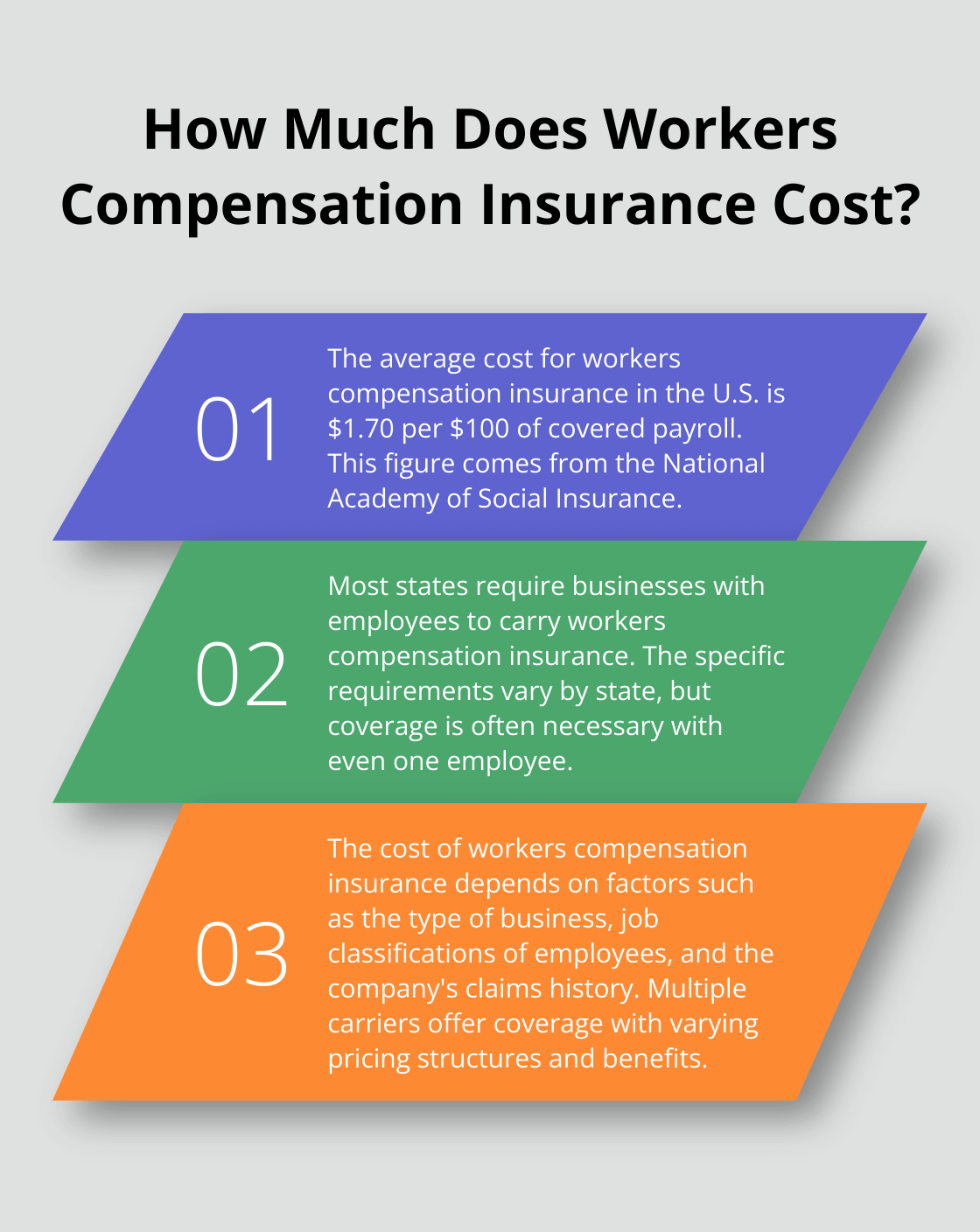
Multiple carriers offer workers compensation coverage, each with its own pricing structure and benefits. Businesses should compare options to find the most cost-effective solution that meets their specific needs and budget.
As we move forward, let’s explore the significant benefits that workers compensation insurance provides to employers, beyond just meeting legal requirements.
How Workers Comp Benefits Employers
Workers compensation insurance offers significant advantages for employers beyond legal compliance. This coverage positively impacts businesses in Austin and beyond.
Financial Shield Against Costly Lawsuits
The most immediate benefit of workers comp is protection from potentially bankrupting lawsuits. Without this insurance, employers could face astronomical legal fees and settlement costs if an employee suffers an injury on the job. The National Safety Council reports that the average work-related injury claim costs $41,000. For small businesses, even a single lawsuit could spell financial ruin.
Boost in Employee Morale and Productivity
When employees know they have protection, they feel more valued and secure in their roles. This sense of security often translates to increased loyalty and productivity. A study by the Workers Compensation Research Institute found that companies with robust workers comp programs experienced a 3.4% increase in employee retention rates.
Tax Advantages for Businesses
Workers compensation premiums typically qualify as tax-deductible business expenses. This can result in substantial savings, especially for companies in high-risk industries with higher premium costs. While the exact amount varies based on tax brackets and other factors, the deduction can significantly offset the cost of coverage.
Streamlined Return-to-Work Programs
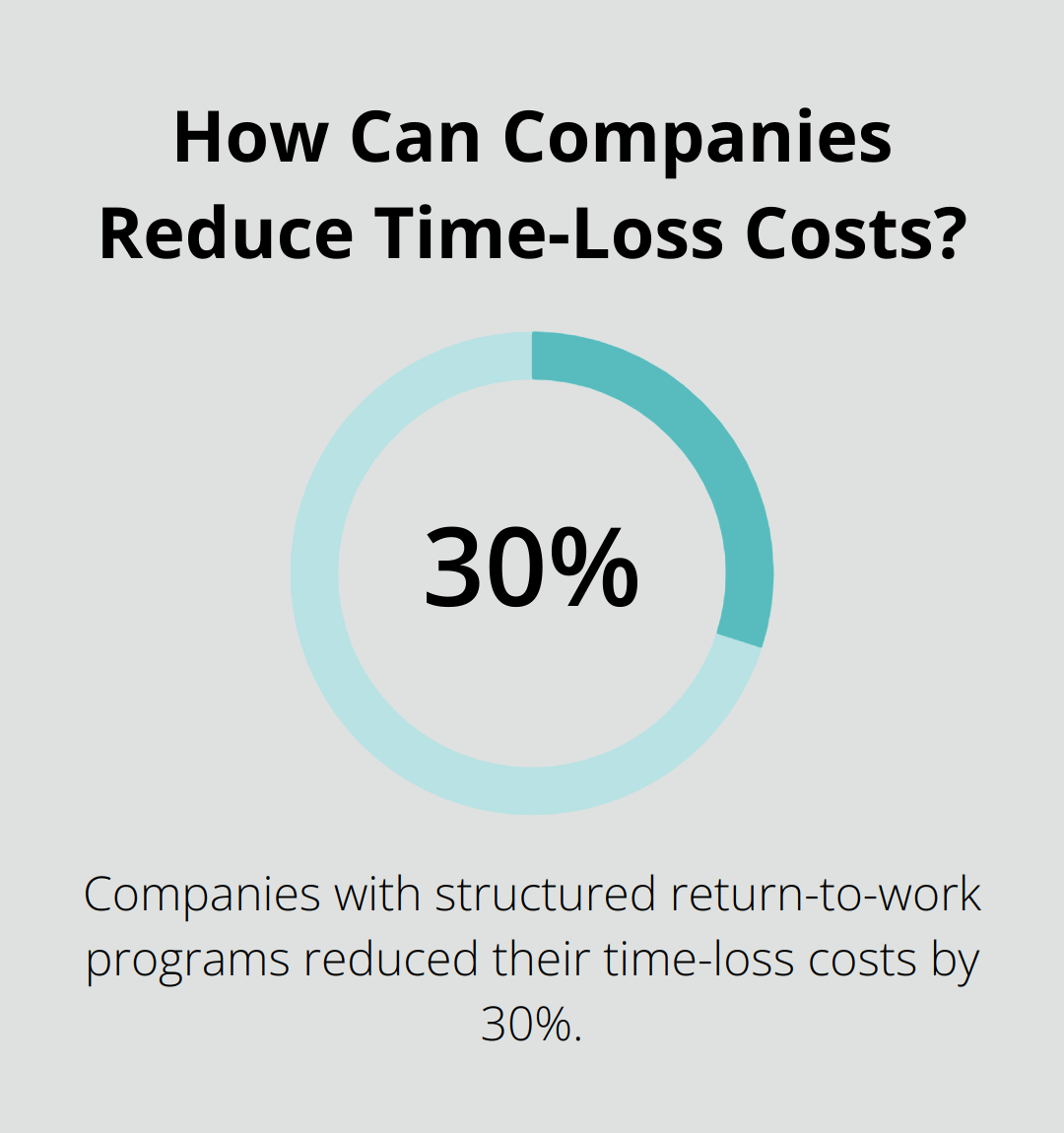
Many workers comp policies include resources for effective return-to-work programs. These programs help injured employees transition back to their jobs more quickly, which reduces the overall cost of claims. The Washington State Department of Labor & Industries found that companies with structured return-to-work programs reduced their time-loss costs by 30%.
Enhanced Safety Culture
Workers comp often leads to a stronger focus on workplace safety. This proactive approach can result in fewer accidents and lower premiums over time. The Occupational Safety and Health Administration (OSHA) reports that companies which implement safety and health programs can reduce their injury and illness costs by 20 to 40%.
Now that we understand the benefits of workers compensation insurance for employers, let’s explore how to implement an effective program that maximizes these advantages while ensuring compliance with state regulations. Workers Comp coverage covers lost wages and medical treatment costs resulting from an on-the-job injury or work related illness.
How to Create a Robust Workers Comp Program
Develop a Culture of Safety
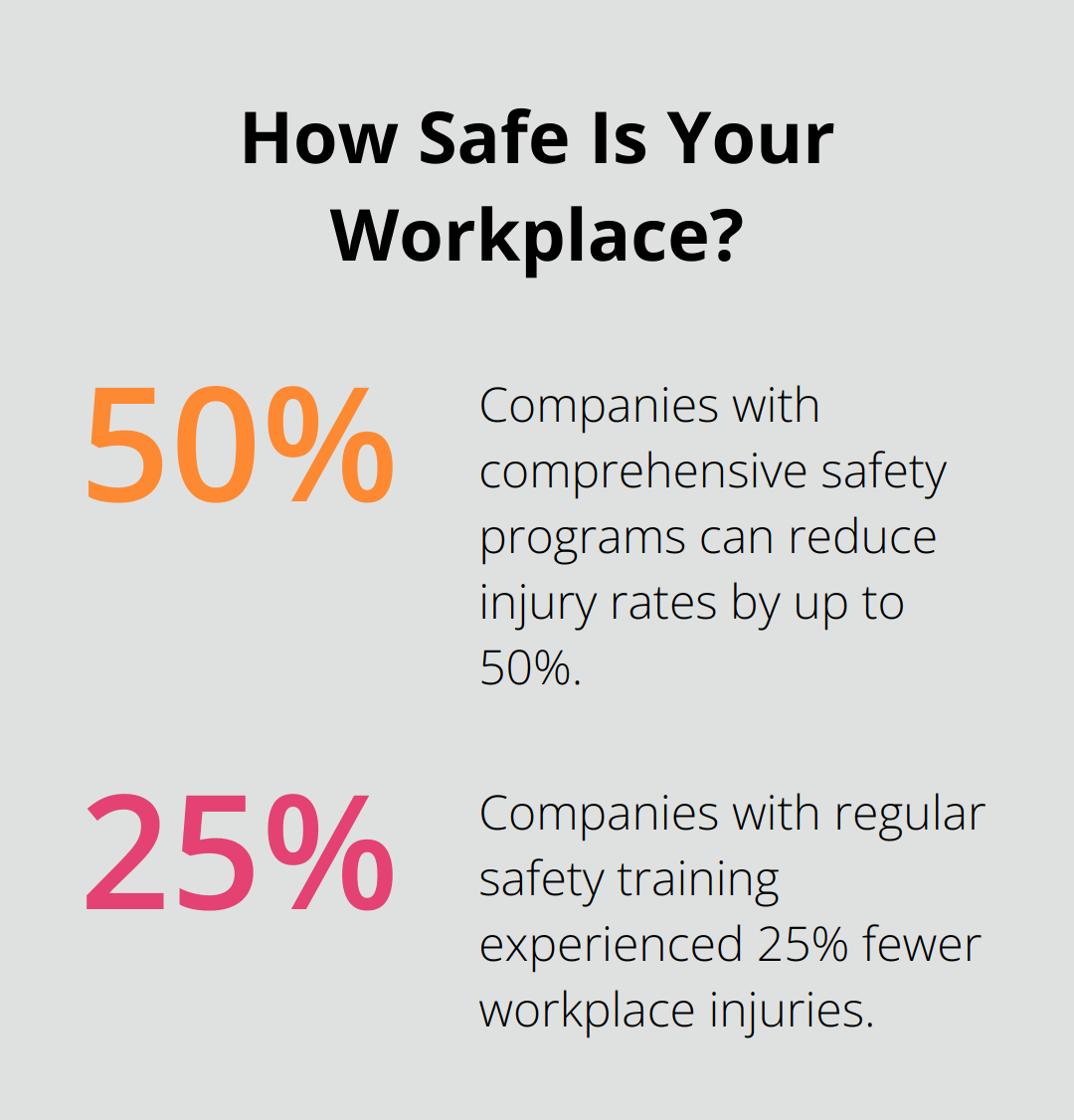
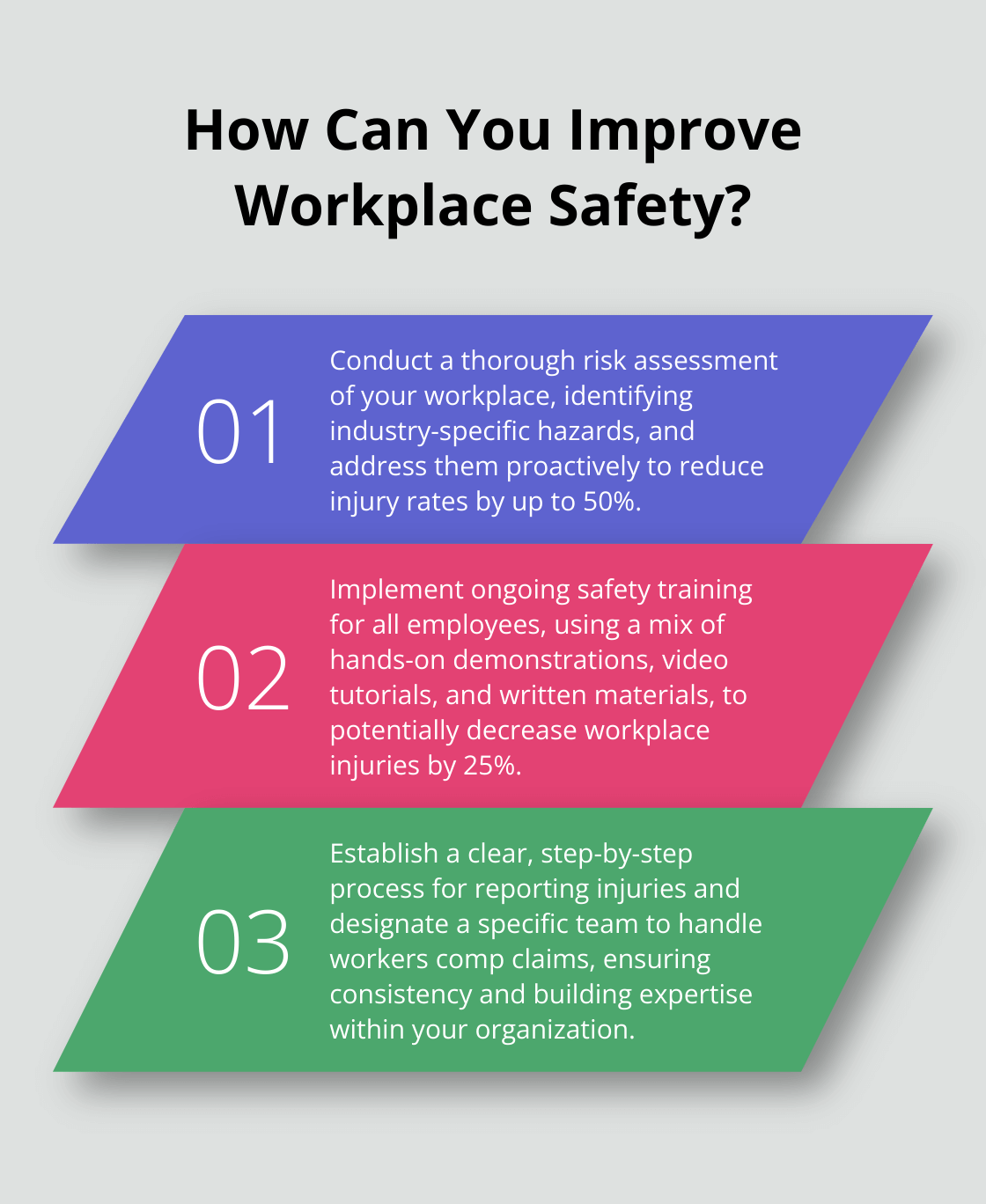
A company-wide commitment to safety forms the foundation of an effective workers compensation program. The National Safety Council reports that companies with comprehensive safety programs can reduce injury rates by up to 50%.
Start with a thorough risk assessment of your workplace. Identify potential hazards specific to your industry and address them proactively. For example, a construction company should focus on fall prevention and proper equipment handling, while an office might prioritize ergonomic workstations and proper lifting techniques.
Involve employees in the safety process. Encourage them to report potential hazards and suggest improvements. This helps identify risks you might have missed and increases buy-in from your team. The Occupational Safety and Health Administration (OSHA) identifies employee involvement as a key factor in successful safety programs.
Invest in Comprehensive Training
Effective training underpins any successful workers comp program. Don’t limit training to new hires – make it an ongoing process for all employees. The Bureau of Labor Statistics found that companies with regular safety training experienced 25% fewer workplace injuries.
Tailor your training to address the specific risks in your workplace. Use a mix of methods (including hands-on demonstrations, video tutorials, and written materials) to cater to different learning styles. Consider bringing in experts for specialized training on complex equipment or procedures.
Document all training sessions and have employees sign off on their participation. This helps with compliance and can prove valuable if you need to defend against a claim.
Streamline Injury Reporting and Claims Management
Quick and efficient injury reporting is essential for managing workers comp claims effectively. Establish a clear, step-by-step process for reporting injuries and ensure all employees understand it. The sooner an injury is reported, the faster treatment can begin, which often leads to better outcomes and lower costs.
Designate a point person or team to handle workers comp claims. This ensures consistency in the process and helps build expertise within your organization. Train this team on proper documentation, communication with injured workers, and coordination with your insurance provider.
Implement a return-to-work program. These programs can significantly reduce the duration and cost of claims. The Workers Compensation Research Institute found that effective return-to-work programs can reduce time off work by up to 30%.
A well-implemented workers comp program is more than just insurance – it’s a comprehensive approach to employee safety and well-being. Focus on prevention, training, and efficient claims management to create a safer workplace and potentially reduce your insurance premiums over time.
Final Thoughts
Workers compensation insurance protects the financial stability and reputation of businesses while safeguarding employees. This essential coverage offers a win-win situation for employers and workers, fostering a safer work environment and providing peace of mind. A robust workers compensation program yields long-term benefits beyond legal compliance, including reduced workplace accidents, improved employee morale, and potential cost savings.
Expert guidance proves invaluable for employers who navigate the complexities of workers compensation insurance. At Heaton Bennett Insurance, we specialize in tailoring coverage to meet the unique needs of businesses in Austin and beyond. Our team of professionals uses years of experience and access to multiple carriers to design comprehensive insurance solutions that protect both employers and employees.
We take the time to assess your company’s needs thoroughly, helping you develop a workers compensation program that meets legal requirements and aligns with your business goals and budget. From risk assessment to claims management, we support you throughout the process. Don’t leave your business vulnerable to the financial and legal risks associated with workplace injuries.

