

Workers Comp for Subcontractors: What You Need to Know
Navigating the world of workers’ compensation insurance can be complex, especially for subcontractors. At Heaton Bennett Insurance, we often hear the question: “Do I need workers’ compensation insurance for subcontractors?”
The answer isn’t always straightforward, as it depends on various factors including state laws, contract requirements, and the nature of your work. Understanding these nuances is crucial for protecting your business and ensuring compliance with legal obligations.
What Is Workers’ Comp for Subcontractors?
Workers’ compensation insurance provides a critical safety net for businesses and their employees. This insurance offers financial protection and medical benefits to workers who suffer job-related injuries or illnesses. Subcontractors must understand this insurance for legal compliance and business security.
The Fundamentals of Workers’ Comp
Workers’ comp insurance covers medical expenses, lost wages, and rehabilitation costs for employees injured on the job. It also shields employers from lawsuits related to workplace injuries. The National Safety Council reports that the average workers’ compensation claim in 2020 amounted to $41,353 (a figure that underscores the potential financial impact on uninsured businesses).
The Importance for Subcontractors
Subcontractors often operate in high-risk industries such as construction or manufacturing. Without adequate coverage, a single workplace accident could result in devastating financial consequences. The Occupational Safety and Health Administration (OSHA) reported that in 2019, the construction industry accounted for 20% of all private industry fatalities.
Texas Workers’ Comp Requirements
Texas does not mandate workers’ compensation insurance for most private employers. However, this fact doesn’t mean subcontractors should forego it. Many general contractors and project owners require subcontractors to carry workers’ comp insurance before allowing them on job sites.
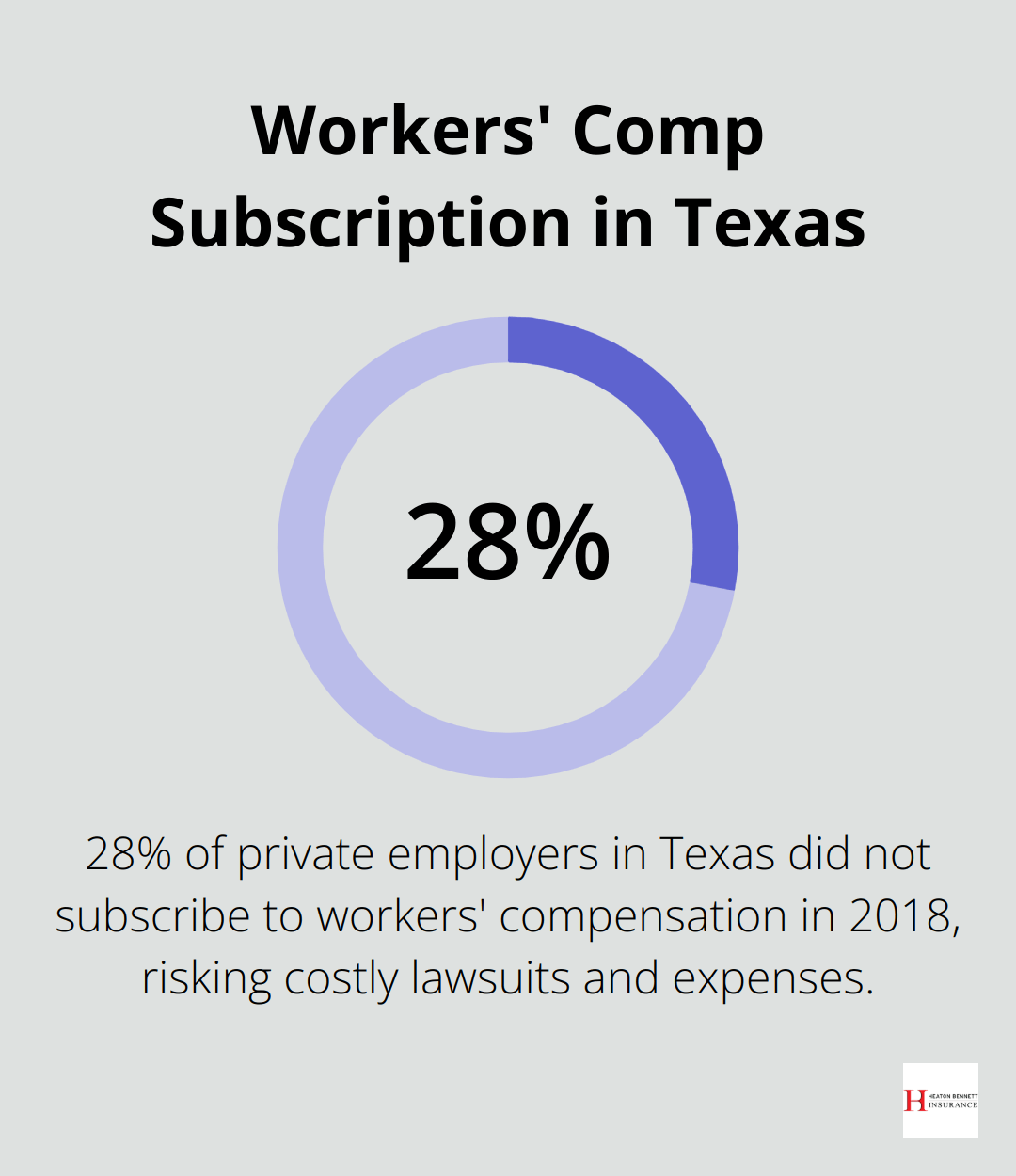
The Texas Department of Insurance reports that 28% of private employers in Texas did not subscribe to workers’ compensation in 2018. These businesses risk facing costly lawsuits and out-of-pocket expenses for employee injuries.
The Role of Insurance Agencies
Insurance agencies play a vital role in helping subcontractors navigate the complexities of Texas workers’ comp laws. They can assist in finding a policy that fits specific needs and provides comprehensive coverage. (It’s worth noting that while some agencies might offer limited options, others provide access to multiple carriers for more tailored solutions.)
As we move forward, we’ll explore when subcontractors need workers’ comp and the factors that determine coverage requirements. This information will help you make informed decisions about protecting your business and employees.
When Do Subcontractors Need Workers’ Comp?
Contract Requirements
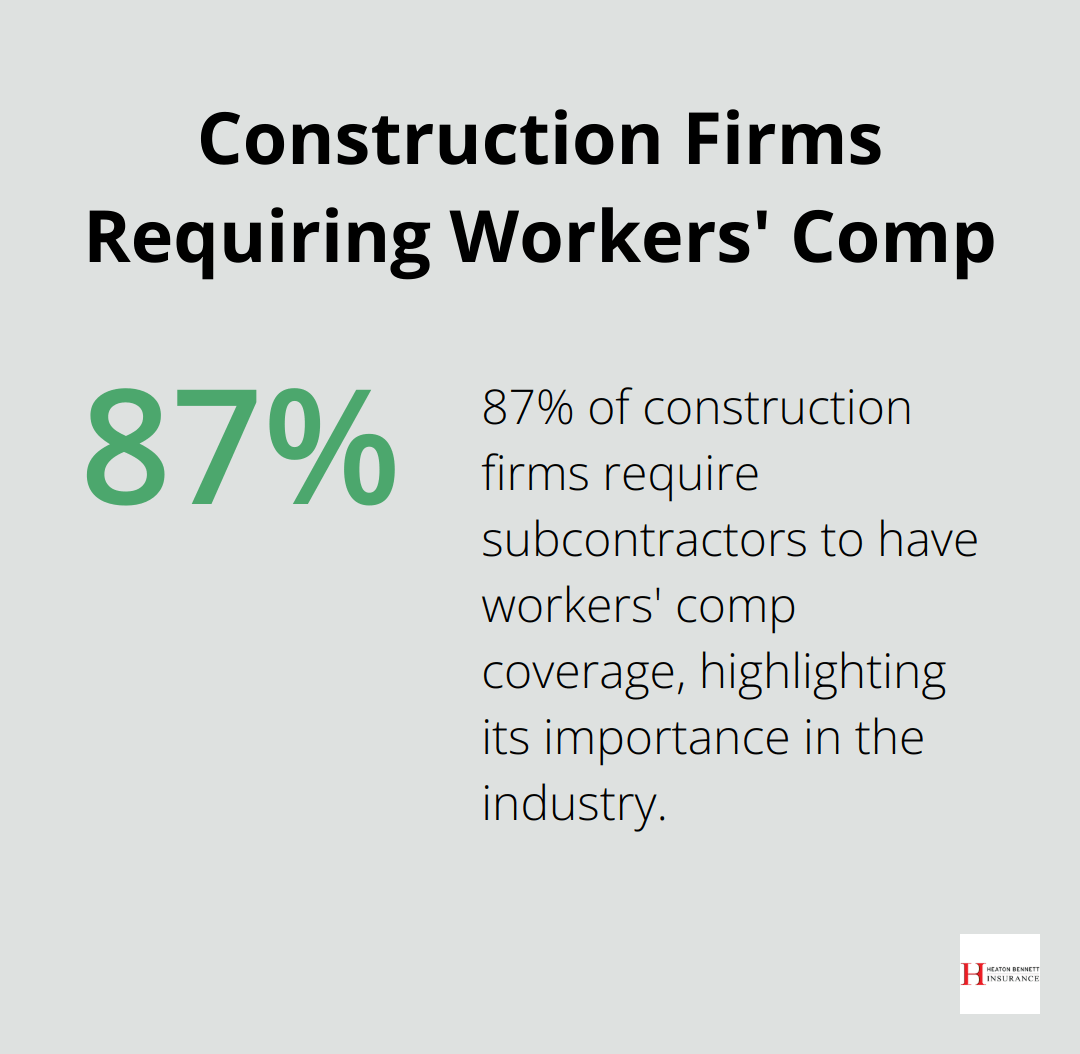
Many general contractors and project owners require subcontractors to carry workers’ comp insurance before allowing them on job sites. This requirement minimizes liability and ensures a safe work environment. A survey by the Associated General Contractors of America found that 87% of construction firms require subcontractors to have workers’ comp coverage.
Employee Count
While sole proprietors and independent contractors may not need to carry workers’ comp in Texas legally, the situation changes when you hire employees. If you have even one employee, you should obtain coverage. The Texas Department of Insurance reports that businesses with employees who opt out of workers’ comp lose important legal protections (including immunity from most employee lawsuits).
Industry Risk Level
High-risk industries often necessitate workers’ comp coverage, regardless of legal requirements. Construction, for instance, saw 1,061 fatal work injuries in 2019, according to the Bureau of Labor Statistics. This high risk level makes workers compensation insurance essential for subcontractors in such fields.
Financial Protection
Not having workers’ comp exposes subcontractors to significant financial risks. The National Safety Council states that the average cost of a workplace injury in 2019 was $42,000. Without insurance, subcontractors would have to bear these costs out-of-pocket, potentially leading to financial ruin.
Competitive Advantage
Having workers’ comp can give subcontractors a competitive edge. Many clients prefer working with insured subcontractors, viewing it as a sign of professionalism and responsibility. A study by the Insurance Information Institute found that 71% of consumers are more likely to hire a contractor with proper insurance coverage.
While Texas law may not always mandate workers’ comp for subcontractors, the potential risks and benefits make it a wise investment for most. The next section will explore the specific benefits that workers’ comp insurance provides to subcontractors and their employees.
Why Workers’ Comp Matters for Subcontractors
Financial Protection Against Workplace Injuries
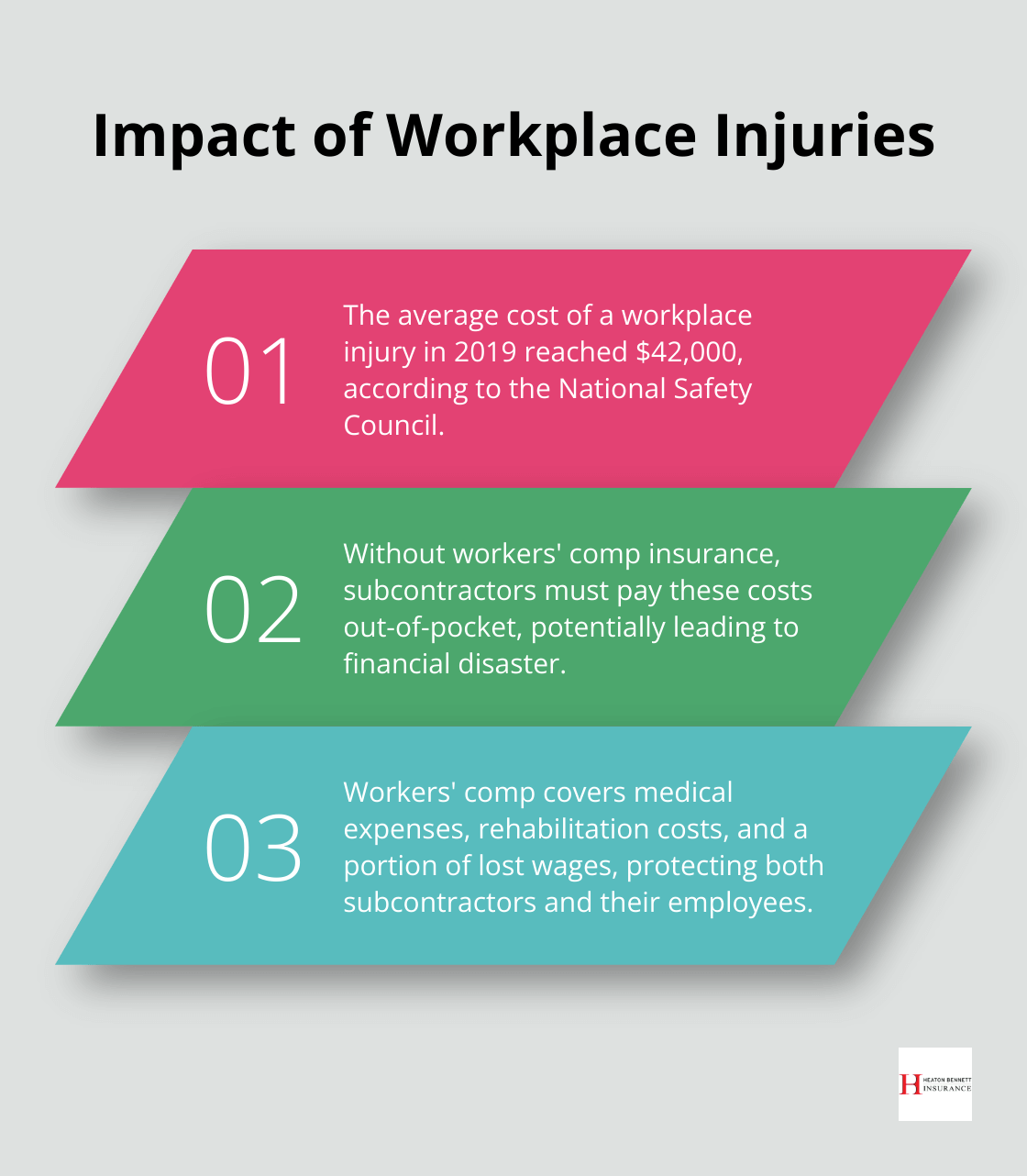
Workers’ compensation insurance provides essential financial protection for subcontractors. The National Safety Council reports that the average cost of a workplace injury in 2019 reached $42,000. Without insurance, subcontractors must pay these costs out-of-pocket, which can lead to financial disaster. Workers’ comp covers medical expenses, rehabilitation costs, and a portion of lost wages, which protects both the subcontractor and their employees financially in case of an accident.
Enhanced Business Reputation and Opportunities
Workers’ comp insurance can significantly improve a subcontractor’s reputation and create new business opportunities. Many general contractors and project owners require proof of workers’ comp coverage before allowing subcontractors on job sites. (The Associated General Contractors of America found that 87% of construction firms require this coverage from subcontractors.) This insurance demonstrates professionalism and responsibility, which makes subcontractors more attractive to potential clients and partners.
Legal Compliance and Protection
Texas doesn’t mandate workers’ comp for most private employers, but this insurance provides important legal protections. The Texas Department of Insurance states that businesses with employees who opt out of workers’ comp lose immunity from most employee lawsuits. This means subcontractors without workers’ comp face potentially costly legal battles if an employee suffers an injury on the job. Workers’ comp acts as a safeguard, which protects subcontractors from these legal risks and ensures compliance with applicable regulations or contract requirements.
Risk Management and Safety Promotion
Workers’ comp insurance encourages subcontractors to implement strong safety practices. Insurance providers often offer resources and incentives for maintaining a safe work environment. (This can include safety training programs, risk assessments, and discounts for good safety records.) These measures not only reduce the likelihood of workplace accidents but also contribute to a culture of safety that benefits everyone involved in a project.
Employee Satisfaction and Retention
Providing workers’ comp insurance can increase employee satisfaction and retention rates. Employees who know they have protection in case of workplace injuries feel more secure in their jobs. This sense of security can lead to increased loyalty, productivity, and overall job satisfaction. Subcontractors who offer this benefit may find it easier to attract and retain skilled workers in a competitive labor market.
Final Thoughts
Workers’ compensation insurance provides essential protection for subcontractors in Texas. The question “Do I need workers’ compensation insurance for subcontractors?” depends on factors like contract requirements, employee count, and industry risk level. Consulting with insurance professionals helps subcontractors navigate the complexities of Texas workers’ comp laws and understand their coverage needs.
At Heaton Bennett Insurance, we help subcontractors find the right workers’ compensation coverage. Our team uses a “Security Snapshot” process to provide personalized, comprehensive coverage options. We have access to multiple carriers, which allows us to find the best protection for your unique business needs.
Don’t leave your business vulnerable to potential risks. Contact Heaton Bennett Insurance today to explore your workers’ compensation options and secure the protection your business deserves. Our expertise in workers’ comp and other business insurance types means we can provide you with a holistic view of your insurance needs.

