

Liability Insurance for Contractors: A Practical Guide
Contractors face real financial risk every day on job sites. One accident or mistake can lead to lawsuits that threaten your business.
Liability insurance for contractors isn’t optional-it’s the foundation of smart business protection. We at Heaton Bennett Insurance help contractors understand their coverage options so they can focus on what they do best.
What Contractor Liability Insurance Actually Covers
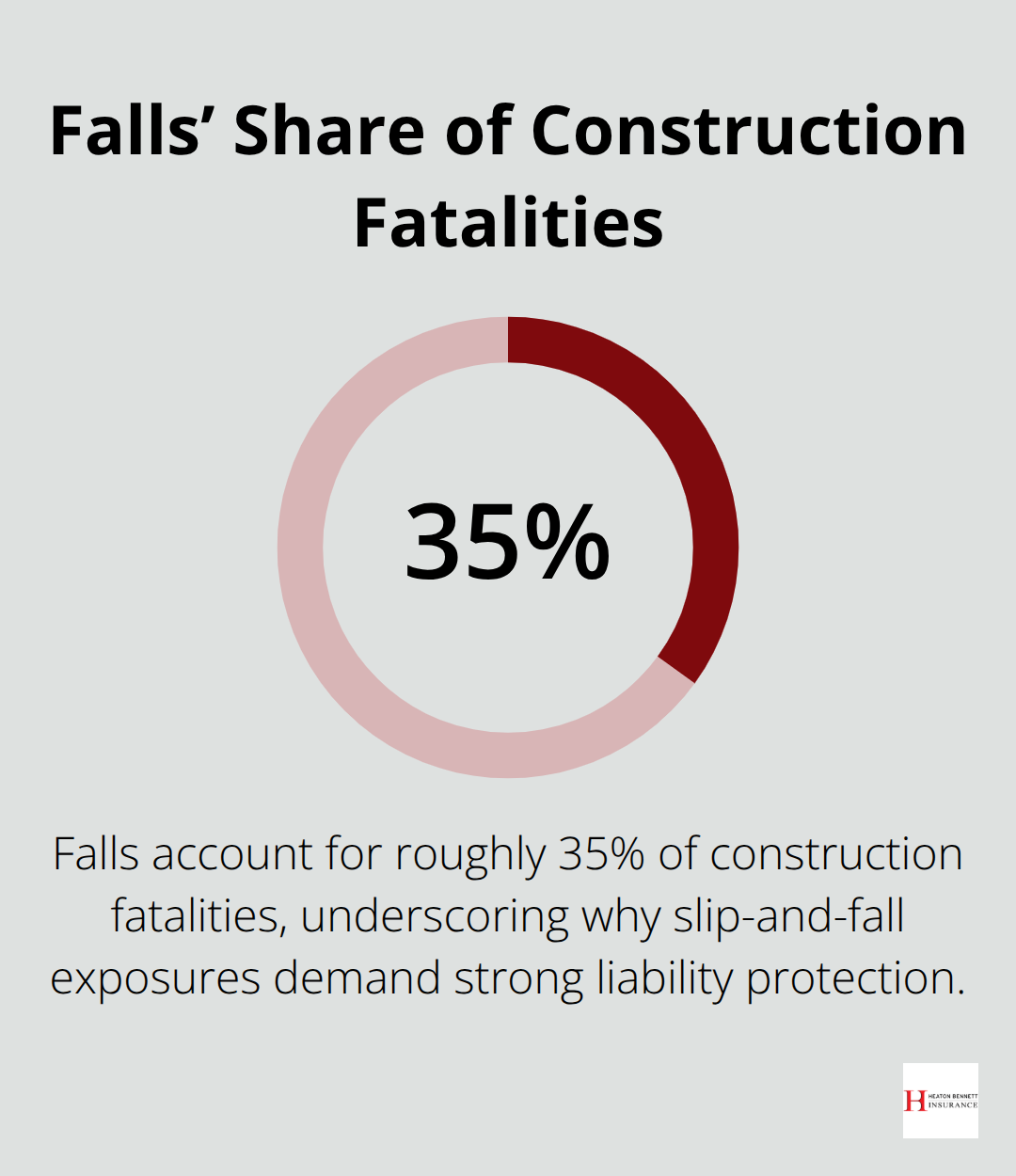
Contractor liability insurance protects your business when someone gets hurt or property gets damaged because of your work. The U.S. Bureau of Labor Statistics recorded 174,100 nonfatal injuries in construction during 2020, which means claims happen regularly across the industry. General liability covers third-party bodily injury and third-party property damage-meaning injuries to clients, neighbors, or passersby, plus damage to their property caused by your operations. It does not cover your own faulty workmanship or mistakes in design; that’s what professional liability handles. The National Safety Council reports that the average slip-and-fall claim reached $20,000 in 2022, and falls account for roughly 35% of construction fatalities, making this single exposure worth serious attention. Your policy also covers legal defense costs and medical payments for minor public injuries, which can save tens of thousands before a case even goes to trial.
Most clients require proof of coverage through a Certificate of Insurance before signing contracts, typically in the 1 million per occurrence and 2 million aggregate range for standard projects, though commercial work often demands 5 million or higher.
Where Claims Actually Come From
Slip-and-fall injuries dominate construction claims because wet surfaces, uneven ground, and debris create constant hazards on active job sites. Property damage claims often stem from negligence-hitting underground utilities, damaging client structures, or collateral damage during your work-and can easily reach six figures. The National Association of Home Builders notes that roofing contractors pay 20 to 30 percent more for general liability than general contractors, reflecting higher injury risk. Equipment theft and damage represent another major claim category; the National Insurance Crime Bureau reports about 300 million dollars in annual construction equipment theft, making scheduled tools and overnight storage essential protections. Your policy also covers products and completed operations liability, protecting you if someone gets injured by something you installed weeks or months after the job ended. Advertising injury coverage handles copyright infringement or libel claims related to your marketing materials, though this rarely triggers claims.
How State Rules Shape Your Coverage
Workers’ compensation is mandatory in all states except Texas and South Carolina, and large clients often require proof of coverage before allowing you on site. New York adds complexity with Disability and Paid Family Leave requirements if you hire even part-time help. High-risk states like California, Colorado, and New York push general liability premiums significantly higher-sometimes 2 to 5 times compared with rural areas-so geographic location directly impacts your costs. Many municipalities require minimum general liability to obtain building permits, and government projects demand additional coverage or bonding. Your contracts themselves often dictate insurance requirements; endorsements like Additional Insured, Waiver of Subrogation, and Primary and Noncontributory reshape how your coverage applies and must be attached to your policy. Residential remodels typically need 1 to 2 million in liability limits, while commercial foundations may demand around 5 million, so project type drives your actual coverage needs. Verify what your specific clients require before bidding work, because misalignment between your policy and contract demands can leave you uninsured for that project and create disputes when claims arise. Understanding these three main exposure areas-slip-and-fall injuries, property damage to client structures, and equipment theft or damage-helps you recognize why coverage limits matter and why cheap policies with exclusions can leave you exposed. The right coverage protects your business, but selecting it requires knowing exactly what your clients expect and what your operations actually face.
Key Coverage Options Every Contractor Needs
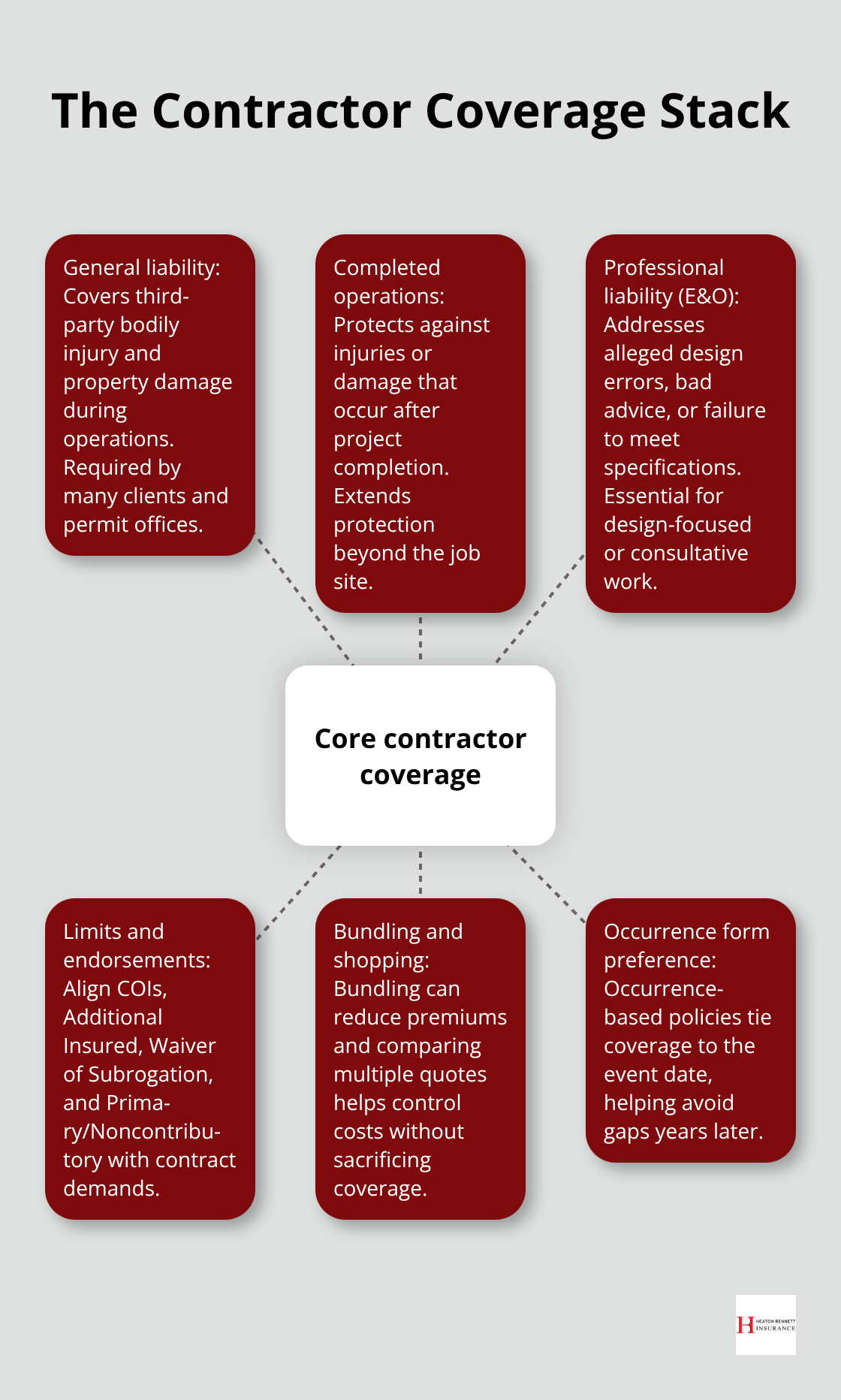
General liability insurance is non-negotiable, but it’s only one piece of the puzzle. Most contractors who stop at general liability alone leave themselves exposed to major gaps. Your core protection stack needs three distinct policies working together: general liability for third-party injuries and property damage, completed operations coverage to protect you after projects finish, and professional liability to guard against claims of negligence or mistakes in your work.
General Liability: Your Foundation
General liability typically costs $400 to $900 annually for solo contractors with standard exposure, but this varies dramatically by trade and location. Roofing contractors pay 20 to 30 percent more than general contractors according to the National Association of Home Builders, reflecting higher injury risk on steep surfaces. Your policy should carry limits of at least $1 million per occurrence and $2 million aggregate for residential work; commercial projects frequently demand $5 million or higher.
The Hartford, ERGO NEXT, and Hiscox offer solid occurrence-based policies, which cover events during your policy term rather than when claims are filed. Occurrence forms protect you far better than claims-made forms because coverage stays active even after a project ends, eliminating the trap of having claims filed years later with no coverage in place.
Completed Operations: Protection After You Leave
Completed operations coverage handles injuries or damage that happen weeks or months after you finish a job. A homeowner slips on a tile you installed three months earlier, or someone gets hurt using equipment you built-completed operations covers these scenarios when your general liability policy might not. This coverage typically extends one year after project completion, though you can negotiate longer tail periods for high-value work.
Many contractors bundle completed operations into their general liability policy, but you need to verify this explicitly with your carrier because some policies limit or exclude it. The difference between a policy that includes completed operations and one that doesn’t can mean the difference between recovery and financial loss after a claim surfaces months later.
Professional Liability: Protecting Your Expertise
Professional liability (also called errors and omissions or E&O insurance) protects you if a client claims you made a design mistake, gave bad advice, or failed to meet specifications. For design-focused trades like engineering or architectural work, professional liability commonly costs $600 to $1,500 annually and carries limits around $1 million per occurrence.
This coverage is separate from general liability because it covers your intellectual work, not physical injuries or property damage. If you provide consulting, design services, or specialized recommendations as part of your work, professional liability is essential-general liability explicitly excludes faulty workmanship and design errors, leaving you completely exposed without it.
Bundling Policies for Better Value
Bundling all three policies can yield discounts up to 15 percent according to the National Association of Insurance Commissioners, so shopping multiple carriers simultaneously matters significantly. Comparing at least three quotes can save you up to 20 percent on premiums, and an independent agent can access multiple carriers to find the right fit for your specific operation. The right combination of these three policies creates a safety net that protects your business across the most common exposures contractors face, but selecting the right limits and endorsements requires understanding what your clients actually demand before you bid the work.
How to Choose the Right Coverage for Your Actual Risk
Compile Your Project History First
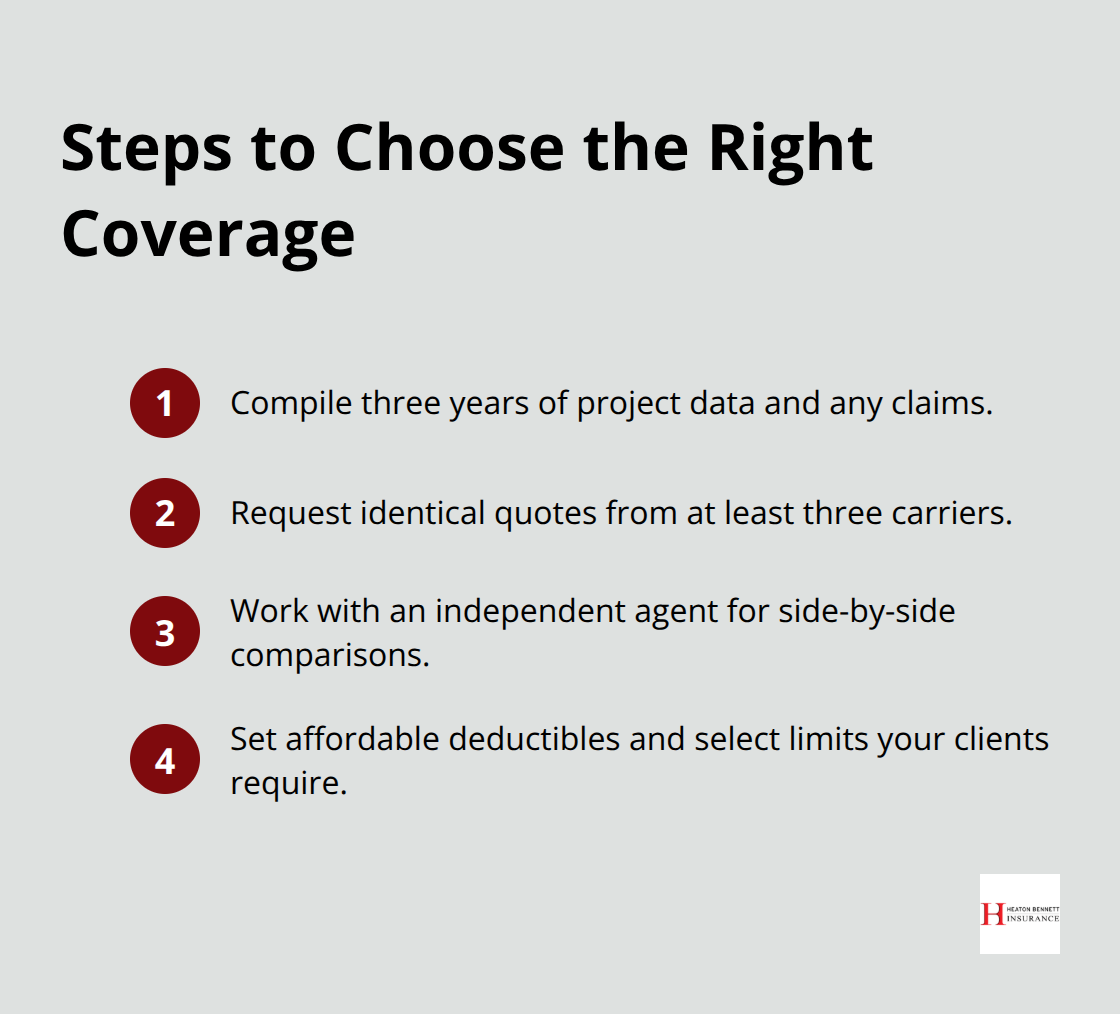
Start by pulling together the past three years of project data before talking to any insurance carrier. Document the types of jobs you completed, the annual revenue from each category, which states you worked in, and any claims or incidents that occurred. This information tells you exactly which exposures matter most to your business, not what matters to contractors in general.
A residential remodeler operating in Arizona faces completely different risks than a commercial foundation contractor in New York, so your coverage needs to match your specific operation. Your project history reveals patterns that carriers use to classify your work and calculate premiums accurately.
Request Quotes from Multiple Carriers
Contact at least three different carriers and request quotes for the exact same coverage limits and deductibles. Comparing quotes from different companies is non-negotiable because premiums vary wildly depending on how each carrier classifies your work, what exclusions they apply, and whether they offer endorsements your clients require.
The difference between a cheap quote and a competitive quote can compound to thousands of dollars over five years, but the cheap option often hides exclusions for unattended equipment or subcontractors that leave you completely exposed when claims happen. Ask explicitly whether completed operations coverage is included in the general liability policy, whether your specific trade classification carries any exclusions, and what endorsements the carrier can attach without additional cost.
Work with an Independent Agent
An independent insurance agent matters here because they access multiple carriers at once and can identify gaps that you would miss comparing quotes alone. Rather than calling three carriers separately and juggling three different conversations, an independent agent can show you side-by-side comparisons of coverage, exclusions, and pricing from dozens of options.
When you receive quotes, verify that your top choice offers instant Certificate of Insurance generation because you need COIs issued within hours of signing contracts, not days later. An agent who represents multiple carriers (rather than just one) gives you flexibility to find the right fit for your specific operation.
Set Deductibles and Limits That Match Your Business
Higher deductibles lower your premiums but increase your out-of-pocket costs after a claim, so choose a deductible you can actually afford to pay if a loss occurs. Most contractors should target deductibles between $1,000 and $2,500 because anything higher creates cash flow problems after a claim, and anything lower wastes money on premiums you could spend elsewhere.
Request quotes at multiple limit levels too, because upgrading from $1 million to $2 million in aggregate coverage often costs far less than you expect, and knowing the actual price difference helps you make informed decisions about what protection your clients require versus what your budget allows. The right policy protects your business across your actual operations, but selecting it requires comparing real quotes from multiple carriers and understanding what your specific clients demand before you sign anything.
Final Thoughts
Your liability insurance for contractors must evolve as your business grows and your clients demand higher limits. The three-policy foundation of general liability, completed operations, and professional liability protects you against slip-and-fall injuries, property damage claims, and equipment theft-the exposures that actually drain contractor profits. Protection only works when your policy limits match what your clients require and what your operations actually face.
Start by gathering your project history and understanding exactly what risks your business carries, then request quotes from multiple carriers using identical coverage specifications. Don’t chase the cheapest quote because low premiums often hide exclusions that leave you exposed when claims happen; a policy that costs $200 more annually but includes completed operations coverage and subcontractor protection beats a cheap policy that excludes both. An independent agent accesses dozens of carriers simultaneously and shows you side-by-side comparisons of coverage, pricing, and exclusions while handling Certificate of Insurance generation instantly when you sign contracts.
We at Heaton Bennett Insurance help contractors navigate these decisions by providing access to multiple carriers and personalized guidance. Rather than pushing you toward one-size-fits-all coverage, we work with you to understand your specific operations and build protection that actually covers what matters. Contact us to discuss your liability insurance needs and get quotes that reflect your real business.
The information provided in this blog is for general informational purposes only and does not constitute legal, financial, or insurance advice. Coverage options, terms, and availability may vary. Please consult with a licensed professional for advice specific to your situation.

