
Understanding Commercial Property Weather Insurance for Businesses
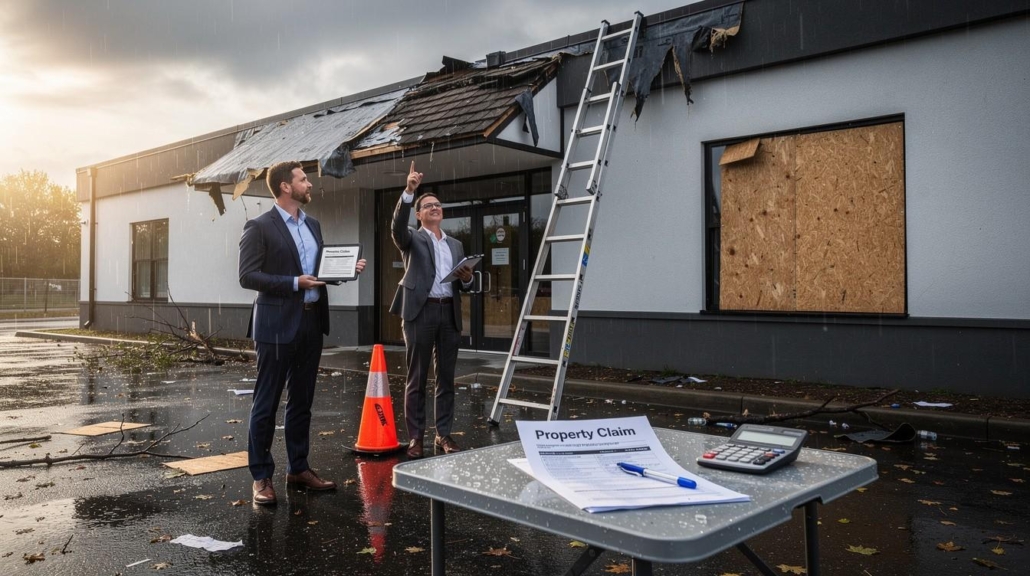
Weather damage costs U.S. businesses billions annually, yet many lack adequate protection. Standard property insurance often leaves significant gaps when storms, floods, or hail strike.
At Heaton Bennett Insurance, we help businesses understand commercial property weather insurance and why it’s essential for your operation. The right coverage can mean the difference between recovering quickly and facing devastating financial losses.
What Weather Insurance Actually Covers vs. What It Doesn’t
Standard Coverage Leaves Critical Gaps
Wind and hail damage fall under standard commercial property policies, but flood damage requires separate coverage or an endorsement. This distinction matters enormously because many business owners assume their existing policy protects them during major storms. According to MSCI data, insurance costs as a share of income for U.S. commercial properties rose to 2.4% in the 12 months through Q3 2024, up from 1.4% five years earlier, reflecting how climate risk is reshaping coverage availability and pricing. Regional variation is dramatic: Orlando properties face insurance costs at 4.6% of income while Chicago sits at just 1.3%, showing that location-based weather risk directly affects what you’ll pay and what you can actually get covered.
How Property Type Affects Your Costs
Apartment buildings experienced the sharpest increase, with insurance costs jumping from 1.4% to 3.0% of income over five years, signaling that property type matters as much as geography when underwriters assess weather exposure. Your building’s age, construction materials, and roof condition all influence how insurers price weather risk into your premium. This means two similar businesses in the same city can face vastly different rates based on their specific property characteristics.
The Hidden Exclusions in Your Current Policy
Standard policies cover damage from fallen trees only if the tree damages your insured building; if it falls without hitting your structure, coverage stops. Water damage from rain can be included in standard policies, but hurricane-related flood damage almost always requires a separate flood policy or endorsement. For businesses with vehicle fleets, weather-related damage to vehicles is covered under commercial auto policies only if comprehensive coverage is in place. This fragmentation means you need to audit your current policies line by line rather than assume blanket protection.
How Parametric Insurance Changes the Game
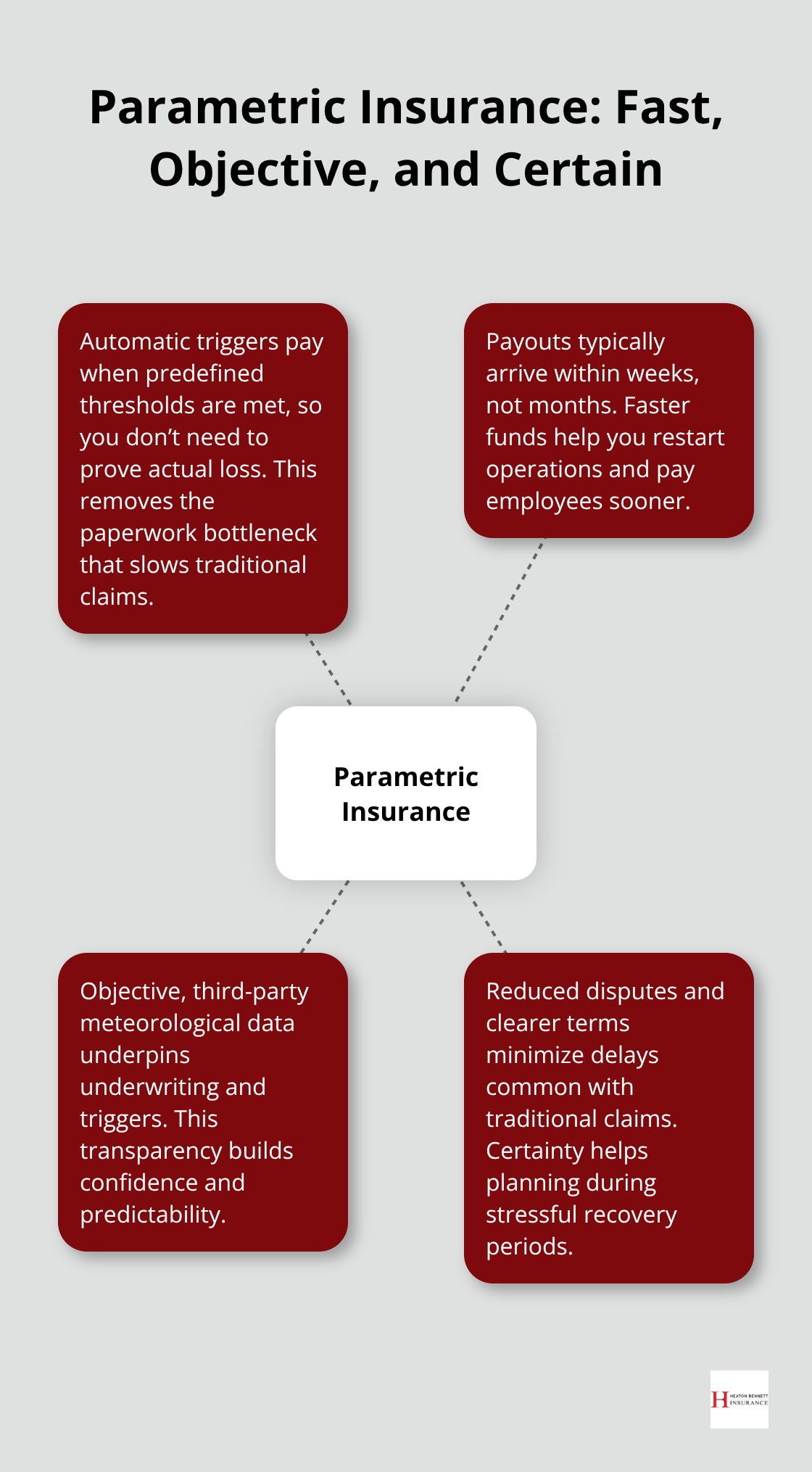
Parametric weather insurance operates differently from traditional coverage by paying out automatically when predefined weather thresholds are reached, without requiring you to prove actual loss. This approach eliminates the documentation burden and disputes that typically delay claims for weeks or months. The underwriting is backed by third-party meteorological data, creating transparency and faster payouts that typically occur within weeks after a triggering event, compared to the standard three-to-six-month timeline for traditional claims processing. Understanding these differences positions you to make informed decisions about which coverage types actually protect your business from the weather risks you face most often.
What Weather Damage Actually Costs Your Business
The Financial Toll of Weather Events
Weather events inflict staggering financial damage on U.S. businesses every year. Hurricanes Milton and Helene demonstrated this reality vividly, reshaping how carriers price commercial property coverage and exposing how vulnerable most businesses remain. Beyond the immediate repair bills, weather damage triggers business interruption losses that often dwarf the physical damage itself. A manufacturing facility shut down for two weeks loses far more than the cost of roof repairs-it loses revenue, strains customer relationships, and disrupts supply chains.
Rising Insurance Costs Squeeze Your Bottom Line
According to MSCI research, insurance costs as a share of income for commercial properties have doubled in five years, climbing from 1.4% to 2.4% through Q3 2024. This rising cost burden squeezes net operating income directly, forcing property owners to absorb higher premiums or reduce coverage. Apartment buildings absorbed the sharpest hit, with insurance costs jumping from 1.4% to 3.0% of income over the same period. Geography amplifies this burden dramatically-Orlando properties pay 4.6% of income toward insurance while Tampa sits at 4.1%, compared to Chicago’s manageable 1.3%.
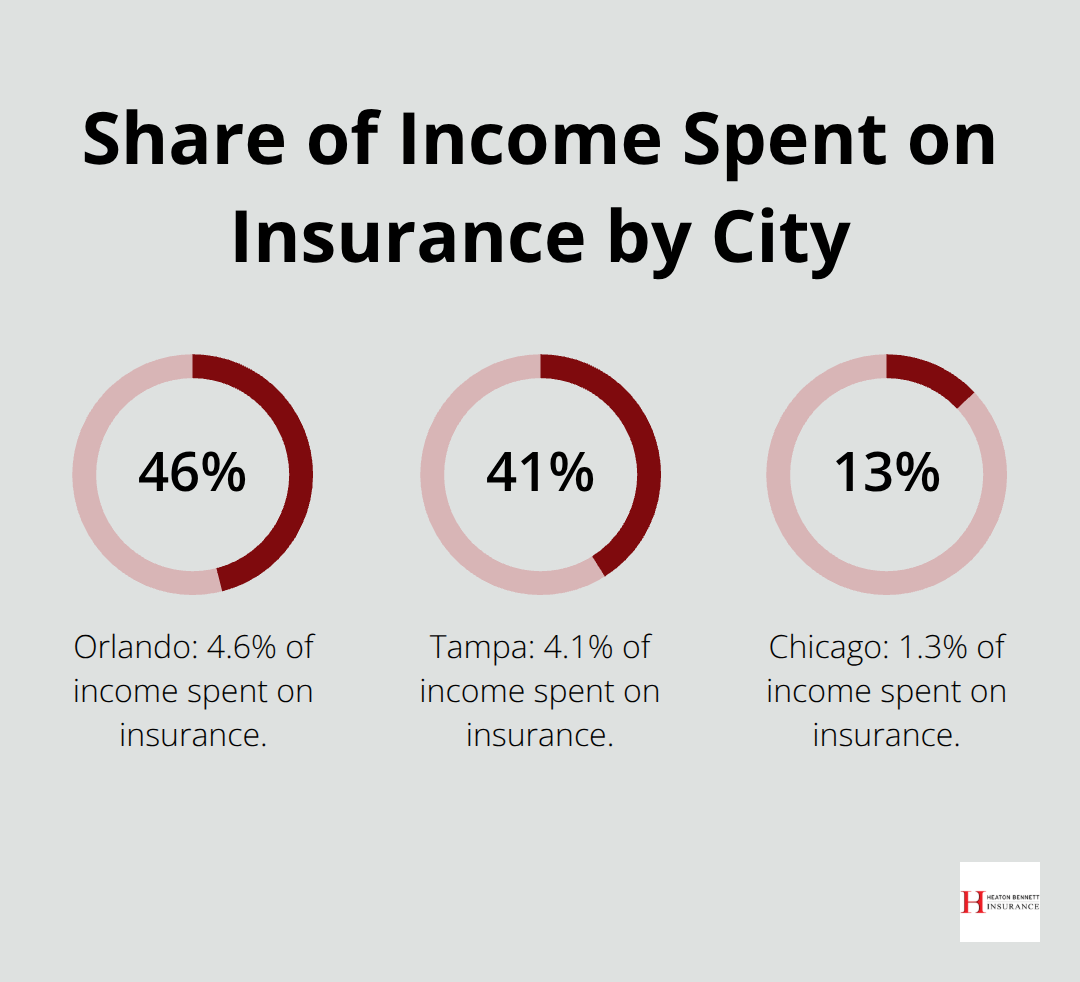
These disparities reflect real differences in weather exposure and loss history, not market inefficiencies. Your location determines not just what you pay, but whether coverage remains available at any price.
Standard Coverage Leaves You Exposed
Standard property insurance leaves enormous gaps that become painfully obvious after a weather event strikes. Wind and hail damage fall under traditional policies, but flood damage almost never does without a separate endorsement, and business interruption coverage requires explicit inclusion in your policy language. Many business owners discover too late that their standard policy covers the roof damage but not the lost revenue from closure, or covers wind damage but excludes the resulting water intrusion. This fragmentation means you must audit your current policies line by line rather than assume blanket protection.
Parametric Insurance Delivers Speed and Certainty
Parametric weather insurance addresses these gaps by paying out automatically when predefined weather thresholds trigger, without requiring you to document losses or wait months for claims adjusters. Payouts typically arrive within weeks rather than the standard three-to-six-month timeline, accelerating your recovery and reducing the financial hemorrhage from extended downtime. For businesses that cannot afford extended closure periods (restaurants, retail operations, data centers), this speed difference transforms parametric coverage from optional to operationally essential. The data-driven approach eliminates disputes over whether damage meets your deductible or qualifies under policy exclusions, replacing subjective assessment with objective meteorological measurements. This certainty matters enormously when you need funds quickly to restart operations, pay employees during closure, or fulfill customer commitments.
Understanding these cost realities and coverage gaps positions you to make informed decisions about which protection strategies actually match your business’s weather exposure. The next section walks you through assessing your specific risk profile and identifying which coverage options protect your operation most effectively.
Matching Coverage to Your Actual Weather Risks
Identify Your Specific Weather Threats
Start with your location and what weather actually threatens your business, not what sounds scary. A retail operation in Denver faces hail risk but minimal hurricane exposure, while a warehouse in Tampa confronts both hurricane wind and storm surge. Your address determines everything. According to MSCI analysis covering over 50,000 property assets, asset-level risk varies dramatically within the same market. Under a 3°C warming scenario to 2050, Chicago faces minimal physical climate value-at-risk at negative 0.1%, while Tampa sits at negative 3.0% and Orlando at negative 2.1%, meaning your specific address matters far more than regional averages when calculating what coverage you actually need.
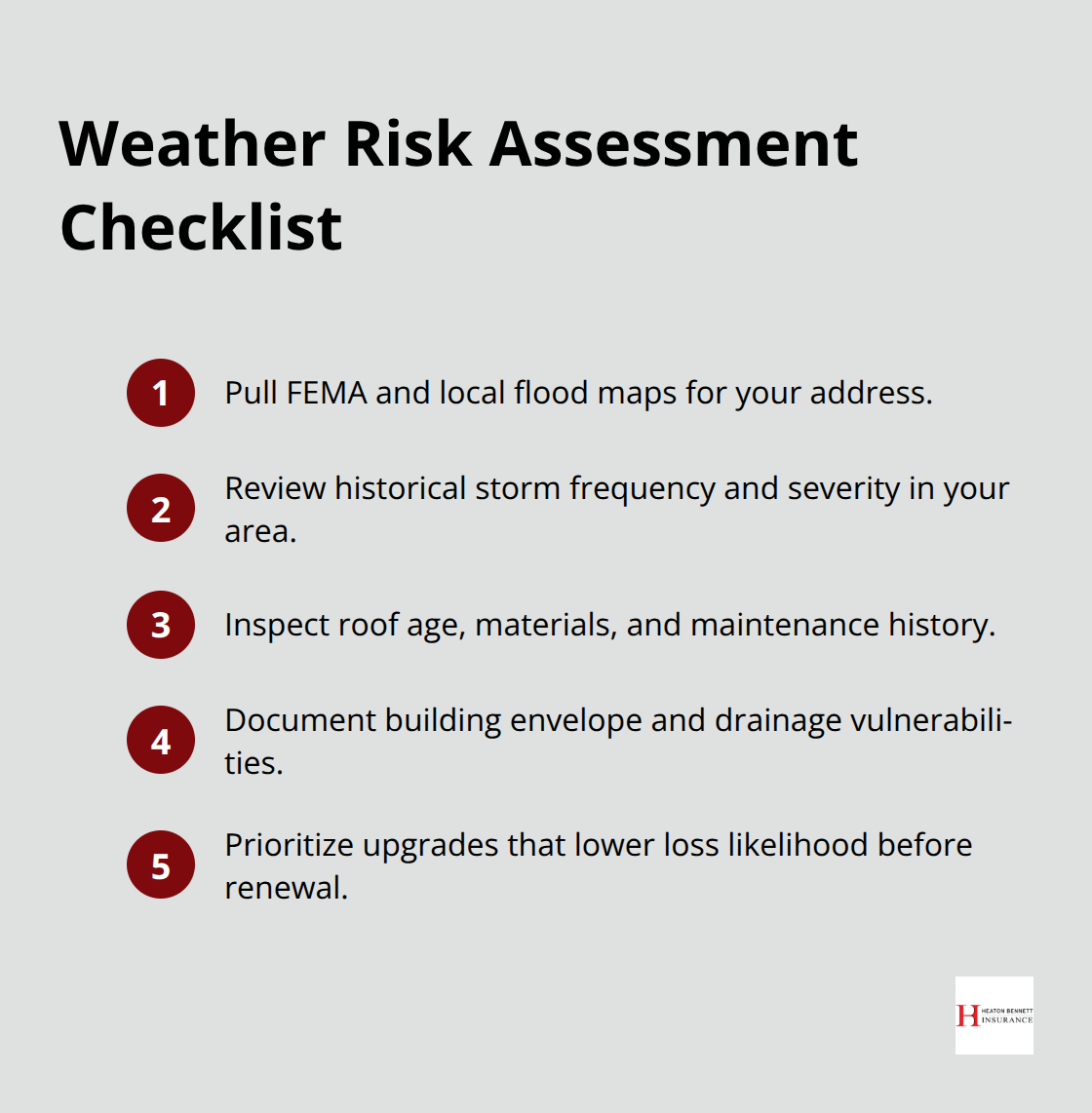
Pull your property’s flood maps, check historical storm frequency in your area, and examine your roof’s age and materials. A 20-year-old roof in a hail-prone zone demands different protection than a newly installed metal roof. This assessment takes hours but prevents months of regret after a weather event strikes.
Calculate Your True Shutdown Costs
Document your facility’s revenue dependency on uninterrupted operations. If your business generates $10,000 daily and cannot operate during a weather closure, business interruption coverage becomes non-negotiable rather than optional. Calculate what a two-week shutdown costs you beyond physical repairs-lost payroll, customer defection, supply chain penalties-and that figure should drive your coverage floor, not your deductible.
Most business owners underestimate these indirect costs. The roof repair bill represents only a fraction of total losses when you factor in operational disruption. This calculation transforms coverage from a cost center into a profit-protection investment.
Set Parametric Thresholds That Match Your Vulnerability
Parametric coverage works best when you set thresholds matching your specific vulnerability. If rainfall exceeding 0.10 inches triggers your facility’s flooding, setting that as your trigger costs more than waiting for 1 inch of rain, but it actually protects your operation. Lower thresholds cost more but trigger more frequently and provide certainty about when you’ll receive funds.
Compare quotes across different rainfall or wind-speed thresholds to understand the cost-versus-protection tradeoff rather than simply selecting the cheapest option. An experienced insurance agent helps you avoid both over-insurance (paying for protection you’ll never trigger) and under-insurance (choosing thresholds so high that typical weather events won’t qualify).
Work with an Agent Who Understands Your Industry
Work with someone who understands your industry’s specific exposures. A restaurant faces different weather threats than a manufacturing plant or data center, and your agent should customize parameters around your actual operational vulnerabilities, not generic industry benchmarks. Your industry’s revenue model, facility dependencies, and supply chain vulnerabilities all shape which coverage combinations actually protect you.
An agent familiar with your business type can identify exposures you might miss entirely. They translate your operational realities into coverage specifications that match your actual risk profile rather than theoretical industry standards.
Avoid Both Over-Insurance and Under-Insurance
The cost-versus-protection tradeoff requires honest assessment of your risk tolerance and financial capacity. Setting thresholds too low wastes premium dollars on protection that triggers frequently but costs more than the losses it prevents. Setting thresholds too high leaves you exposed when typical weather events occur but fall short of your trigger point.
Your agent should help you find the balance that protects your operation without draining your budget on unnecessary coverage. This balance point differs for every business based on your specific circumstances, location, and operational model.
Final Thoughts
Commercial property weather insurance protects your business from financial devastation when storms, floods, or hail strike. Rising costs and coverage gaps in standard policies make this protection non-negotiable for most operations, especially in high-risk regions like Orlando and Tampa where insurance now consumes 4.6% and 4.1% of income respectively. Your business cannot absorb these losses through standard coverage alone, and the financial impact extends far beyond repair bills into lost revenue, operational disruption, and supply chain penalties.
Protecting your operation starts with honest assessment of your actual weather exposure and what a two-week shutdown costs beyond physical repairs. Parametric weather insurance deserves serious consideration because it delivers payouts within weeks rather than months, eliminating the financial hemorrhage from extended claims processing. When you set thresholds matching your specific vulnerability, this coverage provides certainty that funds arrive when you need them most, and an experienced agent helps you find the balance between over-insurance and under-insurance.
We at Heaton Bennett Insurance help Austin-area businesses navigate these decisions with personalized coverage tailored to your specific circumstances. Contact us today to assess your weather risk exposure and build protection that keeps your business operating when weather strikes.
The information provided in this blog is for general informational purposes only and does not constitute legal, financial, or insurance advice. Coverage options, terms, and availability may vary. Please consult with a licensed professional for advice specific to your situation.

