

Austin TX Weather Insurance: Weathering the Unexpected
Austin’s weather doesn’t take it easy on your property. Hail, flooding, and severe storms hit our region regularly, and without the right Austin TX weather insurance coverage, you could face devastating financial losses.
At Heaton Bennett Insurance, we’ve helped countless homeowners and vehicle owners navigate these risks. This guide walks you through what you need to know to protect what matters most.
What Makes Austin’s Weather So Costly for Property Owners
Central Texas roofs face frequent hail, straight-line winds, and storm debris that drive higher annual damage and more replacement needs than many regions see in a decade. In 2022 alone, the United States experienced 90 natural disasters, with 18 causing losses of $1 billion or more, according to NOAA and NCEI data. Texas sits squarely in the danger zone as one of 11 high-loss states identified by FEMA, meaning residents here face above-average expected annual disaster losses.
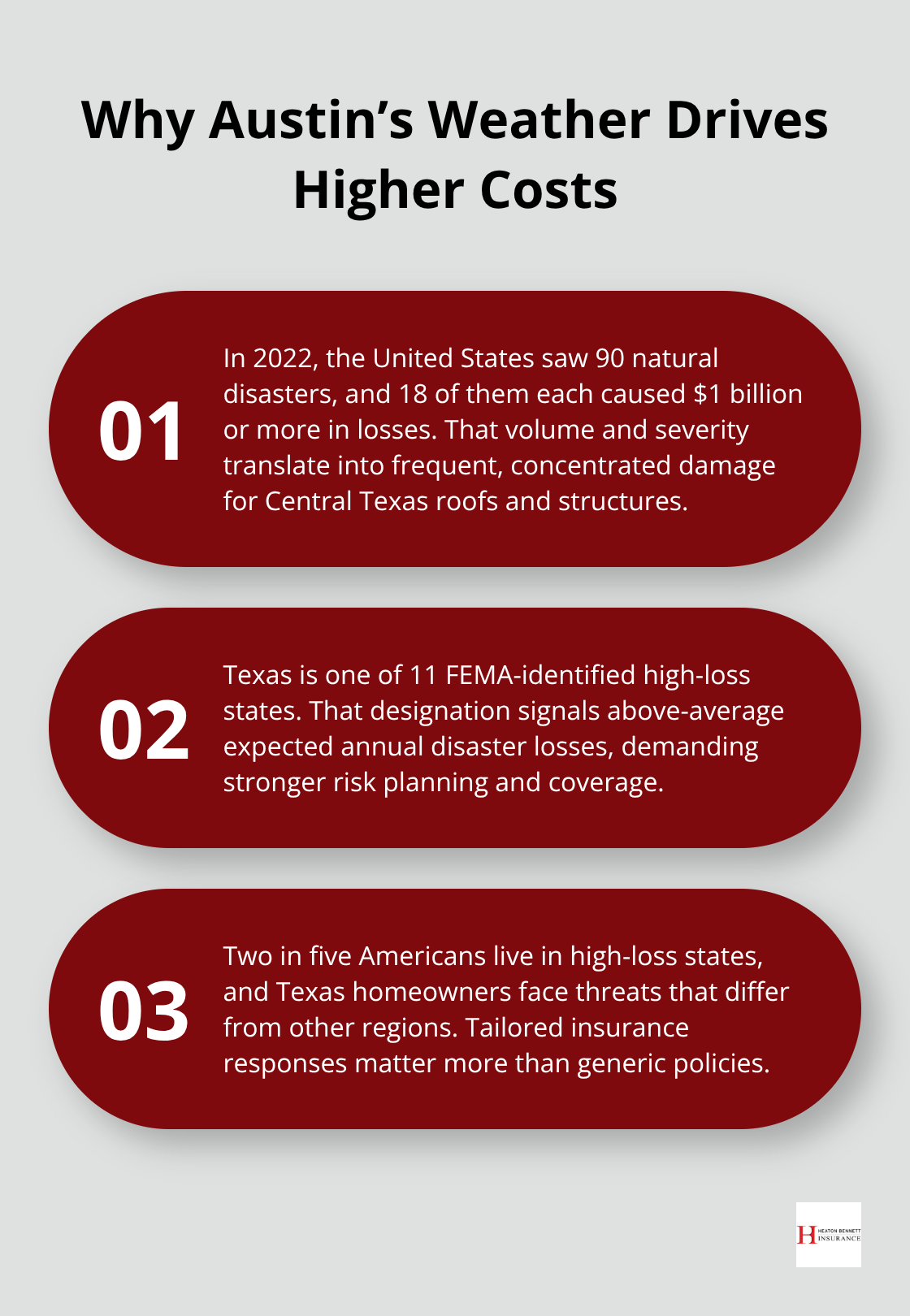
Two in five Americans live in these high-loss states, but Texas homeowners face specific threats that demand tailored insurance responses rather than generic coverage.
Hail strikes harder than most realize
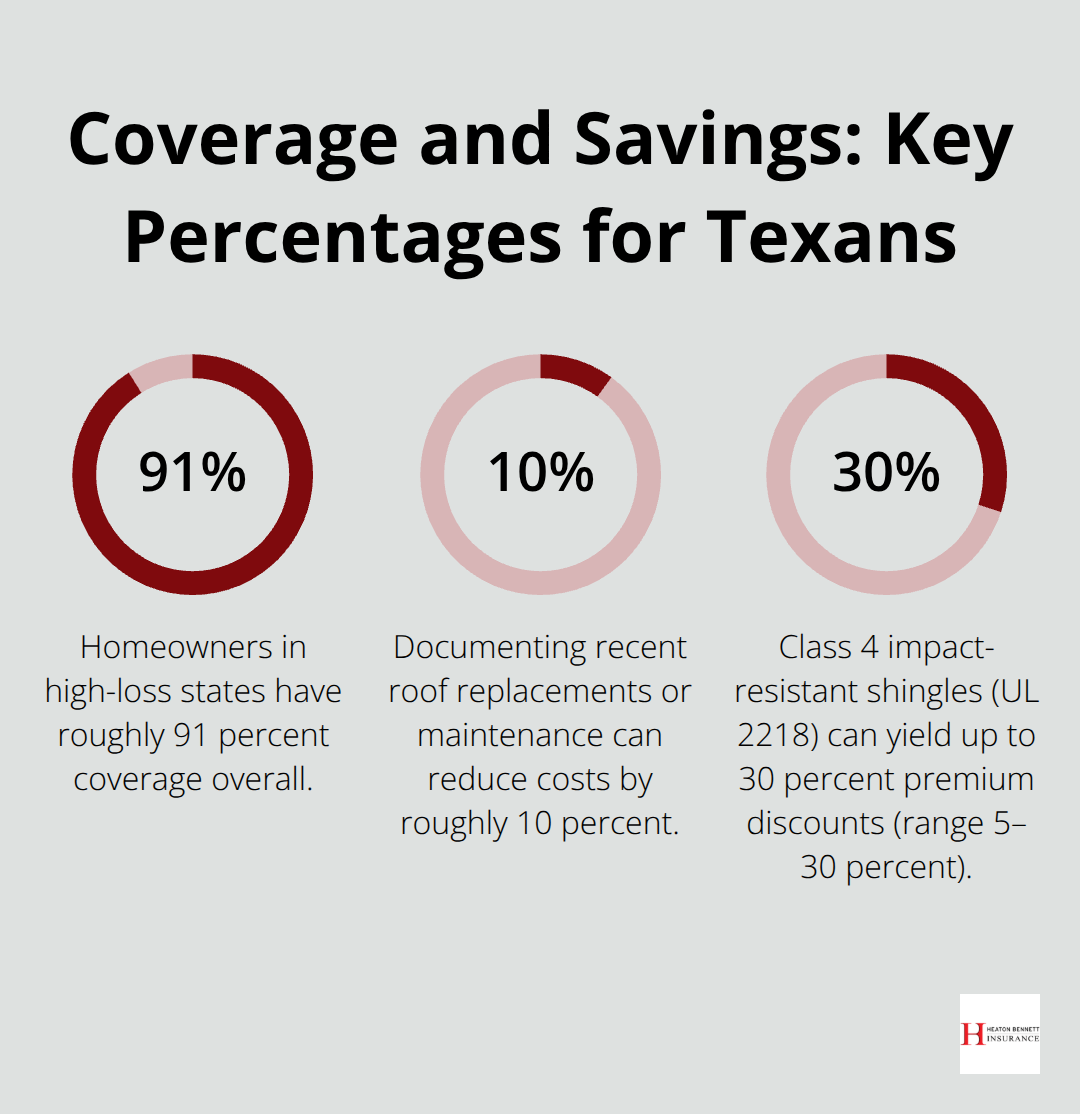
Central Texas hail events create concentrated damage that standard policies sometimes undervalue. When hail hits your roof, vehicle, or siding, the damage often goes unnoticed until water intrusion or rust appears weeks later. The most common perils damaging Central Texas roofs are hail, wind, and falling tree limbs, yet many homeowners don’t understand the difference between Replacement Cost Value coverage (which pays the full replacement cost) and Actual Cash Value (which pays only the depreciated value and can mean tens of thousands of dollars less). If your roof sustains damage, you must document everything within 72 hours with date-stamped photos and videos, then obtain a free inspection from a local Texas roofing contractor who will document hail strikes to support your claim. Documenting recent roof replacements or maintenance records can reduce costs by roughly 10 percent. Filing promptly matters enormously-many policies require damage notification within 90 days or as little as 30 days, governed by Texas Insurance Code Section 542A.
Flooding and wind threats require separate planning
Flood damage is not covered by standard homeowners policies and requires either NFIP coverage or a private flood insurance policy, yet many Austin residents skip this protection entirely. Wind and hail coverage in Texas typically involves separate wind and hail deductibles, and coastal counties may rely on the Texas Windstorm Insurance Association for coverage. The gap between what people think they’re covered for and what they actually own protection on creates financial vulnerability exactly when disaster strikes hardest. Homes near trees face higher wind damage risk, and properties with poor drainage invite flood damage, which is why a local contractor or engineer should walk your property to assess exposure. Climate change is driving more frequent and severe extreme weather, increasing the financial risk households face after disasters, so assuming last year’s weather patterns predict next year’s threats is dangerous. Residents in high-loss states tend to be more financially vulnerable and are more likely to be from racial and ethnic minority groups, amplifying potential disparities after disasters, which is why getting the right coverage now matters more than waiting. Understanding your specific exposure sets the stage for selecting the right coverage types that actually protect your Austin property.
What Coverage Actually Protects Your Austin Property
Homeowners Insurance Gaps Leave You Exposed
Standard homeowners policies cover wind and hail damage to your roof and structure, yet they exclude flood damage entirely. You need a separate flood policy through the National Flood Insurance Program or a private carrier if your property sits in or near a flood zone. The Texas Department of Insurance reports that homeowners in high-loss states like Texas have roughly 91 percent coverage overall, but that figure masks a critical problem: about 8.8 million homeowners in high-loss states remain uninsured.
Wind and hail coverage in Texas typically involves separate deductibles, sometimes ranging from 1 to 5 percent of your home’s value. A hail claim on a $300,000 home could carry a $3,000 to $15,000 out-of-pocket cost before insurance kicks in. Replacement Cost Value coverage pays the full replacement cost for damaged items, while Actual Cash Value pays only depreciated value and can leave you tens of thousands of dollars short on roof replacement.
The Depreciation Problem in Central Texas
This distinction matters enormously because Central Texas roofs sustain concentrated hail damage regularly, and depreciation calculations on older roofs can reduce payouts dramatically. Flood insurance requires separate application and typically carries a 30-day waiting period before coverage activates, so waiting until flood season arrives leaves you unprotected. Many homeowners discover too late that their policy covers only a fraction of actual replacement costs.
Vehicle Coverage Requires Active Selection
Comprehensive auto insurance covers hail and storm damage to vehicles, but only if you carry the comprehensive component and understand your deductible structure. Many Austin drivers carry only liability coverage, leaving their vehicles exposed when hail or wind damage occurs. Comprehensive coverage typically costs between $100 and $300 annually depending on your deductible, but skipping it exposes you to thousands in hail repair costs that Austin experiences almost annually.
Understanding Your Specific Exposure
An independent agent can walk you through these coverage layers, explain your specific exposure based on your property location and roof age, and identify which gaps pose the greatest financial risk to your household. Your roof age, proximity to trees, drainage conditions, and vehicle usage patterns all shape which coverage types actually protect you. The right coverage structure depends on your individual circumstances, not generic recommendations that apply to everyone in Austin.
With your coverage gaps identified, the next step involves taking concrete action to reduce your property’s vulnerability before the next storm season arrives.
Protect Your Property Before Storm Season Hits
Inspect Your Roof Before Damage Strikes
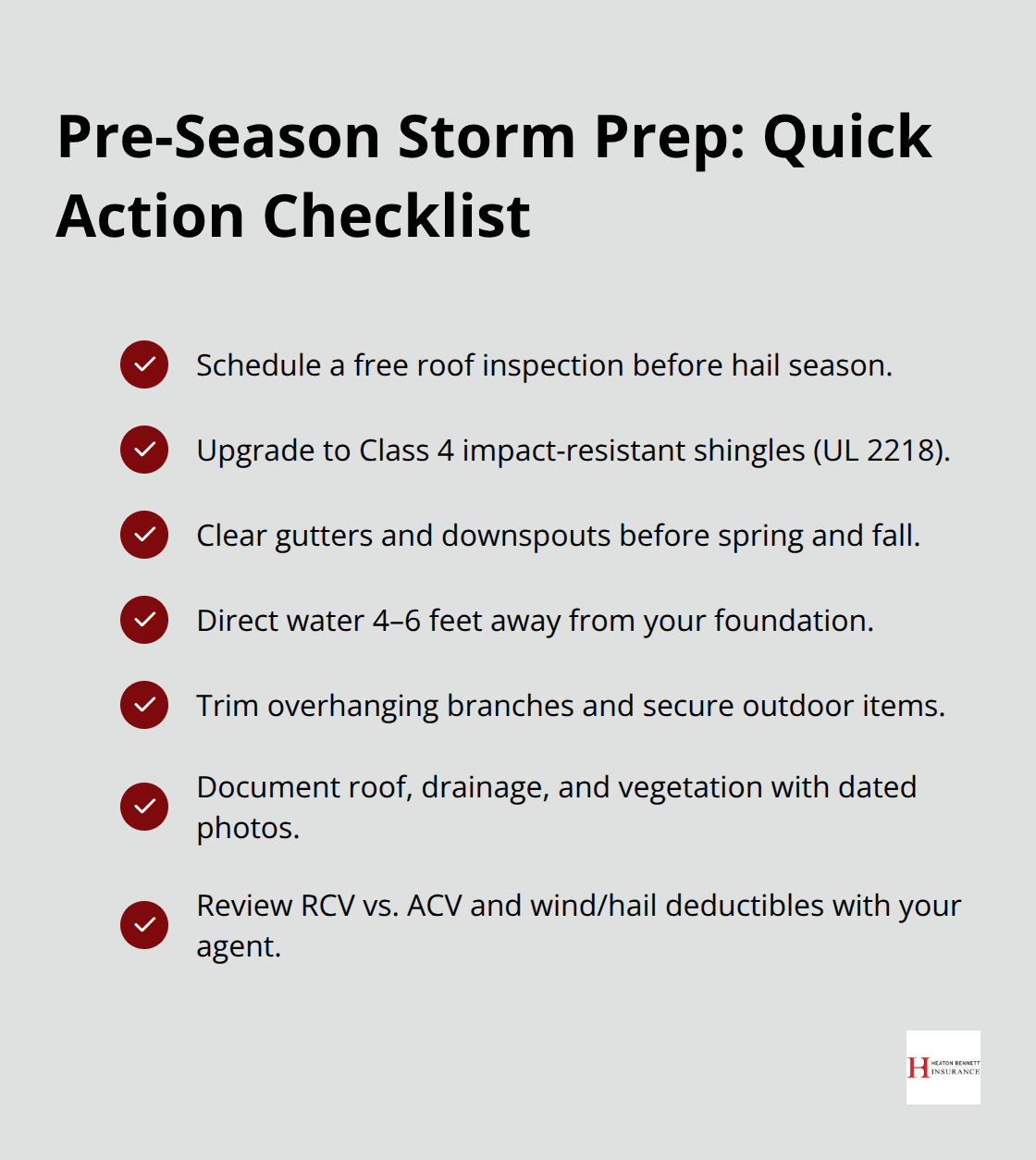
Your roof age determines whether you qualify for coverage and how much depreciation reduces your payout when hail strikes. Many carriers won’t write new policies on roofs older than 15 to 20 years, and depreciation terms shift at renewal, so you must inspect your roof now to prevent surprises when you file a claim. Schedule a free inspection from a local Texas roofing contractor before hail season arrives, not after damage occurs. The contractor will document existing conditions, identify vulnerabilities like missing shingles or compromised flashing, and photograph everything with dates. This documentation strengthens your position if an adjuster later disputes damage claims or tries to attribute new damage to pre-existing conditions. Central Texas experiences concentrated hail events almost annually, and the difference between a proactive inspection and reactive damage assessment often means the difference between full coverage and partial denial.
Upgrade Materials for Immediate Savings
Installing Class 4 impact-resistant shingles rated UL 2218 yields premium discounts ranging from 5 to 30 percent according to manufacturer data, so if your roof needs replacement anyway, you should upgrade materials to pay dividends immediately through lower premiums. This investment protects your structure while reducing your annual insurance costs, making the financial case for upgrading stronger than many homeowners realize.
Clear Drainage Systems to Prevent Water Damage
Gutters clogged with debris force water to pool against your foundation and into attic spaces, creating conditions that standard homeowners policies explicitly exclude because they classify pooling as poor maintenance rather than storm damage. You must clear gutters and downspouts before spring and again before fall storm season, directing water at least 4 to 6 feet away from your foundation. Check that your drainage system actually moves water away from the house rather than collecting near the base, which invites foundation damage and basement flooding that insurance won’t cover. Properties with poor drainage face higher flood risk, and even homes outside official flood zones experience water intrusion when gutters fail or grading slopes toward the structure.
Secure Outdoor Items and Trim Vegetation
Securing outdoor items before storms prevents damage to your belongings and eliminates projectiles that could damage neighboring properties, creating liability exposure beyond your homeowners policy limits. You should bring in patio furniture, grills, and loose items when severe weather threatens, and trim tree branches that hang over your roof or structure since falling limbs rank among the most common perils damaging Central Texas roofs. Document your home’s condition with photos and video before storm season, noting roof condition, vegetation proximity, drainage patterns, and any visible wear. Store this documentation safely and share it with your insurance agent, who can flag exposure areas and confirm your coverage addresses your specific property risks.
Confirm Your Coverage Details Before Storm Season
Your agent can review your declarations page during this pre-season window, confirming whether your roof is insured on Replacement Cost Value or Actual Cash Value and whether you carry separate wind and hail deductibles. This conversation costs nothing and prevents the financial shock of discovering inadequate coverage after damage occurs. An independent agent with access to multiple carriers can walk you through these coverage layers, explain your specific exposure based on your property location and roof age, and identify which gaps pose the greatest financial risk to your household.
Final Thoughts
Austin’s weather creates real financial exposure that generic insurance solutions won’t address. Hail, flooding, and severe winds hit our region regularly, and the gap between what you think you’re covered for and what actually protects your property can cost tens of thousands of dollars when disaster strikes. Standard homeowners policies exclude flood damage entirely, separate wind and hail deductibles can reach thousands of dollars, and the difference between Replacement Cost Value and Actual Cash Value coverage determines whether you rebuild or settle for less.
Your action plan starts now, before the next storm season arrives. Schedule a free roof inspection from a local contractor to document your home’s current condition and identify vulnerabilities. Clear your gutters and drainage systems to prevent water damage that insurance won’t cover, then trim tree branches hanging over your structure and photograph your property’s condition with dates (these steps take hours, not weeks, and they prevent financial shock after damage occurs).
We at Heaton Bennett Insurance understand that Austin TX weather insurance isn’t one-size-fits-all, and as an independent agency we have access to multiple carriers that match your specific exposure to coverage that actually protects your property. Our Security Snapshot process walks you through your unique risks based on your property location, roof age, proximity to trees, and drainage conditions, then identifies which coverage layers matter most for your household. Contact Heaton Bennett Insurance to schedule your coverage review before storm season arrives and protect what matters most.
The information provided in this blog is for general informational purposes only and does not constitute legal, financial, or insurance advice. Coverage options, terms, and availability may vary. Please consult with a licensed professional for advice specific to your situation.

