
Wind and Flood Insurance: Comprehensive Risk Coverage
Wind and flood damage costs American homeowners billions annually. Standard homeowners policies simply don’t cover these events, leaving many properties dangerously exposed.
At Heaton Bennett Insurance, we’ve seen firsthand how devastating these gaps in coverage can be. This guide walks you through wind and flood insurance options so you can protect what matters most.
What Makes Wind and Flood Damage So Costly
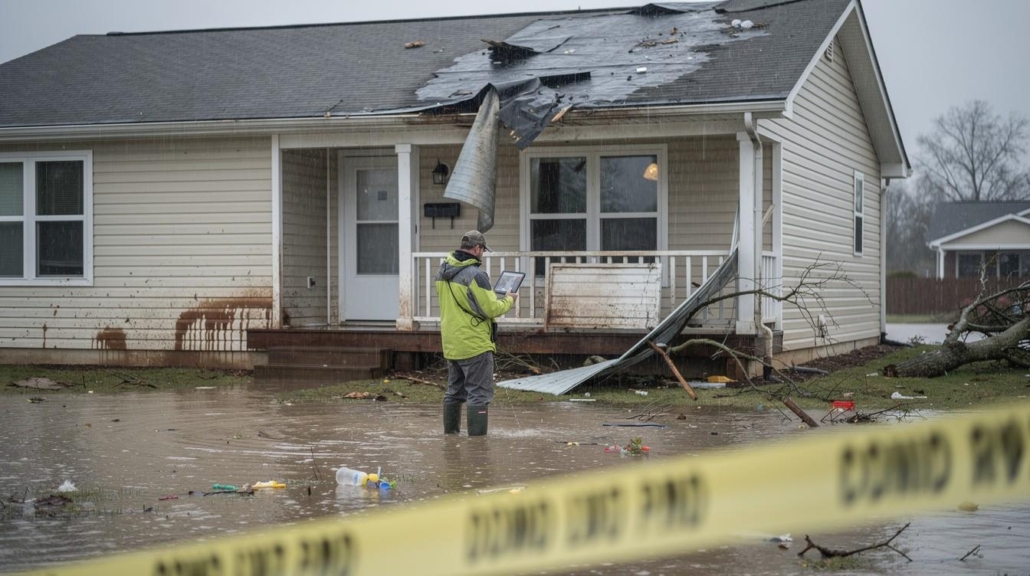
Wind and flood damage strike differently, but both drain finances fast. Hurricanes, windstorms, and tornadoes destroy roofs, shatter windows, and topple structures-CoreLogic’s 2024 Coastal Wind Risk map shows 6.44 million homes face extreme wind risk, representing $1.68 trillion in potential reconstruction value. Flood damage compounds the problem because water infiltrates everything: it ruins foundations, destroys electrical systems, warps wood, and creates mold that spreads for months.
The Scale of Recent Disasters
The National Flood Insurance Program data reveals the true cost of past storms. Hurricane Katrina in 2005 generated 168,200 paid flood claims, with an average payout of $156,046 per claim. Hurricane Harvey in 2017 produced 77,100 claims averaging $150,337 each. Even more recent storms hit hard-Hurricane Ian in 2022 resulted in 48,000 claims averaging $94,896.
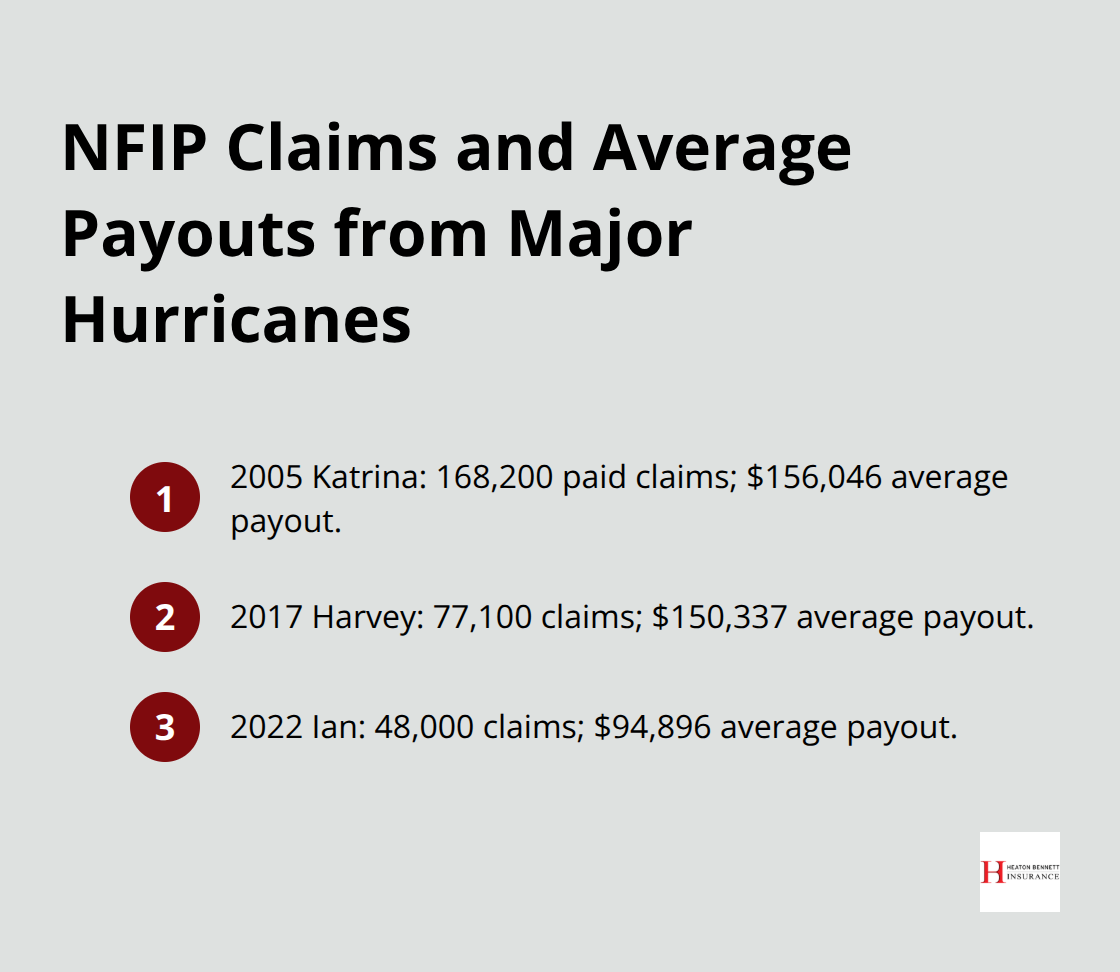
These numbers represent real homeowners and business owners who faced catastrophic financial loss, not theoretical scenarios.
Why Standard Policies Leave You Exposed
Standard homeowners insurance explicitly excludes both wind and flood damage in most policies. Your typical homeowners policy covers fire, theft, and certain weather events, but water damage from rising water or storm surge gets rejected every single time. Wind damage presents a murkier situation-if wind creates an opening and rain enters through that opening, some policies cover it, but damage from wind alone often doesn’t.
The National Flood Insurance Program and private insurers must offer separate flood policies because the risk is simply too large to bundle into standard coverage. This means buying a homeowners policy without separate wind and flood protection leaves you exposed to the two most destructive forces that hit properties.
Flood Risk Extends Beyond High-Risk Zones
Nearly one-third of NFIP flood claims from 2014 to 2024 came from areas outside high-risk flood zones, according to FloodSmart.gov. This statistic proves that flood risk doesn’t respect designated boundaries. If your mortgage lender required flood insurance, that requirement exists for one reason: lenders understand what homeowners often miss. Without separate coverage, a single storm can wipe out decades of equity and leave you financially devastated while your insurance company denies every claim.
Understanding these risks sets the stage for exploring what wind and flood coverage actually protects-and how combining the right policies creates a comprehensive safety net for your property.
What Wind and Flood Insurance Actually Covers
How Wind Insurance Protects Your Property
Wind insurance protects against damage from hurricanes, windstorms, tropical storms, and tornadoes. A comprehensive wind policy covers repairs to your building structure, damage to contents inside, replacement inventory for businesses, lost business income, and business interruption costs. You won’t face thousands in out-of-pocket expenses when a storm rips through your roof or shatters windows. CoreLogic data shows that 6.44 million homes already face extreme wind risk with $1.68 trillion in potential reconstruction value, meaning wind coverage isn’t optional in coastal and vulnerable areas. Wind insurance availability varies by location and carrier, with some insurers restricting coverage in high-risk coastal areas or charging premiums that reflect the actual risk level.
Understanding Flood Coverage and Its Limits
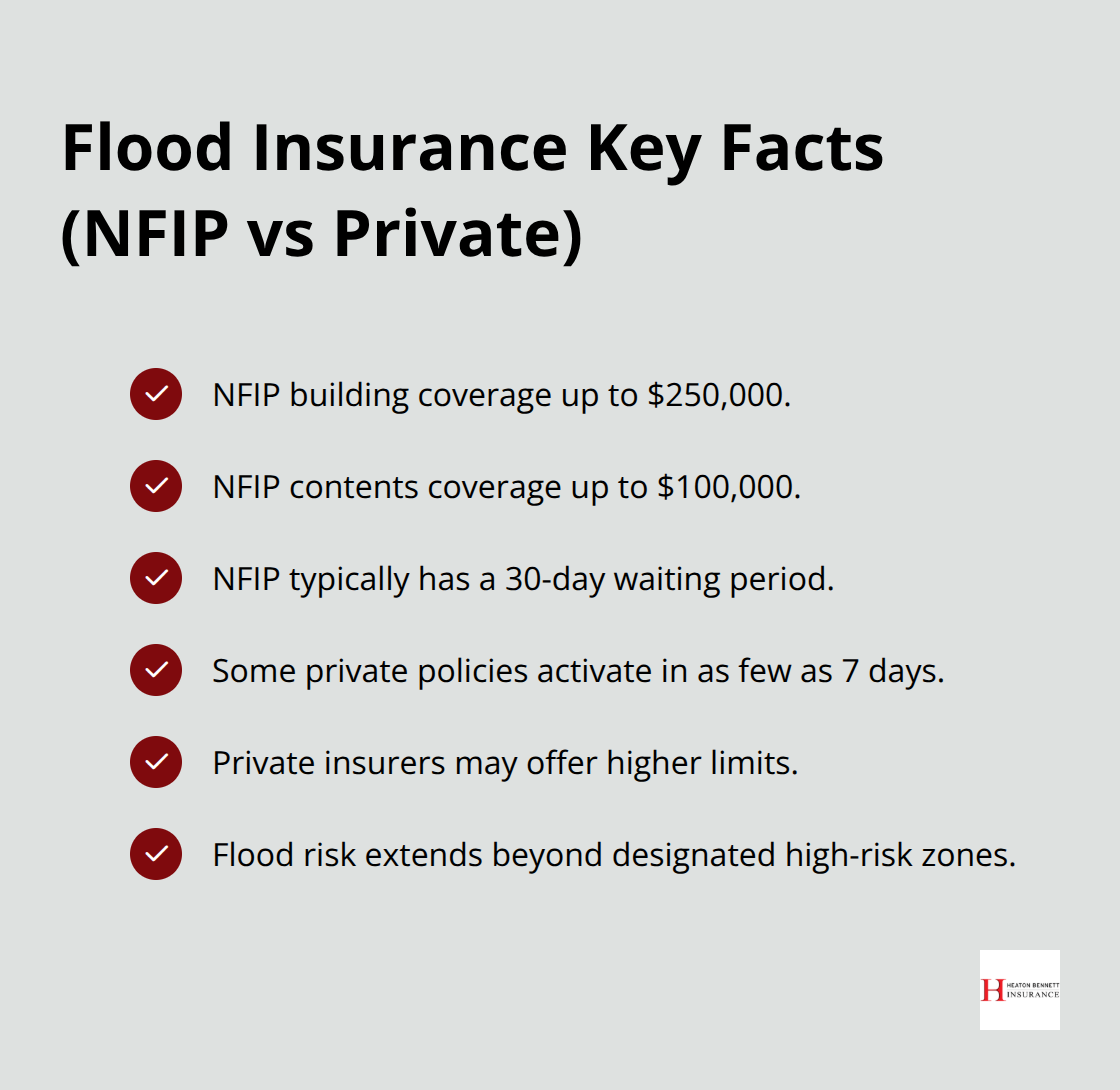
Flood insurance covers damage from rising water, storm surge, heavy rainfall that overwhelms drainage systems, and overflow from rivers or streams. The National Flood Insurance Program administered by FEMA offers building coverage up to $250,000 and contents coverage up to $100,000 for residential properties. Private flood insurers now provide higher limits and sometimes faster coverage activation than the NFIP. Flood policies typically have a 30-day waiting period through the NFIP before coverage starts, though some private insurers offer shorter activation periods as brief as 7 days if you purchase well before storm season. FloodSmart.gov reports that nearly one-third of all NFIP flood claims between 2014 and 2024 came from areas outside designated high-risk flood zones, proving that flood damage strikes properties that most homeowners assume are safe.
Why You Need Both Coverages
Standard homeowners policies exclude both wind and flood coverages entirely, so you must purchase them separately. Combining wind and flood coverage creates genuine comprehensive protection because each policy addresses what the other cannot. A wind event might tear open your roof, and then flood damage enters through that opening-your wind policy covers the wind damage while your flood policy covers the water intrusion. Without both, you face a coverage gap that could cost you $50,000 to $200,000 or more depending on your property’s value. Each policy operates independently, protecting against distinct perils that often strike together during major storms.
Understanding what each policy covers helps you recognize why gaps exist without both protections. The next section explores how to assess your specific risk level and select the right combination of policies for your situation.
Selecting Wind and Flood Coverage That Matches Your Actual Risk
Assess Your Property’s Wind and Flood Exposure
Start by determining your property’s exposure to wind and flood events, because risk varies dramatically by location and property type. CoreLogic’s 2024 Coastal Wind Risk map identifies 6.44 million homes in extreme wind risk zones worth $1.68 trillion in reconstruction value, while FloodSmart.gov data shows that nearly one-third of NFIP flood claims from 2014 to 2024 came from areas outside designated high-risk zones. Check your property’s flood zone designation through FEMA’s Flood Map Service Center and research your local wind risk using CoreLogic’s publicly available risk assessment. If your mortgage lender required flood insurance when you purchased your property, that requirement signals genuine risk that persists regardless of whether you still carry that coverage. Request your property’s wind and flood risk ratings from your insurance agent, then cross-reference those ratings against recent claims data in your area. Properties within one mile of coastlines face substantially higher wind exposure, while those near rivers, streams, or in low-lying areas face flood risk that intensifies with climate patterns.
Understand How Roof Age Affects Your Coverage
Your roof age directly impacts wind insurance costs and availability-insurers charge more for roofs over 15 years old and may decline coverage entirely for roofs beyond 20 years. Document your roof’s installation date and condition, then update your agent immediately if you replace it, since this single factor can reduce premiums by 10 to 20 percent depending on your carrier. A newer roof demonstrates better resistance to wind damage and water infiltration, which explains why carriers reward this improvement with lower rates or expanded availability.
Compare Private and NFIP Flood Insurance Options
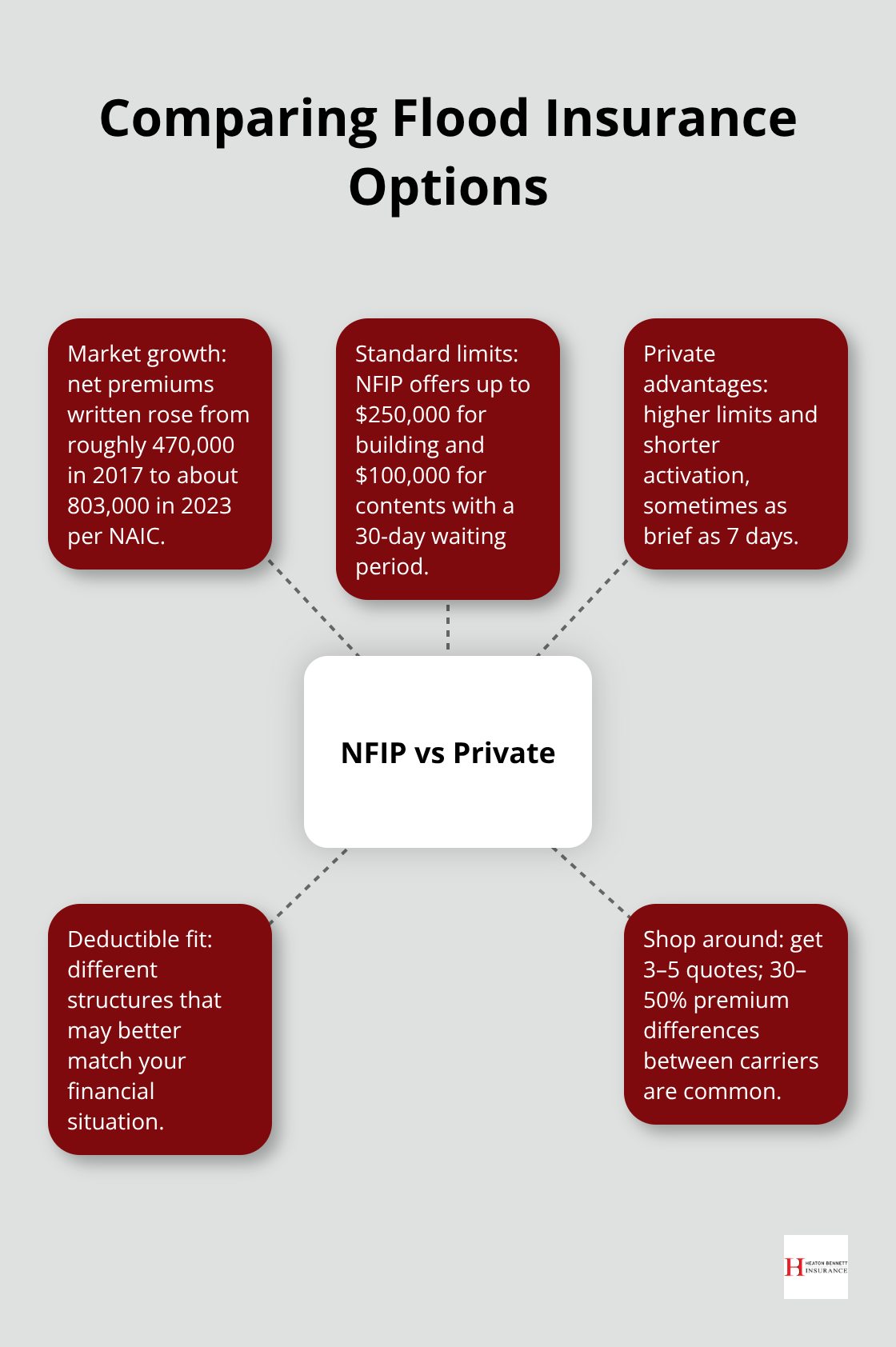
Private flood insurance has grown significantly, with net premiums written rising from roughly 470,000 in 2017 to about 803,000 by 2023 according to NAIC data, giving you genuine alternatives to NFIP coverage. The NFIP offers building coverage up to $250,000 and contents coverage up to $100,000 with a standard 30-day waiting period, while private insurers often provide higher limits, shorter activation periods as brief as 7 days, and different deductible structures that may better match your financial situation. Compare three to five quotes from different carriers before committing, because premium differences of 30 to 50 percent between carriers remain common for identical coverage.
Evaluate Wind Insurance Availability and Deductibles
Wind insurance availability depends heavily on your coastal proximity and recent claims history in your area-some carriers restrict or decline coverage in high-risk zones entirely, making early shopping critical before storm season arrives. Separate wind and hail deductibles appear on many policies, meaning you might face a $1,000 deductible for standard claims but a $2,500 or higher deductible for wind or hail damage. Calculate your actual out-of-pocket exposure by multiplying potential deductibles against your property’s replacement cost, then determine whether higher deductibles justify lower premiums.
Work with an Insurance Agent to Customize Coverage
An independent insurance agent can access multiple carriers and explain how each policy’s terms, limits, and deductibles compare, preventing you from overpaying or leaving gaps in protection that create financial exposure during actual storms. This approach (comparing options across multiple insurers rather than accepting a single carrier’s offer) protects your financial interests and ensures you understand exactly what your coverage includes. Your agent reviews your specific situation, property characteristics, and risk profile to recommend policies that match your actual needs rather than generic solutions.
Final Thoughts
Wind and flood insurance protects your property against the two most destructive forces that strike homes and businesses. Standard homeowners policies exclude both perils entirely, leaving you exposed to financial devastation that can wipe out decades of equity in a single storm. The data proves this risk is real and widespread: nearly one-third of NFIP flood claims from 2014 to 2024 came from areas outside designated high-risk zones, while 6.44 million homes face extreme wind risk representing $1.68 trillion in reconstruction value.
Your next step is straightforward: assess your property’s actual wind and flood exposure using FEMA’s Flood Map Service Center and CoreLogic’s risk tools, then request quotes from multiple carriers before storm season arrives. Waiting until September or October when hurricane season peaks means limited availability and higher premiums from carriers still accepting new business. Compare both NFIP and private flood insurance options, evaluate wind deductibles against your replacement costs, and document your roof age since this single factor dramatically affects availability and pricing.
We at Heaton Bennett Insurance understand that navigating wind and flood insurance options feels overwhelming without expert guidance. Our team accesses multiple carriers and provides personalized coverage recommendations that match your actual risk profile rather than generic solutions. Contact us today to review your current coverage, identify gaps, and secure the comprehensive protection your property deserves.
The information provided in this blog is for general informational purposes only and does not constitute legal, financial, or insurance advice. Coverage options, terms, and availability may vary. Please consult with a licensed professional for advice specific to your situation.

