
Austin Property Weather Insurance Demystified
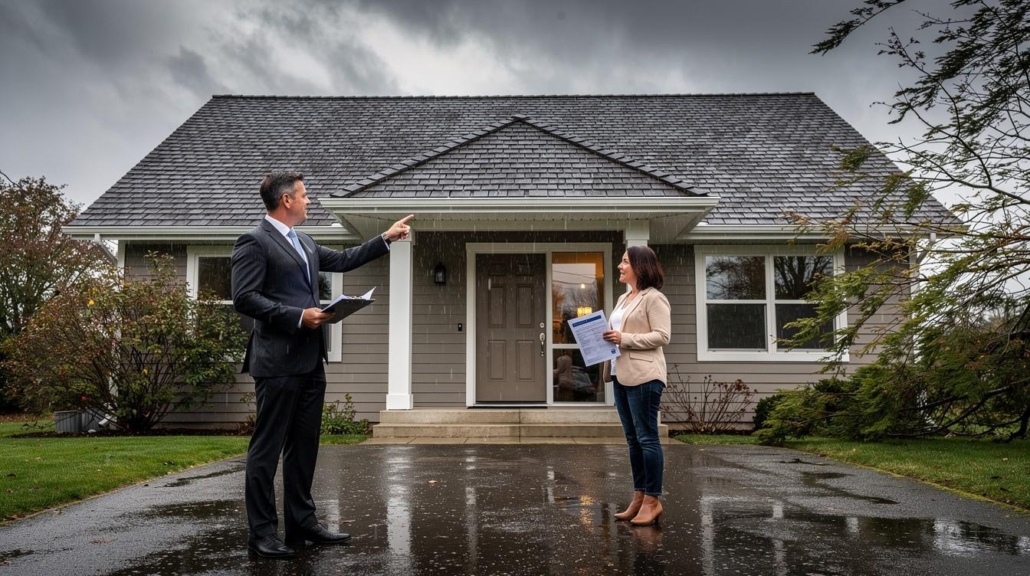
Austin’s weather doesn’t play nice with property owners. Hail, flooding, and severe storms hit our area hard every year, and standard homeowners insurance often leaves gaps in coverage.
At Heaton Bennett Insurance, we’ve seen too many Austin homeowners caught off guard by weather damage that wasn’t covered. Austin property weather insurance fills those gaps and protects what matters most.
What Weather Insurance Actually Covers
Weather insurance fills the gaps that standard homeowners policies leave wide open. A typical HO3 policy covers wind and hail damage, but flood damage requires a separate flood policy or endorsement, and that’s where Austin property owners run into trouble. Standard policies almost never cover hurricane-related flood damage, and rain-related water intrusion gets complicated fast depending on how the water entered your home. Many Austin homeowners discover this gap the hard way after a storm hits.
Two Types of Weather Insurance Protection
Weather insurance comes in two main forms: traditional claims-based coverage and parametric weather insurance. Traditional coverage works like your standard homeowner’s policy-you file a claim, an adjuster inspects damage, and the insurer pays based on actual losses. Parametric weather insurance operates differently. It pays out automatically when predefined weather thresholds are reached, such as wind speeds exceeding 75 mph or hail stones larger than one inch. According to industry data, parametric payouts typically arrive within weeks after a triggering event, compared to the standard three-to-six-month timeline for traditional claims.
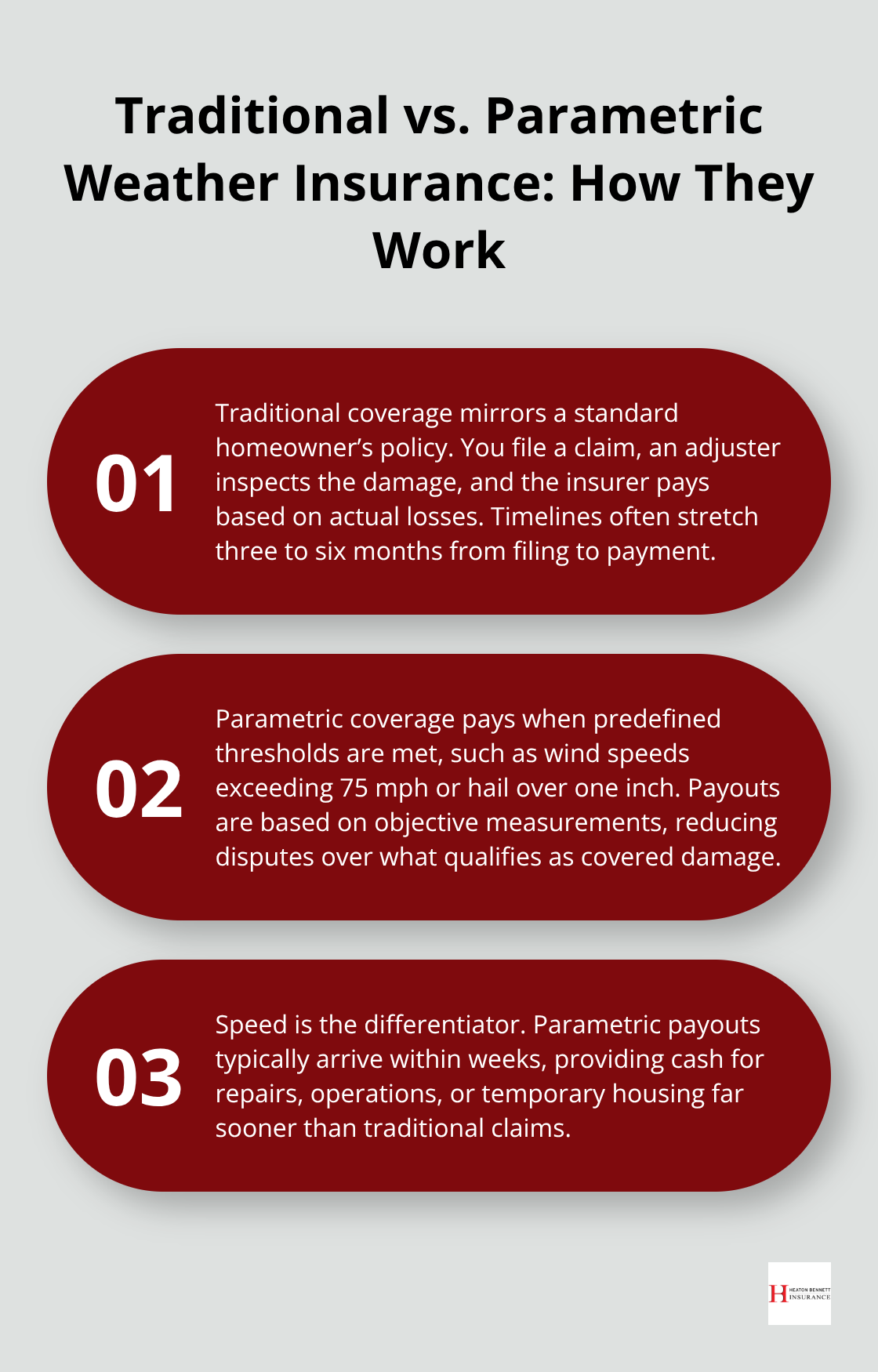
This speed matters enormously when you need funds to restart operations or temporary housing.
Why Austin Needs Specialized Weather Protection
Austin sits in a zone where multiple weather threats converge. Texas recorded 162 tornadoes in 2025, the highest number of any U.S. state, and hail in Austin regularly reaches up to four inches, causing roof shingle damage, broken windows, gutter damage, and siding destruction. Flash flooding is endemic to the region-Austin sits in what experts call Flash Flood Alley due to geography that channels heavy rainfall into rapid water accumulation. Severe thunderstorms bring lightning strikes that cause electrical surges, burned wiring, roof damage, and sometimes fires.
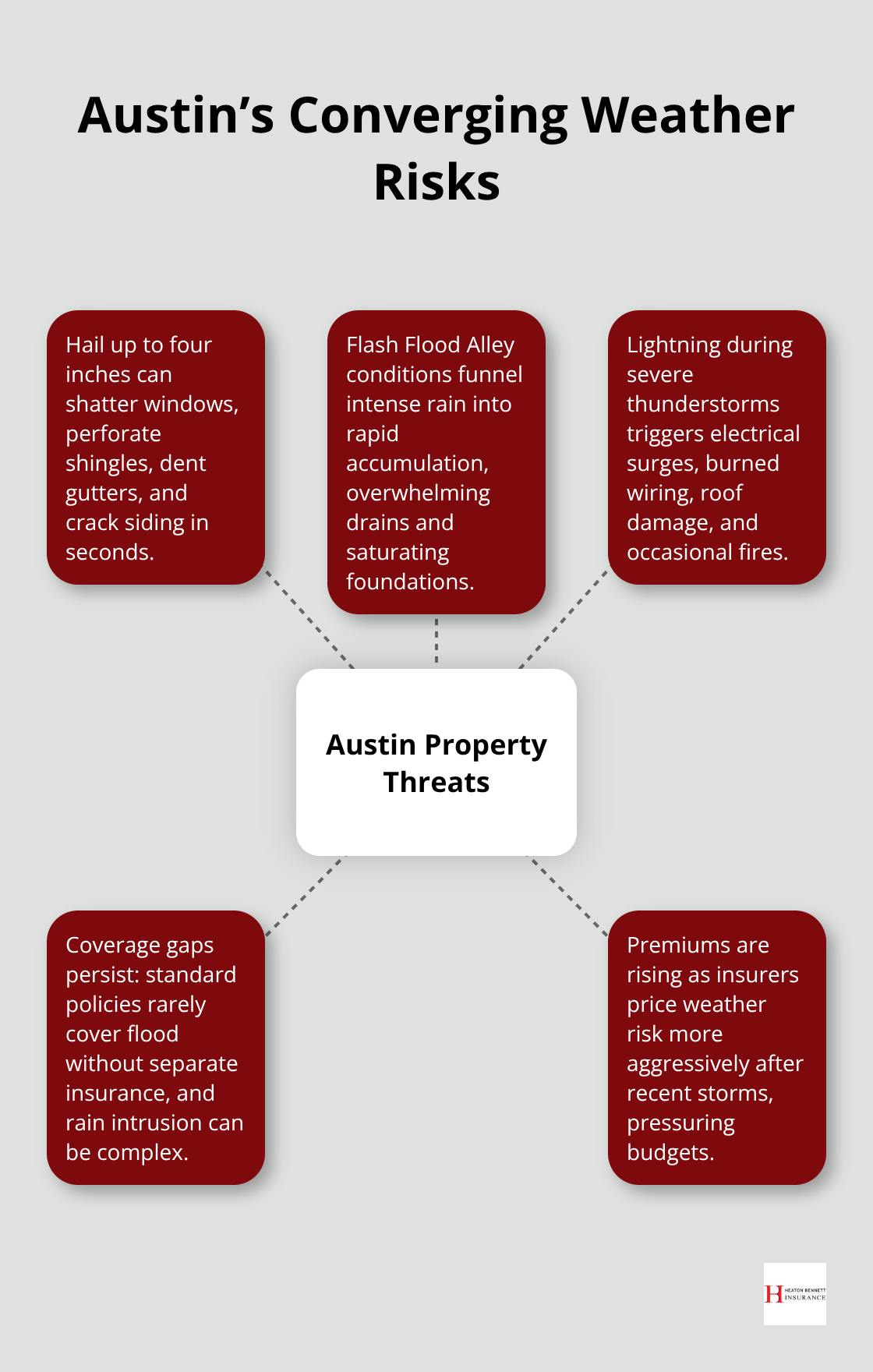
Standard homeowners policies address wind and hail but leave flood damage unprotected unless you purchase separate flood insurance through the National Flood Insurance Program or a private carrier. MSCI data shows insurance costs as a share of income for U.S. commercial properties rose to 2.4% in the 12 months through Q3 2024, up from 1.4% five years earlier, and apartment buildings saw costs rise from 1.4% to 3.0% of income over that same period. Austin property owners face rising premiums precisely because insurers now price weather risk more aggressively after recent storm events.
How Weather Insurance Differs from Standard Coverage
Your HO3 policy covers the physical structure and your belongings, but it excludes flood damage unless you add it separately. Water damage from rain can be included in standard policies, but flood damage from hurricanes almost always requires separate coverage. Additionally, standard policies often exclude business interruption losses-the lost revenue, disrupted supply chains, and damaged customer relationships that follow a major storm. Weather events cause business interruption losses that can dwarf physical damage. Parametric weather insurance addresses this gap (paying out based on meteorological measurements rather than receipts and adjuster assessments), which reduces disputes about whether damage qualifies. An independent agent who understands your specific address-level risk can tailor thresholds and combinations of coverage to your actual exposures rather than applying generic benchmarks.
Assessing Your Address-Level Risk
Your location within Austin determines which weather threats pose the greatest risk to your property. Hail risk in Denver differs dramatically from hurricane risk in a coastal city, and address-level risk matters just as much within Austin itself. Identify your specific weather threats and map them to your address to understand whether you face greater exposure to hail, flooding, wind, or lightning damage. Calculate true shutdown costs (estimating how much revenue is lost during closure beyond repairs) and use that figure to set a minimum coverage level. Set parametric thresholds carefully: lower thresholds increase frequency and cost but boost certainty, so compare quotes across different thresholds to find the right balance for your situation. An independent agent can help you tailor coverage to your actual exposures rather than generic benchmarks, ensuring you have the protection your Austin property truly needs.
What Weather Threatens Your Austin Property Most
Hail: The Most Destructive Weather Hazard
Hail causes more insured losses in Texas than any other weather hazard, and Austin sits directly in the path of severe hail events. Hail stones regularly exceed three inches in diameter, with some storms producing stones up to four inches that shatter windshields, perforate roof shingles, dent gutters, and crack siding in seconds. The damage compounds because hail often arrives with wind gusts that amplify destruction across multiple sides of a structure simultaneously.
Flash Flooding: Austin’s Hidden Threat
Flash flooding represents the second major threat and the one most Austin property owners underestimate. Austin’s geography funnels heavy rainfall into rapid water accumulation, earning the region the designation Flash Flood Alley. During intense rainfall events, water moves fast enough to overwhelm storm drains and saturate foundations, causing basement flooding, roof leaks, and structural damage that standard homeowners policies explicitly exclude.
Lightning and Severe Thunderstorms
Severe thunderstorms bring a third threat through lightning strikes that arc through electrical systems, burning wiring, tripping surge protectors, and occasionally igniting fires in walls and attics where damage goes undetected for weeks. These three hazards converge in Austin’s weather pattern because the atmospheric conditions that spawn hail also trigger heavy rain and lightning within the same storm system, meaning a single event can inflict all three types of damage on your property.
How Your Address Determines Your Risk
Understanding which threat poses the greatest risk to your specific address matters far more than knowing Austin’s general weather patterns. Properties in North Austin near the Domain face higher hail exposure because that area sits in a corridor where spring and early summer storms develop with particular intensity. Central and South Austin properties near Town Lake face elevated flash flood risk because water drainage channels toward lower elevations and natural flood plains.
Tailoring Coverage to Your Property’s Vulnerabilities
Older homes with deteriorated roof conditions suffer disproportionate hail damage because compromised shingles offer less resistance to impact, while newer construction with impact-resistant roofing sustains far less harm from identical storms. An independent agent can assess your property’s specific vulnerability by examining roof age and condition, proximity to drainage areas, and historical storm patterns affecting your ZIP code. This assessment reveals which parametric thresholds work best for your actual exposure rather than applying generic coverage levels that leave you either overinsured or dangerously exposed. Once you understand your property’s vulnerabilities, the next step involves selecting the right coverage limits and deductibles that align with your financial situation and risk tolerance.
Selecting Coverage That Matches Your Property’s Real Risk
Establish Your True Rebuild Cost
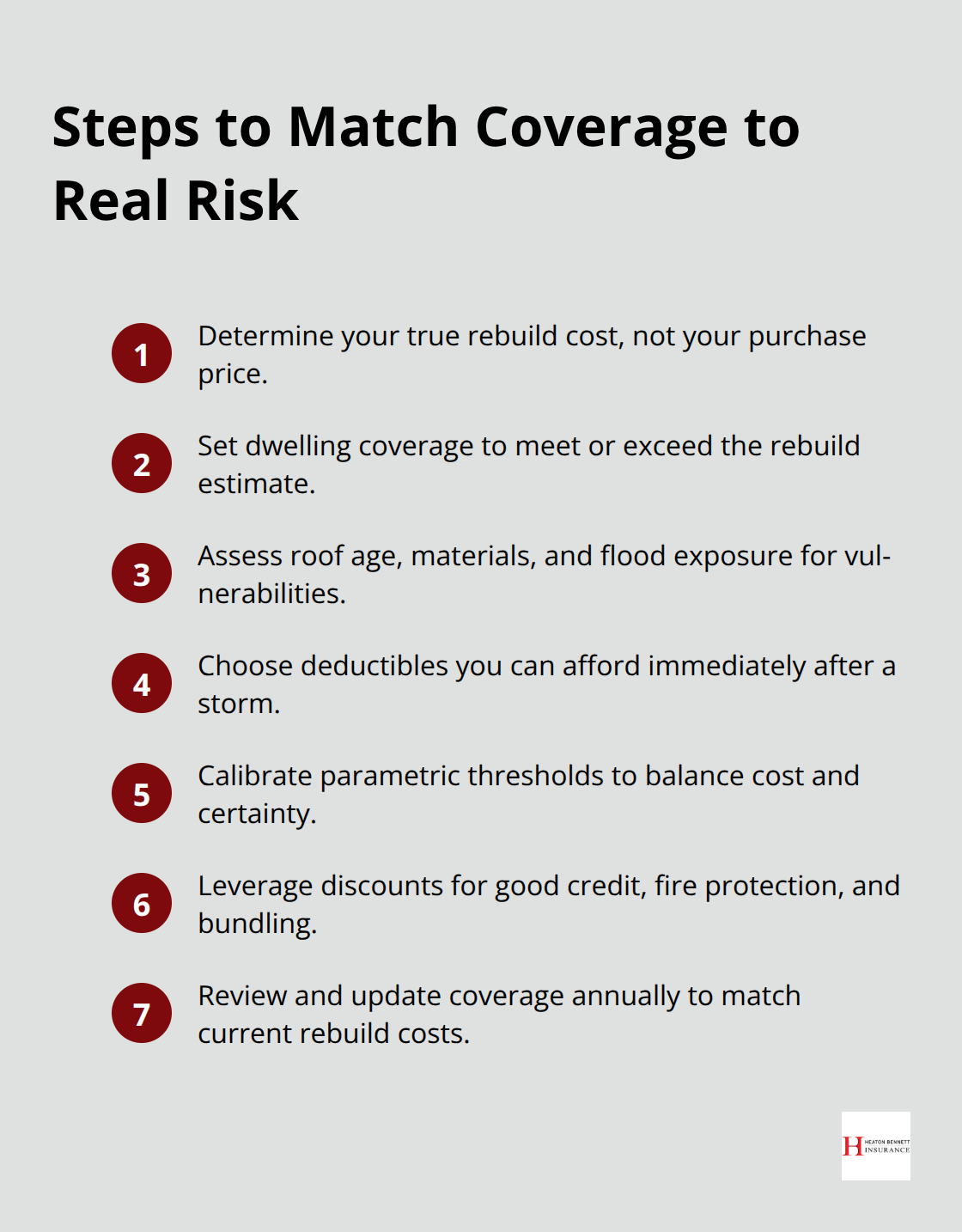
Start by determining what your property actually costs to rebuild, not what you paid for it. Austin’s construction costs often exceed purchase prices, and MSCI data shows that apartment buildings in the region saw insurance costs rise from 1.4% to 3.0% of income over five years, reflecting how aggressively insurers now price weather exposure. Request a professional cost estimate from a contractor or use your insurer’s rebuild cost tool rather than guessing based on market value. Your dwelling coverage limit should meet or exceed that number. Many Austin homeowners set coverage too low and later discover they cannot fully rebuild after a major storm.
Assess Roof Condition and Property Vulnerabilities
Examine your property’s specific vulnerabilities by walking through your home with attention to roof age, condition, and materials. Homes with roofs over 20 years old sustain disproportionate hail damage because deteriorated shingles offer minimal resistance to impact. Properties in designated flood zones on FEMA maps face mandatory wind and flood insurance requirements if financed, but even properties outside those zones can experience flash flooding in Austin’s geography. Document your property’s condition with photos and note any previous damage or repairs, because claims history on your property via CLUE reports can affect your premium even if past claims were not your own.
Choose Deductibles That Fit Your Budget
Deductible selection directly impacts your monthly cost and out-of-pocket exposure at claim time. Higher deductibles reduce premiums but increase your financial responsibility when damage occurs, so calculate what you can actually afford to pay immediately after a storm before selecting a deductible level. Parametric weather insurance requires careful threshold calibration because lower thresholds increase payout frequency and cost but boost certainty of recovery, while higher thresholds reduce premiums but leave you exposed if storms fall short of triggering coverage. Compare quotes across different threshold options to find the balance that matches your financial situation and risk tolerance.
Leverage Discounts and Rate Factors
An independent agent who works with multiple carriers can access options from different insurers rather than locking you into a single company’s offerings. Texas law allows insurers to use credit history to price premiums, so maintaining good credit directly lowers your rate. Properties with shorter fire department response times or closer proximity to hydrants or fire stations qualify for rate reductions, so ask your agent whether your location qualifies for these discounts. Bundling weather insurance with auto or other policies typically reduces your total premium compared to purchasing coverage separately (many carriers offer 10–15% savings for multi-policy customers).
Schedule Annual Coverage Reviews
Your dwelling coverage should reflect current rebuild costs, because construction prices in Austin continue climbing and your protection must keep pace. Schedule an annual review with your agent to confirm that your coverage limits still match your property’s replacement value. An independent agent can assess your property’s actual vulnerabilities, calculate true shutdown costs if applicable, and tailor coverage combinations to address the specific threats affecting your address.
Final Thoughts
Austin property weather insurance protects what standard homeowners policies leave exposed, and hail, flooding, and severe storms hit our area with predictable regularity. Your address determines which weather threats pose the greatest risk, and your roof condition, proximity to flood zones, and construction materials all influence how much protection you truly need. Calculate what your home costs to rebuild today, not what you paid for it years ago, then set your dwelling coverage to match that number and layer in flood insurance.
Deductible selection and threshold calibration matter more than most homeowners realize because higher deductibles lower your monthly premium but increase what you pay out of pocket after damage occurs. Parametric thresholds work the same way: lower thresholds trigger payouts more frequently but cost more upfront, while higher thresholds reduce premiums but leave you exposed if storms fall short of triggering coverage. The right choice depends on your financial situation and how much certainty you need.
An independent agent who works with multiple carriers can access options that a single insurer cannot offer, and we at Heaton Bennett Insurance guide you through this complexity with personalized solutions tailored to your specific address and property vulnerabilities. Contact Heaton Bennett Insurance today to assess your property’s weather exposure and build Austin property weather insurance coverage that actually protects your home.
The information provided in this blog is for general informational purposes only and does not constitute legal, financial, or insurance advice. Coverage options, terms, and availability may vary. Please consult with a licensed professional for advice specific to your situation.

