

Trade Contractor Insurance: Tailored Coverage for Projects
Trade contractors face unique risks on every job site. Equipment gets damaged, accidents happen, and one lawsuit can wipe out your profits.
At Heaton Bennett Insurance, we know that standard business insurance doesn’t cut it for your work. Trade contractor insurance is built for the specific hazards you encounter daily, protecting your business when things go wrong.
What Trade Contractor Insurance Actually Protects
General Liability Coverage for On-Site Incidents
General liability insurance covers bodily injury and property damage claims from your work, but coverage limits matter more than most contractors realize. If a worker on a neighboring property gets hurt because of your equipment, or you accidentally damage a client’s building, general liability steps in to cover medical bills, repair costs, and legal fees. Most construction projects require minimum limits of $1 million per occurrence, and many larger projects demand $2 million or higher. The Hartford and Liberty Mutual both offer general liability programs tailored to trade contractors, with automatic additional insured endorsements that protect your clients without requiring you to list them individually.
Workers’ Compensation and Employee Protection
Workers’ compensation is legally required in most states and covers medical expenses, lost wages, and rehabilitation costs when your employees get injured on the job. California requires workers’ compensation coverage for licensed contractors regardless of employee count as of January 1, 2026, making this non-negotiable if you operate there. This protection shields your business from direct liability while your employees receive the care they need after an accident.
Tools, Equipment, and Inland Marine Insurance
Equipment insurance protects your expensive hand tools, power equipment, and machinery from theft, damage, or loss at job sites. This coverage typically reimburses you at replacement cost, which matters when a $3,000 nail gun or $5,000 power drill disappears between jobs. Equipment losses also trigger coverage for debris removal and pollution cleanup costs if your tools cause environmental damage during operations.
Vehicle and Environmental Coverage
Commercial auto insurance is essential if you drive vehicles for work, covering liability for accidents, physical damage to your truck or van, and medical payments to injured parties. Standard personal auto policies exclude business use, leaving you exposed if you drive a personal vehicle to job sites or make material runs. Contractors pollution liability addresses environmental exposures specific to your trade, including mold remediation work, soil contamination, or accidental chemical spills on client properties. This coverage prevents gaps that general liability won’t fill and is increasingly required by project owners and general contractors hiring you as a subcontractor.
Understanding Insurance Costs and Project-Specific Pricing
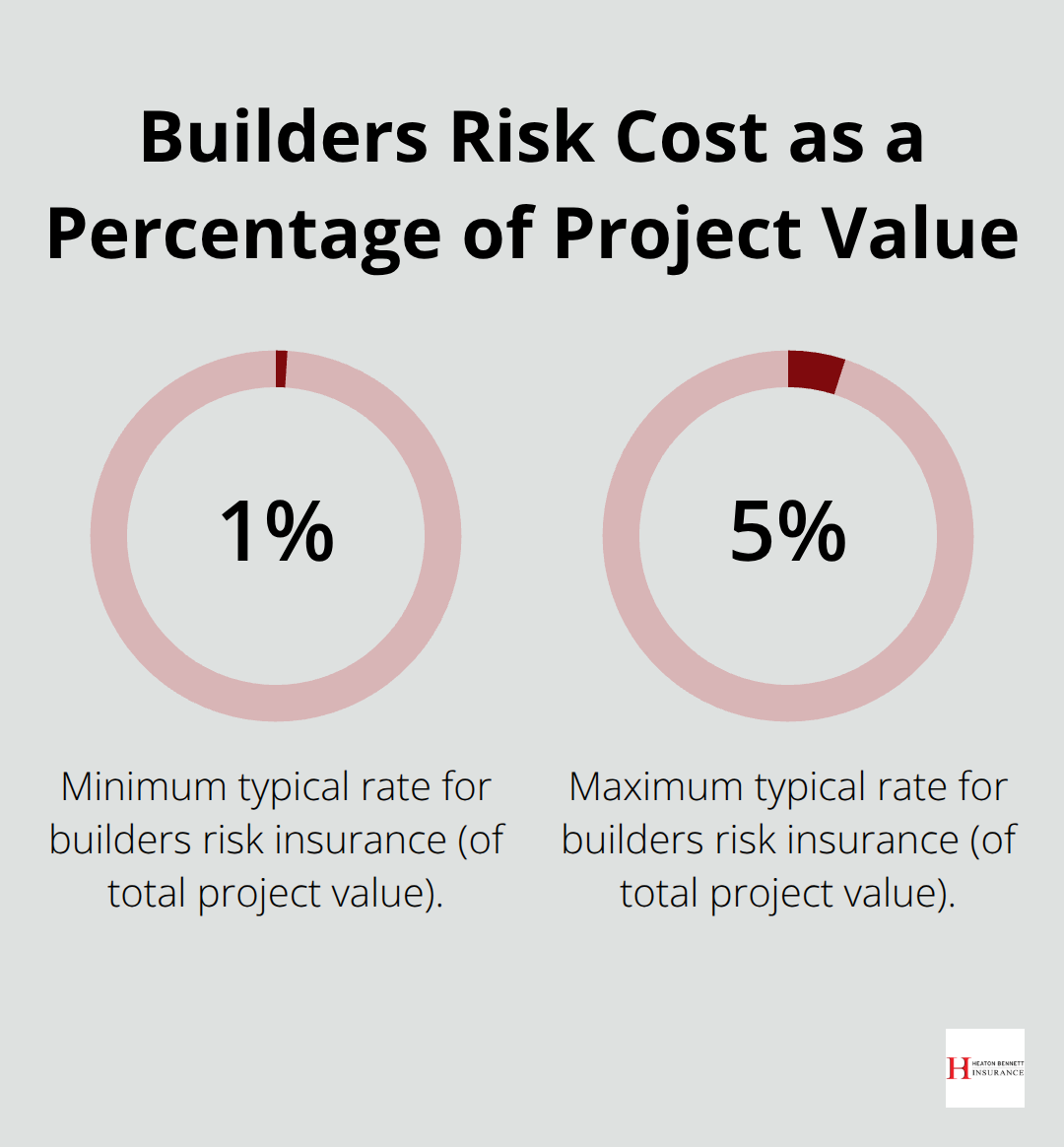
The cost structure for trade contractor insurance varies significantly based on your business size, project history, and loss record. General liability premiums typically range from $1,000 to $3,500 annually, while workers’ compensation costs between $1,000 and $4,500 per employee depending on your classification code and state. Inland marine insurance runs $500 to $1,500 per year, and commercial auto ranges from $800 to $5,000 per vehicle. Builders risk insurance, which covers structures under construction, costs between 1 and 5 percent of the total project value, making accurate project bidding critical to avoid underinsuring the work.
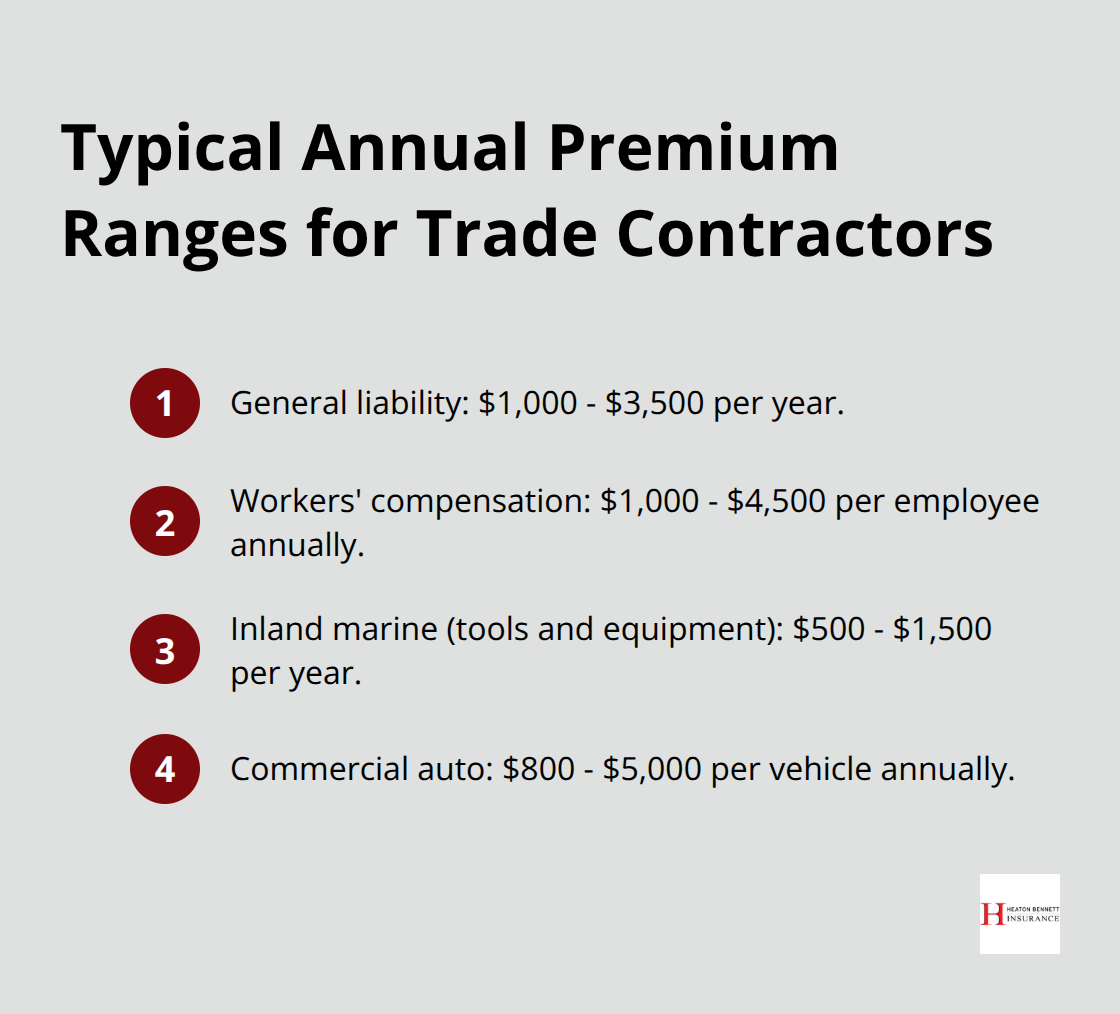
These figures shift based on your specific trade, claims history, and the complexity of projects you take on, which is why assessing your actual exposure matters before you commit to coverage limits.
Why Trade Contractors Need Specialized Insurance
Standard commercial insurance policies were built for office-based businesses, not for the realities of job sites where equipment theft occurs, workers suffer injuries, and accidents happen constantly. Trade contractors operate in high-risk environments where a single incident creates multiple liability exposures that generic policies simply don’t address. Your general liability coverage might cover bodily injury, but what about the pollution from your equipment damaging soil on a client’s property? What about the tools stolen from your truck overnight? What about the injured employee whose medical bills exceed your workers’ comp limits?
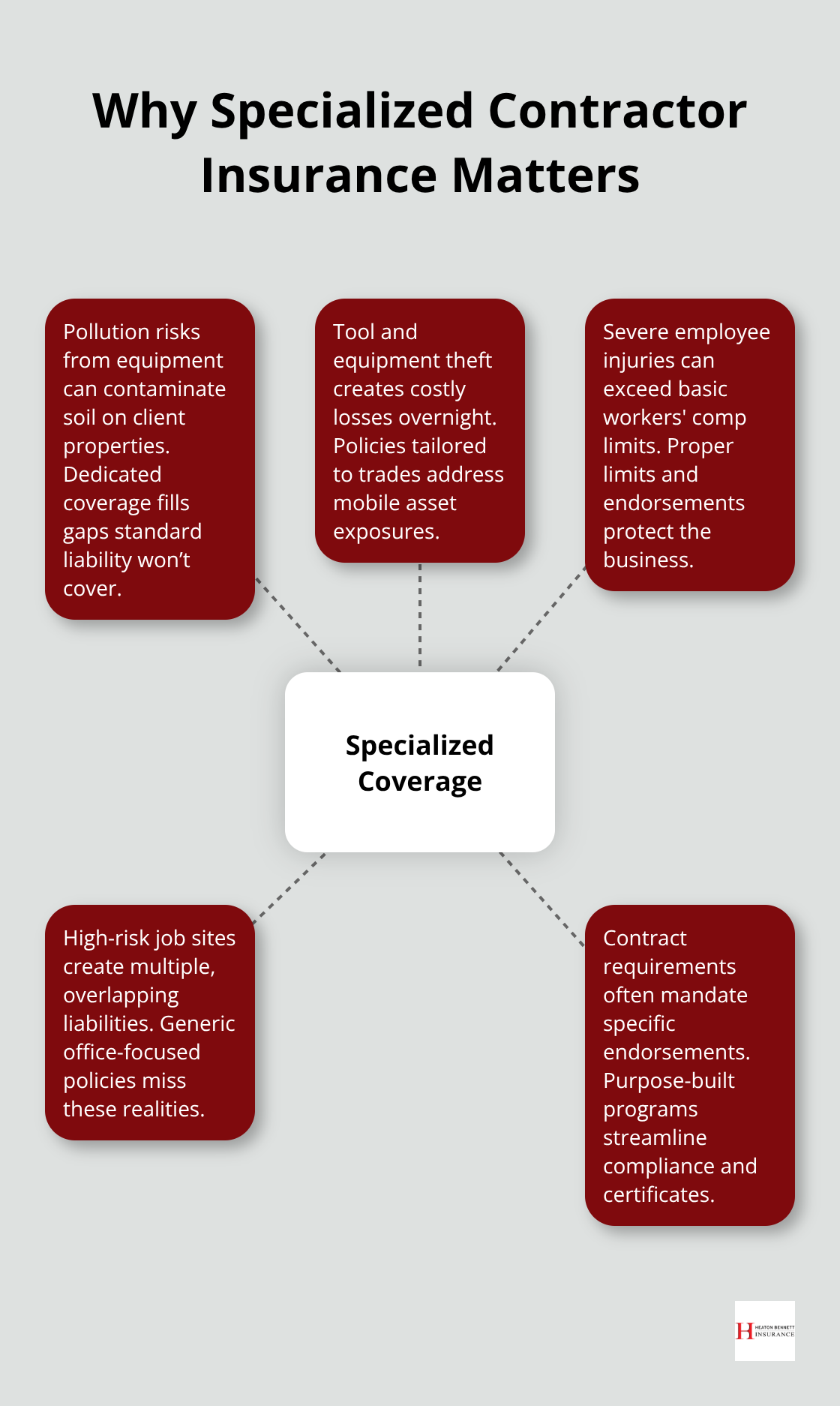
Specialized trade contractor insurance fills these gaps because it addresses how you actually work.
Automatic Coverage Requirements Your Clients Demand
Most construction projects now require proof of additional insured status before you can step foot on site. The Hartford and Liberty Mutual both structure their contractor programs to include automatic additional insured endorsements for your clients, which means you don’t have to manually add each general contractor or property owner to your policy. This matters because delays in providing certificates of insurance cost you days of lost work and can disqualify you from bidding altogether. Without automatic endorsements, you waste time chasing paperwork instead of running your business.
Legal Mandates That Affect Your Bottom Line
California requires workers’ compensation coverage for licensed contractors regardless of employee count as of January 1, 2026, and most states mandate coverage once you hire your first employee. Beyond legal minimums, contract requirements often demand higher limits than the bare legal minimum. Many general contractors now require their trade subs to carry at least $1 million in general liability, and larger commercial projects frequently demand $2 million per occurrence. If your policy maxes out at $500,000, you either cannot bid the job or you face personal liability for anything above your limit.
Why One Lawsuit Can Destroy Your Business
Court awards for permanent disability or wrongful death regularly exceed $1 million in construction cases. One lawsuit from a serious injury wipes out years of profit and threatens your ability to operate. Specialized contractors pollution liability addresses environmental exposures from your specific trade, whether that’s mold remediation, asbestos abatement, or chemical spills. General contractors increasingly write this coverage into subcontract requirements, and without it, you’re technically unable to legally perform jobs you bid on because you lack the required protection.
Finding Coverage That Meets Contract Mandates
Independent agents understand these contract mandates and can build policies that actually meet what your clients require, not just what sounds good in theory. They work with multiple carriers to match your specific trade’s exposures with appropriate limits and endorsements. The next section examines the specific coverage types that address these requirements and help you bid confidently on projects.
Essential Coverage Types for Trade Contractors
General Liability: Your First Line of Defense
General liability covers third-party bodily injury and property damage claims when your work causes injury to someone on site or damages a client’s property. This coverage pays for medical bills, repair costs, and legal defense-expenses that can spiral into six figures on a single claim. Most projects require $1 million per occurrence as a baseline, though larger commercial work often demands $2 million or higher, so verify your limits against actual contract requirements before bidding. The Hartford structures general liability programs with automatic additional insured endorsements, eliminating the paperwork delays that typically slow down certificate of insurance requests.
Workers’ Compensation: Protecting Your Team and Business
Workers’ compensation is non-negotiable in most states and absolutely mandatory in California for licensed contractors regardless of employee count as of January 1, 2026. This coverage pays medical expenses, lost wages, and rehabilitation costs when employees suffer job-site injuries, and it protects your business from direct liability exposure. Premiums typically run $1,000 to $4,500 annually per employee depending on your trade classification and state requirements, making accurate classification critical since misreporting your work type triggers premium adjustments and coverage disputes later.
Tools and Equipment: Covering Mobile Assets
Tools and equipment insurance protects hand tools, power equipment, and machinery from theft or damage at job sites, covering losses at replacement cost rather than depreciated value. A single theft of nail guns or drill sets can easily exceed $5,000, and this coverage reimburses full replacement cost while also covering debris removal and pollution cleanup if your equipment causes environmental damage during operations. Inland marine insurance typically costs $500 to $1,500 annually and addresses gaps that general liability leaves open, particularly for mobile equipment and materials in transit between jobs.
Commercial Auto: Essential for Job-Site Operations
Commercial auto insurance is essential if you operate any vehicles for work, covering liability for accidents, physical damage to your truck or van, and medical payments to injured parties. Standard personal auto policies explicitly exclude business use, leaving you uninsured and personally liable if you drive to job sites or make material runs in a personal vehicle. Premiums range from $800 to $5,000 per vehicle annually depending on vehicle type, driving records, and coverage limits selected.
Contractors Pollution Liability: Addressing Environmental Exposures
Contractors pollution liability specifically addresses environmental exposures from your trade, whether mold remediation, asbestos abatement, or chemical spills, and general contractors increasingly write this requirement into subcontracts. This coverage prevents gaps that standard general liability won’t fill and has become a market expectation rather than an optional add-on for most trade subs bidding on commercial projects.
Final Thoughts
Trade contractor insurance protects your business from the specific hazards you face on every job site, but only if your coverage matches the work you perform and the contracts you bid on. Pull your last five project agreements and note every insurance requirement listed, including minimum limits, additional insured endorsements, and specialized coverages like pollution liability. Compare those requirements against your current policies to identify gaps that could cost you thousands in unexpected expenses and lost opportunities.
The cost of being uninsured or underinsured far exceeds what you pay for proper coverage. A single lawsuit from a serious injury regularly exceeds $1 million in construction cases, and environmental claims from pollution liability gaps can drag on for years with mounting legal fees. Your independent agent accesses multiple carriers and builds a trade contractor insurance program that meets your contract requirements without paying for unnecessary coverage.
We at Heaton Bennett Insurance work with contractors across Austin and beyond to build tailored coverage that protects your business. Our team guides you through the coverage options that matter for your specific trade and helps you understand what your contracts require before you bid. Contact us to discuss your trade contractor insurance needs and get quotes that reflect your actual exposures and contract requirements.
The information provided in this blog is for general informational purposes only and does not constitute legal, financial, or insurance advice. Coverage options, terms, and availability may vary. Please consult with a licensed professional for advice specific to your situation.

