

Business Liability Protection: A Holistic Approach
One lawsuit can wipe out years of profit. At Heaton Bennett Insurance, we’ve seen businesses lose everything because they didn’t have the right business liability protection in place.
The good news? A solid liability strategy protects your assets and keeps your business running when accidents happen. This guide shows you exactly how to build that protection.
The Three Core Liability Protections Your Business Needs
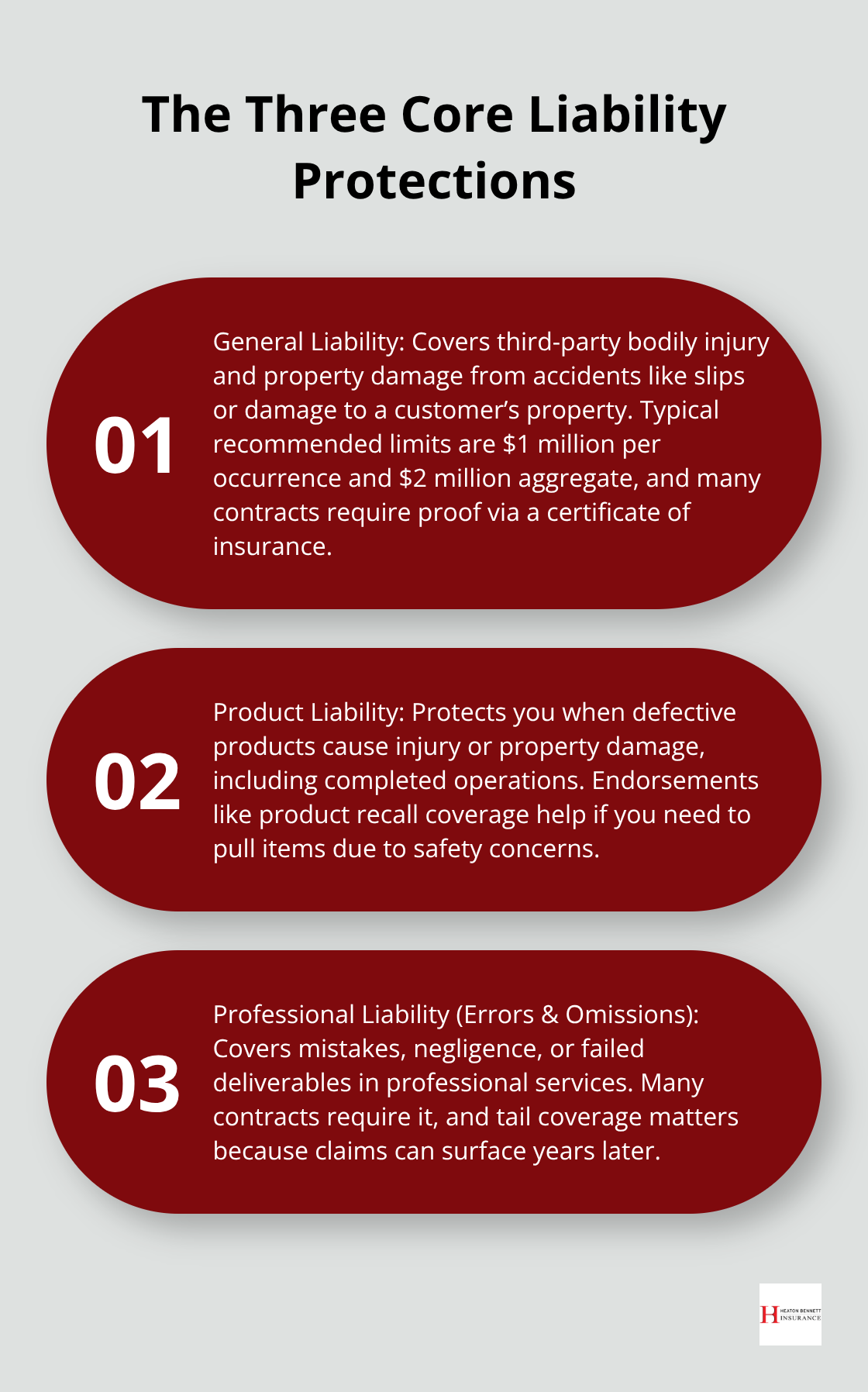
General liability insurance forms the foundation of any liability strategy, but it’s far from the only protection you need. General liability covers third-party bodily injuries and property damage-like when a customer slips on your premises or your work damages their equipment. According to The Hartford, typical limits recommended for many industries are $1 million per occurrence and $2 million in the general aggregate. The national median cost through Progressive Commercial in 2025 was about $55 per month, though this varies significantly by profession and employee count. Many contracts and client agreements require proof of coverage before you can work with them. A certificate of liability insurance demonstrates this protection and is frequently requested by landlords, partners, and clients as a condition of doing business.
When Products Cause Harm
Product liability insurance protects you when a defective product injures someone or damages their property. This coverage applies whether the injury occurs immediately after purchase or months later, since product liability includes coverage for completed operations. If you manufacture, distribute, or sell products, this protection is essential.
Medical expenses, legal defense costs, and settlements up to your policy limits all fall under product liability coverage when a customer is harmed by your product.
Many businesses underestimate this risk because they assume their general liability policy covers product-related claims adequately-it often doesn’t. The Hartford notes that product liability can be enhanced with endorsements like product recall coverage, which is critical if you ever need to pull items from shelves due to safety concerns. A single serious injury from a defective product could bankrupt a small business without this specific coverage in place.
Professional Services Require a Different Kind of Protection
Professional liability insurance, also called errors and omissions insurance, protects service providers from claims arising from mistakes, negligence, or failed deliverables. This coverage addresses what you do, not just what happens on your premises. An architect’s design flaw, a consultant’s bad advice, or an engineer’s calculation error can trigger claims that general liability doesn’t cover. The Hartford emphasizes that general liability covers third-party bodily injury and property damage, while professional liability specifically addresses errors in the services you provide.
If you’re an accountant, attorney, designer, or other professional service provider, this coverage is non-negotiable. Many professional service contracts explicitly require proof of errors and omissions insurance before engagement. Claims under professional liability can take years to emerge, so continuous coverage with tail protection matters as your business evolves and changes direction.
Moving Beyond the Basics
These three core protections address the most common liability exposures, but your business faces additional risks that require their own specialized coverage. The next section examines the specific liability threats that emerge across different business operations and how to identify which ones apply to your situation.
Where Liability Claims Actually Come From
Slip and Fall Accidents on Your Premises
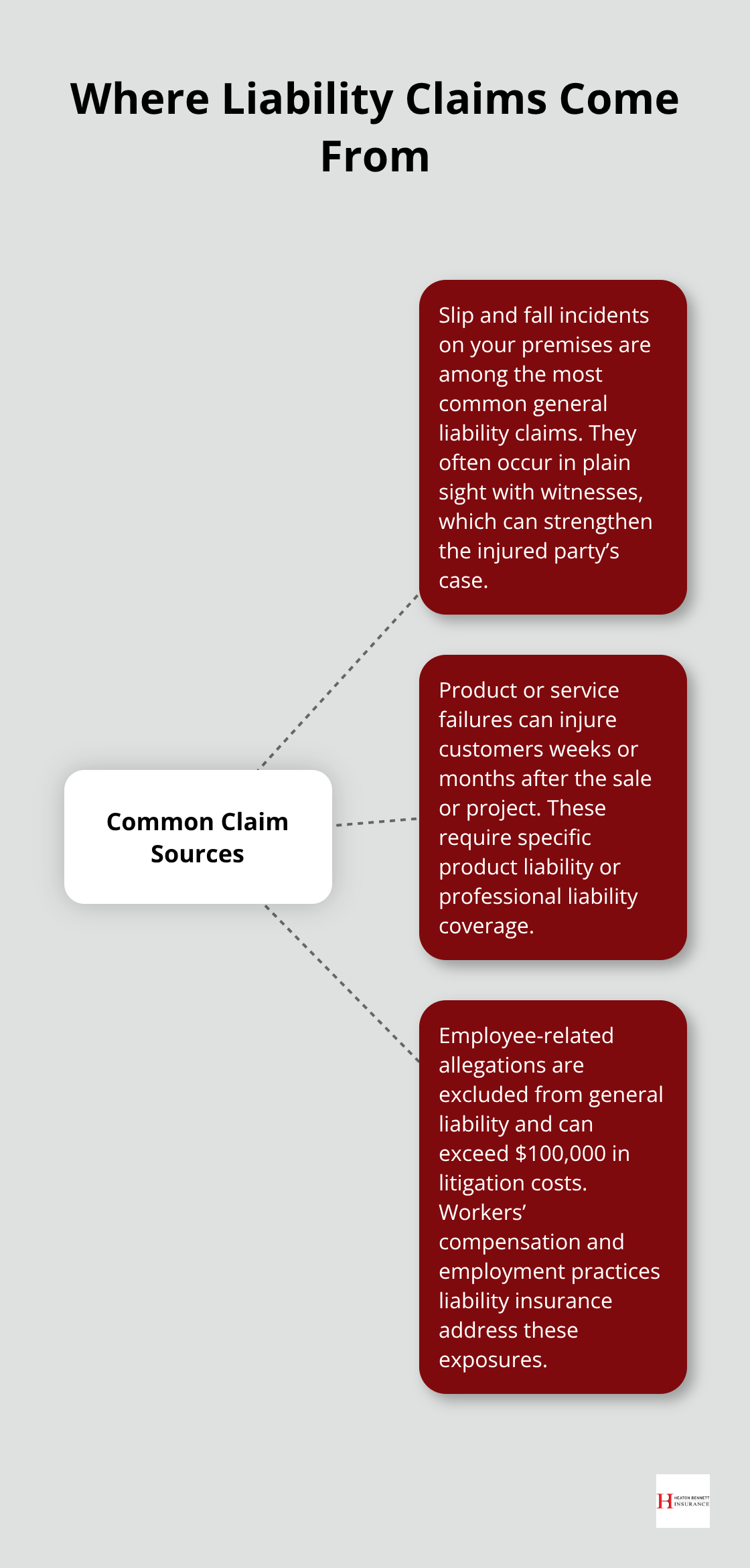
Slip and fall accidents happen constantly on business premises, and they cost far more than most owners realize. A customer trips on uneven flooring, slips on a wet floor, or catches their foot on a loose carpet-and suddenly you face medical bills, legal fees, and potential settlements. The Hartford data shows that bodily injury claims rank among the most common general liability claims businesses file. These claims carry particular danger because they often occur in plain sight with witnesses present, which strengthens the injured party’s legal position.
You cannot prevent every accident, but you can reduce your exposure significantly. Document your premises regularly, maintain clear pathways, address hazards immediately, and train staff on safety protocols. When an accident does occur, photograph the scene, collect witness statements, and report it to your insurance carrier promptly. General liability policies cover these claims, but only if you maintain adequate limits. The Hartford recommends $1 million per occurrence and $2 million in general aggregate for most industries-limits that apply directly to slip and fall scenarios.
Product and Service Failures That Cause Injury
Customer injuries from products or services represent a different category of risk that demands separate attention. A defective product causes injury weeks or months after purchase, a service provider’s negligence leads to property damage, or a completed project fails and injures someone. These situations require the specific coverage discussed earlier in this guide.
Product liability claims often involve multiple parties (manufacturers, distributors, retailers), so your exact position in the supply chain matters for your coverage strategy. Professional liability claims can emerge years after the work is completed, making tail coverage essential when you change carriers or retire from the business.
Understanding your role in the transaction helps you identify which coverage types apply to your operations.
Employee-Related Claims and Workplace Violations
Employee-related claims introduce another layer of complexity because general liability policies exclude them entirely. Workers’ compensation covers on-the-job injuries for your employees, but employment practices liability insurance addresses discrimination claims, wrongful termination, harassment allegations, and other workplace violations that damage both finances and reputation.
These claims have become increasingly common, with litigation costs often exceeding $100,000 before any settlement is reached. Your general liability policy won’t protect you here, and neither will workers’ compensation-you need a dedicated employment practices liability policy. Most businesses face all three categories of risk simultaneously, which is why a comprehensive liability strategy addresses each one separately rather than relying on a single policy to cover everything.
The specific risks your business faces depend on your industry, operations, and customer interactions. Identifying which liability exposures apply to your situation requires a careful assessment of your actual business activities-the subject of the next section.
How to Identify Your Actual Liability Risks
Start With Your Own History
Every business faces unique liability exposures that depend on your specific operations, customer base, and physical environment. The first step toward comprehensive protection is conducting an honest assessment of where claims actually originate in your business. Examine your past three years of incidents, near-misses, and customer complaints. Did anyone slip on your premises? Did a product malfunction? Did a service fail to meet client expectations? These patterns reveal your actual risk profile far better than industry generalizations.
Document each incident with details about what happened, who was involved, and what it cost to resolve. This record becomes invaluable when meeting with an insurance professional because it demonstrates your specific exposure rather than relying on assumptions. Many business owners skip this step and end up purchasing generic coverage that leaves critical gaps.
Understand Your Industry’s Specific Exposures
Your industry classification matters tremendously. A landscaper faces different slip-and-fall exposure than a software developer, and a manufacturer carries product liability risks that a service provider might not. The Hartford recommends that most industries carry $1 million per occurrence and $2 million in general aggregate limits, but your specific business activities might demand higher limits in certain areas.
If you work under client contracts, review those agreements now because many explicitly require specific coverage types and minimum limits. You cannot build effective protection without understanding exactly where your business is vulnerable.
Layer Coverage Types to Match Your Exposures
Once you understand your specific risks, the next step is layering the right coverage types to address each exposure separately rather than hoping a single policy covers everything. General liability forms your foundation, but it alone leaves you exposed to product claims, professional errors, and employee-related lawsuits. Product liability fills the gap when your products cause harm. Professional liability covers service mistakes.
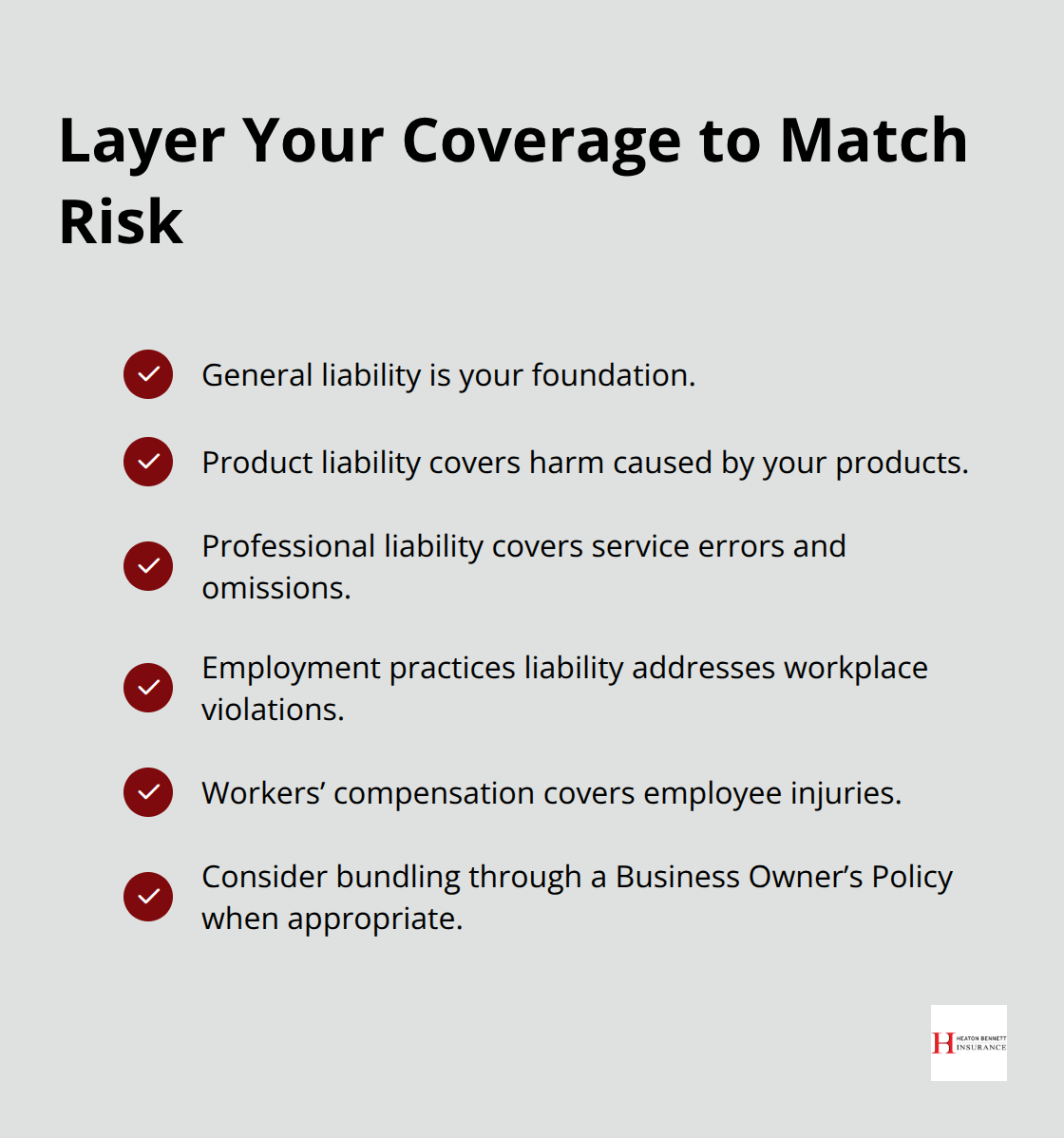
Employment practices liability addresses workplace violations. Workers’ compensation covers employee injuries.
The Hartford emphasizes that bundling these coverages through a Business Owner’s Policy for property-owning businesses can reduce administrative burden while providing integrated protection. However, bundling only works if you select appropriate limits for each exposure category.
Work With an Agent Who Asks the Right Questions
An independent insurance agent becomes essential at this stage because they can access multiple carriers and customize your program to match your actual risk profile. The agent’s job is identifying which coverage layers apply to your business and recommending appropriate limits for each one. This requires asking detailed questions about your operations, reviewing your contracts, and understanding your growth plans.
Do not accept generic quotes that treat your business like every other company in your industry. Demand specificity. If an agent cannot explain why they recommended particular coverage limits or why they excluded certain protections, find a different agent. The goal is a liability program where each policy addresses a specific exposure without gaps between them or overlapping coverage you do not need.
Final Thoughts
A single lawsuit destroys a business that lacks proper liability protection. We at Heaton Bennett Insurance have watched companies lose everything because they delayed building comprehensive coverage. The financial impact of even one claim-medical bills, legal defense costs, settlements-exceeds years of profit if you operate without adequate business liability protection.
Your actual risk profile depends entirely on your operations, industry, and customer interactions. A landscaper faces different exposures than a consultant, and a manufacturer carries product risks that a service provider might not. Start by reviewing your past three years of incidents and near-misses, then examine your client contracts for required coverage types and minimum limits.
Work with an independent agent who can access multiple carriers and customize your program to match your actual risk profile. That agent should ask detailed questions about your operations and explain exactly why they recommended particular coverage limits. Contact us today to discuss your business liability protection needs and secure the coverage that keeps your business running when accidents happen.
The information provided in this blog is for general informational purposes only and does not constitute legal, financial, or insurance advice. Coverage options, terms, and availability may vary. Please consult with a licensed professional for advice specific to your situation.

