

Small Business Liability Plan: Build a Stronger Protection Strategy
One liability claim can drain your business finances and damage your reputation. At Heaton Bennett Insurance, we’ve seen small businesses struggle because their coverage didn’t match their actual risks.
A strong small business liability plan isn’t about buying the cheapest policy-it’s about understanding what you’re really exposed to and protecting against it. This guide walks you through building a strategy that actually works for your operation.
What Liability Risks Actually Threaten Your Small Business
How Fast Liability Claims Drain Your Finances
A single liability claim can devastate your business finances and wreck your reputation. One slip-and-fall incident at your location, one mistake in your service delivery, or one product defect can trigger claims that exceed $100,000 before legal fees accumulate. The National Safety Council reports that the average premises liability claim costs $31,000, but that’s only the beginning.
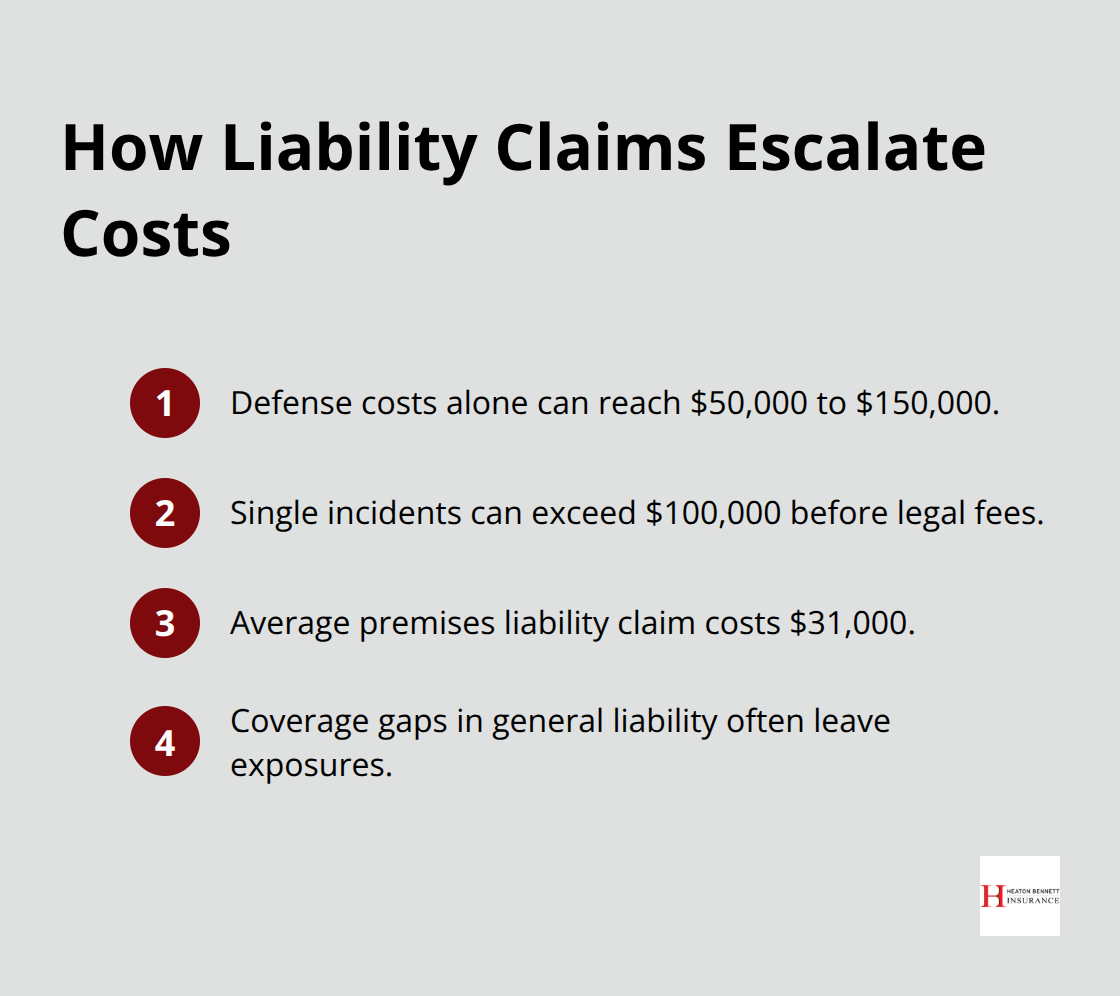
Once lawyers enter the picture, defense costs alone can reach $50,000 to $150,000 depending on claim complexity. General liability gaps plague most small businesses because owners assume standard coverage protects more than it actually does.
Professional Services and Product Liability Expose You to Higher Claims
Professional service providers face steeper exposure than they realize. A single error in advice or implementation can trigger claims that reach $250,000 or higher. Product liability claims hit manufacturers and retailers hard, with the average product liability claim settling around $75,000 according to insurance industry data. Your business size offers no shield from exposure; small companies face the same litigation costs as large ones, yet you have far fewer resources to absorb them.
Standard Policies Leave Critical Coverage Gaps
Standard commercial policies contain exclusions that create dangerous gaps in your protection. Many basic policies exclude completed operations, which means work you finished six months ago might not be covered if a client later discovers damage. Professional liability coverage isn’t included in general liability policies, yet small business owners frequently assume it is. Contractors especially suffer from this misconception-general liability covers bodily injury and property damage at your location, but it won’t cover claims that your workmanship failed or caused financial loss to the client.
Subcontractors and Aggregate Limits Create Hidden Exposures
Subcontractors add another layer of complexity because contract terms may hold you liable for their mistakes, yet your general policy might not extend coverage to that exposure. Aggregate limits in standard policies get consumed quickly when multiple claims occur in one year, leaving you unprotected for subsequent claims. Retention amounts and deductibles also vary widely, and selecting the wrong deductible means you’re essentially self-insuring smaller claims while still paying premiums.
The Dangerous Gap Between What You Think You’re Covered For and What You Actually Are
The mismatch between what business owners think they’re covered for and what their policy actually covers creates a protection gap that surfaces only when a claim arrives. Understanding these gaps is the first step toward building a liability plan that actually matches your operation’s real exposures and protects your business from the financial devastation that claims can cause.
What Makes Each Liability Coverage Type Different
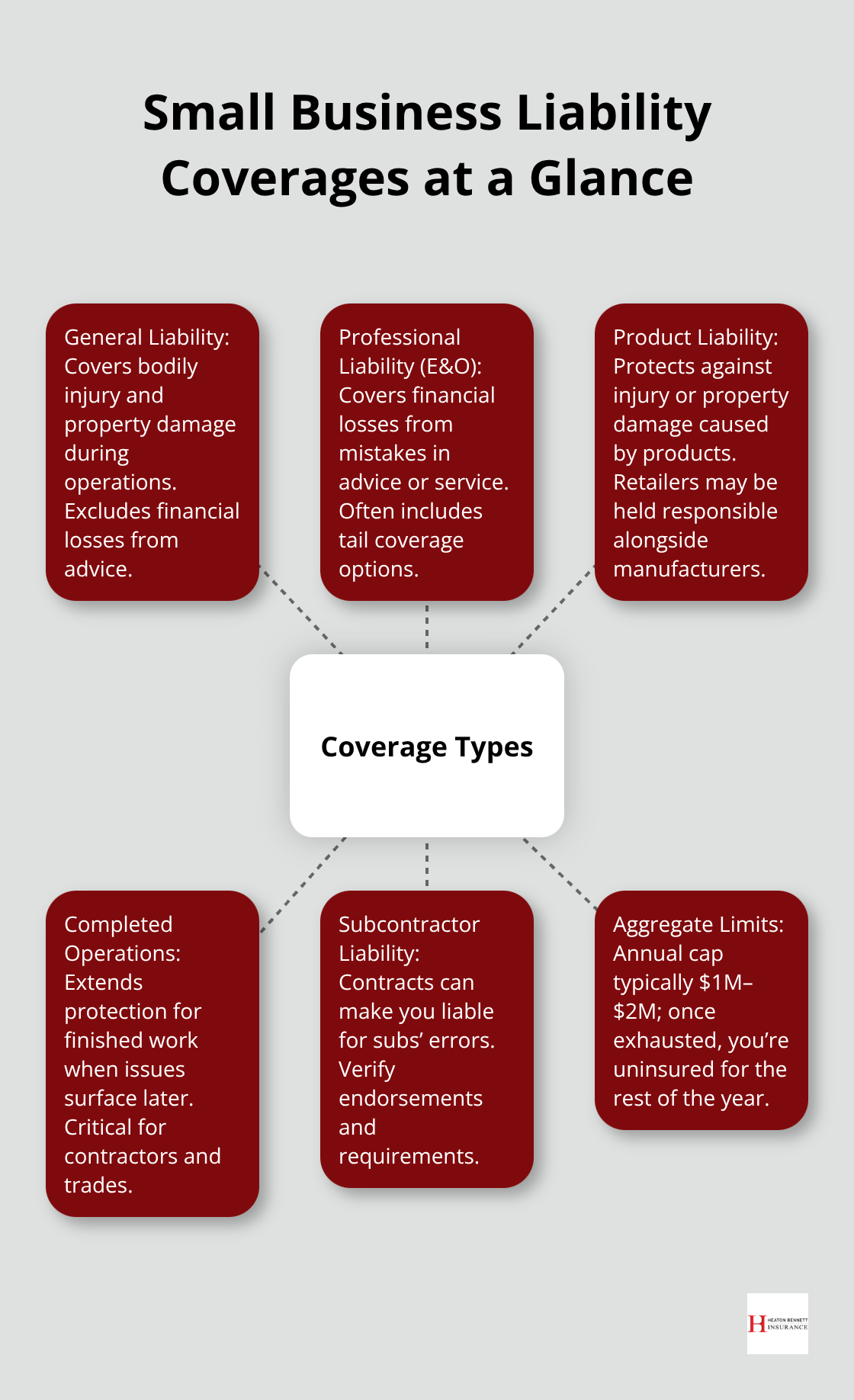
General liability insurance forms the foundation of business protection, but it covers only bodily injury and property damage that occurs at your location or during your operations. This policy won’t cover financial losses from professional mistakes, product defects discovered after work completion, or errors in advice you provided to clients. The standard general liability policy has an aggregate limit, typically ranging from $1 million to $2 million annually, which means once claims consume that amount, you’re uninsured for the rest of the year. Small business owners often discover their general liability policy excludes completed operations coverage, leaving them exposed for months or years after a project ends. If you’re a service provider or contractor, this gap proves particularly dangerous because clients frequently uncover problems long after you’ve finished the work and moved to the next job.
Professional Liability Closes the Gap for Service Providers
Professional liability insurance, also called errors and omissions coverage, protects against claims that your advice or work caused financial loss to a client. A consultant who recommends a flawed business strategy, an accountant who misses a tax deduction, or an engineer whose design calculations prove incorrect all face claims that general liability won’t touch. These claims average $100,000 to $300,000 depending on your profession and the scope of your client relationships. Professional liability policies typically include a tail coverage option that extends protection for claims reported after you stop working, which matters because many professional mistakes surface years later. Without this coverage, a single error can force you into personal liability, potentially affecting your personal assets and home equity.
Product Liability Protects Retailers and Manufacturers
Product liability coverage protects manufacturers, distributors, and retailers against claims that a product caused injury or property damage. Retailers often overlook this exposure entirely, assuming the manufacturer carries all liability, but courts frequently hold retailers responsible alongside manufacturers. Your retail operation faces the same litigation costs as the manufacturer, yet you may lack the resources to absorb them. Adding product liability coverage requires higher premium investment but prevents the catastrophic scenario where a claim arrives and leaves your business financially exposed.
Completed Operations Coverage Extends Protection Beyond Project Completion
Completed operations coverage extends protection for work or products you finished in prior years, addressing the dangerous gap that standard policies create. Construction companies, HVAC contractors, and plumbing firms especially need completed operations because building defects or equipment failures discovered years after installation still generate claims against the original contractor. This coverage activates when clients discover problems long after you’ve moved on to other projects, protecting you from claims that arrive when your general liability aggregate has been consumed. Adding completed operations coverage requires higher premium investment but prevents the scenario where a claim arrives after your project is supposedly complete and leaves you unprotected.
Subcontractor Liability and Aggregate Limits Demand Attention
Subcontractors add another layer of complexity because contract terms may hold you liable for their mistakes, yet your general policy might not extend coverage to that exposure. Aggregate limits in standard policies get consumed quickly when multiple claims occur in one year, leaving you unprotected for subsequent claims. Retention amounts and deductibles also vary widely, and selecting the wrong deductible means you’re essentially self-insuring smaller claims while still paying premiums. Understanding how subcontractor liability and aggregate limits interact with your coverage becomes essential as you move toward selecting appropriate coverage limits for your specific operation.
How to Build Your Custom Protection Plan
Document Your Actual Business Operations
Start by listing every operational activity your business performs, because coverage limits must match your actual exposure, not industry averages. Walk through your facility and identify every way a customer could get injured, every service or product you deliver, every mistake that could cost a client money, and every subcontractor you rely on. A plumbing contractor’s exposure differs vastly from a marketing consultant’s exposure, yet both might purchase identical general liability policies. Your business documentation should include the dollar value of your largest client contracts, your annual revenue, the number of employees, and the scope of work you perform on client premises versus your own location. This information directly determines whether a $1 million aggregate limit protects you adequately or leaves you dangerously underinsured.
Match Coverage Limits to Your Financial Risk
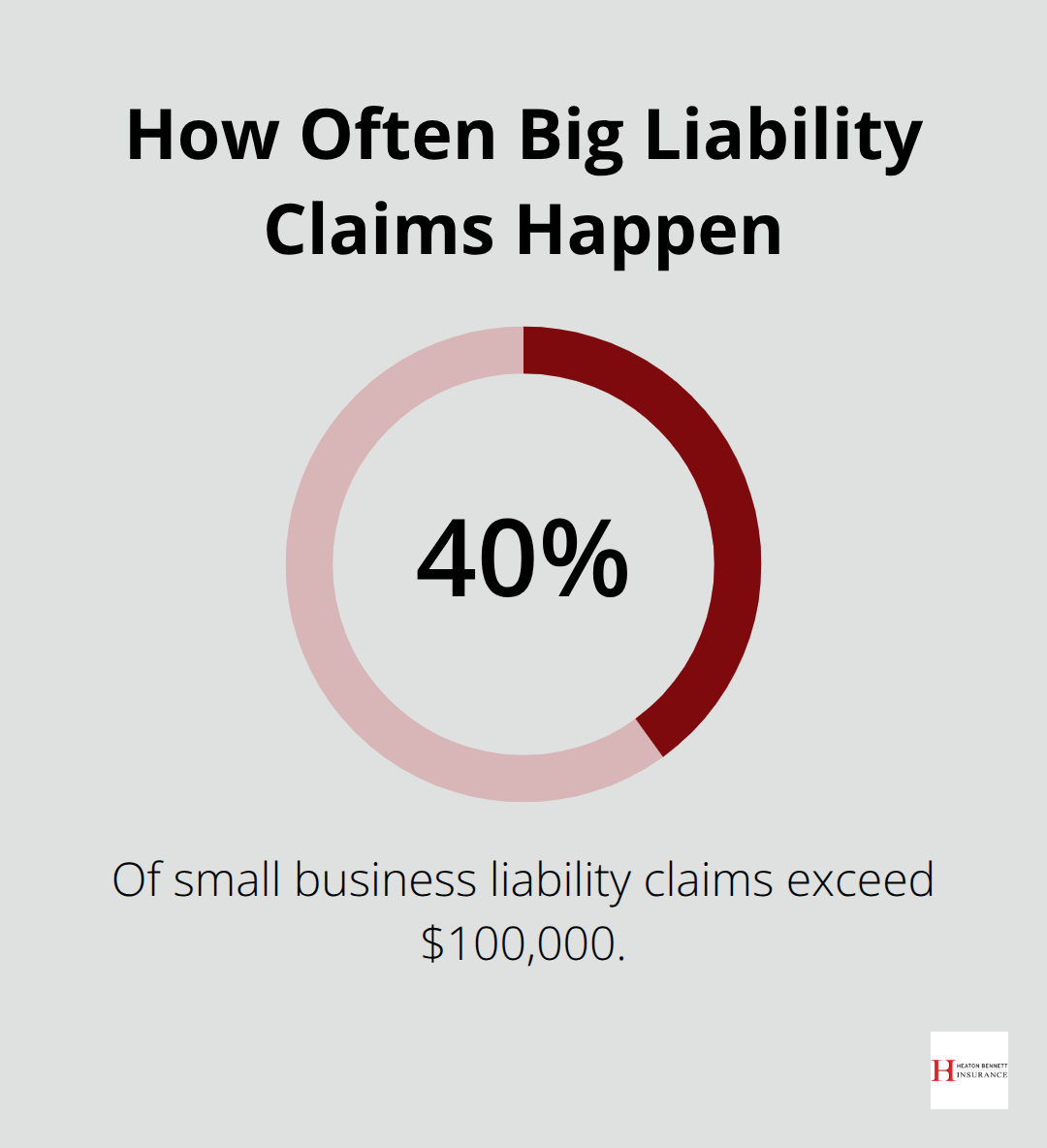
Your coverage limits should reflect your actual financial risk, not your budget constraints. If your largest client contract represents $250,000 in revenue and a professional error could trigger a claim matching that value, your professional liability limit must exceed $250,000 to provide real protection. Insurance industry data shows that 40% of small business liability claims exceed $100,000, so selecting a $500,000 aggregate limit means one substantial claim consumes half your annual protection.
A contractor experiencing three claims annually averaging $75,000 each needs a $225,000 minimum aggregate just to cover expected claims, making a $1 million aggregate more realistic for business continuity.
Extend Completed Operations Coverage Appropriately
Completed operations coverage should extend for the full statute of limitations in your state, typically ranging from three to ten years depending on your profession and location. This protection matters because clients frequently uncover problems long after you’ve finished the work and moved to the next job. Your coverage must remain active during the entire period when claims could surface, not just while you’re actively performing work.
Align Subcontractor Coverage With Contract Terms
Subcontractor coverage requires reviewing your contract terms to identify which party bears liability responsibility, then matching your policy limits to those obligations. Contract language often holds you liable for subcontractor mistakes, yet your general policy might not extend coverage to that exposure. Product liability limits should reflect the potential injury or damage one unit of your product could cause, not the profit margin on that product.
Avoid Selecting Limits Based on Budget Alone
Many small business owners select coverage limits based on what they can afford rather than what their exposure demands, creating a false sense of protection that evaporates the moment a claim arrives. This approach leaves dangerous gaps that surface only when a claim arrives and your actual exposure exceeds your selected limits. Your protection strategy must address your real financial risk, not your current cash flow constraints.
Final Thoughts
Your small business liability plan becomes your financial protection when a claim arrives. One incident can drain your business finances, force you into personal liability, and damage your reputation without adequate coverage. With the right plan in place, you transfer that financial risk to an insurance carrier and maintain business continuity.
The businesses that weather liability claims successfully invested time understanding their specific risks before a claim arrived. They selected coverage limits based on their largest client contracts and potential financial losses, not on what seemed affordable. They extended completed operations coverage for the full statute of limitations in their state and aligned subcontractor coverage with their contract terms.
We at Heaton Bennett Insurance understand that building the right liability plan requires more than shopping for the lowest premium. Our team works with you through a Security Snapshot process to identify your actual exposures, match coverage limits to your real risks, and layer multiple policies for comprehensive protection. Contact us to discuss your small business liability plan and confirm your business has the coverage it actually needs.
The information provided in this blog is for general informational purposes only and does not constitute legal, financial, or insurance advice. Coverage options, terms, and availability may vary. Please consult with a licensed professional for advice specific to your situation.

