
Business Property Weather Risk: A Practical Roadmap
Weather events cost U.S. businesses an average of $54 billion annually in direct losses. If your company operates physical locations, you’re exposed to this risk whether you realize it or not.
At Heaton Bennett Insurance, we’ve helped countless business owners understand their business property weather risk and take concrete steps to protect what they’ve built. This roadmap walks you through assessing your exposure, strengthening your defenses, and closing the gaps that leave too many companies vulnerable.
What Weather Actually Costs Your Business
Weather-related property damage hits businesses harder than most owners anticipate. The National Institute of Standards and Technology reports that hurricane damage costs the U.S. economy roughly $54 billion per year, but that represents only one type of event. Flooding causes approximately $20 billion in annual damages, while severe thunderstorms and hail damage property at rates exceeding $10 billion yearly. These aren’t distant problems affecting only coastal or tornado-prone regions-a single severe weather event in your area can wipe out years of profit margins. Many business owners face this reality only after their first major claim, when they learn their business insurance coverage doesn’t actually protect what they thought it did.
Direct Financial Damage Goes Beyond Repair Costs
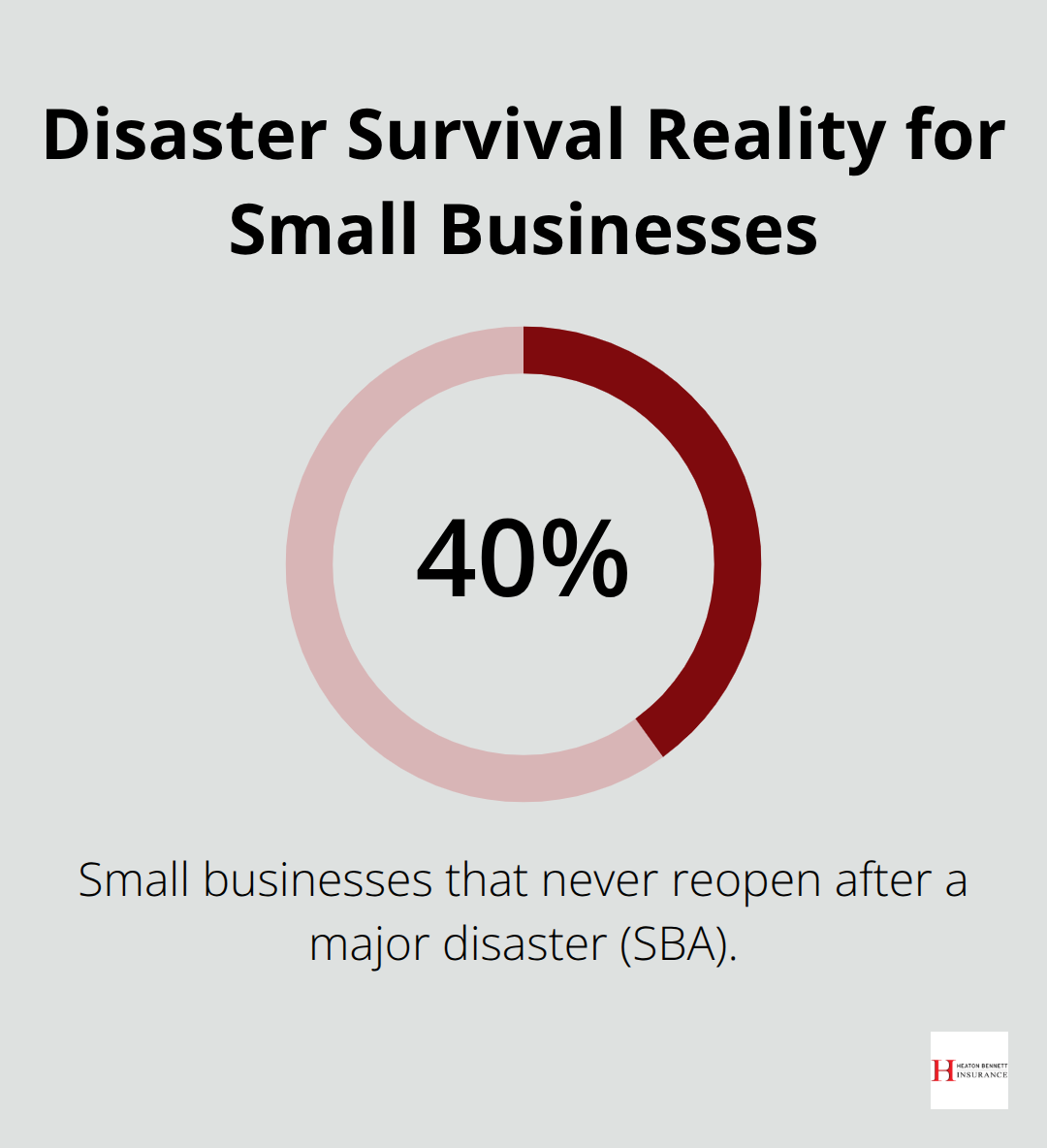
When a storm damages your building, equipment, or inventory, the immediate repair bill represents just the beginning. You also face business interruption losses while operations halt, increased expenses to maintain operations from temporary locations, and potential revenue loss if customers can’t reach you. According to the Small Business Administration, 40 percent of small businesses never reopen after a major disaster. The financial hit extends to supply chain disruptions that may last weeks or months after the weather event passes.
Your vendors might suffer damage too, meaning materials you depend on become unavailable even if your facility survives intact. A roofing contractor lost $200,000 in revenue during a three-week shutdown from hail damage, yet his standard commercial property policy covered only the building repairs, not the lost income. Insurance coverage gaps here are massive and often remain invisible until disaster strikes.
The Hidden Costs of Business Interruption
Many business owners focus entirely on property damage coverage and ignore business interruption insurance, which is a serious mistake. If a weather event forces you to close your doors, business interruption coverage pays your ongoing expenses like payroll, rent, and utilities while you cannot operate. Without it, you personally absorb these costs even though you’re earning zero revenue. The duration of shutdown matters enormously. A manufacturing facility might take six months to fully recover from flood damage, during which fixed costs continue accumulating. Your employees need income, your landlord expects rent, and your creditors want payment regardless of whether you’re open. This is where many businesses fail financially even though the physical damage was repairable. The key is understanding that comprehensive commercial property coverage must include business interruption protection with adequate limits based on your actual monthly operating expenses, not guesses about what you might need.
Why Coverage Gaps Leave You Exposed
Standard commercial property policies often exclude or severely limit coverage for specific weather events. Flood damage typically requires a separate flood insurance policy, yet many business owners skip this step because they underestimate their flood risk. Wind and hail damage sometimes carry high deductibles that make claims impractical for smaller losses. Water damage from heavy rain might fall into gray areas where your insurer disputes whether it qualifies as “flood” coverage. These gaps create a false sense of security-you think you’re protected until you file a claim and discover otherwise. The time to identify these gaps is now, before a weather event forces you to confront them. Understanding exactly what your current insurance covers and what it doesn’t is the foundation for building real protection.
Assessing Your Business Weather Risk
Map Every Asset That Weather Can Damage
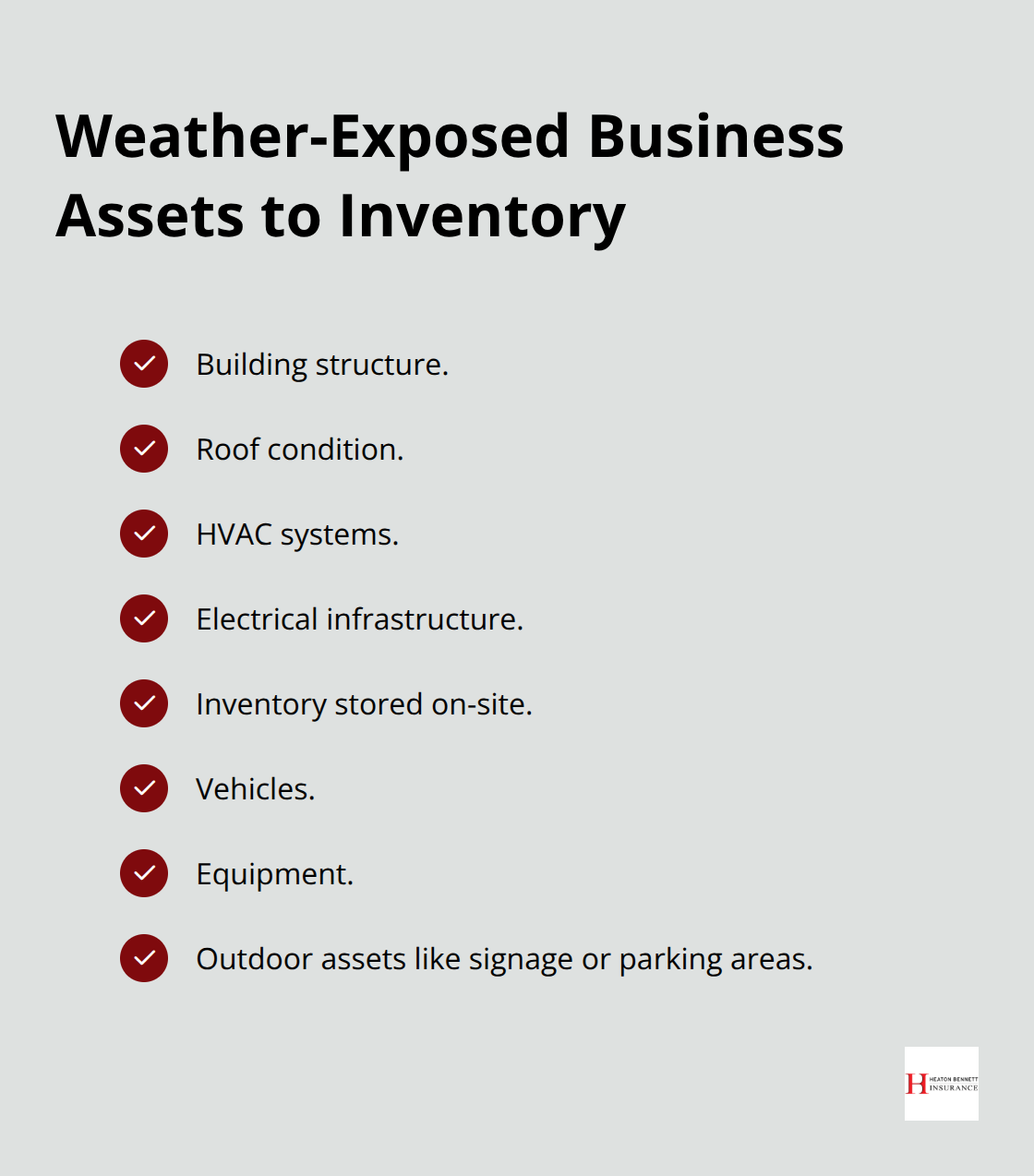
Start by listing every asset your business owns or operates that weather can damage. This includes your building structure, roof condition, HVAC systems, electrical infrastructure, inventory stored on-site, vehicles, equipment, and outdoor assets like signage or parking areas. Most business owners skip this step and jump straight to asking their insurance agent what they’re covered for, which is backward.
You need to know what you’re protecting before you can assess whether your coverage is adequate.
Walk through your facility and photograph everything. Document the age and condition of your roof, since that’s where most weather damage originates. Note whether your building sits in a flood-prone area by checking FEMA flood maps, which are free and publicly available online. If you operate multiple locations, this exercise becomes more critical because exposure varies dramatically by geography.
Understand Your Local Weather Patterns
A retail store in Colorado faces different weather risks than an identical business in Louisiana. The NOAA National Centers for Environmental Information tracks 76 years of severe weather data by county and region, which gives you actual historical patterns for your exact location, not generic national statistics. Pull this data for your area and identify which weather events have caused the most damage historically.
Did your county experience more tornado damage or flooding? More hail or wind? This shapes which coverage gaps pose the greatest threat to your specific operation. Historical data reveals patterns that national averages completely miss, and those patterns directly determine which risks matter most to your business.
Audit Your Current Coverage With Brutal Honesty
Request declarations pages from your current agent and read them carefully, paying specific attention to coverage limits, deductibles, and exclusions. Most business owners never do this because the documents feel overwhelming, but this is where coverage gaps hide. Look for specific exclusions related to flood, earthquake, or weather-related water damage, since these are commonly excluded from standard policies.
Check your business interruption coverage limits and compare them to your actual monthly operating expenses including payroll, rent, utilities, and debt payments. If your limit is $50,000 monthly but your real expenses total $120,000, you have a massive gap. The Council of Insurance Agents and Brokers reports that 62 percent of small businesses lack adequate business interruption coverage, which means the majority of companies would face severe financial stress during an extended shutdown.
Calculate Your True Recovery Costs
Calculate what it would actually cost your business to operate from temporary facilities or maintain operations at reduced capacity during recovery. This calculation (including temporary staffing, equipment rental, and expedited shipping) often surprises business owners who’ve never quantified these expenses. Then verify your policy covers those specific costs. If your current coverage doesn’t align with your actual exposure and recovery needs, that’s the actionable insight you need to drive changes before the next weather event tests your protection.
This assessment reveals exactly where your vulnerabilities lie and which insurance adjustments will actually matter for your operation. With this foundation in place, you’re ready to explore the specific strategies that transform exposure into resilience.
Building Resilience Through Prevention and Insurance
Physical Mitigation Strategies Protect Your Property
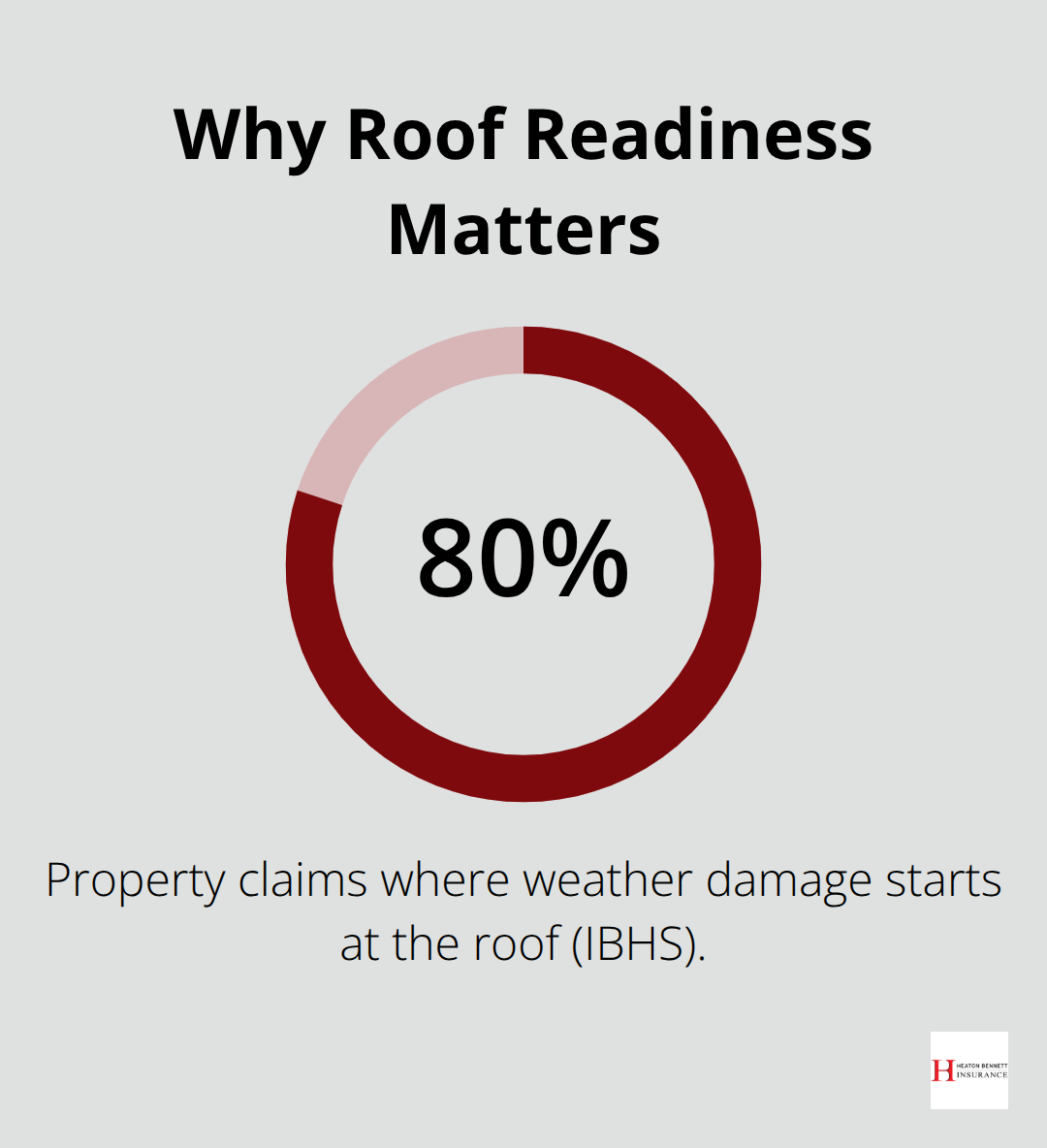
Physical damage prevention cuts your weather losses far more effectively than hoping insurance covers everything afterward. Start with your roof, since weather damage begins there in roughly 80 percent of property claims according to the Insurance Institute for Business & Home Safety. Have a structural engineer inspect your roof’s current condition and age.
If it’s over 20 years old, replacement becomes urgent, not optional.
A metal roof costs more upfront than asphalt shingles but withstands hail and wind far better and lasts 40 to 70 years compared to 15 to 20 years for standard materials. A manufacturing facility in Texas replaced an aging roof before hurricane season and avoided $400,000 in damage when a major storm hit six months later. Beyond roofing, install gutter systems that actually drain water away from your foundation, seal all gaps where water can penetrate walls, and elevate your HVAC units if flooding is possible in your area. The cost of these improvements typically ranges from $5,000 to $25,000 depending on building size, but claims from water damage average $11,000 per incident according to the Insurance Information Institute. Prevention pays for itself quickly.
Comprehensive Commercial Property Coverage Closes Gaps
Your insurance coverage must match your actual exposure, not what feels comfortable to spend. Standard commercial property policies leave gaps that most business owners don’t recognize until claims fail. Flood damage requires a separate policy in nearly all cases since standard coverage excludes it entirely, yet the National Flood Insurance Program reports that 20 to 25 percent of flood claims occur outside high-risk areas where business owners wrongly assume they don’t need protection.
Get a professional flood risk assessment from FEMA or a qualified surveyor, then purchase flood coverage if your risk exceeds minimal levels. Business interruption coverage should cover at least 12 months of your actual monthly operating expenses, not just three or six months. If a major weather event forces a six-month recovery period and your coverage runs out after three months, you’ve solved nothing. Review your property coverage limits annually since business growth often outpaces insurance adjustments. A distribution center that doubled its inventory without updating coverage limits discovered during a hail claim that they were underinsured by $200,000.
Emergency Response Planning Prepares Your Team
Create a written emergency response plan that identifies who communicates with insurers, where critical documents are stored, how operations shift during shutdown, and what temporary facilities you’ll use. Document your assets with photographs and serial numbers, store copies offsite or in cloud storage, and practice your response plan annually so employees know their roles when an actual event occurs. This combination of prevention, adequate coverage, and operational readiness transforms weather risk from a potential catastrophe into a manageable business challenge.
Final Thoughts
Weather events will strike your business regardless of preparation, but your response determines whether your company survives or fails. The $54 billion in annual weather losses across U.S. businesses represents thousands of companies that either lacked adequate coverage or never assessed their exposure until disaster forced their hand. You have the advantage of acting now, before the next event tests your protection.
Start this week by walking through your facility and documenting what you own, then pull your current insurance declarations and read them carefully for exclusions and coverage limits. Compare those limits to your actual monthly operating expenses and recovery costs, which reveals exactly where your business property weather risk protection falls short. This audit takes a few hours but transforms vague concerns into specific, actionable gaps.
Contact an insurance professional who understands your exposure and can match your coverage to your actual needs. We at Heaton Bennett Insurance work with business owners across Austin to build comprehensive protection that covers what matters most, and our team uses a Security Snapshot process to identify gaps you might miss on your own. Visit our website to connect with us and take control of your business property weather risk today.
The information provided in this blog is for general informational purposes only and does not constitute legal, financial, or insurance advice. Coverage options, terms, and availability may vary. Please consult with a licensed professional for advice specific to your situation.

