

Small Business Insurance: Comprehensive Coverage That Scales
Small business owners often carry the wrong insurance or not enough of it. The gap between what you think you’re covered for and what actually protects you can cost thousands.
At Heaton Bennett Insurance, we’ve seen businesses lose everything because they missed a single coverage type. The right small business insurance adapts as you grow, protecting both your current operations and your future.
The Three Pillars Every Small Business Needs
General Liability: Your First Line of Defense
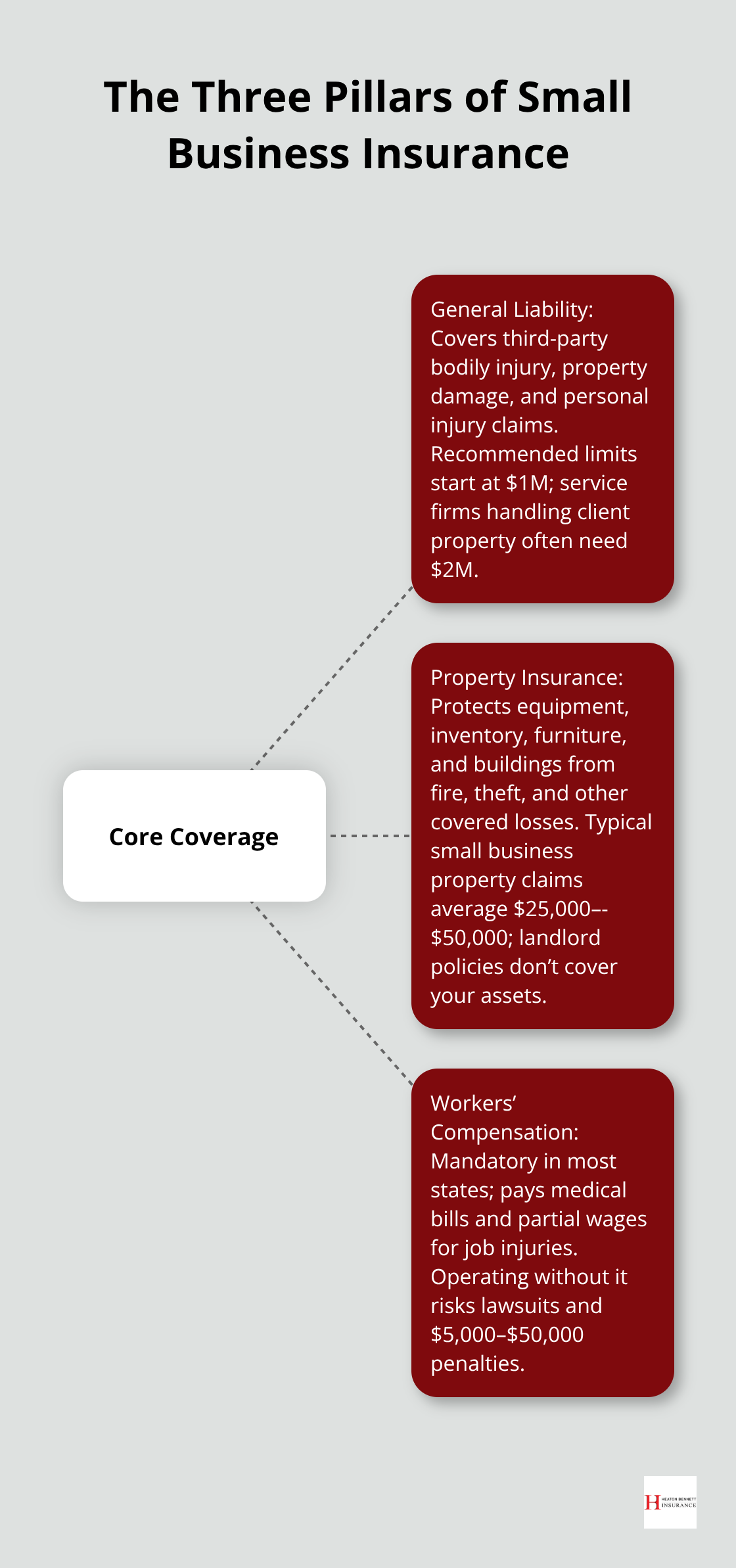
General liability insurance stops lawsuits from destroying your finances. If a customer slips in your office or claims your work caused them harm, this coverage handles legal fees and settlements. The National Federation of Independent Business reports that over 40% of small business lawsuits involve general liability claims, yet many owners carry inadequate limits. You need at least $1 million in coverage, though service-based businesses handling client property should consider $2 million.
Property Insurance Protects What You’ve Built
Property insurance protects your physical assets-equipment, inventory, furniture, and buildings. A single fire or theft can wipe out years of investment. The Insurance Information Institute found that small business property claims average $25,000 to $50,000, which most owners cannot absorb without insurance. Don’t assume your landlord’s policy covers your belongings; it doesn’t. Your equipment and stock remain your responsibility.
Workers’ Compensation: A Legal Requirement with Real Teeth
Workers’ compensation is mandatory in most states if you have employees, and ignoring this requirement carries serious penalties. Operating without it exposes you to lawsuits from injured workers seeking damages beyond what compensation would cover. The Department of Labor tracks state violations, and penalties range from $5,000 to over $50,000 per violation. This coverage pays medical bills and partial wages when an employee gets hurt on the job.
A construction worker with a broken leg or an office worker with a repetitive strain injury both fall under this protection. Without it, you remain personally liable for all costs. The average workers’ compensation claim costs $40,000 across all industries, according to the National Council on Compensation Insurance. Small businesses in high-risk fields like construction or manufacturing face even higher exposure.
Getting this right from day one matters far more than most owners realize. These three coverage types form the foundation, but they represent only the beginning of what your business actually needs to stay protected.
Common Coverage Gaps Small Business Owners Miss
Professional Liability: The Service Business Blind Spot
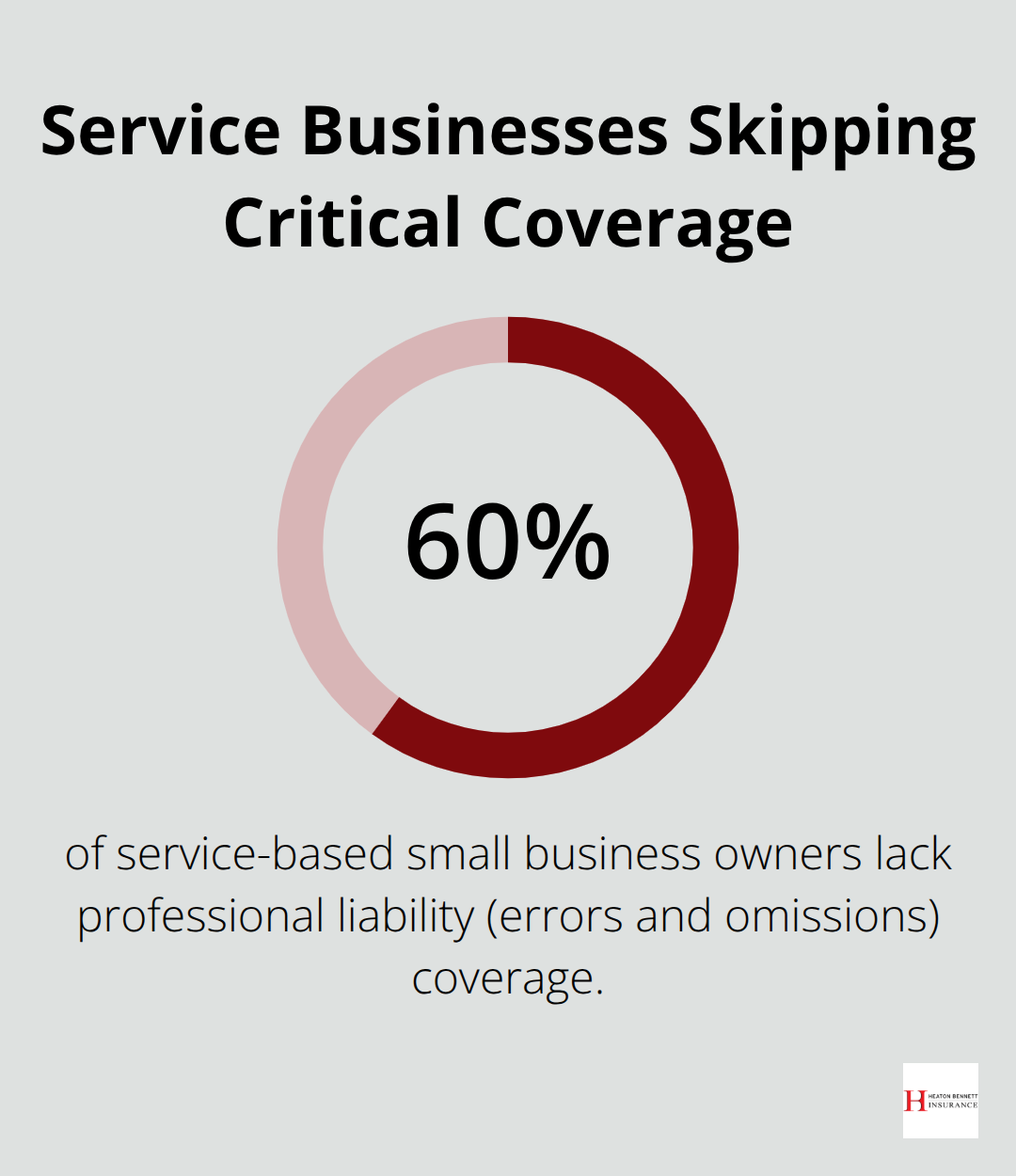
Service-based businesses operate under a dangerous assumption: general liability covers everything. It doesn’t. A consultant who gives bad advice, an accountant who misses a tax deduction, or a designer who delivers faulty code creates liability that general policies explicitly exclude. Professional liability insurance, also called errors and omissions coverage, protects against these claims. The Professional Insurance Agents and Brokers Association found that 60% of service-based small business owners lack this coverage despite operating in high-risk fields.
One missed deadline or incorrect recommendation can trigger a six-figure lawsuit. A single claim averages $50,000 to $100,000, which would bankrupt most service businesses without this protection. The cost runs $500 to $1,500 annually for most consultants and professionals-money owners skip to save funds they’ll never recover after a claim hits.
Cyber Liability: The Threat Most Owners Ignore
Cyber threats represent an entirely different monster that most small businesses ignore completely. A ransomware attack costs the average small business $200,000 in recovery and downtime according to IBM’s 2024 Cyber Security Intelligence Index. Most general liability policies contain cyber exclusions, meaning your standard coverage vanishes the moment hackers strike.
Retail shops storing customer credit cards, medical offices holding patient records, and service firms managing client financial data all face massive exposure. Cyber liability insurance covers breach notification costs, credit monitoring for affected customers, regulatory fines, and business interruption losses. Without it, you absorb everything yourself. A single breach notification to 500 customers costs roughly $5,000 to $10,000 before legal fees and regulatory penalties accumulate.
The threat isn’t theoretical anymore. The FBI reported that ransomware attacks on small businesses increased 300% between 2021 and 2023. This gap in coverage leaves your business vulnerable to losses that standard policies won’t touch, which makes addressing your complete protection picture essential before growth accelerates.
How to Scale Your Insurance as Your Business Grows
Match Coverage Limits to Your Current Revenue
Insurance needs shift dramatically as your revenue grows and headcount expands. A $500,000 annual revenue business operates with entirely different exposure than a $5 million operation, yet many owners never adjust their policies accordingly. The mistake happens in both directions: some businesses carry limits designed for operations half their current size, while others lock into coverage that exceeds what they actually need.
Start with your current revenue and map it against your liability limits. A service firm generating $2 million annually should carry at least $2 million in general liability coverage, not the $1 million that worked when you started. Property coverage needs similar attention. If your equipment inventory has grown from $50,000 to $200,000, your policy limits must reflect that expansion or you face significant underinsurance penalties when claims occur. The Insurance Services Office reports that underinsured businesses recover only 60-70% of actual losses, leaving the gap as your personal financial burden.
Adjust Coverage as Your Team and Operations Expand
Employee count matters equally to revenue when calculating your insurance needs. Each new hire increases your workers’ compensation exposure and exposes you to employment practices liability claims. Ten employees create different risk profiles than fifty. Your cyber liability needs also scale with data volume. Adding customer payment processing or expanding your client database amplifies breach risk substantially.
Review coverage limits quarterly during your growth phase rather than waiting for annual renewals. This approach catches gaps before they become expensive problems. The timing matters because your business changes faster than most owners realize, and insurance that protected you last quarter may leave you exposed today.
Work with an Independent Agent for Personalized Guidance
An independent agent transforms how you navigate these decisions because they access multiple carriers and aren’t locked into recommending one company’s products. This matters tremendously when scaling. An agent can compare how different insurers price coverage for your specific revenue level, industry, and claims history, then adjust your package as circumstances change. Many agents charge nothing for this consultation since carriers pay them commissions, making professional guidance essentially free.
Request a coverage audit specifically tied to your revenue growth trajectory. Tell your agent where you expect to be in two years, not just where you are today. This allows them to recommend policies that accommodate growth without forcing you into expensive mid-term changes.
Make Annual Reviews Non-Negotiable Routine
Annual policy reviews must become non-negotiable routine. Too many business owners treat insurance as set-it-and-forget-it, then wonder why claims get denied because coverage limits haven’t kept pace with operations. Schedule your review for the same month every year, and bring actual financial data: last year’s revenue, current employee roster, equipment inventory, and any new services or products you’ve launched.
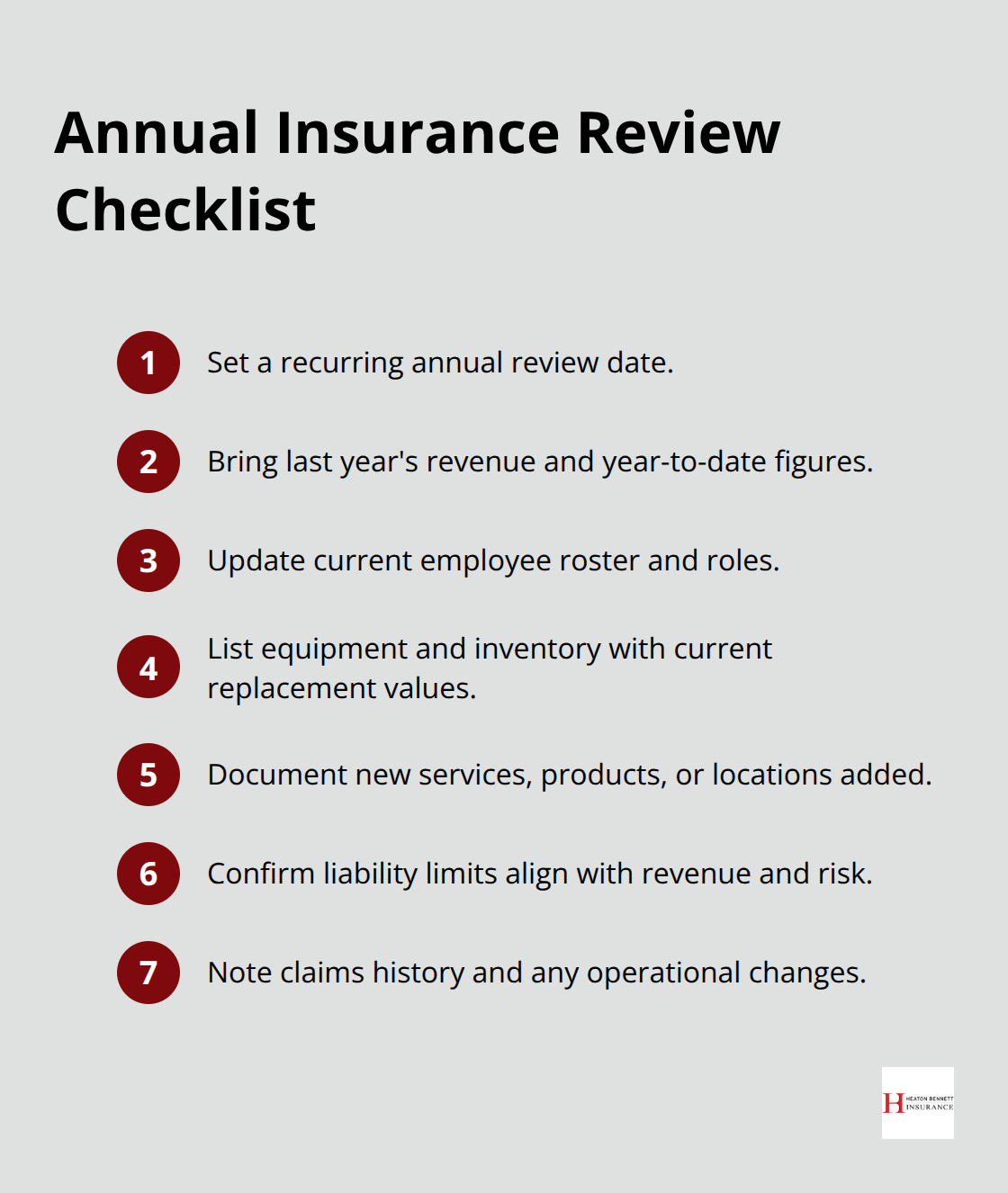
This transforms the conversation from theoretical to concrete, helping your agent identify gaps you might otherwise miss completely.
Final Thoughts
Small business insurance protects far more than your current operations-it protects your investment, your employees, and your ability to recover when something goes wrong. The businesses that survive unexpected events aren’t the ones with basic coverage; they’re the ones who planned ahead and carried the right protection at every stage of growth. Scalable coverage adapts as your business expands because your risks change constantly, and waiting until disaster strikes to identify gaps in your small business insurance costs exponentially more than addressing them proactively.
Revenue growth, new employees, expanded services, and larger asset bases all demand policy adjustments that annual reviews help you catch before problems emerge. An independent insurance provider makes this process straightforward rather than overwhelming, since they recommend coverage based on your actual needs rather than pushing one company’s products. We at Heaton Bennett Insurance work with multiple carriers to identify gaps you might miss and build a comprehensive package tailored to your specific situation, whether you operate as a one-person shop or manage dozens of employees.
Your business deserves protection that grows with it. Contact Heaton Bennett Insurance to schedule a coverage audit and stop guessing whether your policies actually protect what you’ve built.
The information provided in this blog is for general informational purposes only and does not constitute legal, financial, or insurance advice. Coverage options, terms, and availability may vary. Please consult with a licensed professional for advice specific to your situation.

