
Renters Insurance Guidance: Practical Tips For Tenant Coverage
Most renters skip insurance because they think their landlord’s policy covers their belongings. It doesn’t.
At Heaton Bennett Insurance, we’ve seen firsthand how this mistake costs tenants thousands of dollars. Our renters insurance guidance walks you through what actually protects your stuff, how much coverage you need, and the common errors that leave people underinsured.
What Your Renters Policy Actually Protects
Personal Property Coverage Basics
Personal property coverage forms the backbone of renters insurance. It protects your belongings against specific perils like fire, theft, and windstorms. Your furniture, electronics, clothing, and other possessions receive coverage if damage or theft occurs.
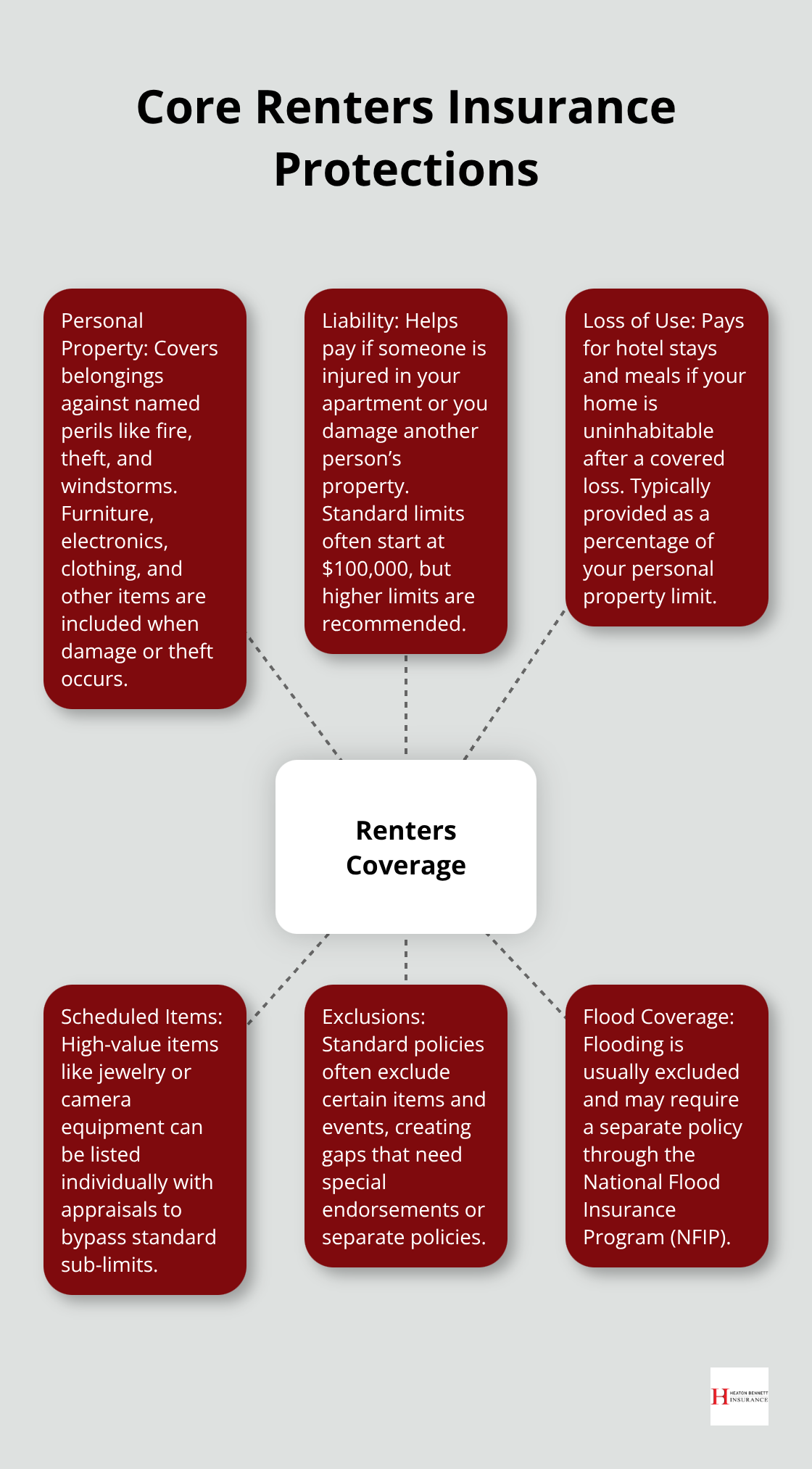
However, most standard policies exclude certain items entirely, which creates gaps many renters don’t anticipate.
Understanding Coverage Limits on Valuables
Jewelry typically has a limit of $1,500 to $2,500 per item unless you add special coverage. Electronics like laptops and cameras often cap at $2,500 total. If you own valuable items, you need to schedule them separately on your policy-this means listing them individually with their replacement cost. Photograph your belongings and keep receipts because insurers will ask for proof of ownership and value when you file a claim.
Water damage from flooding almost never appears on standard renters policies. If you live in a flood-prone area, you need a separate flood insurance policy through the National Flood Insurance Program.
Liability Coverage: Your Financial Protection
Liability coverage protects you financially when someone gets hurt in your apartment or you accidentally damage someone else’s property. Standard liability limits start at $100,000, but this amount falls short. If someone slips on your floor and breaks their leg, medical bills plus lost wages can easily exceed $100,000. You should carry at least $300,000 in liability coverage, and $500,000 is better if you have any significant assets.
Loss of Use Coverage for Unexpected Displacement
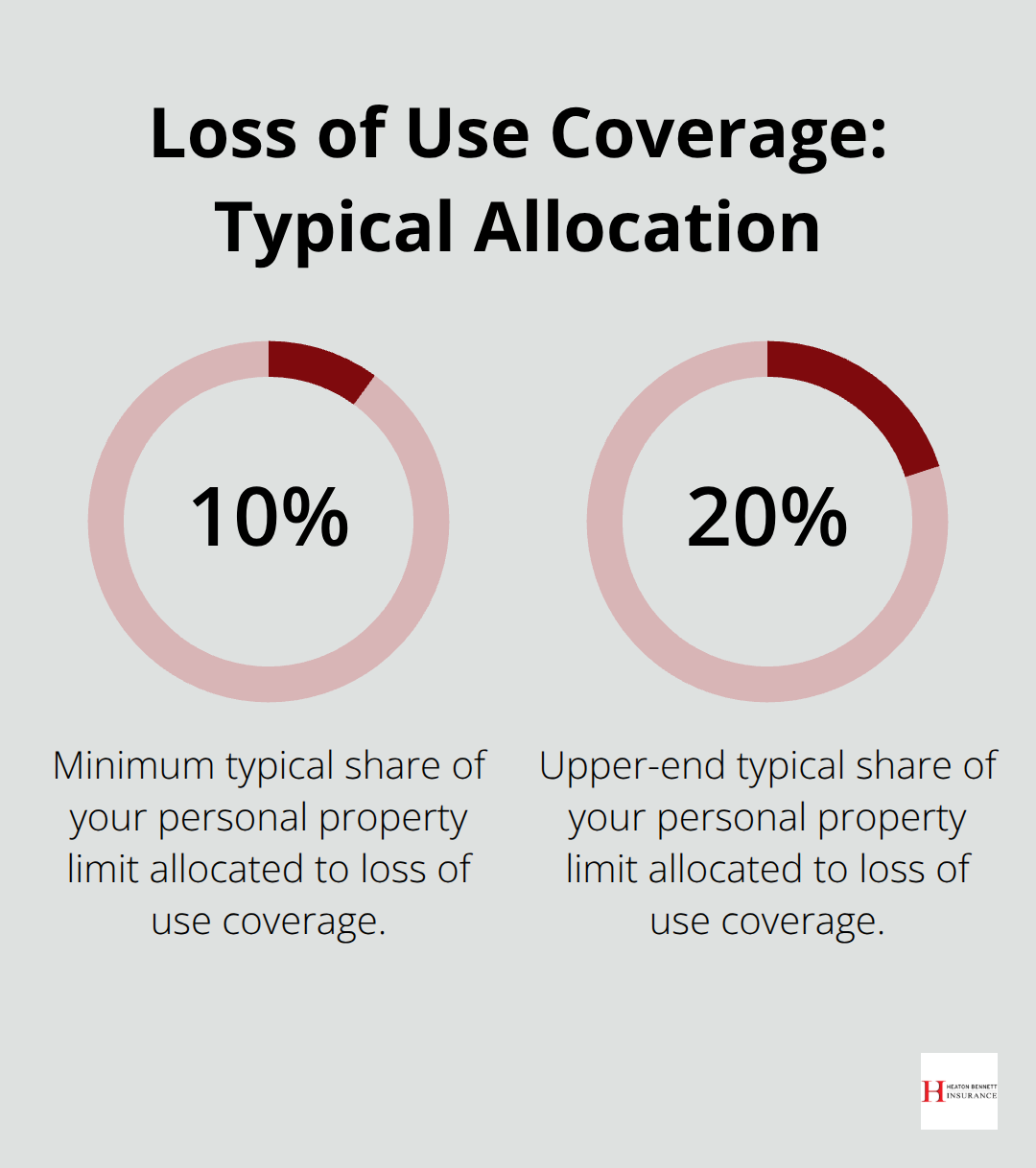
Loss of use coverage (also called additional living expenses) pays for hotel rooms and meals if your apartment becomes uninhabitable after a covered loss like fire. Most policies include 10 to 20 percent of your personal property limit for this coverage. If your personal property limit is $30,000, your loss of use coverage typically runs $3,000 to $6,000, which covers roughly 30 to 60 days in a moderate-cost city.
Rebuilding after a disaster takes time, and you need money to live somewhere while repairs happen.
Understanding these coverage components matters because gaps in protection leave you exposed. The next section walks you through calculating exactly how much coverage you actually need.
How Much Coverage Do You Actually Need
Inventory Everything You Own
Start with a complete inventory of everything you own. Walk through your apartment room by room and list items with their replacement cost, not what you paid years ago. A five-year-old television costs $300 to replace today, not the $800 you spent in 2021. Most renters underestimate this total by 30 to 50 percent because they forget items stored in closets, under beds, and in cabinets. Use your phone to photograph each room and every shelf, then create a spreadsheet with item descriptions and current replacement prices. Check retailer websites like Best Buy or Amazon to find actual replacement costs for electronics, furniture, and appliances. This inventory becomes your baseline for coverage decisions and your proof of ownership if you file a claim.
Replacement Cost Versus Actual Cash Value Matters
Replacement cost coverage pays what it costs to replace your belongings new. Actual cash value pays replacement cost minus depreciation. The difference is substantial. A laptop you bought three years ago for $1,200 might have an actual cash value of $400 if depreciated at 33 percent annually, but replacement cost would cover a new laptop at current prices around $900 to $1,200. Replacement cost coverage protects you better because actual cash value leaves you short when you need to rebuild. Yes, replacement cost premiums run 10 to 15 percent higher, but the protection justifies the cost. If a fire destroys your belongings, you’ll want money for new items, not depreciated values that don’t reflect today’s prices.
Schedule High-Value Items Separately
Items exceeding your policy’s per-item limits need individual scheduling on your policy. That means jewelry over $2,000, camera equipment, musical instruments, or art collections must appear individually with appraisals or receipts. Get appraisals for jewelry and collectibles from certified appraisers, then provide those documents to your insurer. The appraisal fee typically costs $100 to $300 per item but protects you against disputes over value during claims. Without scheduling, a $5,000 engagement ring might only receive $2,500 coverage under standard limits. Most renters don’t realize this gap exists until after a loss occurs, which is too late. Once you’ve determined your coverage amount and scheduled your valuables, you need to avoid the mistakes that leave most renters underinsured.
Where Renters Go Wrong With Coverage
Underestimating What Your Belongings Cost to Replace
Most renters make the same three mistakes, and all three stem from incomplete information rather than carelessness. The first mistake happens before you even buy a policy: you underestimate what your belongings actually cost to replace. You walk through your apartment and think about the big items-your bed, your couch, your television-then stop. You forget the kitchen full of cookware and dishes, the closet packed with clothes, the bathroom cabinets stacked with products, the books on shelves, the kitchen appliances, the bedding, the curtains, the lamps. These smaller items add up fast.
Most renters discover they own 30 to 50 percent more than they initially calculated when they actually sit down and inventory everything. This underestimation directly translates to underinsurance. You buy a policy based on a $15,000 estimate when your actual replacement cost is $22,000. Then a fire or break-in happens, and you discover the gap when filing your claim.
Confusing Landlord Coverage With Personal Protection
The second mistake is believing your landlord’s insurance covers your stuff. It absolutely does not. Your landlord’s property insurance covers the building structure and their liability if someone gets hurt due to building defects. It covers nothing inside your unit. If a pipe bursts and floods your apartment, destroying your furniture and electronics, your landlord’s insurance pays for repairs to the building. You pay out of pocket for your belongings unless you have renters insurance.
Insurance companies report that roughly 40 percent of renters have no coverage at all, and a significant portion of those believe their landlord’s policy protects them. This misconception is expensive. A flooded apartment, a kitchen fire, or a break-in can wipe out thousands of dollars in personal property with no recovery available.
Skipping Adequate Liability Protection
The third mistake is treating liability coverage as optional or minimal. Standard limits of $100,000 sound adequate until someone actually gets hurt. A slip-and-fall injury resulting in surgery and months of physical therapy easily exceeds $100,000. Medical bills alone can hit $50,000 to $100,000, and if the injured person loses income during recovery, you face additional liability.
Try carrying at least $300,000 in liability coverage, with $500,000 being ideal if you have any assets worth protecting. The premium difference between $100,000 and $300,000 in liability coverage typically runs only $3 to $5 per month, yet most renters never increase beyond the minimum. That small monthly cost protects you from a potentially devastating financial situation.
Final Thoughts
Renters insurance guidance comes down to three actions: inventory what you own, purchase adequate coverage, and protect yourself with liability limits matching your actual risk. Most renters fail at the first step by underestimating their belongings, then worsen the mistake by assuming their landlord’s policy covers them. Your landlord’s insurance protects only the building structure, leaving your furniture, electronics, and clothing completely exposed.
The numbers reveal the real cost of skipping coverage. Roughly 40 percent of renters carry no insurance at all, and when losses strike, those uninsured tenants face thousands in out-of-pocket expenses. A single break-in or fire destroys $20,000 to $30,000 worth of belongings, while a liability claim from a slip-and-fall injury exceeds $100,000 in medical bills and lost wages. These aren’t theoretical risks-they happen regularly to people who thought they didn’t need protection.
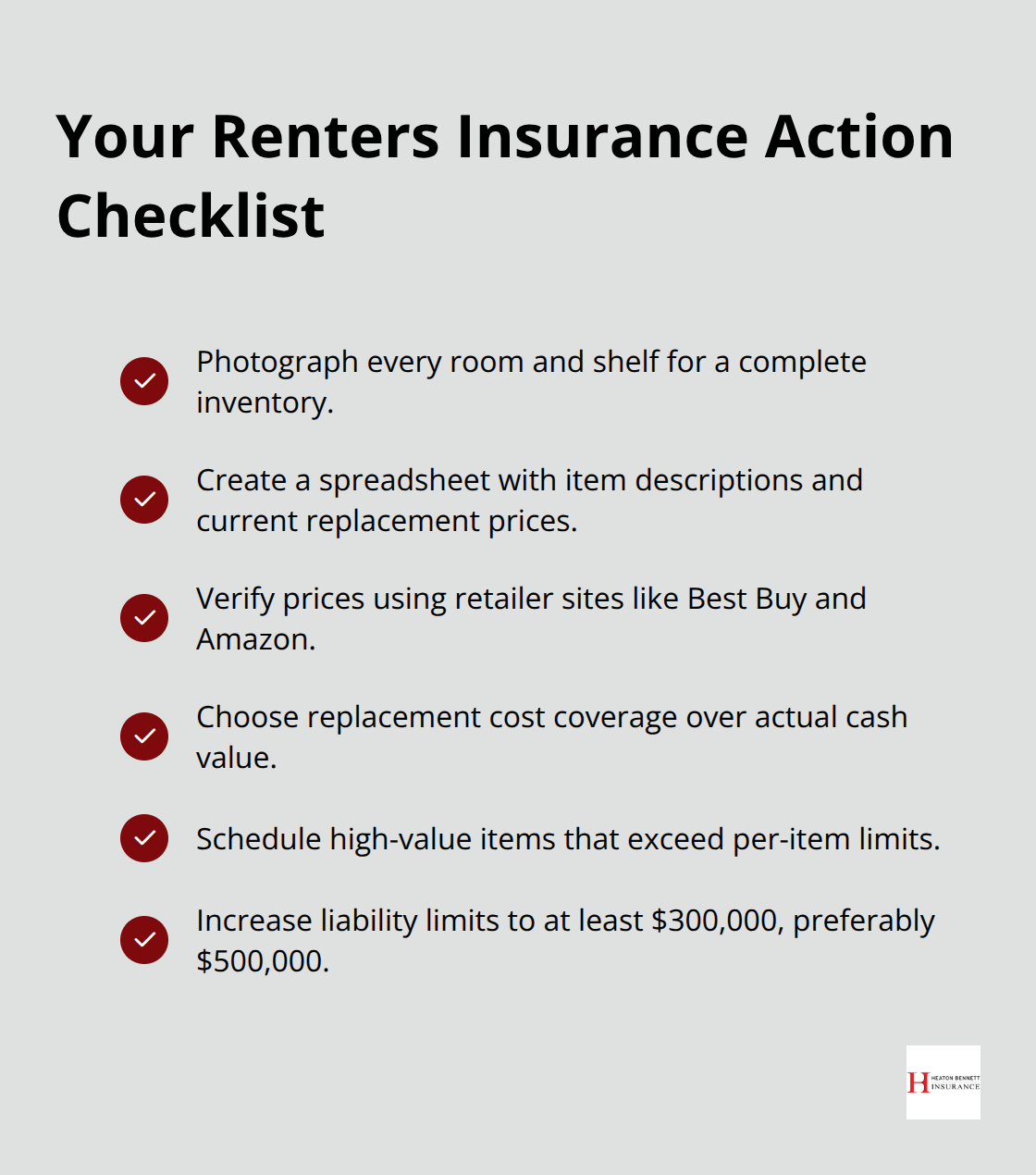
Start by photographing each room and checking current replacement prices online to calculate your total replacement cost. Choose replacement cost coverage over actual cash value, schedule high-value items like jewelry or electronics that exceed per-item limits, and bump your liability coverage to at least $300,000 (preferably $500,000) for just a few dollars more monthly. Contact Heaton Bennett Insurance to discuss your renters insurance needs with an agent who understands your actual risk and builds coverage that truly protects you.
The information provided in this blog is for general informational purposes only and does not constitute legal, financial, or insurance advice. Coverage options, terms, and availability may vary. Please consult with a licensed professional for advice specific to your situation.

