
Business Insurance Options: Tailored Solutions For Growth
Growing your business means protecting what you’ve built. The right business insurance options shield your company from unexpected losses, liability claims, and operational disruptions that could derail your progress.
At Heaton Bennett Insurance, we’ve seen firsthand how proper coverage transforms business owners’ confidence in their growth strategy. This guide walks you through the coverage types that matter, how to select the right protection, and the costly mistakes to avoid.
What Coverage Types Actually Protect Your Business
General Liability Insurance Shields You From Third-Party Claims
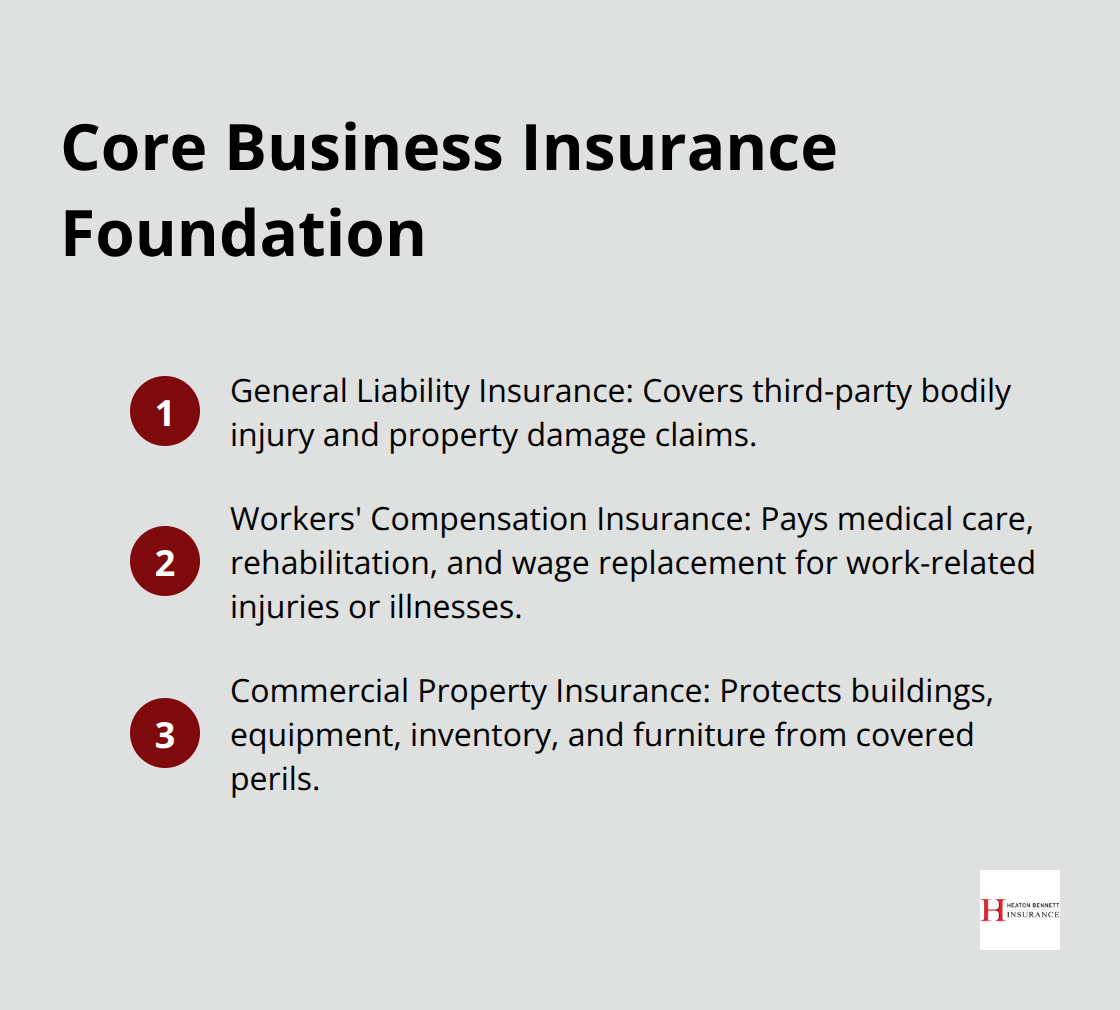
General liability insurance protects your business when someone gets injured on your property or claims your product caused them harm. The National Safety Council reports roughly 42 million nonfatal workplace injuries annually in the United States, many resulting in liability lawsuits. A customer slips in your office and sues for medical bills plus lost wages-general liability covers their legal defense and damages up to your policy limit. Most businesses carry general liability limits between one million and two million dollars, though contractors and manufacturers often need higher amounts. Your industry risk profile determines whether a million-dollar limit is sufficient or dangerously low.
Workers’ Compensation Covers Employee Injuries and Illnesses
Workers’ compensation insurance is mandatory in most states and covers employee injuries or illnesses arising from work. The National Council on Compensation Insurance reports that the average workers’ compensation claim costs employers around forty-two thousand dollars, with serious injuries reaching hundreds of thousands. Without this coverage, you face personal liability for medical treatment, rehabilitation, and wage replacement. Many business owners underestimate their exposure here, assuming one or two employees means minimal risk. That assumption costs businesses dearly when an injury occurs.
Commercial Property Insurance Protects Your Physical Assets
Commercial property insurance protects your physical assets-buildings, equipment, inventory, and furniture-from fire, theft, weather, and vandalism. A manufacturing facility loses production equipment to a fire without property coverage and faces catastrophic financial loss that often ends the business entirely. Unlike general liability (which covers others’ injuries), property insurance protects your own assets from direct damage. These three coverage types form the foundation for most businesses, though your specific industry may require additional protections. The right combination of these policies positions your business to handle the unexpected challenges that growth brings.
How to Select Coverage That Matches Your Business Reality
Identify Your Industry-Specific Risks First
Your industry determines what insurance you actually need, and guessing wrong costs thousands in wasted premiums or leaves dangerous gaps. A construction company operating with a retail business’s coverage limits faces massive exposure, while a consulting firm buying commercial property insurance for equipment that fits in a laptop bag wastes money monthly. Start by identifying the specific risks your operation faces.
A restaurant’s primary liability exposure differs drastically from a software development firm’s. The Bureau of Labor Statistics reports that food service workers experience injury rates of 5.3 per 100 full-time workers annually, making workers’ compensation a non-negotiable priority for restaurants. Meanwhile, a tech company’s biggest exposure might be professional liability or cyber attacks, not physical workplace injuries. Your industry association often publishes risk profiles specific to your sector, giving you concrete data rather than assumptions.
Set Coverage Limits Based on Your Business Scale
Once you understand your actual risks, coverage limits become a numbers game with real consequences. Most small businesses carry one million dollars in general liability coverage, but that limit should reflect your revenue and lawsuit exposure. A contractor doing fifty-million-dollar projects needs dramatically higher limits than a sole proprietor offering consulting services.
The deductible you select directly impacts your monthly premium, and here’s where many business owners make poor choices. Selecting a five-thousand-dollar deductible instead of one thousand dollars might save five hundred dollars annually, but it creates a five-thousand-dollar out-of-pocket expense when a claim occurs. The math only works if you have that cash available without damaging operations. Many business owners pick deductibles they cannot actually afford to pay, turning a policy into financial theater rather than actual protection.
Compare Carriers Beyond Premium Quotes
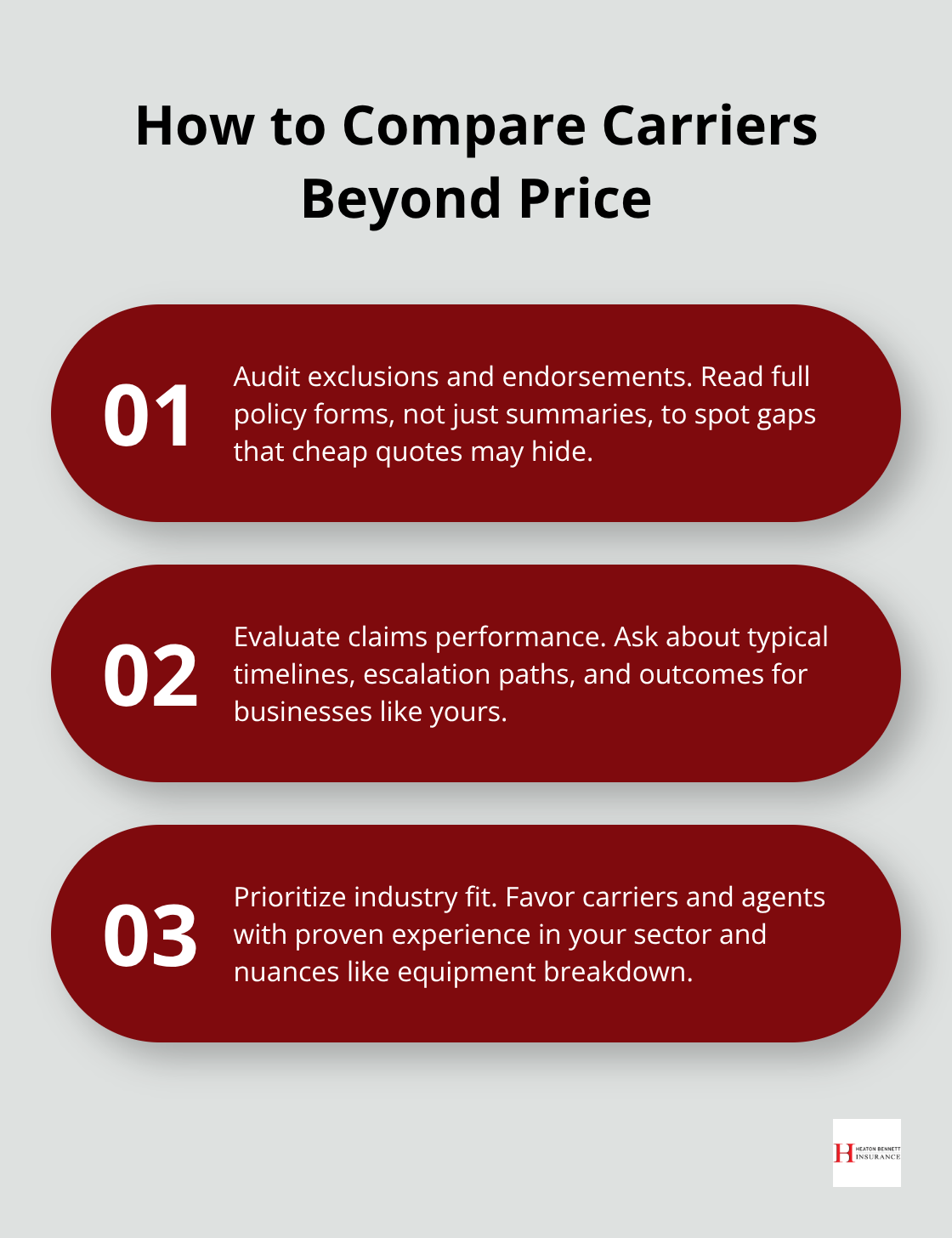
Comparing carriers requires looking beyond premium quotes because price alone tells you nothing about claim handling speed or coverage gaps. A carrier offering the cheapest general liability premium might exclude certain liability exposures your industry typically faces. Request detailed policy documents from multiple carriers and have someone with insurance knowledge review the exclusions, not just the price tag.
Some carriers specialize in specific industries and understand nuances that generalist insurers miss. A manufacturer comparing quotes from three carriers might find that one understands equipment breakdown coverage while another treats it as an afterthought. Talk directly with agents about how each carrier handles claims in your industry, not hypothetical scenarios. Ask whether they’ve worked with similar businesses and what claims took longest to resolve.
Insurance claim resolution times vary significantly between carriers, with some settling routine claims within weeks and others taking months. An agent who represents multiple carriers brings genuine perspective on which companies actually perform when your business needs them. This independent perspective matters far more than a single carrier’s marketing promises when your business faces a real claim.
Common Mistakes Businesses Make With Insurance
Underinsuring Assets Leaves You Exposed When Claims Happen
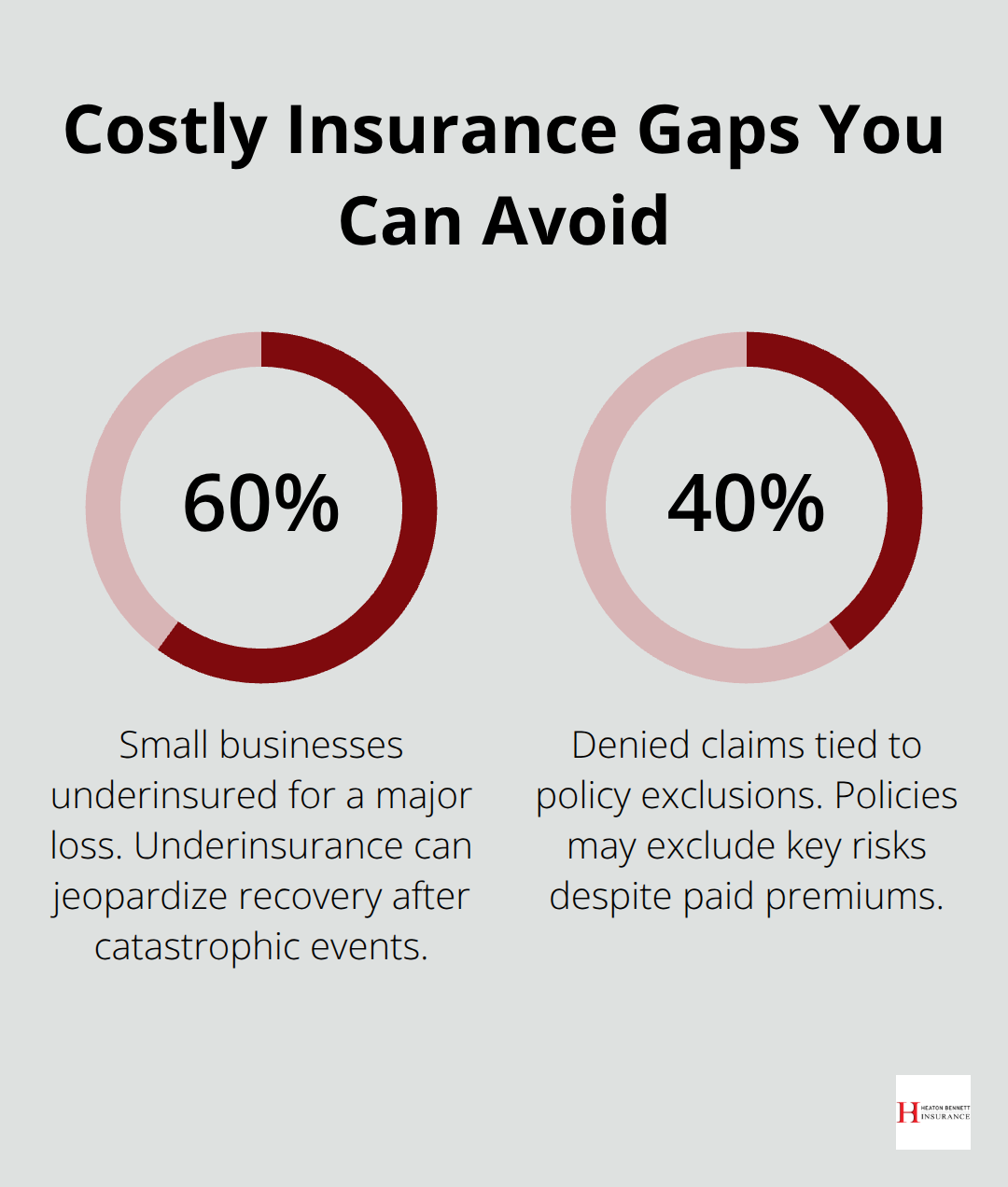
Most business owners calculate their asset value incorrectly, setting property insurance limits far below actual replacement costs. A manufacturing business owner values equipment at two hundred thousand dollars and sets property insurance limits there, then discovers during a claim that replacement cost with installation reaches four hundred fifty thousand dollars. The gap means the insurance company pays their limit while you cover the rest from operating capital that doesn’t exist. The Insurance Research Council reports that roughly sixty percent of small businesses carry limits below what they’d actually need to recover from a major loss. This isn’t a minor shortfall-it’s the difference between weathering a crisis and closing your doors. Business owners focus on monthly premium costs rather than actual recovery capacity. A ten-thousand-dollar annual premium difference between adequate and insufficient coverage becomes meaningless when a fire costs half a million dollars to rebuild.
Generic Coverage Packages Miss Your Actual Risks
Businesses buy standard coverage designed for average companies rather than tailored policies reflecting their specific operation. A plumbing contractor carrying standard commercial general liability might discover their policy excludes water damage claims, the exact exposure their business faces daily. A staffing agency buying workers’ compensation coverage designed for manufacturing operations misses coverage for workplace violence incidents common in their industry. Policy exclusions account for roughly forty percent of denied claims, meaning businesses paid premiums for protection that didn’t actually cover their real risks. Your industry determines what insurance you actually need, and guessing wrong costs thousands in wasted premiums or leaves dangerous gaps.
Outdated Policies Can’t Protect Growing Operations
Treating insurance as a set-it-and-forget-it expense creates serious problems as your business changes. Business operations evolve-you add equipment, expand into new service areas, hire more employees-but many owners never update their coverage to match. A business that operated with five employees and one million dollars in general liability coverage five years ago might now employ twenty people and handle ten-million-dollar contracts, yet carries the same inadequate policy. Your coverage should evolve with your business growth, not lag years behind your actual operations.
Final Thoughts
Selecting proper business insurance options comes down to matching coverage to your actual operation, not buying generic policies and hoping they work. The businesses that grow confidently understand their specific risks, set realistic coverage limits, and review their policies as their operations change. The difference between adequate coverage and inadequate coverage often costs thousands of dollars when a claim happens, making premium price almost irrelevant.
Your next step is straightforward: gather your business details and industry information, then talk with someone who understands your specific situation. Don’t compare quotes in isolation or pick the cheapest option without understanding what you’re actually buying. Talk directly with an agent about how carriers handle claims in your industry, not hypothetical scenarios.
Connect with Heaton Bennett Insurance to review your current coverage or build a protection strategy that supports your growth without wasting money on unnecessary policies. We work with businesses across Austin and beyond to build tailored business insurance options that match their actual needs. As an independent agency, we have access to multiple carriers, which means we identify coverage gaps before they become expensive problems.
The information provided in this blog is for general informational purposes only and does not constitute legal, financial, or insurance advice. Coverage options, terms, and availability may vary. Please consult with a licensed professional for advice specific to your situation.

