

Independent Insurance Agent: Your Guide To Choosing The Right Partner
Choosing the right independent insurance agent can make a real difference in how well your coverage actually protects you. Most people don’t realize that independent agents have access to multiple insurance carriers, which means you’re not locked into one company’s options.
At Heaton Bennett Insurance, we’ve seen firsthand how the right partnership transforms the insurance experience. This guide walks you through exactly what to look for and what to avoid.
Why Independent Agents Give You Real Advantages
Multiple Carriers Mean Better Rates
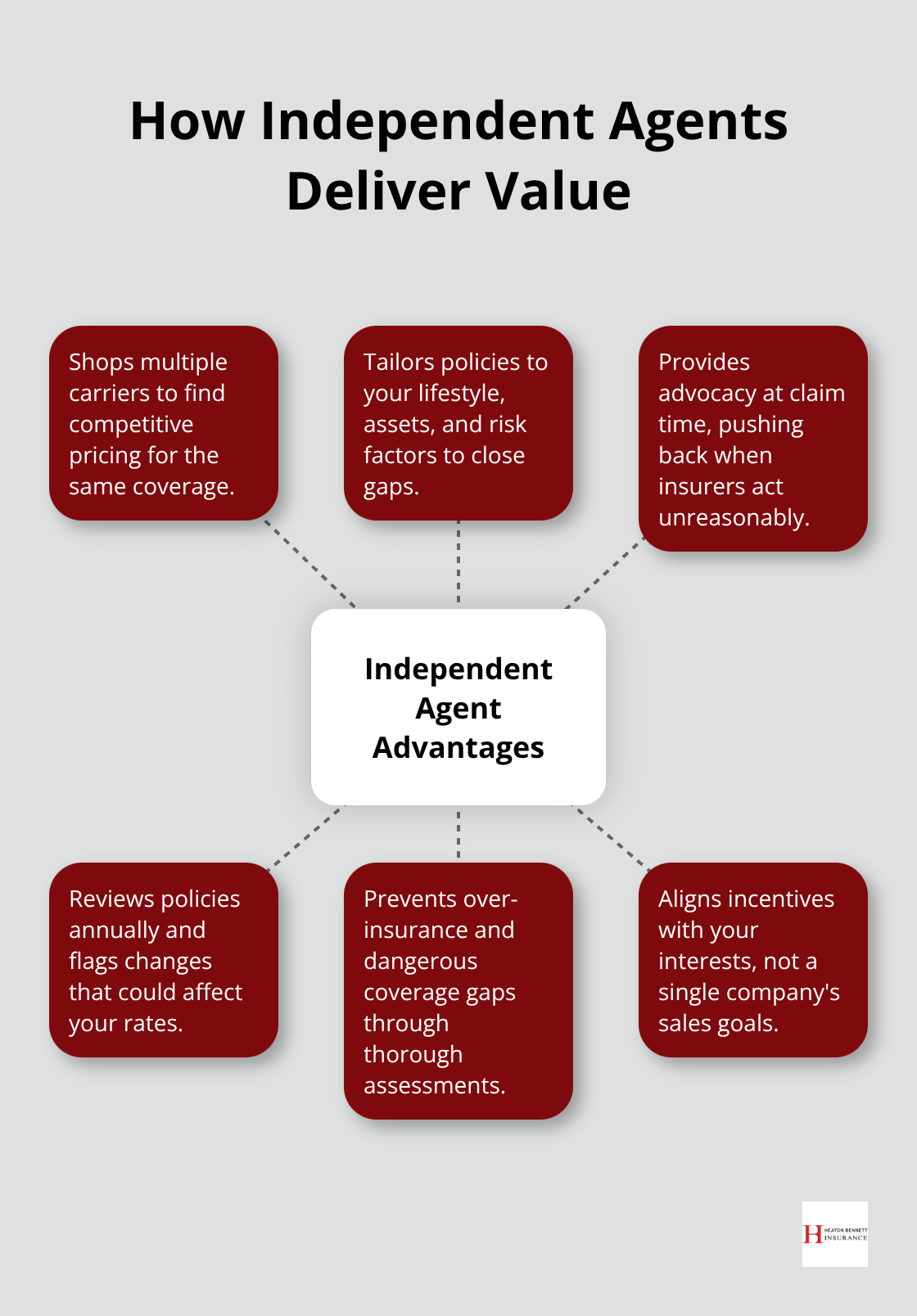
Independent insurance agents work with multiple insurance carriers rather than pushing you toward one company’s products. This matters because insurance rates vary dramatically between carriers for identical coverage. According to the National Association of Insurance Commissioners, the price difference between the cheapest and most expensive quote for the same policy can exceed 40 percent. An independent agent shops your coverage across multiple insurers, so you avoid inflated rates simply because you walked into the wrong agency.
This competitive pressure keeps prices honest.
Tailored Coverage That Fits Your Life
Independent agents tailor coverage to your actual situation instead of pushing standardized packages. They ask detailed questions about your lifestyle, assets, and risk factors because their income doesn’t depend on selling you the maximum policy. A thorough assessment process helps identify exactly what you need, which eliminates guesswork and prevents both over-insurance and dangerous coverage gaps. Most people find they’re either paying for protection they don’t need or missing critical gaps after they’ve already purchased coverage elsewhere.
Real Advocacy When It Matters Most
The ongoing relationship with an independent agent provides something captive agents rarely offer: genuine advocacy on your behalf. When a claim happens or your situation changes, you have someone working for you rather than for the insurance company. Independent agents review your coverage annually, catch policy changes that affect your rates, and push back against claim denials when insurers act unreasonably. Insurance companies deny legitimate claims regularly, and having an agent who understands the details of your policy and maintains relationships with underwriters significantly improves your odds of getting paid. The agent’s reputation depends on client satisfaction, not on how many claims the company rejects.
When you’re shopping for an independent agent, you’re essentially hiring someone to protect your interests for years to come. This long-term partnership is worth far more than saving a few dollars on a single year’s premium, which is why evaluating the right agent requires careful attention to their qualifications and track record.
How to Evaluate an Independent Insurance Agent
Verify Credentials and Relevant Experience
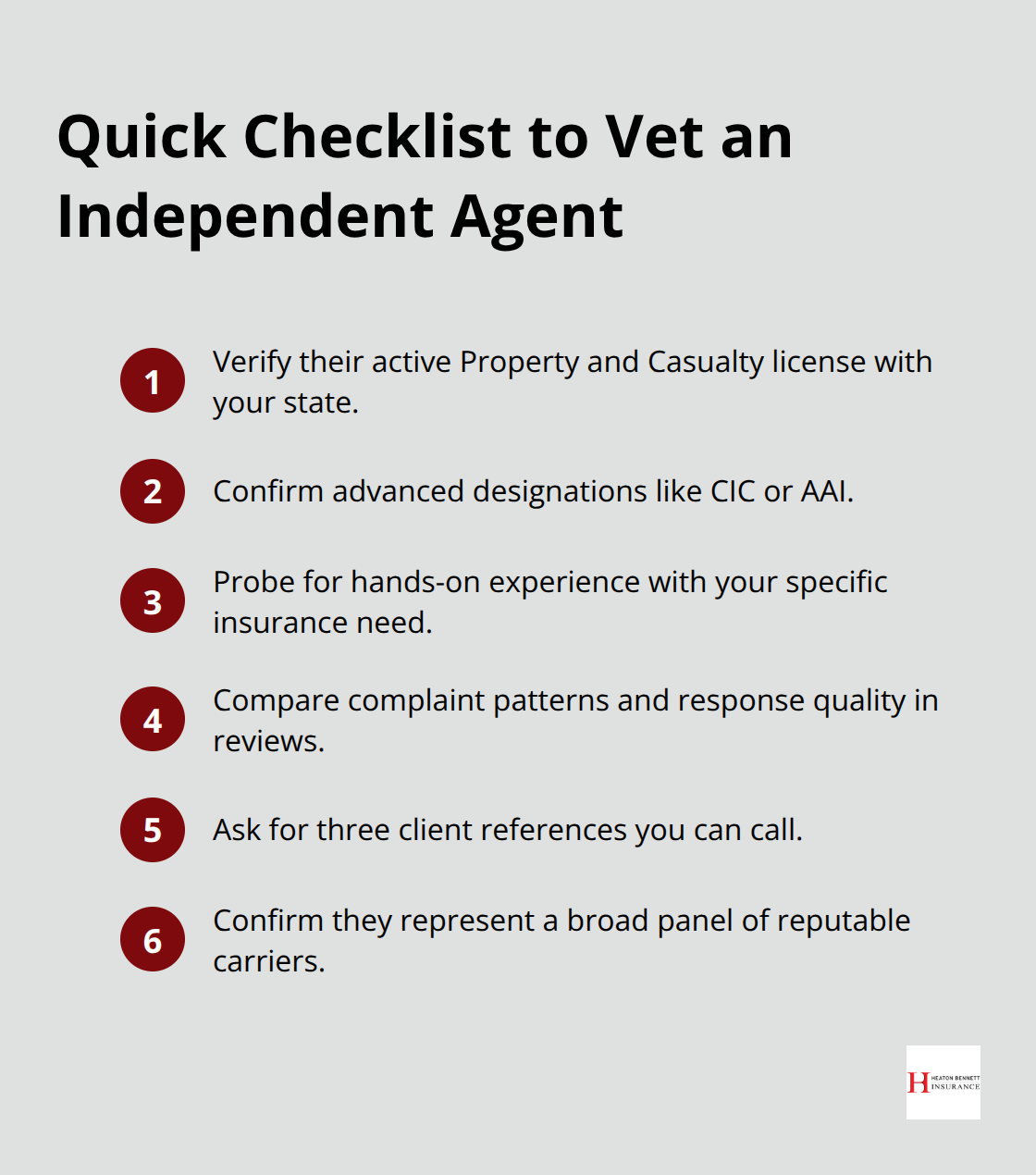
Verifying credentials separates serious agents from amateurs. Ask for their Property and Casualty license number and evaluate it directly through your state’s insurance commissioner website rather than trusting their word. Check whether they hold additional certifications like Certified Insurance Counselor or Accredited Advisor in Insurance, designations that require ongoing education and exam passage. Experience matters significantly, but tenure alone doesn’t guarantee competence. An agent who worked in the business for 15 years handling only auto insurance brings less value than someone with 5 years across multiple lines including commercial, homeowners, and specialty coverage. Ask specifically about their experience with your type of insurance need.
If you need business coverage and they mostly handle personal lines, that’s a warning sign.
Examine Client Testimonials and Track Records
Client testimonials reveal how an agent actually performs when problems arise. Don’t just skim Google reviews for star ratings. Read specific complaints about responsiveness and claim handling, which matter far more than general satisfaction scores. The National Association of Insurance Commissioners reports that complaint ratios vary dramatically between agents, with some receiving zero complaints annually while others in the same market face dozens. Look for patterns in reviews mentioning communication speed, policy explanation clarity, and how the agent handled claim disputes. Check the Better Business Bureau for complaint history and how the agent responded to negative feedback. An agent who dismisses criticism or doesn’t respond to complaints demonstrates poor customer service instincts. Equally important, ask the agent directly for three client references you can call. Agents confident in their work readily provide them. Those who hesitate or offer vague excuses are hiding something.
Assess Insurance Product Range and Carrier Access
Product range determines whether an agent can actually meet your complete needs. Many agents focus narrowly on personal auto and home insurance because those generate steady commissions with minimal complexity. Ask what insurance types they handle regularly, not just theoretically. If you own a small business and the agent has never placed commercial liability coverage, they’ll struggle to properly advise you. Quality independent agents demonstrate expertise across personal and business lines, including specialty products like motorcycle insurance, vacant property coverage, and commercial general liability. Request a list of carriers they represent and verify it independently. An agent representing only three carriers severely limits your options compared to one accessing eight or more. Fewer carriers means fewer rate comparisons and higher odds you’ll overpay. The agent’s willingness to shop multiple quotes before recommending coverage signals they prioritize your interests over commission efficiency.
With credentials verified, testimonials reviewed, and product range confirmed, you now have the foundation to identify a capable agent. The next step involves recognizing the warning signs that separate trustworthy partners from agents who prioritize their own interests over yours.
Red Flags That Signal a Poor Agent Match
Single-Carrier Agents Limit Your Options
An agent with access to only one or two carriers immediately disqualifies themselves from serious consideration. Some agents operate under exclusive contracts with single insurers, meaning they cannot shop your coverage across multiple options no matter how badly you need competitive rates. You spot this quickly when you ask what carriers they represent and they hesitate or provide a vague answer. Insurance News and Analysis reports that agents representing fewer than five carriers place their clients at significant disadvantage, with average premium differences of 15 to 25 percent compared to agents accessing broader markets. The agent might frame single-carrier loyalty as specialization or deep relationships, but that protects their commission structure, not your wallet.
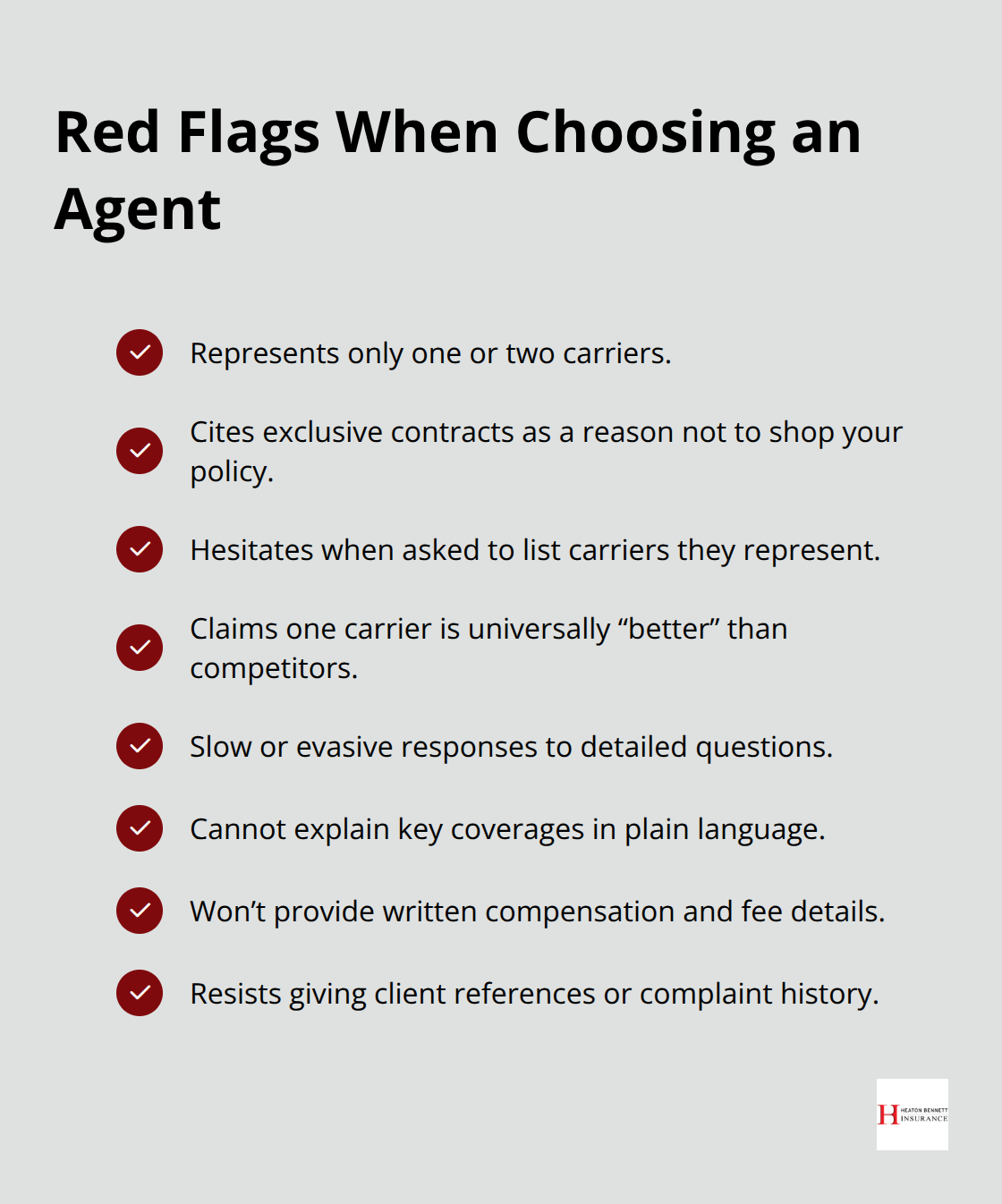
Walk away immediately if they resist providing a written list of carriers they can access or if they suggest their one carrier offers better coverage than competitors. That claim is nonsense. Every major carrier offers comparable homeowners and auto policies with different pricing models based on underwriting criteria.
Unresponsive Communication Signals Trouble Ahead
Poor communication reveals itself quickly once you start asking questions. Agents who take hours or days to respond to emails, who don’t return calls, or who provide vague answers about coverage details will abandon you the moment a claim becomes complicated. The National Association of Insurance Commissioners tracks complaint data by agent, and responsiveness issues dominate the most-complained-about agents. Before signing anything, send the agent a detailed question about a specific coverage gap or concern and note how long they take to respond and whether they actually address your question or deflect. If they cannot explain why you need uninsured motorist coverage or what the difference is between actual cash value and replacement cost, they lack the equipment to guide you properly.
Opaque Fee Structures Hide Conflicts of Interest
Fee transparency matters equally to carrier access and communication speed. Legitimate independent agents clearly explain how they receive compensation, whether through commissions, flat fees, or a combination. Agents who dodge questions about compensation or claim they work purely for client interest without explaining their actual income model are hiding something. Commission-based compensation isn’t inherently problematic, but agents must disclose it upfront. If an agent resists providing written documentation of their fees and how much commission they earn on your specific policy, that opacity signals they prioritize their interests over yours. You should find someone else who operates with full transparency about how they make money and what that means for your coverage recommendations.
Final Thoughts
The right independent insurance agent transforms how you experience insurance from a frustrating chore into a genuine partnership. You’ve now seen exactly what separates agents who prioritize your interests from those protecting their own commission structure. The difference matters enormously when a claim arrives or your situation changes unexpectedly.
Your decision comes down to three concrete criteria: verify they represent multiple carriers and can articulate exactly which insurers they access, confirm they communicate responsively and explain coverage in plain language you actually understand, and demand transparency about how they earn compensation and what that means for your recommendations. Agents meeting all three standards deserve serious consideration, while those failing any single criterion should be eliminated immediately. This vetting process takes a few hours but protects you for years to come.
At Heaton Bennett Insurance, we work with clients throughout Austin, Texas, handling everything from auto and homeowners insurance to business coverage and specialty policies like motorcycle and vacant property insurance. Our Security Snapshot process identifies exactly what you need without pushing unnecessary coverage, and we maintain relationships with multiple carriers so you get competitive rates without being locked into a single company’s options. Connect with our team to discover how the right independent insurance agent partnership protects what matters most.
The information provided in this blog is for general informational purposes only and does not constitute legal, financial, or insurance advice. Coverage options, terms, and availability may vary. Please consult with a licensed professional for advice specific to your situation.

