

Ransomware Attacks Why Your Business Needs Cyber Insurance Now
Ransomware attacks have become a major threat to businesses of all sizes, with devastating financial and operational consequences. At Heaton Bennett Insurance, we’ve seen firsthand the impact these cyberattacks can have on unprepared organizations.
Effective ransomware protection is no longer optional-it’s a necessity for modern businesses. This post will explore why your company needs robust cyber insurance to safeguard against this growing digital menace.
What Makes Ransomware So Dangerous?
The Digital Extortion Scheme
Ransomware is a malicious software that encrypts a victim’s files, rendering them inaccessible until a ransom is paid. This digital extortion scheme has evolved into a sophisticated and prevalent threat, posing significant risks to businesses of all sizes.
The Staggering Cost of Ransomware
The financial impact of ransomware attacks is astronomical. In 2023, organizations worldwide detected 317.59 million ransomware attempts (SonicWall). While this number decreased from the previous year, the severity and cost of successful attacks have escalated dramatically.
The average cost of a ransomware incident reached $4.88 million in 2024. This figure encompasses not only potential ransom payments but also downtime, lost business, and reputational damage. For small businesses, these costs can lead to permanent closure.
Industries in the Crosshairs
No sector is immune to ransomware, but some industries face a higher risk. In 2022, the manufacturing sector bore the brunt of attacks, with 437 reported incidents. The food and beverage industry followed closely, reporting over 50 ransomware attacks in the same year.
Healthcare organizations have become prime targets, filing the highest number of complaints to U.S. law enforcement about ransomware attacks in 2022. The sensitive nature of medical data and the critical need for continuous operations make healthcare facilities particularly vulnerable to these attacks.
The Evolution of Ransomware Tactics
Cybercriminals constantly refine their methods. The rise of Ransomware as a Service (RaaS) has lowered the barrier to entry for would-be attackers. In early 2022, 31 extortion groups existed (up from 19 in the prior year), indicating a troubling trend in the accessibility of these malicious tools.
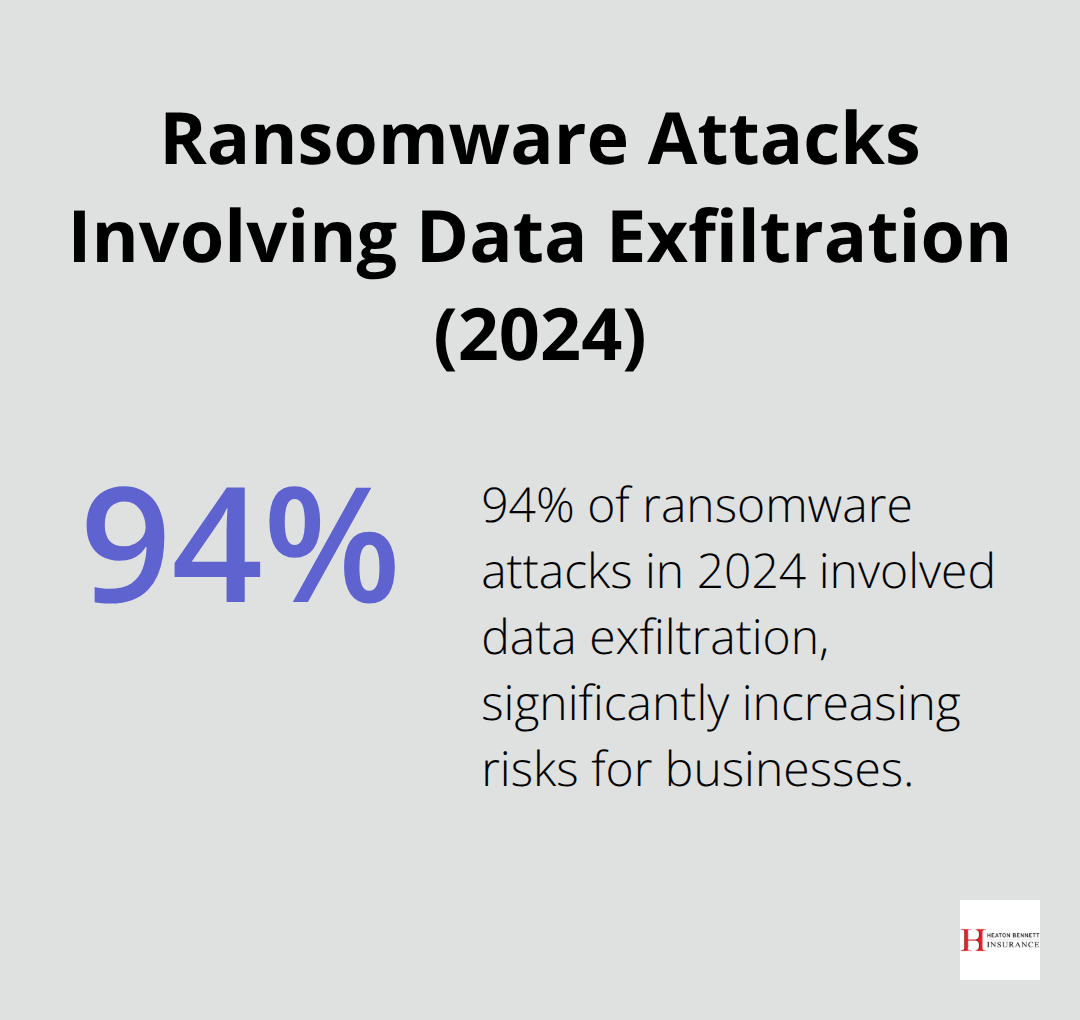
Moreover, attackers now employ more sophisticated strategies. Double extortion tactics, where data is not only encrypted but also stolen and threatened with public release, have become commonplace. In 2024, 94% of ransomware attacks involved data exfiltration, significantly raising the stakes for affected businesses.
The Need for Comprehensive Protection
The rapid advancement of ransomware techniques underscores the critical need for comprehensive cyber insurance and robust security measures. As the landscape of digital threats continues to shift, businesses must stay informed and protected to ensure their survival.
The next chapter will explore the specific vulnerabilities that make businesses prime targets for ransomware attacks and the industries most at risk. Understanding these factors is the first step in developing an effective defense strategy against this pervasive threat.
Why Your Business Is Vulnerable
The Digital Achilles’ Heel
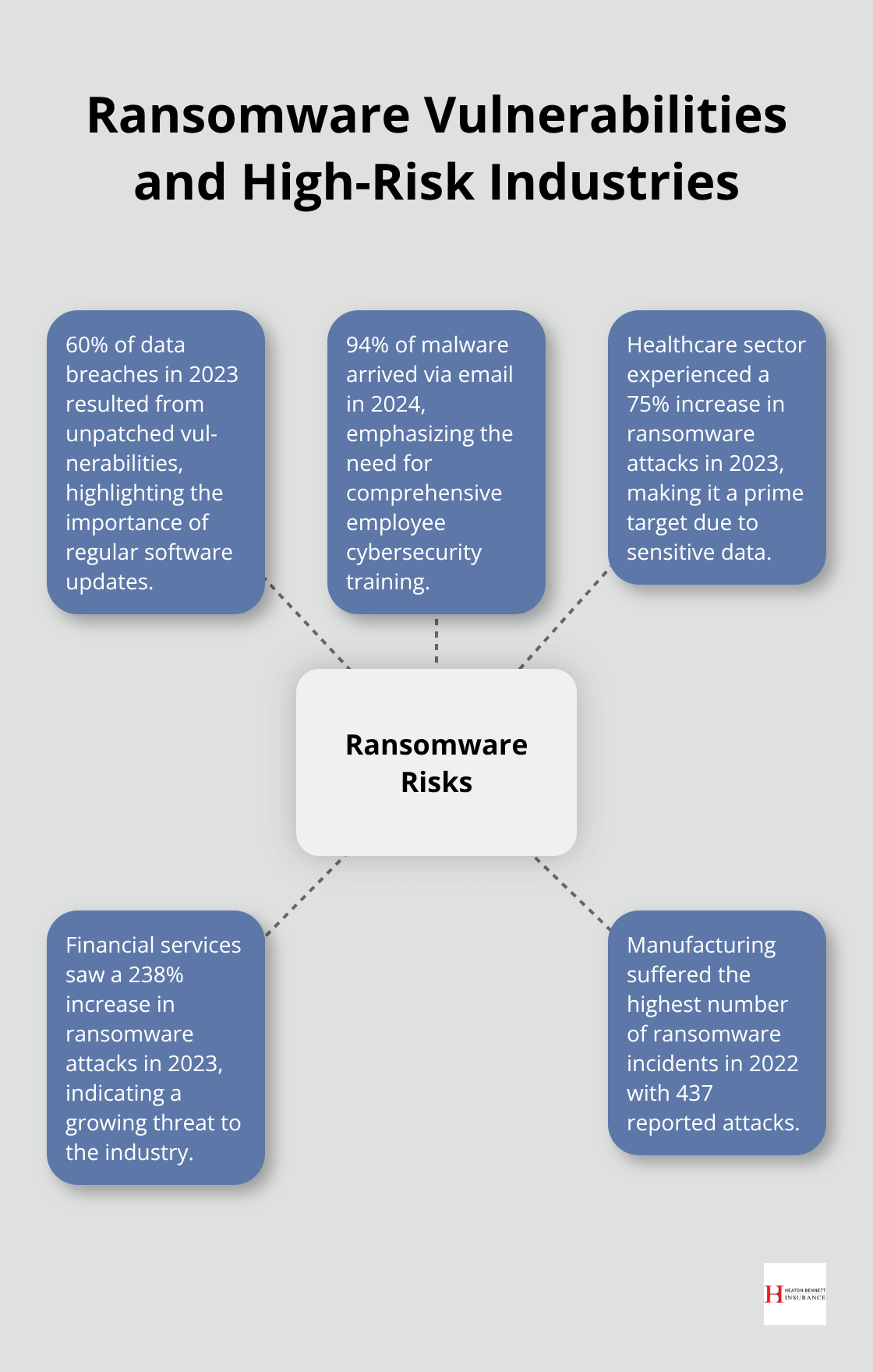
Modern businesses face unprecedented risks from ransomware attacks. Many companies underestimate their vulnerability until it’s too late. Outdated software stands out as one of the most exploited weaknesses. A 2023 Ponemon Institute study revealed that 60% of data breaches resulted from unpatched vulnerabilities. This statistic emphasizes the importance of regular software updates and patch management.
Human error presents another significant weakness. Phishing emails continue to serve as a primary vector for ransomware attacks. Verizon’s Data Breach Investigations Report found that in 2024, 94% of malware arrived via email. This fact underscores the urgent need for comprehensive employee training on cybersecurity best practices.
Industries at High Risk
No sector remains immune to ransomware, but certain industries face heightened risks. Healthcare organizations top the list of prime targets due to their sensitive data and need for continuous operations. The CyberPeace Institute reported a 75% increase in ransomware attacks on the healthcare sector in 2023 compared to the previous year.
Financial services and manufacturing sectors also confront significant threats. VMware’s Modern Bank Heists report noted a staggering 238% increase in ransomware attacks on the financial industry in 2023. Manufacturing companies suffered the highest number of ransomware incidents in 2022 (437 reported attacks).
The Far-Reaching Impact of an Attack
Ransomware attacks inflict damage far beyond immediate financial losses. Operational disruptions lead to severe reputational damage and loss of customer trust. A Cybereason study found that 66% of organizations hit by ransomware reported significant revenue loss.
The average downtime caused by ransomware attacks increased to 22 days in 2023 (Coveware). For many businesses, especially small and medium-sized enterprises, such extended periods of inactivity can prove fatal.
The financial toll reaches staggering heights. IBM’s Cost of a Data Breach Report 2023 revealed that the average cost of a ransomware attack hit $4.54 million. This figure excludes potential regulatory fines, which can add millions more to the total cost.
The Need for Comprehensive Protection
These statistics paint a clear picture: businesses need robust protection against ransomware threats. Cybersecurity measures alone no longer suffice. Companies must consider comprehensive cyber insurance to mitigate these multifaceted risks effectively.
The next section will explore how cyber insurance provides essential protection against the complex threats posed by ransomware attacks. You’ll learn about specific coverage options and how they safeguard your business from financial losses in the event of an attack.
How Cyber Insurance Shields Your Business
Financial Protection Against Ransom Demands
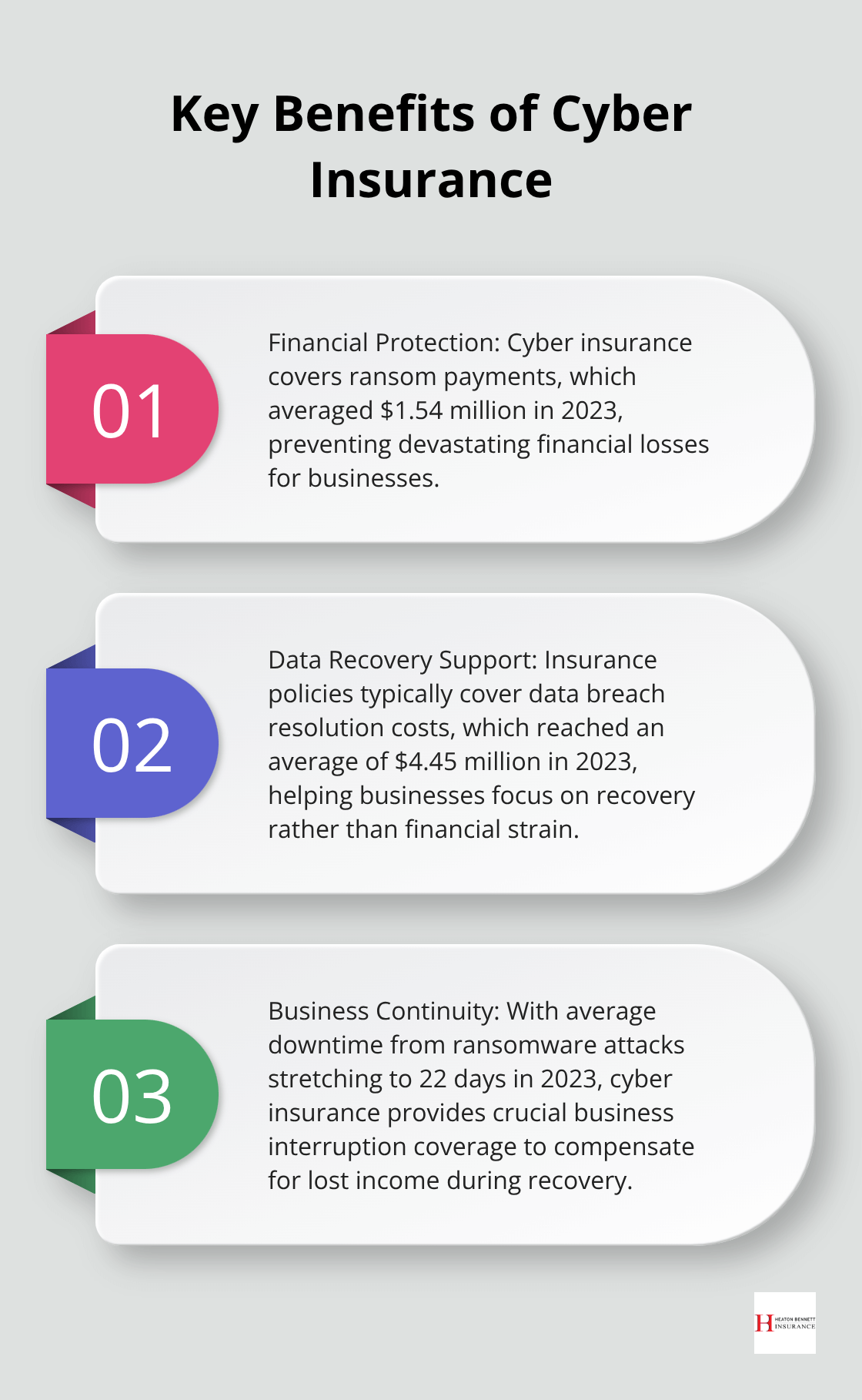
Cyber insurance provides a critical safety net for businesses facing ransomware attacks. Many companies feel pressured to pay ransoms to regain access to their data. Cyber insurance policies often cover these payments, which averaged $1.54 million in 2023 (Coveware). This coverage prevents devastating financial losses and aids in quicker recovery.
Some insurers now exclude ransom payments from their policies to discourage future attacks. When selecting a policy, review the terms carefully to understand the extent of coverage for ransom demands.
Data Recovery and System Restoration
Cyber insurance typically covers costs associated with data recovery and system restoration. This includes expenses for forensic IT services, data reconstruction, and hardware replacement. The IBM Cost of a Data Breach Report 2023 found that the average cost of data breach resolution reached $4.45 million. Cyber insurance significantly offsets these expenses, allowing businesses to focus on recovery rather than financial strain.
Business Interruption Coverage
Ransomware attacks often cause crippling operational downtime. Cyber insurance policies frequently include business interruption coverage, which compensates for lost income during the recovery period. With average downtime from ransomware attacks stretching to 22 days in 2023 (Coveware), this coverage acts as a lifeline for struggling businesses.
Reputation Management and Public Relations Support
The aftermath of a ransomware attack extends beyond immediate financial and operational impacts. Many cyber insurance policies offer coverage for public relations efforts and crisis management services. This support proves crucial in maintaining customer trust and mitigating long-term brand damage.
Access to Cybersecurity Experts
One of the most valuable aspects of cyber insurance is the access it provides to a network of cybersecurity experts. In the chaotic aftermath of an attack, immediate access to professionals who can guide your response proves invaluable. These experts help with everything from initial containment to long-term security improvements.
Final Thoughts
Ransomware attacks pose significant risks to businesses across industries. The financial and operational consequences can reach millions of dollars, with extended periods of downtime. Proactive cybersecurity measures form the foundation of effective ransomware protection, but they may not completely prevent an attack.
Comprehensive cyber insurance provides a vital safety net for businesses. It offers financial protection against ransom demands, covers data recovery costs, and supports business continuity during critical periods. Cyber insurance also grants access to expert resources that can guide organizations through incident response and recovery.
Heaton Bennett Insurance specializes in tailored insurance solutions that address the specific needs of your organization. We work with multiple carriers to ensure you receive comprehensive protection (without being tied to a single provider). Contact Heaton Bennett Insurance today to discuss your cyber insurance needs and develop a strategy to protect your business from ransomware threats.

