

Professional Liability Protection: Shielding Your Expertise
One mistake in your client work can trigger a lawsuit that drains your finances and damages your reputation. Professional liability protection isn’t optional-it’s a business necessity for anyone selling expertise.
At Heaton Bennett Insurance, we’ve seen firsthand how the right coverage transforms how professionals handle risk. This guide walks you through what you need to know to protect your practice.
What Professional Liability Insurance Actually Covers
Professional liability insurance protects you when your work causes financial loss to a client. Healthcare providers face the highest exposure-the Journal of the American Medical Association reports that medical malpractice claims cost the U.S. healthcare system over $55 billion annually, with individual settlements often exceeding $500,000. A surgeon’s missed diagnosis, a radiologist’s misreading, or an anesthesiologist’s incorrect dosing can trigger lawsuits that bankrupt a practice without proper coverage. Accountants and tax professionals encounter similar risks when calculation errors cost clients money or trigger IRS penalties. A missed deduction that costs a client $50,000 in taxes becomes your liability. Design and engineering professionals face claims when structural failures, design flaws, or specification errors cause property damage or injury.
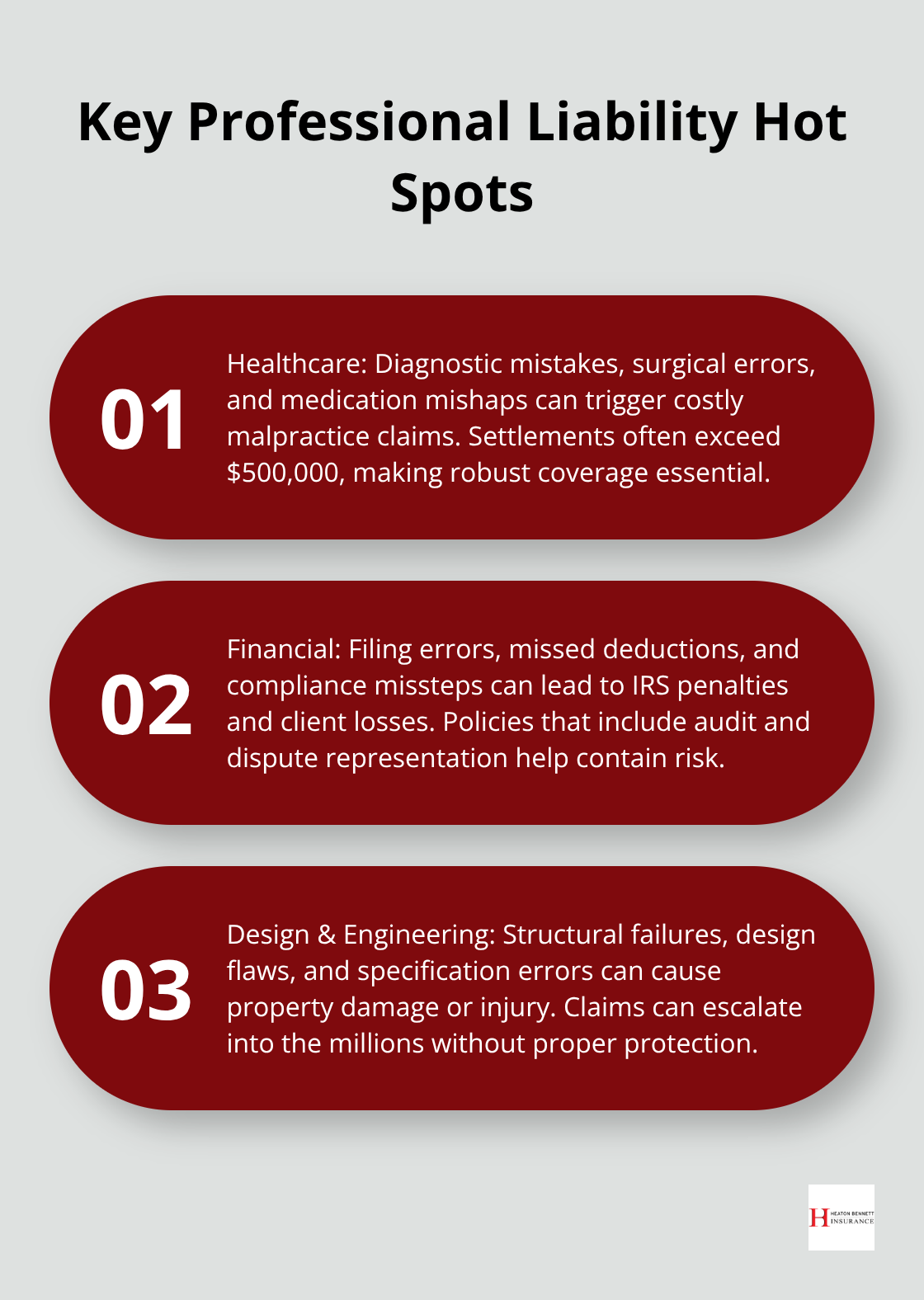
An architect’s miscalculation on load-bearing walls or an engineer’s faulty drainage design can result in damage claims reaching millions of dollars.
Healthcare Errors That Insurance Must Cover
Medical professionals need coverage for diagnostic mistakes, surgical errors, medication errors, and treatment failures. A study in JAMA Network Open found that diagnostic errors affect roughly 12 million Americans annually, making this the single largest source of malpractice claims. Your policy should cover defense costs even if the claim has no merit-legal fees alone can reach $100,000 before trial concludes. Hospital-affiliated physicians often think their employer’s coverage protects them, but gaps exist when you work across multiple facilities or take on independent consulting work. You need your own tail coverage, which extends protection after you leave a practice.
Financial Professional Liability
Accountants, bookkeepers, and tax advisors face claims when errors result in missed deductions, incorrect filings, or regulatory violations. The IRS estimates that tax return errors cost individuals and businesses $441 billion in lost deductions annually. Your coverage should include representation during audits and tax disputes. Software errors compound risk-a QuickBooks misconfiguration that overstates expenses or misclassifies income can trigger client claims and regulatory action. Insurance advisors face similar exposure when they misrepresent policy terms or fail to identify coverage gaps. A missed deadline for coverage renewal can cost your client their entire claim, making you liable for the full loss.
Design and Construction Liability
Engineers and architects operate in high-stakes environments where mistakes directly affect building safety and project costs. A single design error on a commercial project can cost hundreds of thousands to remediate. Your policy must cover construction defects, design flaws, and specification errors. Structural engineers face particular exposure-a miscalculation in foundation design or load analysis can result in building failure and catastrophic liability. Architects need coverage for code violations, inadequate site analysis, and failure to identify existing structural problems. Contractors and project managers also benefit from professional liability coverage when they provide design advice or project management services beyond basic labor.
The specific risks you face depend entirely on your profession and the scope of work you perform. Your next step involves assessing which of these liability categories applies to your practice and determining the coverage limits that match your actual exposure.
Why Professional Liability Insurance Matters
Defense Costs Accumulate Fast
A lawsuit costs money before it ever reaches a courtroom. Defense fees start accumulating immediately, and without professional liability coverage, these costs come directly from your business bank account. The American Bar Association reports that the average cost to defend a professional liability claim runs between $50,000 and $150,000, and that’s before any settlement or judgment. For solo practitioners and small firms, these defense costs alone can force closure.
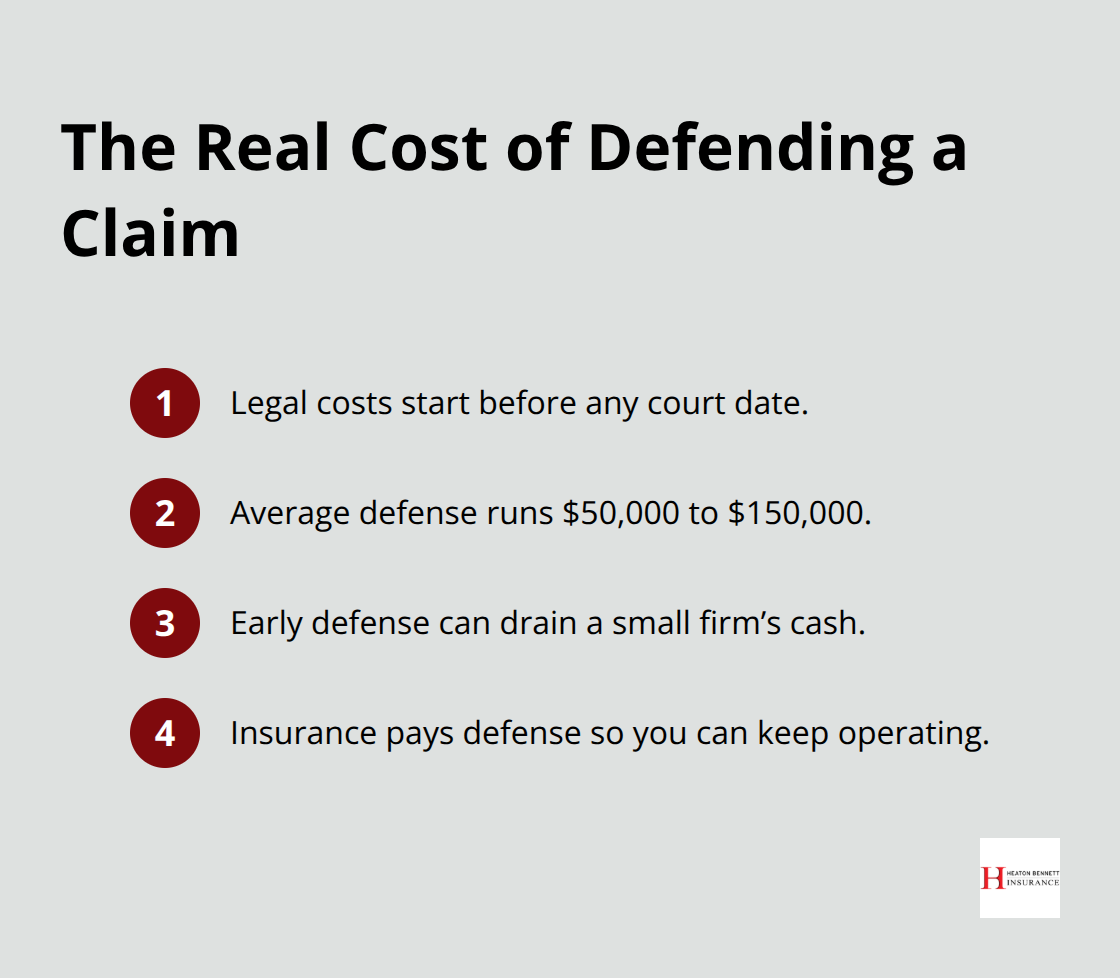
A dental practice facing a malpractice claim might spend $75,000 in legal fees within the first year just to defend against allegations, regardless of whether the claim has merit. Without coverage, you pay this amount while simultaneously trying to maintain your practice and serve existing clients. Professional liability insurance handles defense costs as part of your policy, protecting your operating capital and allowing you to focus on your work rather than spending time in depositions and courtroom appearances.
Your Reputation Faces Real Damage
Your reputation represents your most valuable business asset, and a single claim can damage it permanently. Clients research professionals online before hiring, and lawsuit records are public. A healthcare provider or accountant facing even a dismissed claim finds that potential clients discover it through online searches, creating doubt about competence.
Professional liability insurance demonstrates to clients that you stand behind your work and carry financial protection for them. This coverage becomes a signal of professionalism and accountability that influences hiring decisions.
Coverage Becomes a Contractual Requirement
Many clients now require proof of coverage before engaging services. Contracts increasingly include minimum coverage requirements, and clients may refuse to work with uninsured professionals entirely. Government contracts, healthcare facilities, and large corporations routinely mandate professional liability coverage as a condition of doing business.
If you work with any institutional clients, your lack of coverage becomes a deal-breaker. The insurance itself becomes a competitive advantage and a contractual requirement that directly affects your ability to win and retain profitable work. This contractual demand means that obtaining proper coverage isn’t just about risk management-it’s about market access.
Understanding these financial and reputational stakes shapes how you approach selecting the right coverage limits and policy terms for your specific practice.
How to Choose the Right Professional Liability Coverage
Calculate Coverage Limits Based on Your Actual Exposure
Your coverage limits determine how much the insurance company pays toward defense costs and settlements. Setting these limits too low leaves you exposed to personal liability, while excessive limits waste premium dollars on protection you don’t need. The right approach involves calculating your maximum realistic loss based on your client base and project scope.
A solo tax accountant working with small business clients faces different exposure than a firm managing multi-million dollar corporate accounts. If your largest client engagement generates $500,000 in annual fees, your coverage should exceed that threshold since a major error could trigger claims approaching that amount.
Healthcare providers should examine their malpractice history and peer data within their specialty. The National Practitioner Data Bank shows that orthopedic surgeons face median malpractice awards of $450,000, while emergency medicine physicians see median awards near $250,000. Your coverage limits should substantially exceed these medians because a single catastrophic case can far surpass average awards.
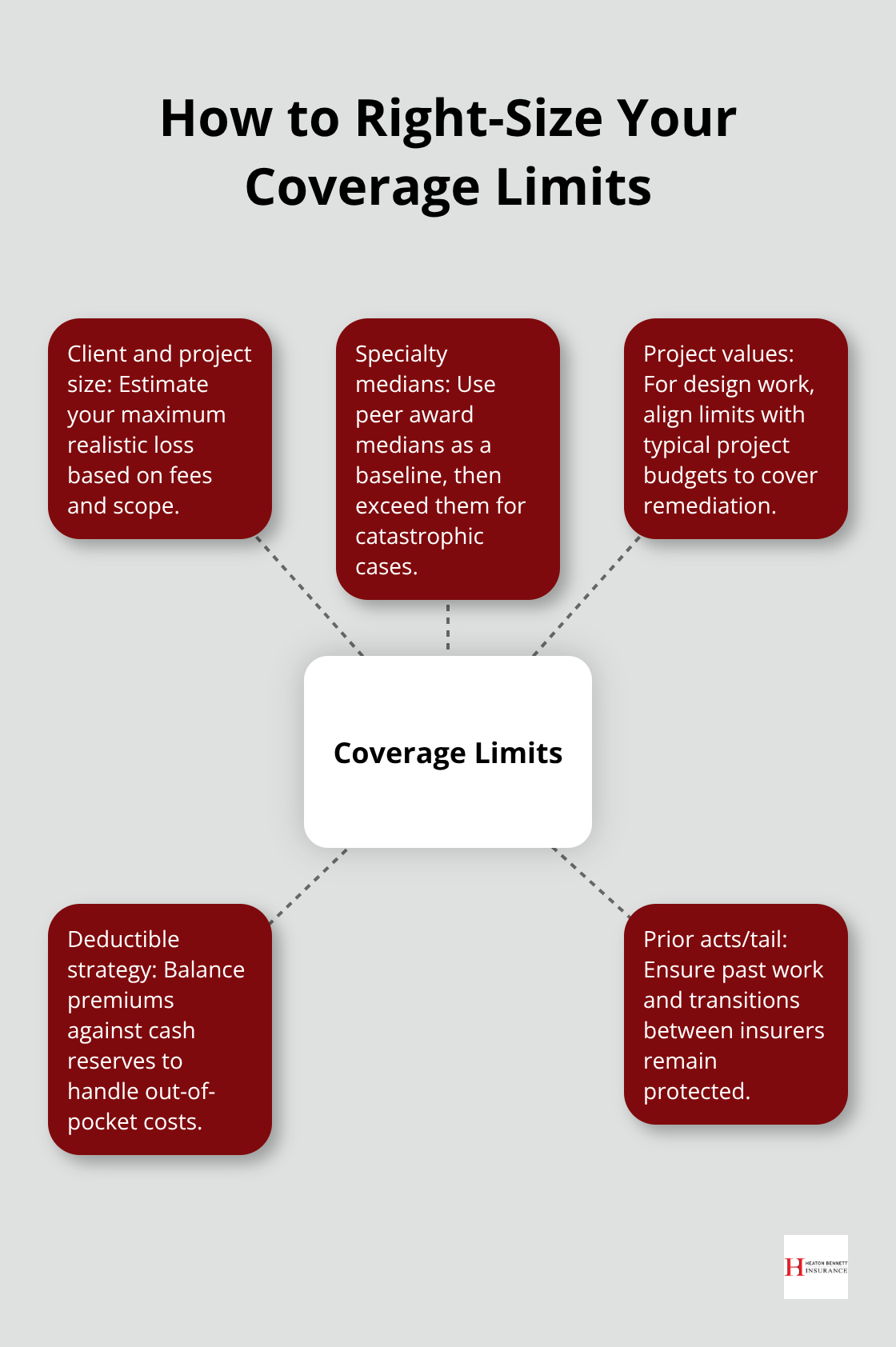
Design professionals should base limits on project values they typically handle. An architect managing projects worth $5 million each should carry minimum limits of $2 million per occurrence, since design errors can trigger remediation costs exceeding the original project budget.
Select Deductibles That Balance Cost and Risk
Deductibles work inversely to premiums-higher deductibles lower your annual cost but increase out-of-pocket exposure when claims occur. Most professionals choose deductibles between $2,500 and $10,000, balancing affordability with manageable self-insurance risk.
Solo practitioners and small firms typically select lower deductibles since they lack financial reserves to absorb large unexpected losses. Larger practices can afford higher deductibles and save substantially on annual premiums.
Customize Coverage for Your Specific Practice
The insurance marketplace offers standardized coverage packages, but your specific risks demand customization. Industry-specific factors matter enormously-a therapist’s coverage differs radically from an engineer’s because their liability exposures diverge completely.
Insurance advisors who specialize in your profession understand which coverage gaps plague practitioners in your field and which policy endorsements matter most. They can identify whether your standard policy excludes certain services you provide or includes coverage you genuinely don’t need.
Evaluate Policy Details Before Purchasing
Many professionals make the mistake of selecting the cheapest quote without examining what’s excluded. A low premium often signals narrow coverage that leaves you exposed precisely where you face real risk.
Request detailed policy comparisons showing what each quote covers and excludes, then evaluate whether exclusions match your practice. Ask specifically about coverage for prior acts if you’re changing insurers, since gaps between policies can leave past work unprotected.
Verify that your policy covers defense costs outside the coverage limit-some policies deduct defense spending from your limit, exhausting coverage faster. The professional liability market changes annually as carriers adjust rates and coverage terms based on claims experience. Reviewing your policy yearly prevents you from carrying outdated limits or missing new endorsements that address emerging risks in your field.
Final Thoughts
Professional liability protection requires regular review and adjustment as your practice evolves, your client base expands, and your industry changes. The coverage limits that protected you five years ago may fall short today if your projects have grown larger or your client roster has shifted toward higher-value engagements. Start by scheduling a conversation with an insurance advisor who understands your specific profession and can assess your current exposure, identify gaps in your existing coverage, and recommend limits that match your actual risk.
Document your decision-making process as you select coverage by recording which risks you identified, what limits you chose, and why you selected those amounts. This documentation protects you if a claim later questions whether you carried adequate coverage, and it provides a baseline for future policy reviews. At Heaton Bennett Insurance, we work with professionals across multiple industries to build coverage that actually protects their practices, and as an independent agency in Austin, Texas, we have access to multiple carriers so we can compare options and find the coverage that fits your specific needs.
Our Security Snapshot process helps you identify gaps and build comprehensive professional liability protection tailored to your profession. You can explore how we approach professional liability coverage by visiting Heaton Bennett Insurance. Proper coverage allows you to focus on your work, serve your clients confidently, and build your practice without the constant worry that a single mistake could destroy everything you’ve built.
The information provided in this blog is for general informational purposes only and does not constitute legal, financial, or insurance advice. Coverage options, terms, and availability may vary. Please consult with a licensed professional for advice specific to your situation.

