

Liability Risk Management: Mitigate What Matters
Liability claims can drain your finances faster than you’d expect. A single lawsuit or injury on your property could cost thousands-or millions-depending on your industry and exposure.
That’s why liability risk management isn’t optional. We at Heaton Bennett Insurance help businesses identify their vulnerabilities and build protection strategies that actually work.
What Liability Exposures Actually Cost Your Business
Different Risks, Different Price Tags
Liability exposure takes different forms depending on what your business does. A restaurant faces completely different risks than a consulting firm, yet both can face ruinous claims. Product liability, premises liability, and professional liability each demand different protection strategies. The National Safety Council reported that the average cost of a nonfatal workplace injury was $42,000 in 2021, but that’s just one category of exposure.
A single customer injury on your property could spiral into medical bills, legal fees, lost productivity, and settlement costs that exceed six figures. Property damage claims add another layer-if your operations damage a client’s equipment or facility, you’re liable for repairs or replacement.
The Hidden Financial Drain
Legal defense costs alone can drain $10,000 to $100,000 before a case ever reaches settlement, according to the U.S. Small Business Administration. Your business also faces indirect costs: time spent managing claims, damaged reputation, lost clients, and increased insurance premiums for future years.
The financial impact extends beyond the immediate payout. Professional errors matter too. A missed deadline, incorrect advice, or service failure can trigger claims that opponents exploit through litigation. These costs compound quickly and often catch business owners off guard.
Which Industries Face the Highest Exposure
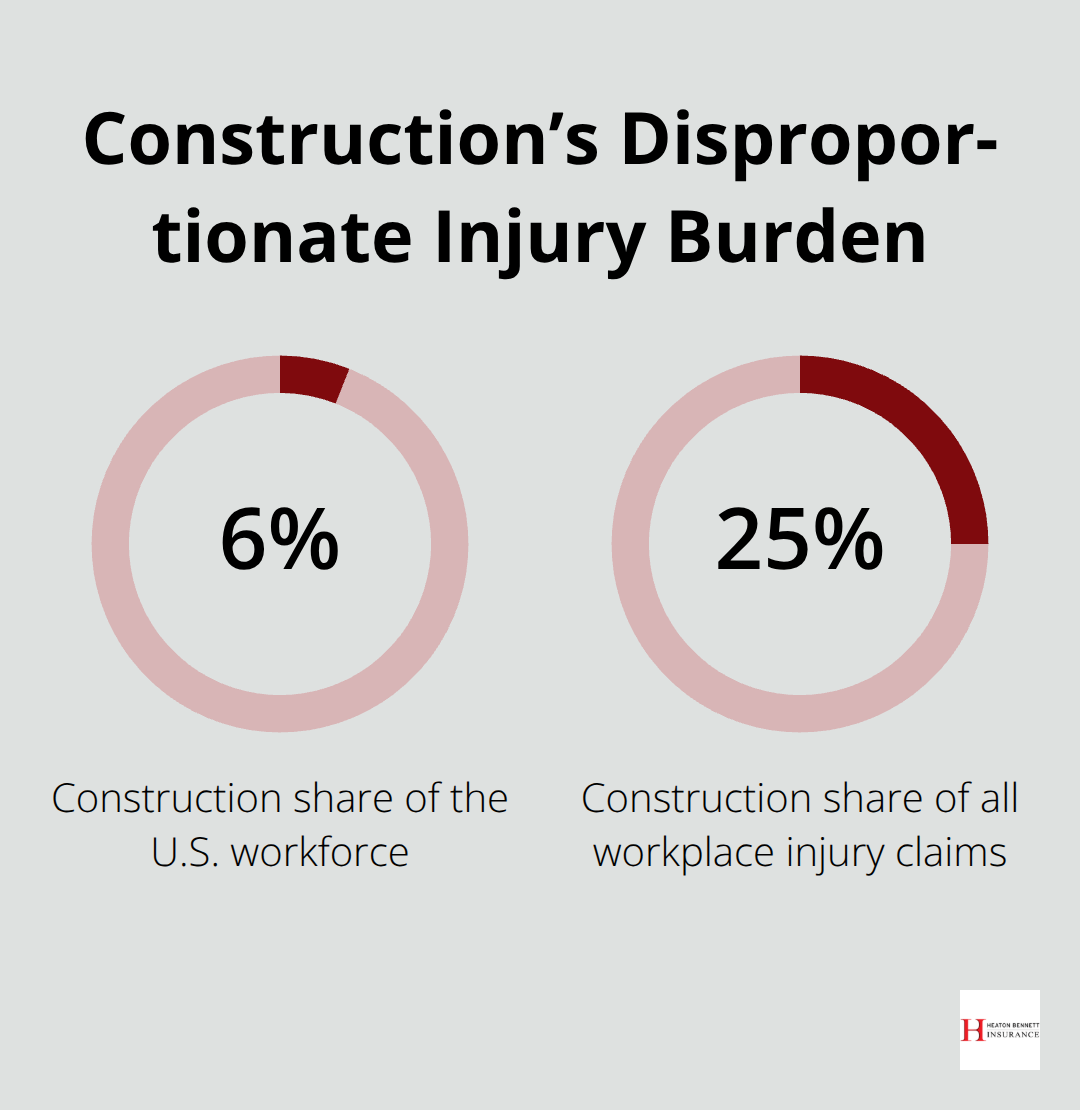
High-liability industries see claims frequencies that dwarf other sectors. Construction accounts for roughly 6% of the U.S. workforce but represents nearly 25% of all workplace injury claims. Healthcare providers face malpractice exposure that can reach millions per claim.
Hospitality businesses encounter premises liability claims at rates that demand serious attention.
These aren’t theoretical numbers-they’re happening across industries right now. Your specific industry likely carries exposures that generic risk advice won’t address. Understanding what actually threatens your bottom line requires mapping your exact vulnerabilities, which is why identifying your specific exposures matters more than broad recommendations. The right protection strategy starts with knowing exactly what risks your business faces.
How to Actually Reduce Liability Exposure
Written Safety Procedures Protect Your Business and Your Wallet
Safety protocols only work if you enforce them consistently and document them thoroughly. Most businesses implement generic training programs, then abandon follow-up-a critical mistake. OSHA data shows that companies with formal safety programs reduce injury rates by 20-40% compared to those without structured approaches. You need written procedures for every high-risk activity in your business, and you must test those procedures regularly. If you operate a construction site, your fall protection procedures should specify equipment requirements, inspection schedules, and employee sign-offs. If you run a medical office, your infection control protocols must be dated and updated whenever regulations change.
Assign Accountability for Documentation
Assign one person responsibility for maintaining these records-not as a side duty, but as a core job function. The National Safety Council found that organizations with dedicated safety coordinators experience 35% fewer workplace injuries than those without. Your documentation becomes your defense in court. Insurance carriers and attorneys will examine your safety records first when evaluating claims. Weak or missing documentation suggests negligence, even if an incident wasn’t actually your fault. Store records digitally with backup copies and maintain them for at least seven years, as litigation timelines often extend that far.
Insurance Coverage Transfers Risk to Specialists
Insurance coverage transfers financial risk to carriers who specialize in managing it, but only if you purchase adequate limits. General liability policies typically start at $1 million per occurrence, yet many small businesses carry exactly that amount-which proves insufficient after legal fees mount. Professional liability coverage protects against errors and omissions specific to your industry, with claims-made policies requiring continuous coverage to maintain protection for past work.
Match Coverage Limits to Your Actual Exposure
A restaurant with $1 million in coverage faces serious gaps if a food poisoning outbreak affects multiple customers. A consulting firm advising on major contracts needs professional liability limits matching the financial stakes of their engagements. Your industry, revenue, number of employees, and specific services all determine appropriate coverage levels. Underinsurance leaves you personally liable for amounts exceeding your policy limits, which means personal assets become vulnerable.
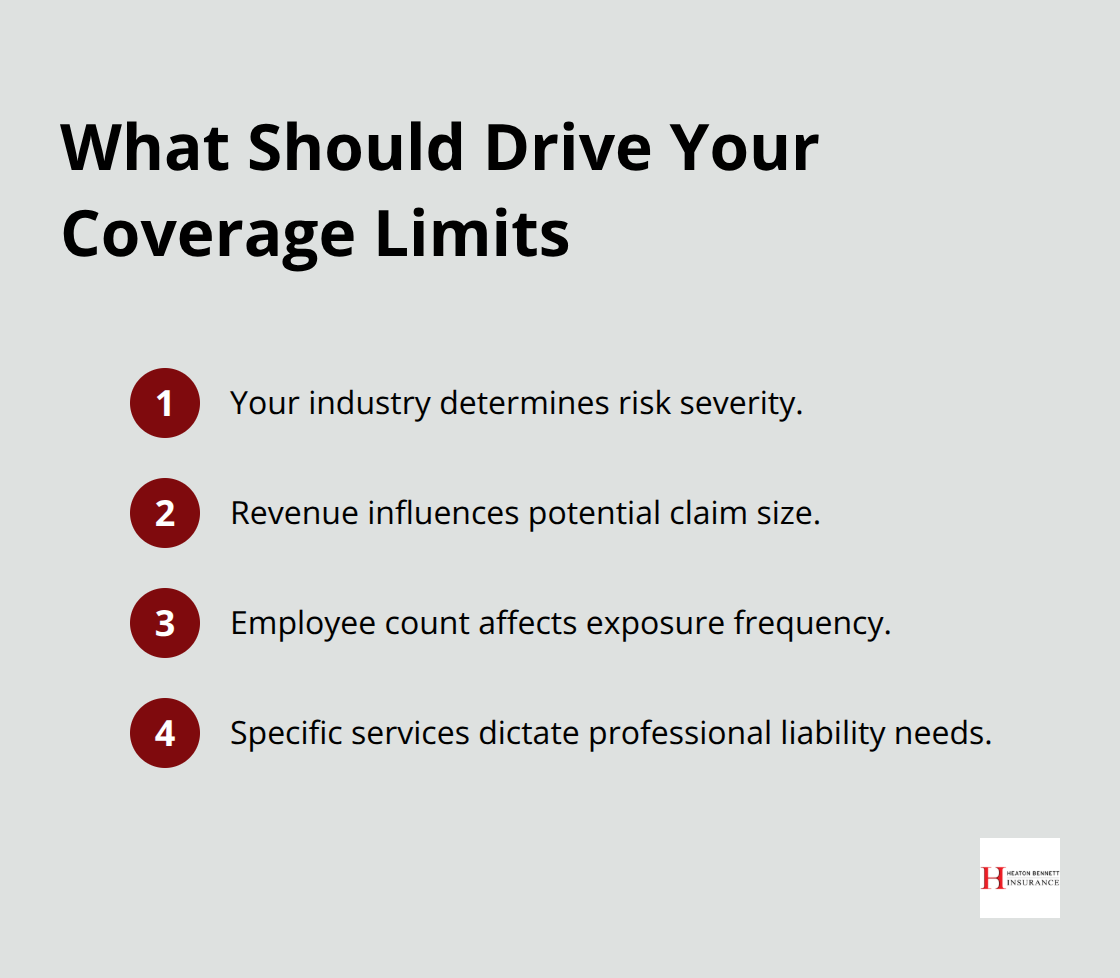
The right coverage amount depends on what your business actually does and what financial exposure you face-not on industry defaults.
Choosing Coverage That Matches Your Actual Risk
General Liability vs. Professional Liability: Know the Difference
General liability and professional liability serve completely different purposes, and confusing them leaves your business dangerously exposed. General liability covers bodily injury, property damage, and advertising injury that occur during your normal business operations-a customer slips in your store, your delivery truck hits someone’s fence, an advertisement offends a competitor. Professional liability, also called errors and omissions insurance, protects against claims arising from mistakes in the advice or services you provide-a financial advisor’s bad recommendation costs a client money, an architect’s design flaw requires expensive corrections, a consultant’s oversight damages a client’s business.
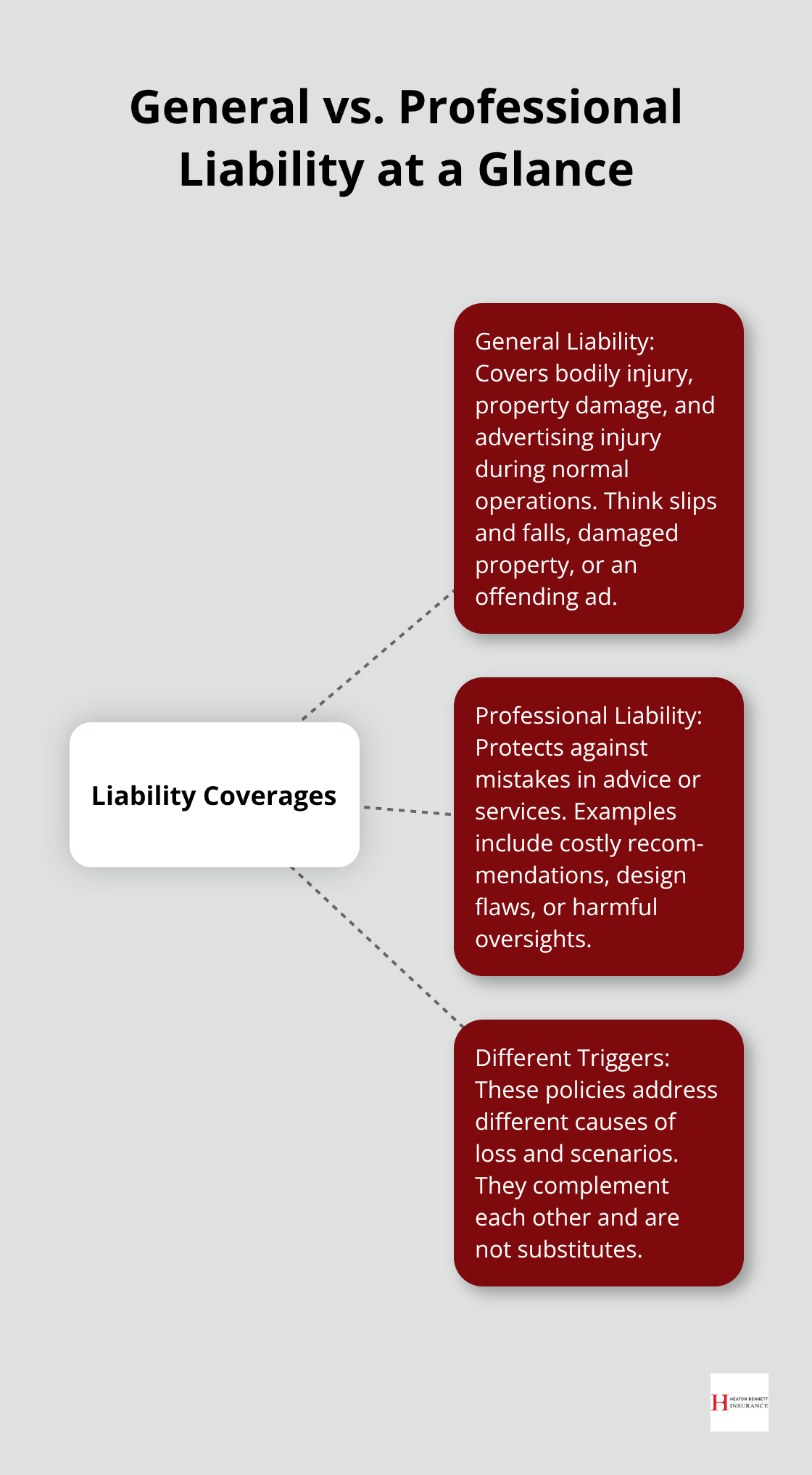
Most businesses need both, not one or the other. A consulting firm that only carries general liability has zero protection if a client sues over faulty advice. A restaurant with only professional liability has no coverage when a customer gets food poisoning. The Insurance Information Institute reports that professional liability claims average $25,000 to $50,000 in defense costs alone before settlement, making this coverage non-negotiable for service-based businesses.
Why $1 Million Isn’t Always Enough
Coverage limits matter more than most owners realize, and the industry default of $1 million per occurrence often falls short dramatically. A single premises liability claim involving multiple injured parties can exhaust $1 million in medical bills and legal fees within weeks. Your coverage limit should reflect your worst-case scenario, not an arbitrary number.
Consider your annual revenue, the number of employees or customers you interact with daily, the value of contracts you manage, and the potential financial impact if something goes catastrophically wrong. A construction company handling $5 million in annual contracts needs professional liability limits reflecting that exposure-typically $2 million or higher. A medical office with 50 employees and thousands of patient interactions yearly faces malpractice exposure that demands limits well above $1 million.
The Real Cost of Underinsurance
The American Bar Association found that litigation costs for commercial disputes average $50,000 to $100,000 in legal fees alone, which means underinsured businesses face personal liability for amounts exceeding their policy limits. A claim that exhausts your policy leaves you personally responsible for the remainder-a situation that threatens your personal assets and business survival. Courts don’t care that you carried insurance; they care that you owe the full judgment amount.
Your coverage limit should match your exposure level, not an arbitrary industry template. An underinsured business transforms a manageable claim into a catastrophe that could force closure or bankruptcy.
Final Thoughts
Liability risk management requires three concrete actions: identify what actually threatens your business, implement documented safety procedures, and carry adequate insurance coverage. Most business owners skip the first step and guess at protection levels, which leaves them dangerously exposed when claims arrive. Your specific industry, revenue, employee count, and service type determine your actual exposure, and the $1 million default coverage limit works for some businesses while leaving others personally liable for millions.
Written safety procedures with assigned accountability reduce injury claims by 20-40% according to OSHA data, and documentation becomes your defense in court when claims happen. Insurance coverage transfers financial risk to specialists, but only if your limits reflect your real exposure-underinsurance transforms manageable claims into catastrophes that threaten business survival. A construction company faces completely different risks than a consulting firm, yet both need general and professional liability coverage that matches their worst-case scenario.
Contact Heaton Bennett Insurance to discuss your liability risk management strategy with an agent who understands your industry and can recommend appropriate coverage limits. We work with businesses across industries to identify vulnerabilities and build protection strategies that actually work. Start mapping your exact exposures today.
The information provided in this blog is for general informational purposes only and does not constitute legal, financial, or insurance advice. Coverage options, terms, and availability may vary. Please consult with a licensed professional for advice specific to your situation.

