

Nonprofit Insurance Quotes: How to Compare Plans
Nonprofit organizations face insurance challenges that standard business plans simply don’t address. Your tax-exempt status, volunteer workforce, and mission-driven activities create coverage gaps that leave you exposed.
Getting nonprofit insurance quotes shouldn’t mean settling for generic options. We at Heaton Bennett Insurance help nonprofits find plans that actually fit their operations and budgets.
Why Nonprofits Need Different Insurance
Tax-Exempt Status Creates Unique Coverage Gaps
Nonprofits operate in a fundamentally different risk environment than traditional businesses, yet many still rely on standard commercial policies that leave critical gaps. Your tax-exempt status creates specific coverage needs that insurers designed for profit-driven companies simply don’t anticipate. When you operate with volunteers instead of employees, host public events, serve vulnerable populations like children or seniors, or depend on fundraising activities, your liability profile looks nothing like a standard business.
Standard commercial plans are built around employment relationships, predictable operations, and profit-focused activities. They don’t account for the unpredictable nature of volunteer management, the liability exposure from community events, or the specialized risks of serving populations with greater care requirements.
The Nonprofit Insurance Market Has Hardened Significantly
A 2024 survey of nonprofit insurance brokers found that 70.5% of commercial carriers are actively nonrenewing nonprofits across the board, up significantly from 56% in 2020. This retreat from the nonprofit market isn’t random-it reflects carriers’ unwillingness to underwrite the specific exposures your organization presents.
Brokers report that 80% of nonprofit clients are seeing premium increases of 25% or more, and specialized coverages like improper sexual conduct insurance for child-serving organizations now face restrictions from 87.5% of carriers. Property coverage has become particularly problematic, with carriers imposing larger wind and hail deductibles and applying actual cash value terms that devastate nonprofits operating on tight budgets.
Placement Challenges Vary by Nonprofit Type
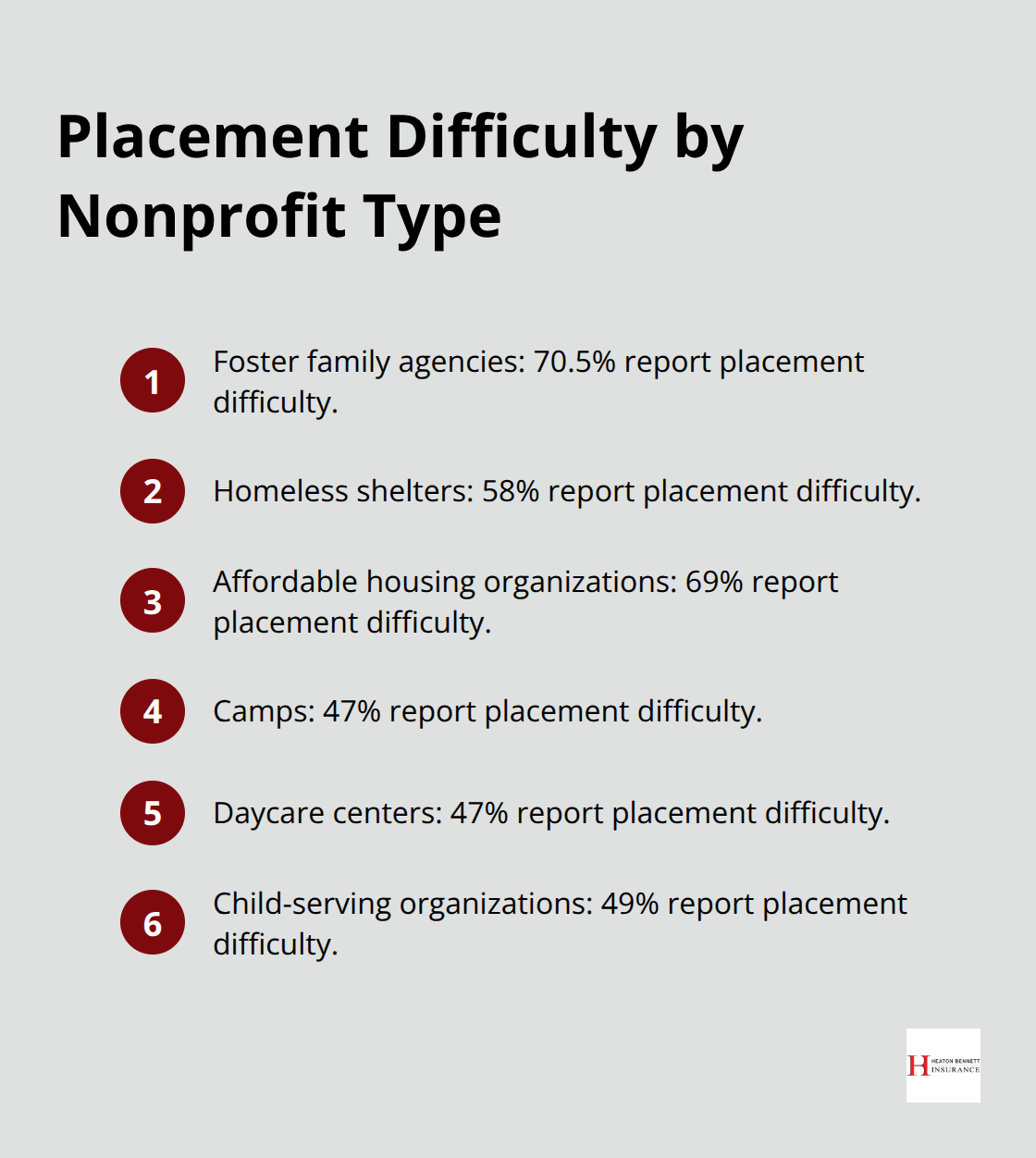
Foster family agencies, homeless shelters, and affordable housing organizations face the most severe placement challenges, with 70.5%, 58%, and 69% of brokers respectively reporting difficulty finding adequate coverage. Even less specialized nonprofits-camps, daycare centers, and child-serving organizations-encounter placement difficulties in 47%, 47%, and 49% of cases.
This hardening means you can’t shop your nonprofit the way you’d shop a for-profit business. You need carriers and brokers who understand nonprofit operations deeply, who know how to structure coverage around volunteer exposure, and who recognize that your mission-driven activities require tailored protection rather than cookie-cutter policies. The right partner will help you navigate these market conditions and secure the coverage your organization actually needs.
Getting the Right Information Before Comparing Quotes
Compile Your Organization’s Operational Details
Requesting nonprofit insurance quotes without proper preparation wastes everyone’s time and produces apples-to-oranges comparisons that leave you confused. Before contacting any broker, compile detailed information about your organization’s structure, operations, and risk profile. Start with your nonprofit’s basic details: annual budget, number of full-time and part-time employees, total volunteer count, and the specific populations you serve. If you work with children, seniors, or vulnerable adults, state this explicitly because carriers treat these exposures differently. Document your fundraising activities in detail-the types of events you host, attendance numbers, whether alcohol is served, and how frequently you operate programs.
List all vehicles your organization owns or uses, including whether volunteers use personal vehicles for nonprofit work. Include your property information: the square footage of buildings you own or lease, the year constructed, security systems installed, and any previous property claims. This data directly influences your premium, so accuracy matters more than optimism. A 2024 broker survey found that applications missing key operational details delay quotes by an average of seven days, pushing your timeline to roughly two weeks instead of one.
Verify Core Coverages Across All Quotes
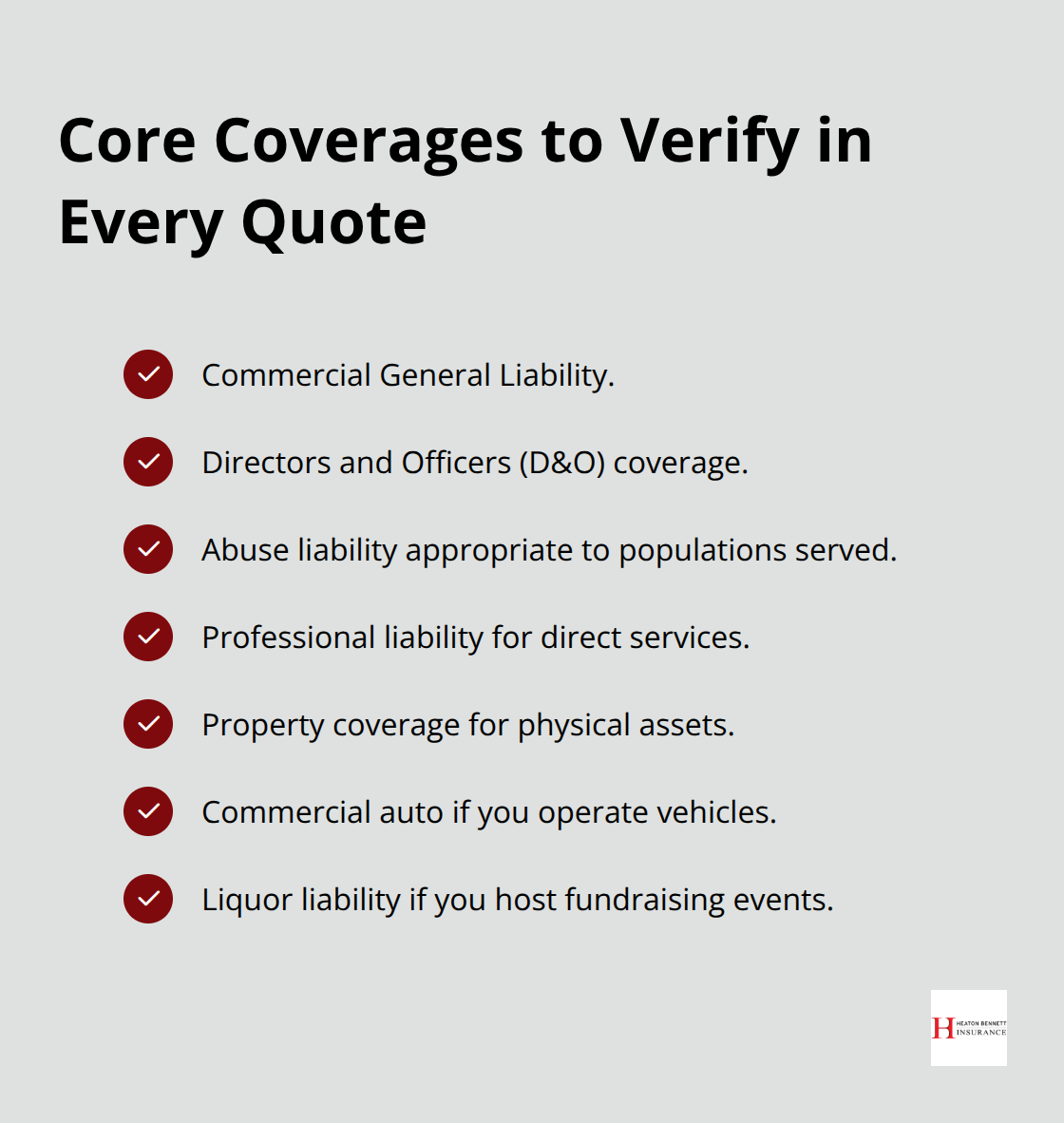
When comparing actual quotes, ignore the temptation to focus solely on price. Instead, verify that each quote includes the core coverages your nonprofit genuinely needs: Commercial General Liability as the foundation, Directors and Officers coverage for your board, abuse liability options appropriate to your populations served, professional liability if you deliver direct services, property coverage for your physical assets, and commercial auto if you operate vehicles. Many brokers include liquor liability at no extra cost, which matters if you host fundraising events.
State-specific terms and exclusions vary significantly, so the policy document from your state takes precedence over national templates. The National Council of Nonprofits maintains state-by-state guidance on coverage requirements, which helps you verify whether quotes meet your state’s standards.
Examine Deductibles and Exclusions Carefully
Deductibles and exclusions are where quotes diverge most dramatically. A $2,500 deductible sounds reasonable until property damage from a fire occurs and you discover wind and hail deductibles are significantly higher. Ask each broker explicitly about actual cash value versus replacement cost terms on property coverage, because many nonprofits operating on tight margins cannot absorb the financial gap between what a carrier pays and what rebuilding actually costs. When comparing quotes from multiple carriers, ensure you’re evaluating identical coverage limits and deductibles across all options so you’re truly comparing apples to apples. These details determine whether your coverage truly protects your mission or leaves you exposed when claims happen.
Reducing Your Nonprofit Insurance Costs Without Sacrificing Coverage
Bundle Coverage Types for Maximum Savings
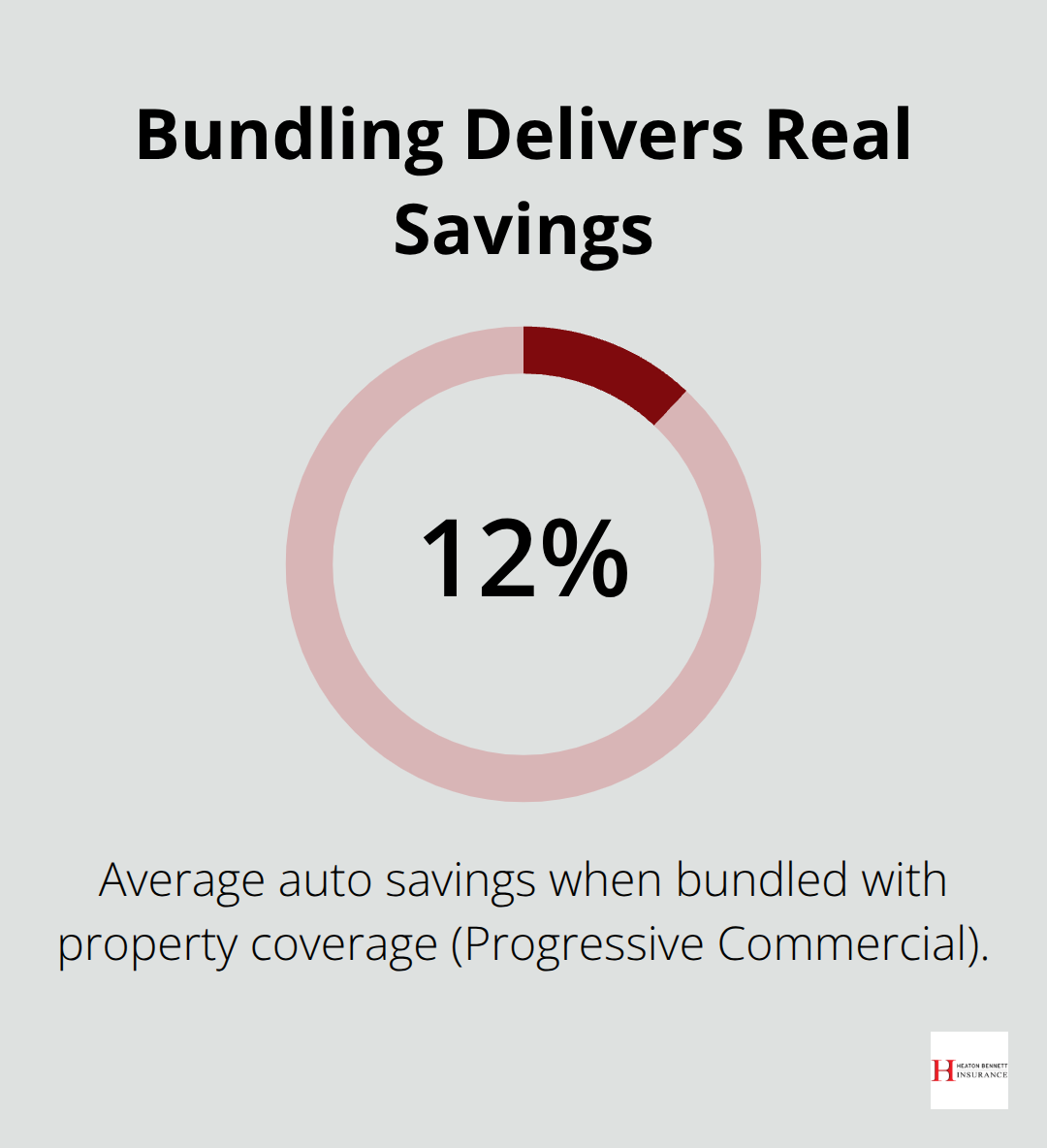
Bundling coverage types remains the single most effective cost-reduction strategy in nonprofit insurance, yet most organizations fail to leverage it properly. When you purchase Commercial General Liability, Directors and Officers coverage, property insurance, and commercial auto through the same carrier, you access pricing that individual policies simply cannot match. Progressive Commercial reports an average 12% savings on auto insurance when bundled with property coverage, and this principle extends across the entire nonprofit insurance spectrum.
The carrier reduces underwriting costs and administrative overhead, passing those savings directly to you. More importantly, bundled policies create cleaner claims experiences because a single carrier manages your entire coverage portfolio rather than forcing you to navigate multiple insurers with conflicting terms and exclusions. Before requesting quotes, decide which coverages your organization genuinely needs, then request bundled quotes specifically asking for multi-line discounts. Carriers price bundled packages differently than piecemeal coverage, so this distinction matters when comparing final numbers.
Identify Nonprofit-Specific Discounts
Nonprofit-specific discounts exist but require you to ask directly and verify eligibility requirements with precision. Some carriers offer 5-10% reductions for organizations with strong risk management practices, documented safety protocols, or claims-free histories. Others provide discounts for nonprofits meeting specific operational standards like staff training on abuse prevention or board governance certifications. The challenge is that carriers rarely advertise these discounts prominently, so your broker must know which carriers offer what. This is where working with an insurer who understands nonprofit operations becomes invaluable-they understand which carriers reward your specific operational strengths and can structure quotes to capture available savings.
Compare Annual and Multi-Year Policy Options
When evaluating annual versus multi-year policies, understand that multi-year commitments typically provide 3-5% rate locks that protect you from the premium increases currently plaguing the nonprofit sector. A 2024 broker survey found that 80% of nonprofit clients experienced premium increases of 25% or more year-over-year, making rate stability through multi-year policies genuinely attractive for budgeting purposes. However, multi-year commitments create risk if your organization’s operations change significantly, so evaluate this trade-off based on your operational stability and growth projections. Request quotes with both annual and multi-year options so you can compare the actual dollar difference before committing. The rate protection offered by multi-year policies may justify the reduced flexibility, particularly if your nonprofit’s core operations remain stable.
Final Thoughts
Choosing nonprofit insurance comes down to three priorities that determine whether your coverage actually protects your mission. Verify that your nonprofit insurance quotes include the core coverages your organization genuinely needs-not what a generic template suggests, but what your specific operations demand. Demand transparency on deductibles, exclusions, and state-specific terms before you commit, because the lowest premium means nothing if exclusions leave you exposed when claims happen.
Start by gathering your operational details with precision: your volunteer count, the populations you serve, your fundraising activities, and your property information. Submit these details to multiple brokers simultaneously so you receive quotes based on identical information, making true comparison possible. Request bundled quotes explicitly, ask about nonprofit-specific discounts, and evaluate both annual and multi-year options before deciding.
We at Heaton Bennett Insurance work with multiple carriers to provide tailored insurance solutions that fit your mission and budget. Contact us to discuss your nonprofit insurance needs and receive quotes that reflect your organization’s real risk profile.
The information provided in this blog is for general informational purposes only and does not constitute legal, financial, or insurance advice. Coverage options, terms, and availability may vary. Please consult with a licensed professional for advice specific to your situation.

