

Disability Insurance Texas: Planning For Income Protection
A sudden illness or injury can stop your paycheck overnight. Most Texans have no backup plan for lost income, which is why disability insurance in Texas deserves serious attention.
At Heaton Bennett Insurance, we’ve seen how quickly financial stability crumbles without proper coverage. This guide walks you through your options so you can protect what matters most.
Why Income Protection Matters in Texas
The Speed of Financial Crisis
Income loss strikes faster than most people think. The Council for Disability Awareness reports that the average disability lasts 34.6 weeks, yet the typical American has less than one month of emergency savings. A construction worker injured on the job, a teacher diagnosed with cancer, or an accountant recovering from surgery all face the same brutal reality: no paycheck while bills keep arriving. Medical debt compounds quickly without income replacement. The National Council on Disability found that working-age people with disabilities face poverty rates nearly double those without disabilities, largely because they lack income replacement coverage.
Texas Has No Safety Net
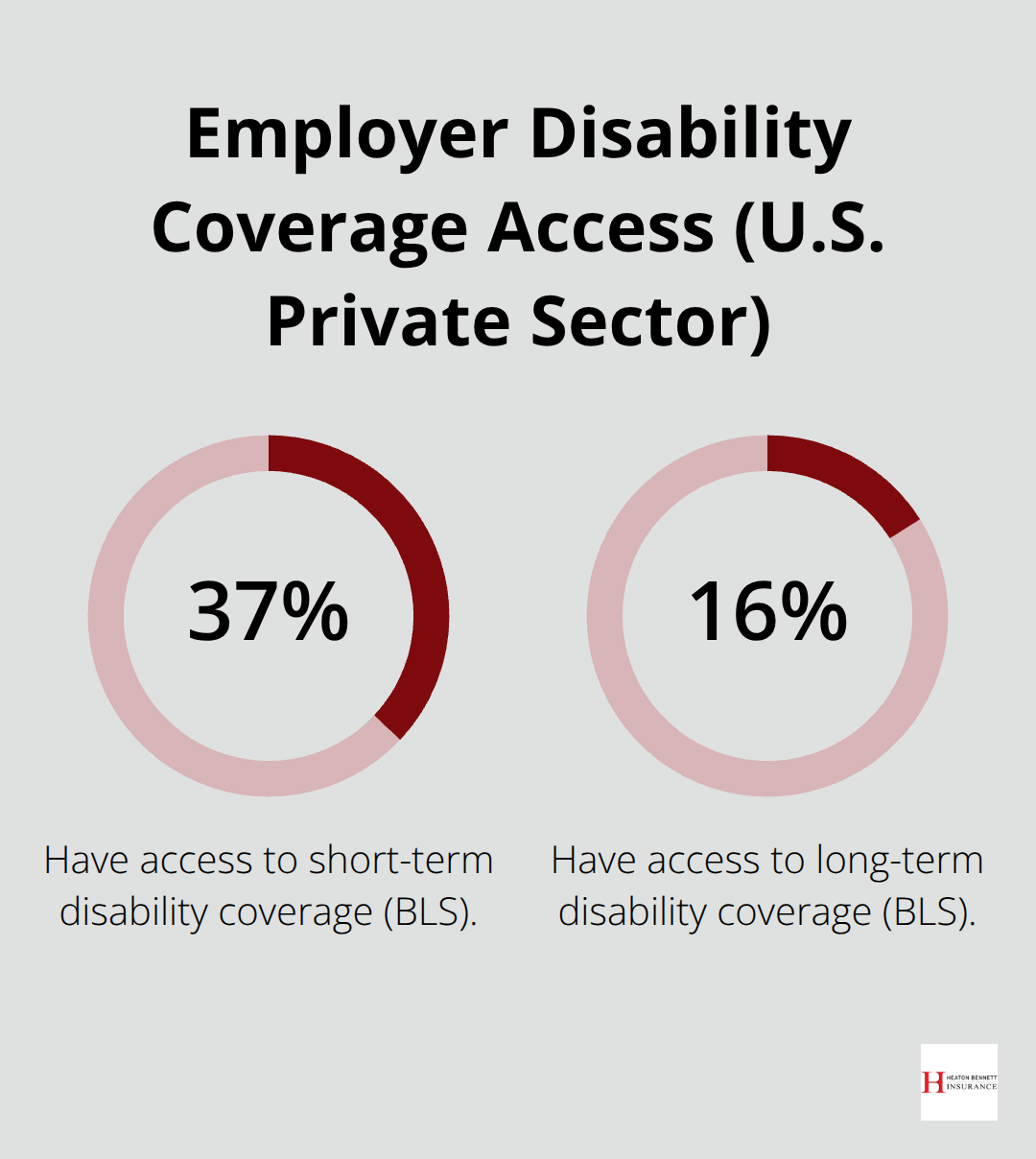
Texas employers aren’t required to carry disability insurance, and most don’t. According to the U.S. Bureau of Labor Statistics, only about 37 percent of private industry workers have access to short-term disability coverage, and just 16 percent have long-term disability protection. This means roughly two-thirds of Texas workers have zero backup income if they can’t work.
Social Security Disability Insurance exists, but the average monthly benefit is around 1,350 dollars, and the approval process takes months-sometimes years. Rent, mortgage, car payments, and insurance premiums won’t wait for federal approval.
The Coverage Gap Most Texans Face
A 2023 survey by the American College of Employee Benefits Counselors revealed that 59 percent of Americans couldn’t cover three months of expenses if they lost their income. For Texans specifically, the problem intensifies because our state has no supplemental disability safety net. Many workers assume their employer covered this risk, only to discover their company offered nothing or minimal protection. Your income protection depends entirely on personal planning and the right coverage selected before disability strikes. Without disability insurance in place, financial stability crumbles within weeks.
What Disability Insurance Types Actually Cover
Short-Term Disability: Your First Line of Defense
Short-term disability insurance replaces 50 to 70 percent of your gross income for a limited period, typically three to six months. This coverage activates after an elimination period, which ranges from zero to 14 days depending on your policy. The Council for Disability Awareness reports that 70 percent of disabilities last less than 90 days, making short-term coverage genuinely valuable for common injuries and illnesses. A broken leg, appendix surgery, or acute back injury falls into this window. Short-term policies move fast-benefits often begin within two weeks of approval. You’ll pay monthly premiums, but the coverage protects your immediate financial obligations when income stops abruptly.
Long-Term Disability: Protection Against Career-Ending Events
Long-term disability insurance handles the serious scenarios that wreck financial stability. This coverage activates after short-term benefits expire, typically starting at three to six months and extending to age 65 or beyond. Monthly benefits replace 40 to 70 percent of your income, depending on your plan. A stroke, severe arthritis, or cancer diagnosis can eliminate your earning ability for years, and long-term coverage prevents bankruptcy in those situations. The Social Security Administration reports that one in four of today’s 20-year-olds will experience a disability lasting 90 days or more during their working years. Long-term premiums cost less monthly than short-term coverage because benefits don’t trigger until months into a disability.
Own-Occupation vs. Any-Occupation: Which Definition Protects You Better
Own-occupation policies define disability as your inability to perform your specific job, while any-occupation policies require you to be unable to work in any job you’re qualified for. Own-occupation protection matters significantly for specialists-a surgeon with hand tremors cannot practice surgery but could theoretically work a desk job, yet own-occupation coverage still pays. Any-occupation policies are cheaper but restrictive; insurers deny claims when alternative work exists.
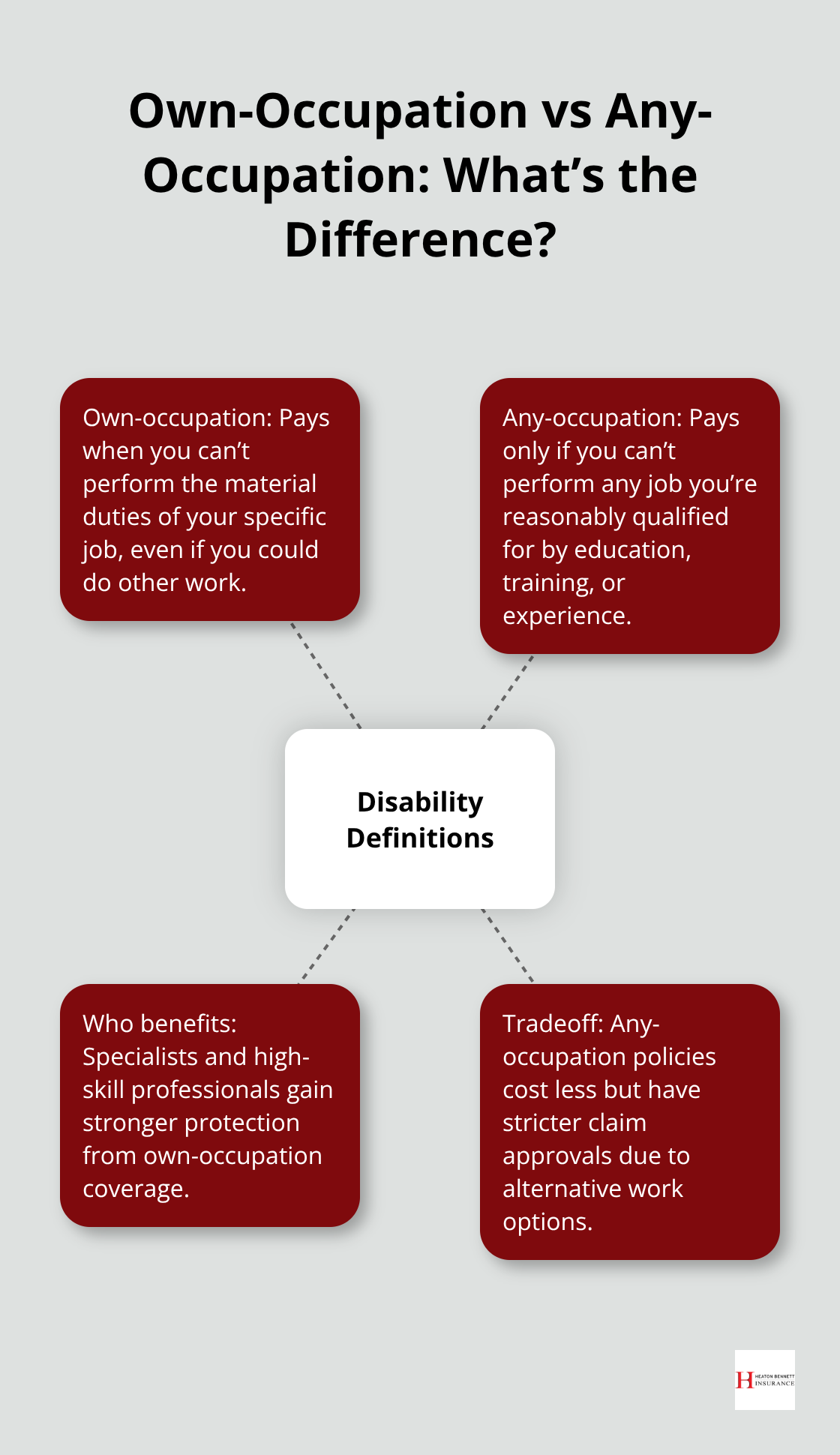
For professional and skilled workers in Texas, own-occupation policies justify their higher cost because they match your actual earning capacity and job specificity.
Understanding these coverage types helps you identify which combination fits your income protection needs. The right policy depends on your profession, financial obligations, and how long you could survive without a paycheck-factors that shift when you compare your current coverage against what actually protects your lifestyle.
How to Choose the Right Disability Insurance Plan
Calculate Your Monthly Expenses and Income Replacement Needs
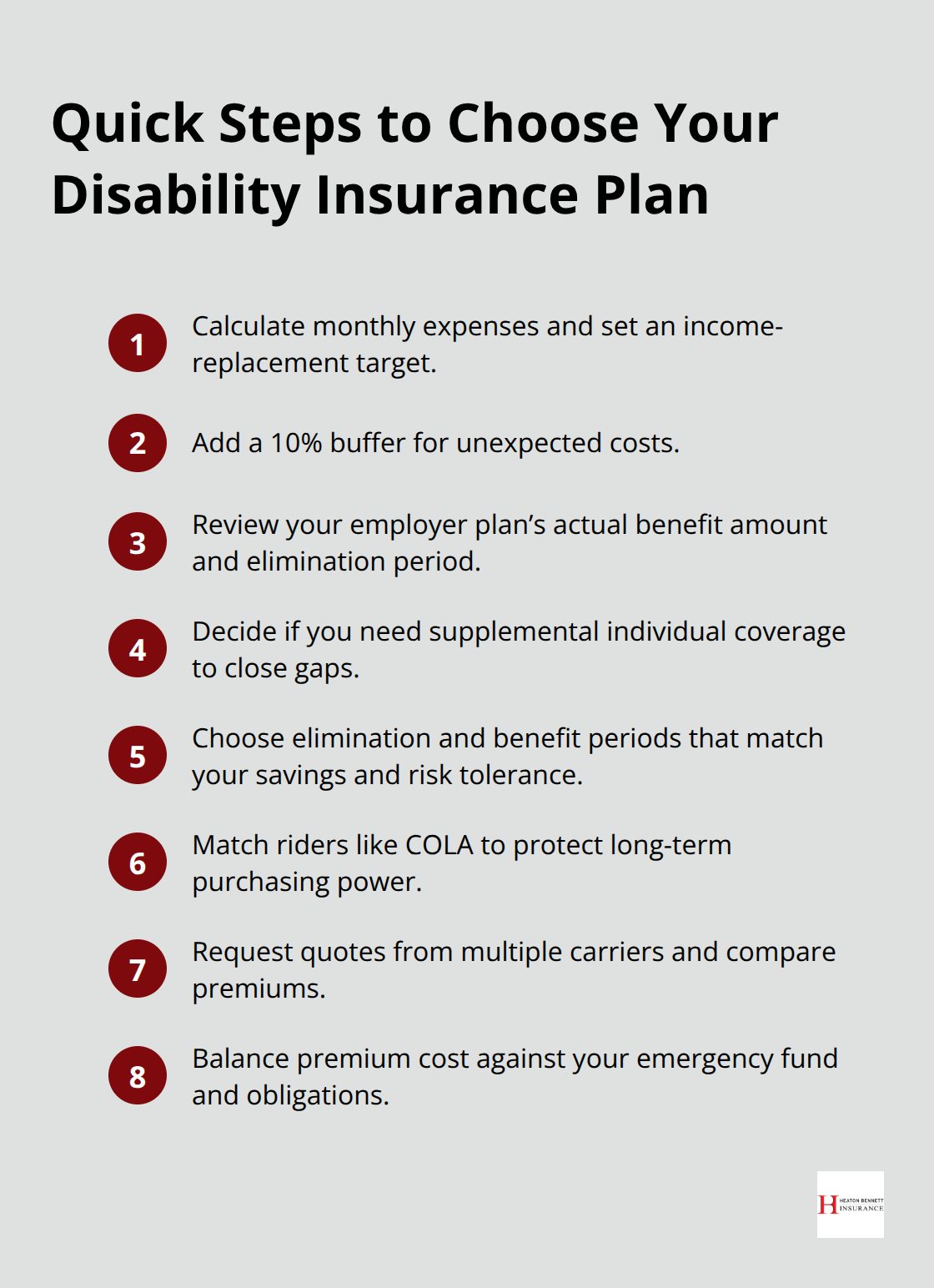
Start with your actual monthly expenses, not guesswork. Most Texans overestimate what they’d need or underestimate their true obligations. Add up rent or mortgage, utilities, insurance premiums, groceries, transportation, childcare, and debt payments. The Employee Benefit Research Institute found that the average American household needs 60 percent of pre-disability income to maintain their lifestyle, but this varies dramatically based on your specific situation. A single parent with childcare costs needs different coverage than a dual-income household with substantial savings. Write down your number and add 10 percent as a buffer for unexpected expenses that always emerge.
This becomes your income replacement target. Now compare it against what your employer offers. Most employer plans replace only 50 to 60 percent of gross income, which means you’re covering the gap with savings or going without. For Texans earning 50,000 to 100,000 dollars annually, supplemental individual disability insurance fills this gap effectively. If your employer offers nothing, individual coverage becomes your only protection. Request quotes from multiple carriers to calculate the monthly premium, then decide whether the cost fits your budget. A 45-year-old earning 70,000 dollars typically pays between 80 and 150 dollars monthly for solid long-term coverage, depending on occupation and health history.
Understand Elimination Periods and Benefit Periods
Elimination periods directly impact your premium and your financial strategy. A policy with a 30-day elimination period costs roughly 20 to 30 percent less than a zero-day option, but you’re self-insuring for that first month. If you have three months of emergency savings, a 30-day or 60-day elimination period makes financial sense. If your savings account contains less than one month of expenses, a shorter elimination period or none at all protects you better, though premiums rise accordingly.
Benefit periods matter equally. A policy paying until age 65 costs significantly more than one paying for two or five years, but career-ending disabilities justify the higher cost. The Council for Disability Awareness reports that disabilities lasting more than two years average over 34 months, meaning short benefit periods leave you exposed to financial catastrophe. For professionals in their 30s and 40s, benefit periods extending to age 65 protect your entire earning window. For those nearing 55, a 10-year benefit period may suffice.
Review Coverage Limits and Rider Options
Coverage limits deserve scrutiny. Most insurers cap monthly benefits at 5,000 to 10,000 dollars or 60 to 70 percent of gross income, whichever is lower. High earners hit these caps quickly. Rider options like cost-of-living adjustments protect your purchasing power during extended disabilities, adding roughly 10 to 15 percent to premiums but preventing your 2,000 dollar monthly benefit from becoming inadequate in five years. These additions (while raising your costs) address the reality that inflation erodes benefit value over time. Talk with an insurance professional who can match riders to your specific income level and career trajectory.
Final Thoughts
Disability insurance in Texas isn’t optional for people who want financial security-it’s mandatory if you value your lifestyle and your family’s stability. Without income replacement coverage, a single health crisis transforms into a financial catastrophe within weeks. The statistics are clear: most Texans lack adequate protection, employer plans fall short of actual needs, and our state offers no safety net to bridge the gap.
Waiting for disability to strike before thinking about coverage guarantees financial damage. Calculate your monthly expenses today, compare your current coverage against that number, and identify the gap. If your employer offers disability insurance, review the actual benefit amount and elimination period rather than assuming it’s adequate. If your employer offers nothing, individual coverage becomes your only protection.
We at Heaton Bennett Insurance work with you to build personalized disability insurance Texas options that match your actual income, your profession, and your financial obligations. Contact Heaton Bennett Insurance to discuss your coverage gaps and get a clear picture of your protection needs. Your financial stability depends on decisions you make today, not on hoping disability never happens.
The information provided in this blog is for general informational purposes only and does not constitute legal, financial, or insurance advice. Coverage options, terms, and availability may vary. Please consult with a licensed professional for advice specific to your situation.

