

Cyber Liability Insurance: Guarding Your Digital Assets
Cyberattacks are hitting businesses harder than ever. In 2024, the average cost of a data breach reached $4.45 million, according to IBM’s Data Breach Report. That’s why cyber liability insurance has become non-negotiable for companies of all sizes.
At Heaton Bennett Insurance, we’ve seen firsthand how the right coverage can mean the difference between recovery and catastrophe. This guide walks you through what you need to know to protect your business.
Why Cyber Threats Are Escalating
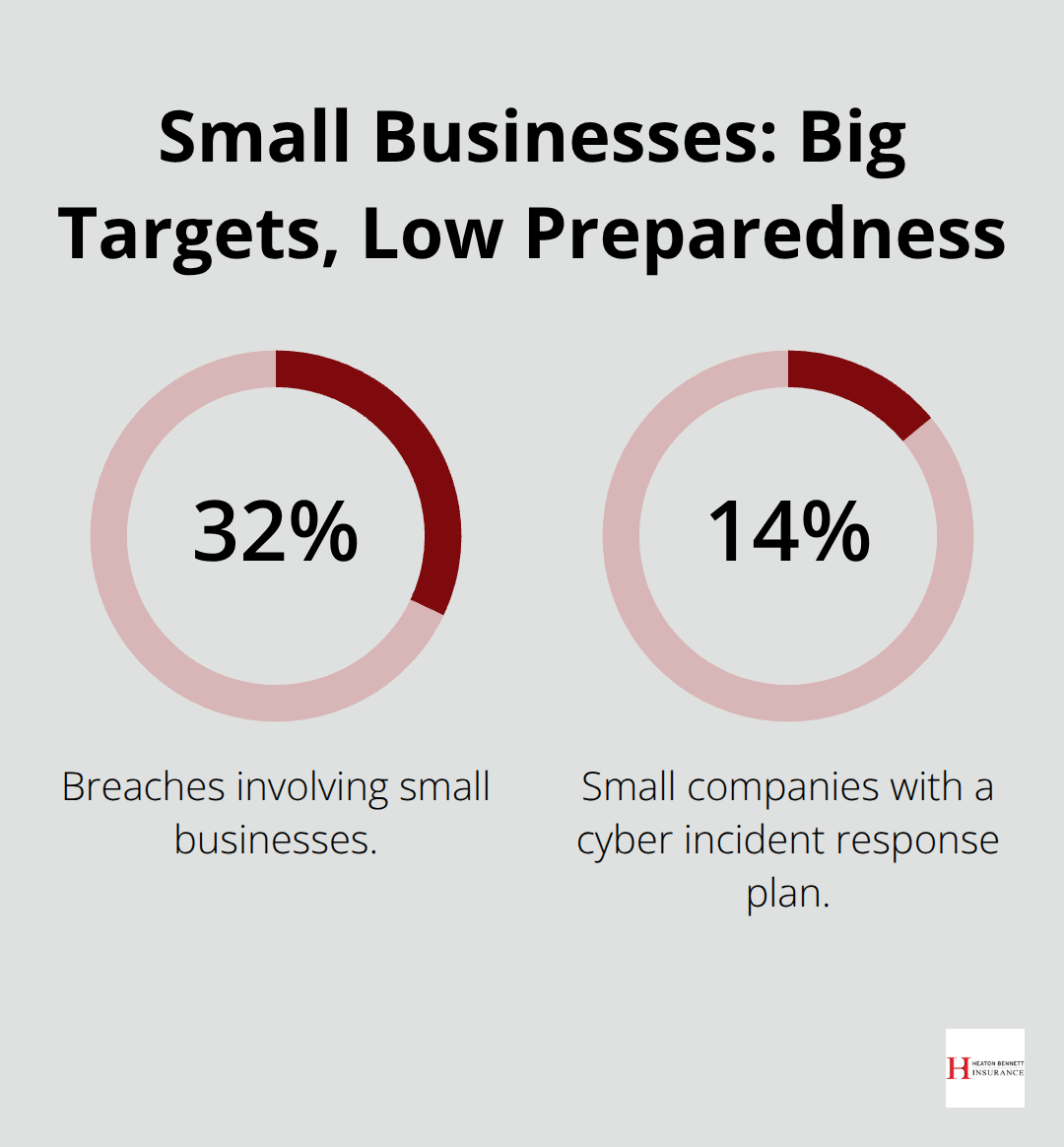
Cyberattacks strike businesses faster, more targeted, and harder to stop than ever before. According to Statista, the number of data breaches in the United States jumped from 1,579 in 2018 to over 3,200 in 2023. Attackers now leverage artificial intelligence to identify vulnerabilities, deploy ransomware that locks critical files, and send personalized phishing emails to specific employees. Small and mid-sized businesses face particular risk because many owners wrongly assume they’re too small to attract attention. The 2024 Verizon Data Breach Investigations Report revealed that 32% of breaches involved small businesses, yet only 14% of small companies maintain a cyber incident response plan.
The financial damage keeps climbing
The cost of recovering from a breach extends far beyond replacing stolen data. Companies must pay for forensic investigations, legal consultations, customer notifications, and credit monitoring services immediately after an attack. Indirect costs then damage your bottom line for months or years afterward. Businesses that experience a breach lose customers, watch employee productivity decline, and suffer reputation damage. Retail and healthcare organizations face the heaviest financial impact, with average breach costs exceeding $10 million according to IBM’s latest research. Manufacturing companies, financial services firms, and technology companies also remain vulnerable. Each sector confronts unique attack vectors and regulatory pressures that multiply costs significantly.
Regulatory fines add another layer of financial pressure
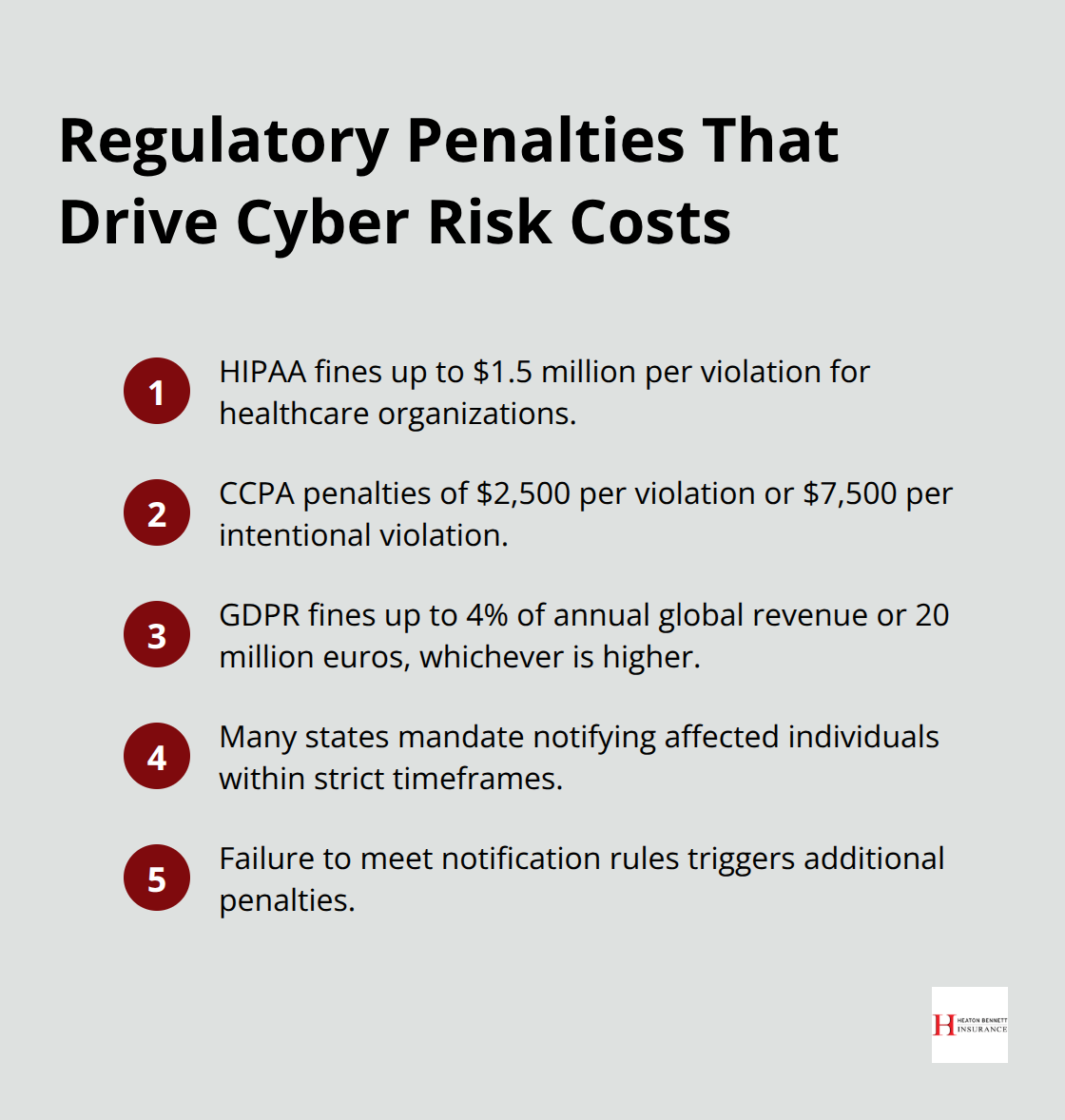
Compliance violations following a breach can cost more than the breach itself. The Health Insurance Portability and Accountability Act imposes fines up to $1.5 million per violation on healthcare organizations. The California Consumer Privacy Act allows penalties of $2,500 per violation or $7,500 per intentional violation. The European Union’s General Data Protection Regulation mandates fines of up to 4% of annual global revenue or 20 million euros, whichever is higher. Many states now require businesses to notify affected individuals within specific timeframes, and failure to comply triggers additional penalties.
These regulations tighten continuously, meaning compliance costs will only increase in the coming years. Companies that operate across multiple states or internationally face a far more complex compliance landscape (one that demands proper documentation, response protocols, and insurance protection) to manage financial exposure.
Why cyber liability insurance becomes your financial shield
The combination of rising attack frequency, escalating breach costs, and tightening regulations creates a perfect storm for unprepared businesses. Standard business insurance policies typically exclude cyber incidents, leaving your company exposed to millions in uninsured losses. Cyber liability insurance fills this critical gap by covering the specific costs that traditional policies ignore. Understanding what this coverage actually protects is the next step toward building a comprehensive defense strategy.
What Cyber Liability Insurance Actually Covers
Immediate Response and Investigation Costs
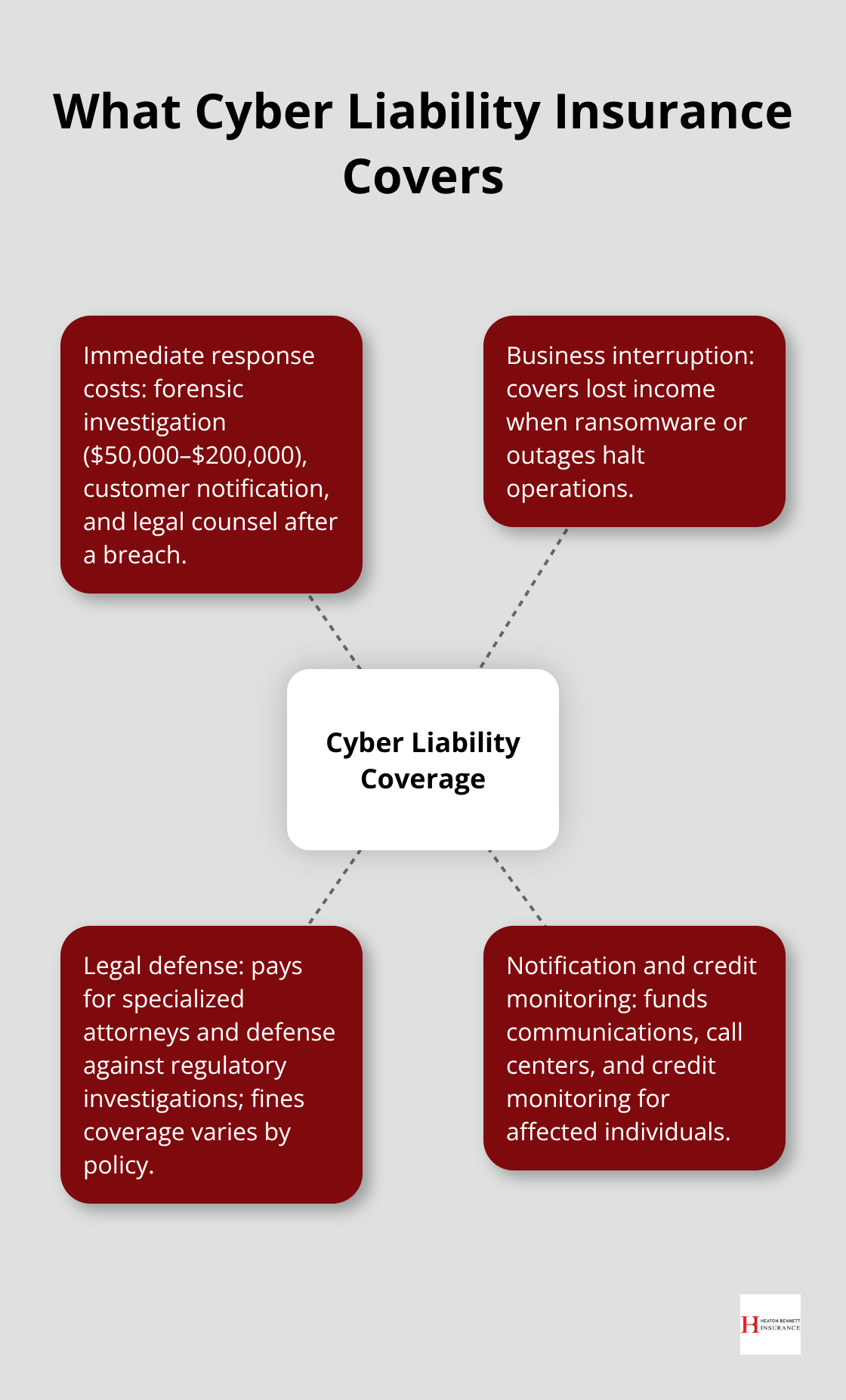
Cyber liability insurance addresses the specific financial fallout from data breaches and cyberattacks that general business policies completely ignore. When a breach happens, your company faces immediate costs that standard coverage won’t touch. Forensic investigators must examine your systems to identify what attackers stole and how they got in, often costing $50,000 to $200,000 depending on your network complexity. Next comes mandatory customer notification, which includes sending breach letters, setting up credit monitoring services, and managing a call center to handle worried customers. The FTC requires notification without unreasonable delay, and many states impose strict timelines that force companies to act fast or face additional penalties. Your legal team needs to review what happened, prepare regulatory responses, and document everything for potential lawsuits. Cyber liability insurance covers these immediate response costs, plus the expenses of hiring forensic experts, legal counsel, and notification services. Without this coverage, you pay these bills directly from operating capital, which can drain cash reserves quickly.
Revenue Loss During System Downtime
Cyberattacks cause revenue loss that most owners never anticipate. When ransomware locks your systems, you cannot process orders, serve customers, or access critical files, sometimes for days or weeks while you rebuild. According to research from Cybersecurity Ventures, the average downtime from a cyberattack costs businesses approximately $5,600 per minute in lost productivity and revenue. A small manufacturing company loses $336,000 in just one hour of downtime. Cyber liability policies cover this lost income while you recover, helping you stay afloat during the crisis. This business interruption coverage protects your cash flow when operations halt unexpectedly.
Legal Defense and Regulatory Costs
Legal defense costs represent another major expense that catches businesses off guard. When customers sue over stolen personal information, regulatory agencies investigate your response procedures, or shareholders file claims about financial impact, your legal bills skyrocket. Defense costs can exceed $1 million for larger breaches, and cyber liability insurance pays for specialized cybersecurity attorneys who understand both the technical and legal dimensions of your case. Regulatory fines themselves may or may not be covered depending on your policy, but the cost of defending against regulatory investigations is typically included in comprehensive cyber liability coverage. These legal protections prove essential when multiple parties pursue claims simultaneously.
Understanding what cyber liability insurance actually covers sets the foundation for selecting the right policy. The next step involves evaluating your specific business risks and determining which coverage limits truly match your operational needs.
How to Choose the Right Cyber Liability Policy
Map Your Data and Systems First
Selecting cyber liability insurance requires honest assessment of what your business actually faces, not what you assume you might face. Start by documenting your current data holdings and systems. A healthcare clinic storing patient records needs different coverage than a software development firm, which needs different protection than a retail business processing credit cards. The National Institute of Standards and Technology provides a free Cybersecurity Framework that helps you identify your specific vulnerabilities without hiring expensive consultants. Map out exactly what data you collect, where it lives, how long you store it, and who can access it. This inventory reveals your true risk profile and prevents you from overpaying for coverage you don’t need or underbuying protection that leaves gaps.
Understand Your Regulatory Obligations
Your industry determines which regulatory frameworks apply to you. Healthcare companies must comply with HIPAA, payment processors must follow PCI DSS standards, and companies handling California residents must follow CCPA rules. Each regulation carries different breach notification requirements and penalty structures that directly impact your coverage needs. A business operating in multiple states faces exponentially more complex compliance obligations than one serving a single state market. These regulatory differences make one-size-fits-all policies ineffective for most companies.
Select Coverage Limits Based on Real Loss Potential
Coverage limits matter far more than premium costs, yet most business owners get this backwards. The average cyber liability policy costs between $1,500 and $5,000 annually for small businesses, but selecting a $500,000 limit to save $200 on premiums creates catastrophic exposure when a breach costs $4.45 million. Calculate your potential loss by adding the cost of notifying every customer you serve, the cost of credit monitoring for a year, your estimated forensic investigation costs, and your potential legal defense expenses. Most policies offer limits ranging from $500,000 to $5 million, and you should select a limit that covers at least 75 percent of your estimated maximum loss. Deductibles typically range from $1,000 to $25,000, and selecting a higher deductible reduces premiums but increases your out-of-pocket exposure when a breach occurs. Consider your company’s cash reserves when selecting deductibles-if a $10,000 deductible would strain your operating capital during a crisis, select $2,500 instead and accept the slightly higher premium.
Evaluate Carrier Response Capabilities
Your carrier’s claims support determines whether you actually receive the help you need when disaster strikes. Contact three potential carriers, describe a hypothetical breach scenario, and ask specifically how they would respond. Ask whether they provide a dedicated claims advocate, whether they maintain relationships with forensic investigators and legal counsel, and whether they offer 24/7 breach response hotlines. Some carriers simply pay claims after the fact, while others provide immediate incident response support that helps minimize damage during the crisis itself. The difference between reactive and proactive carriers can mean the difference between recovering in weeks versus months (rather than the extended timelines that reactive-only carriers typically require).
Final Thoughts
Cyber liability insurance protects your business from financial exposure that standard policies completely ignore. The data proves breaches happen frequently, they cost millions, and regulations punish unprepared companies. Your digital assets face real threats that demand specific coverage designed for cyber incidents.
Start by documenting what data your business holds and where it lives. Identify which regulations apply to your industry and operations, then calculate your potential loss if a breach occurs. Select coverage limits that match your actual exposure, and contact carriers to evaluate their incident response capabilities rather than focusing solely on premium prices (the cheapest policy means nothing if the carrier can’t help when you need them most).
We at Heaton Bennett Insurance work with multiple carriers to find cyber liability insurance that matches your specific risks and budget. Contact Heaton Bennett Insurance to review your current exposure and explore coverage options that actually protect your business.
The information provided in this blog is for general informational purposes only and does not constitute legal, financial, or insurance advice. Coverage options, terms, and availability may vary. Please consult with a licensed professional for advice specific to your situation.

