

Business Liability Protection Strategies: Build Resilience
One lawsuit can drain your business finances faster than you’d expect. At Heaton Bennett Insurance, we’ve seen small and medium-sized businesses face claims that cost hundreds of thousands of dollars-sometimes more.
That’s why business liability protection strategies matter. General liability insurance alone won’t cut it anymore. You need multiple layers of coverage working together to truly protect what you’ve built.
What Liability Risks Actually Threaten Your Business
Small and medium-sized businesses face three distinct liability categories that most owners underestimate. First, there’s bodily injury and property damage liability, which covers incidents where someone gets hurt on your property or your operations damage someone else’s assets. The Hartford reports that the average general liability claim costs around $810 annually in premiums, but individual claims can reach into six figures. Second, professional liability hits service providers hardest. If you provide advice, design work, or specialized services and a client claims your work caused them financial harm, professional liability insurance becomes your only defense. The Hartford data shows professional liability premiums average $744 per year, yet a single malpractice claim can bankrupt a business without proper coverage. Third, employment-related liability emerges when employees file wrongful termination, discrimination, or harassment claims. This category has exploded in frequency over the past five years, with employers facing settlements that regularly exceed $100,000.
The Coverage Gaps That Expose Your Business
General liability insurance covers bodily injury, property damage, and basic legal defense, but it stops there. It won’t touch professional errors, employment disputes, cyber breaches, or product liability claims. A software developer who delivers buggy code isn’t protected by general liability. A consultant who gives bad advice isn’t covered.
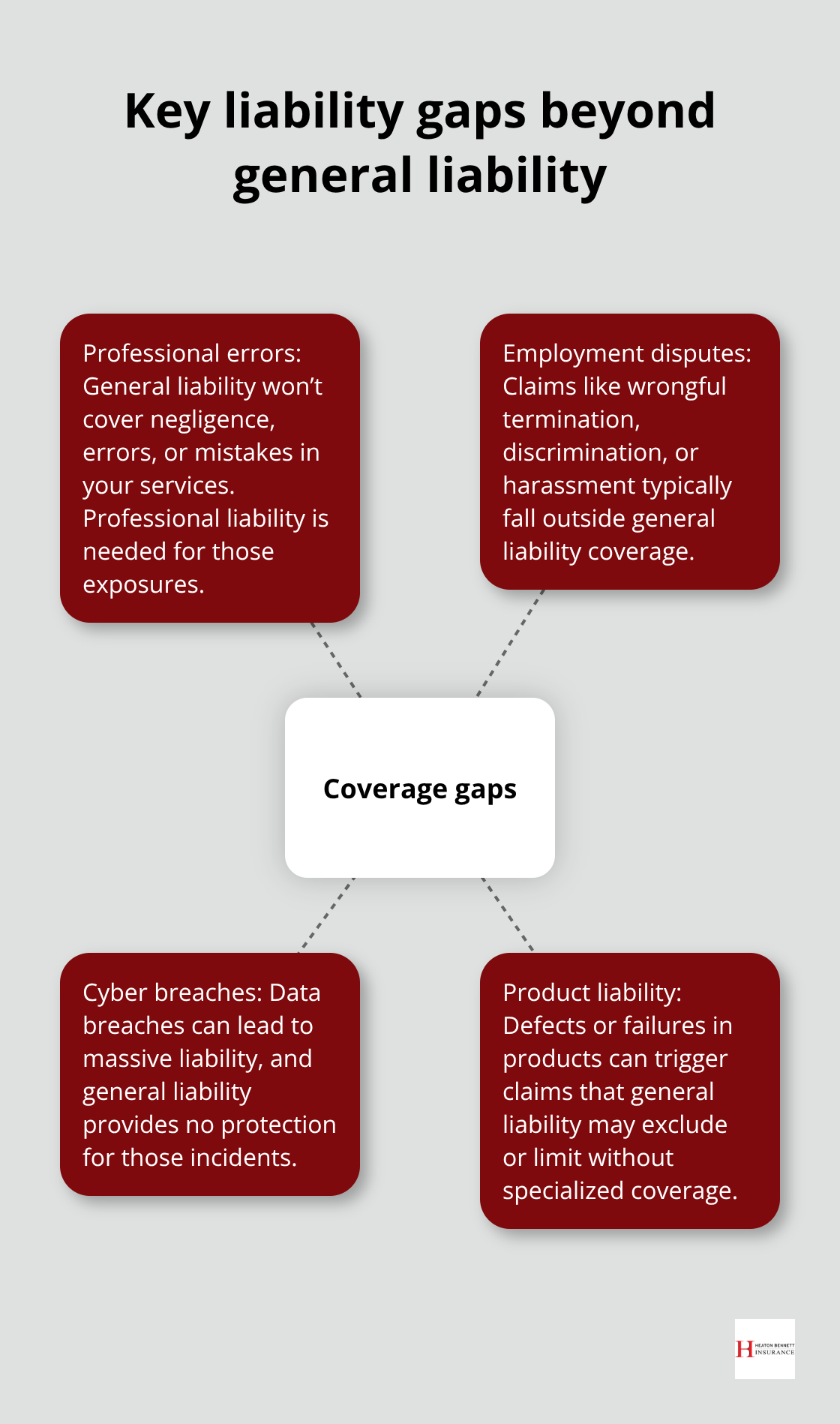
An e-commerce business that suffers a data breach faces massive liability exposure with zero general liability protection.
The Hartford’s research shows that bundling general liability with professional liability and other specialized coverages costs only slightly more but closes critical gaps. Many business owners discover too late that their general liability policy explicitly excludes the exact scenario destroying their finances.
Why Your Policy’s Exclusions Matter More Than Coverage Limits
Your policy’s exclusions matter more than its coverage limits. You need to read what your policy doesn’t cover and then layer additional insurance to fill those voids. Without this multi-layer approach, you run your business with selective protection-covered for some disasters but completely exposed to others.
This reality makes the next step obvious: you can’t rely on a single insurance product to protect everything you’ve built. The businesses that survive major claims are the ones that anticipated their exposure and stacked multiple coverage types together.
How to Stack Coverage Types That Actually Protect Your Business
Start With General Liability as Your Foundation
General liability forms the foundation of your protection strategy, but it represents only the beginning. The Hartford data shows businesses with bundled coverage save money while closing gaps, with discounts reaching 10% when combining general liability with workers’ compensation. General liability covers bodily injury, property damage, and legal defense costs. Most states don’t legally require it for all businesses, but lenders and clients often demand proof before signing contracts.
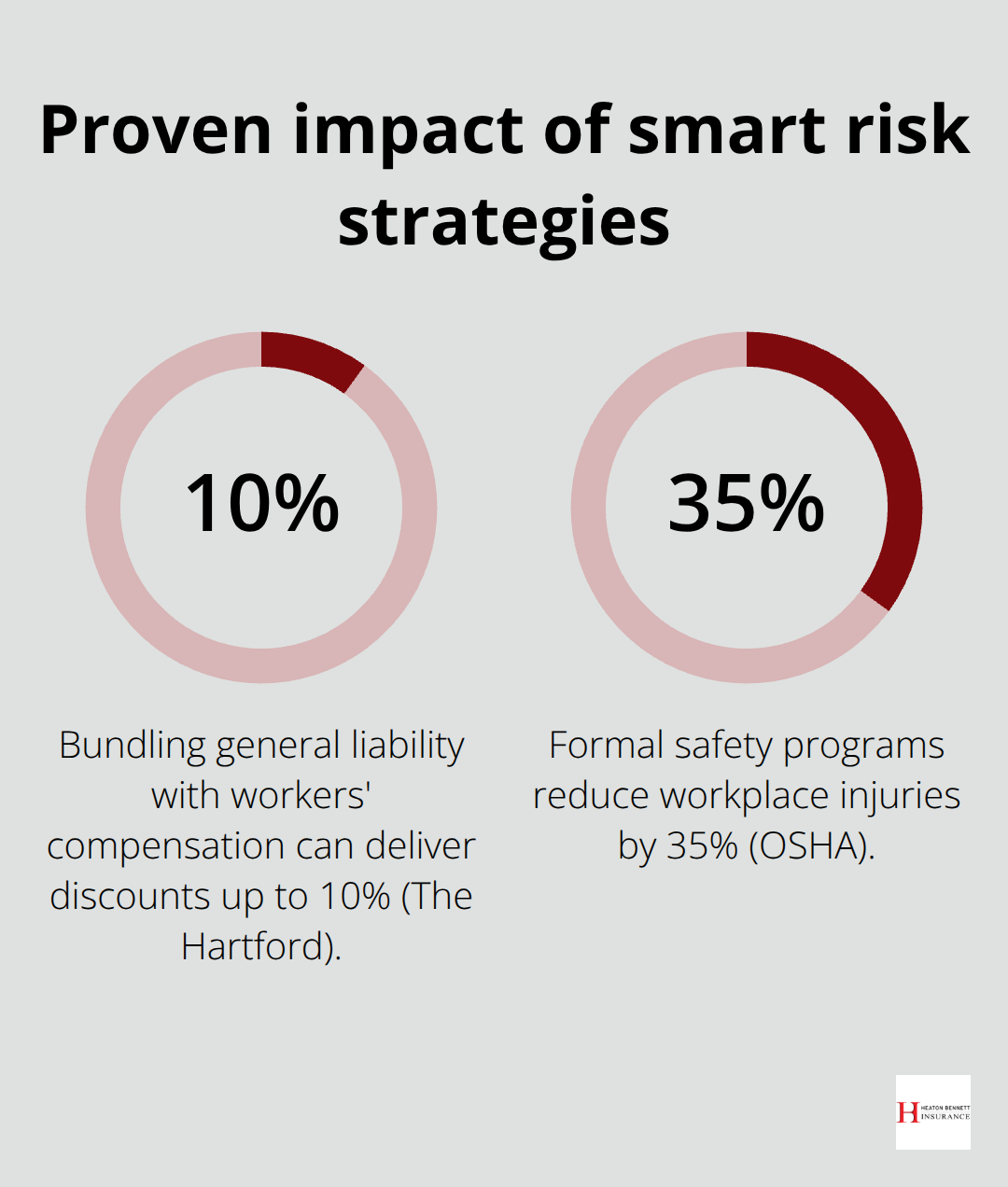
The average premium runs $810 annually according to The Hartford, making it affordable baseline protection.
Your real protection emerges when you layer professional liability on top of this foundation. Service providers, consultants, engineers, and designers face catastrophic exposure without it. One client claiming your advice caused financial loss can trigger claims exceeding $500,000.
Add Professional Liability to Close Critical Gaps
Professional liability insurance covers negligence, errors, and mistakes that general liability explicitly excludes. The Hartford reports average premiums around $744 per year, yet businesses without this coverage face bankruptcy from single claims. If you provide any advice, design work, analysis, or specialized services, professional liability isn’t optional-it’s the difference between surviving a claim and closing your doors.
This coverage type protects service-based businesses that general liability leaves completely exposed. A consultant who gives bad advice, a designer whose work fails to meet specifications, or an engineer whose calculations prove incorrect all face financial ruin without professional liability protection. The cost remains remarkably low relative to the exposure you eliminate.
Build Your Protection Structure With Umbrella Coverage
Umbrella policies sit at the top of your protection structure and handle claims exceeding your underlying coverage limits. If your general liability policy caps at $1 million and a jury awards $2.5 million, your umbrella policy covers the $1.5 million gap. Jury awards don’t respect your coverage limits, which makes this layer essential for businesses with significant assets or revenue.
Umbrella policies typically cost $200 to $500 annually for $1 million in additional coverage, making them remarkably cost-effective compared to raising underlying limits. Rather than viewing umbrella coverage as expensive overkill, recognize it as insurance against catastrophic awards that destroy businesses. The real strategy involves assessing your actual exposure, setting underlying limits that reflect your revenue and assets, then adding umbrella coverage for everything above that threshold.
Understand How Bundling Reduces Your Total Cost
The Hartford’s bundling approach demonstrates that stacking coverage types together costs significantly less than buying each separately. Your industry, business size, and number of employees shape your premium, but the math remains consistent: layered coverage costs less than single-limit protection while providing substantially more security. This efficiency means you can afford comprehensive protection without breaking your budget.
The businesses that survive major claims are the ones that anticipated their exposure and stacked multiple coverage types together. Your next step involves identifying which specific liability risks apply to your operations-and that assessment determines which additional layers you need beyond general liability.
Risk Management and Prevention Best Practices
Insurance sits behind your business as a financial backstop, but prevention stops the expensive claims that trigger insurance payouts in the first place. The difference between a business that survives a liability incident and one that collapses often comes down to what happened before the claim landed. You need safety protocols that actually work, documentation that proves you followed them, and regular assessments that catch exposure before it becomes catastrophic. Most business owners treat prevention as optional-something they’ll address if they have time. That approach guarantees expensive claims.
Establish Safety Protocols That Match Your Actual Risks
The businesses that operate with genuine resilience build prevention into their daily operations, not as an afterthought. This means establishing clear safety procedures for your specific industry, training every employee on those procedures when they start, and then reinforcing that training quarterly. OSHA data shows that businesses implementing formal safety programs reduce workplace injuries by 35 percent compared to those without structured protocols. That reduction directly translates to fewer workers’ compensation claims, lower insurance premiums, and fewer employment-related lawsuits.
Your safety protocols need to address the specific hazards in your business. A consulting firm faces different risks than a construction company, which faces different risks than a retail operation. Document what hazards you identified, what procedures you implemented to address those hazards, and train your team on those exact procedures. When someone gets injured or claims damage, that documentation proves you took reasonable precautions-which matters enormously in court and in settlement negotiations.
Create Documentation That Protects You in Disputes
Documentation becomes your evidence that you operated responsibly. Keep records of every safety training session, every equipment maintenance check, every incident report, and every corrective action you took. When a former employee claims you created an unsafe work environment or a customer claims your negligence caused injury, your documented safety procedures and training records become your defense. Courts and juries view businesses that maintain meticulous records as more credible and responsible than those operating without documentation.
Beyond safety, document your processes for delivering services or products. A design firm should document client approval at every major milestone. A consultant should document the scope of work, the advice given, and the client’s acceptance of recommendations. A product manufacturer should document quality-control testing and results. This documentation prevents disputes about what was promised, what was delivered, and whether the client accepted the work. Professional liability claims often hinge on disagreements about scope or expectations, and your documentation settles those disputes in your favor.
Conduct Annual Risk Assessments to Close Coverage Gaps
Schedule formal risk assessments at least annually, and more frequently if your business changes significantly. This assessment involves walking through your operations, identifying where liability exposure exists, and evaluating whether your current insurance coverage actually addresses that exposure. Many business owners discover during a crisis that their policy excludes the exact scenario unfolding. Annual assessments catch those gaps while you still have time to add coverage.
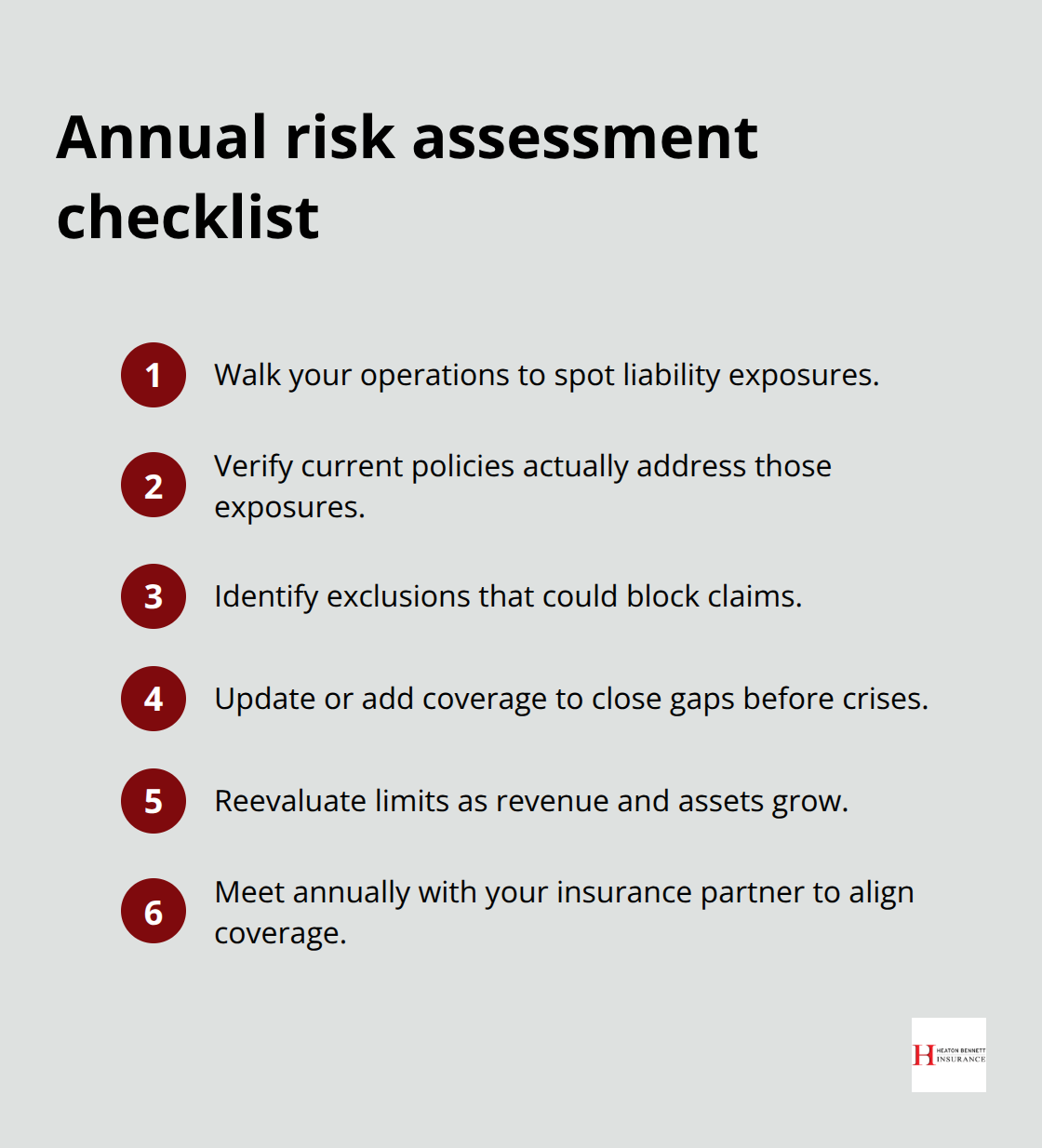
Your assessment should also evaluate whether your coverage limits remain adequate. If your revenue grew 40 percent this year but your liability limits stayed the same, your exposure increased while your protection stayed flat. That’s the opposite of resilience. As your business grows, your coverage must grow with it. Treat this annual assessment as a dedicated meeting with your insurance partner-someone who understands your business and can evaluate whether your protection strategy still fits your actual risk profile.
Final Thoughts
Your business liability protection strategies succeed when multiple layers work together to defend what you’ve built. General liability forms your foundation, professional liability closes critical gaps, and umbrella coverage handles catastrophic awards that exceed your underlying limits. Annual risk assessments keep your protection aligned with your actual exposure as your business evolves.
Taking action means moving beyond hoping nothing goes wrong. Start by identifying which liability risks actually threaten your specific operations-a consulting firm faces different exposure than a manufacturing business, which faces different exposure than a service provider. Review your current policies and identify what they exclude, since most business owners discover gaps only after a claim lands.
We at Heaton Bennett Insurance understand that building comprehensive protection requires understanding your specific exposure and selecting coverage that actually addresses it. Our team works with businesses across Austin to design customized coverage that fits your operations and your budget, and we have access to multiple carriers so we can find the right combination of coverage at competitive rates. Contact Heaton Bennett Insurance to discuss your business liability protection strategy and get started with a Security Snapshot that tailors your protection to your actual risks.
The information provided in this blog is for general informational purposes only and does not constitute legal, financial, or insurance advice. Coverage options, terms, and availability may vary. Please consult with a licensed professional for advice specific to your situation.

