

Why Your Business Needs Group Benefits in 2025
In 2025, group benefits are more than just a perk – they’re a necessity for businesses aiming to thrive in a competitive market.
At Heaton Bennett Insurance, we’ve seen firsthand how comprehensive benefit packages can transform companies, boosting employee satisfaction and productivity.
This blog post will explore why your business needs group benefits and how they can positively impact your bottom line.
Why Group Benefits Are Essential for Business Success
The Competitive Edge in Talent Acquisition
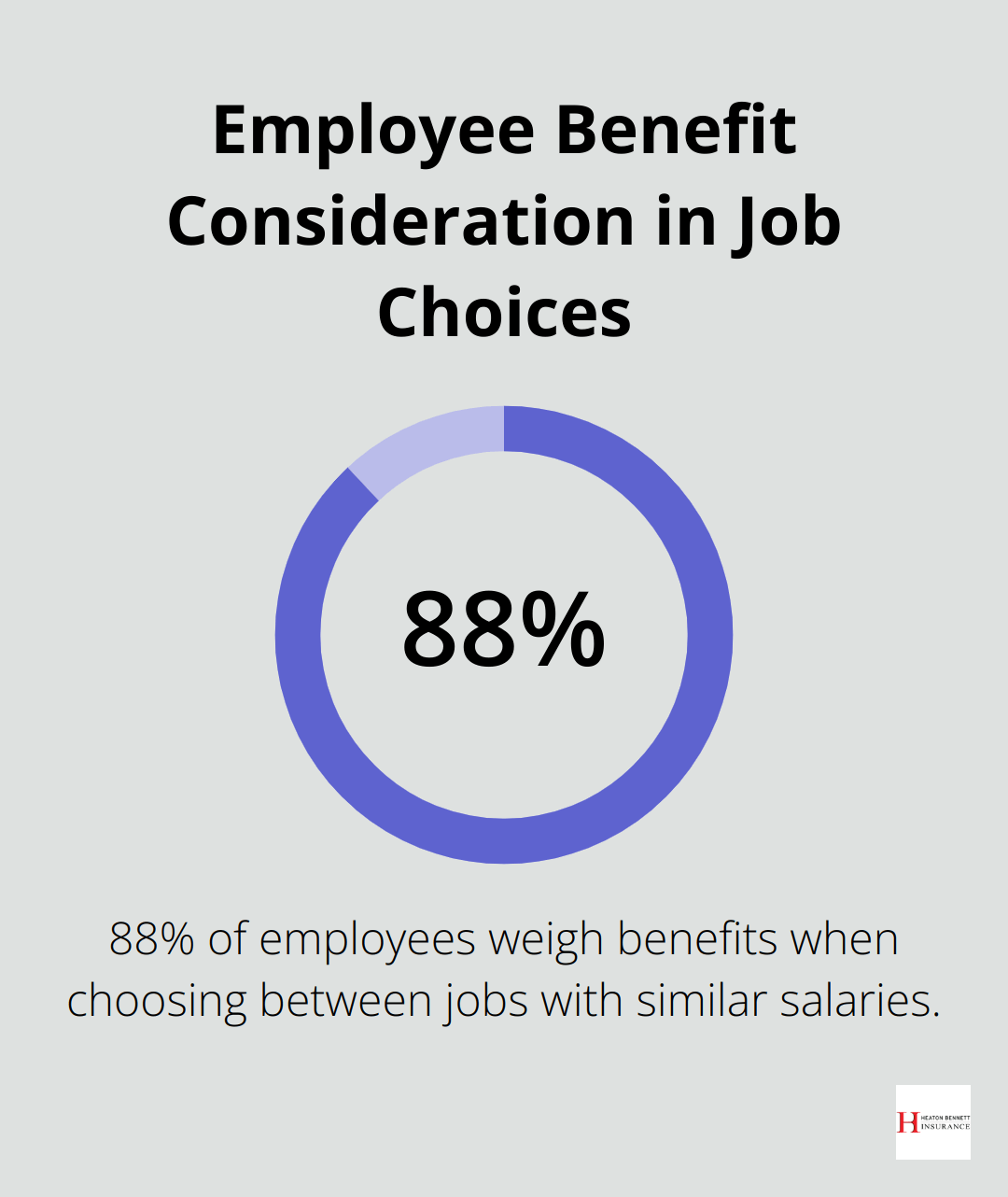
In the fierce job market of 2025, group benefits stand as a decisive factor for businesses striving to attract top talent. A 2024 survey by the Society for Human Resource Management (SHRM) reveals that 88% of employees weigh benefits when choosing between jobs with similar salaries. This statistic highlights the pivotal role comprehensive benefit packages play in a company’s ability to secure the best candidates.
A Glassdoor study found that 63% of job seekers consider benefits and perks before accepting a job offer. Companies that offer competitive group benefits significantly expand their talent pool and position themselves as employers of choice in their industry.
Retention: The Key to Long-Term Success
The impact of group benefits extends beyond recruitment. They serve as a powerful tool for employee retention, which proves particularly important given the high cost of employee turnover. Gallup reports that replacing an employee can cost between one-half to two times their annual salary. Comprehensive benefits foster a sense of security and value among the workforce, leading to increased loyalty and reduced turnover rates.
Employee Satisfaction and Productivity Boost
Group benefits directly contribute to employee satisfaction and overall well-being. A MetLife study shows that 83% of employees who feel cared for by their employer report feeling loyal to their company. This emotional connection translates into tangible business outcomes, including increased productivity and engagement.
Benefits that support employee health and wellness can lead to reduced absenteeism and healthcare costs. The American Journal of Health Promotion reports that companies with comprehensive wellness programs have seen a 25% decrease in sick leave absenteeism.
Cultivating a Positive Company Culture
The benefits a company offers speak volumes about its values and culture. Prioritizing employee well-being through comprehensive group benefits creates a positive work environment that attracts like-minded individuals who share these values. This alignment between company culture and employee expectations often results in higher job satisfaction and improved team cohesion.
Businesses offering tailored group benefits packages often experience a significant boost in their reputation as employers of choice. This enhanced reputation not only aids in recruitment but also contributes to overall brand perception, potentially leading to increased customer loyalty and business growth.
As we move forward, let’s explore the specific types of group benefits that every business should consider to stay competitive in 2025 and beyond.
Essential Group Benefits for Modern Businesses in 2025
Health Insurance: The Foundation of Employee Well-being
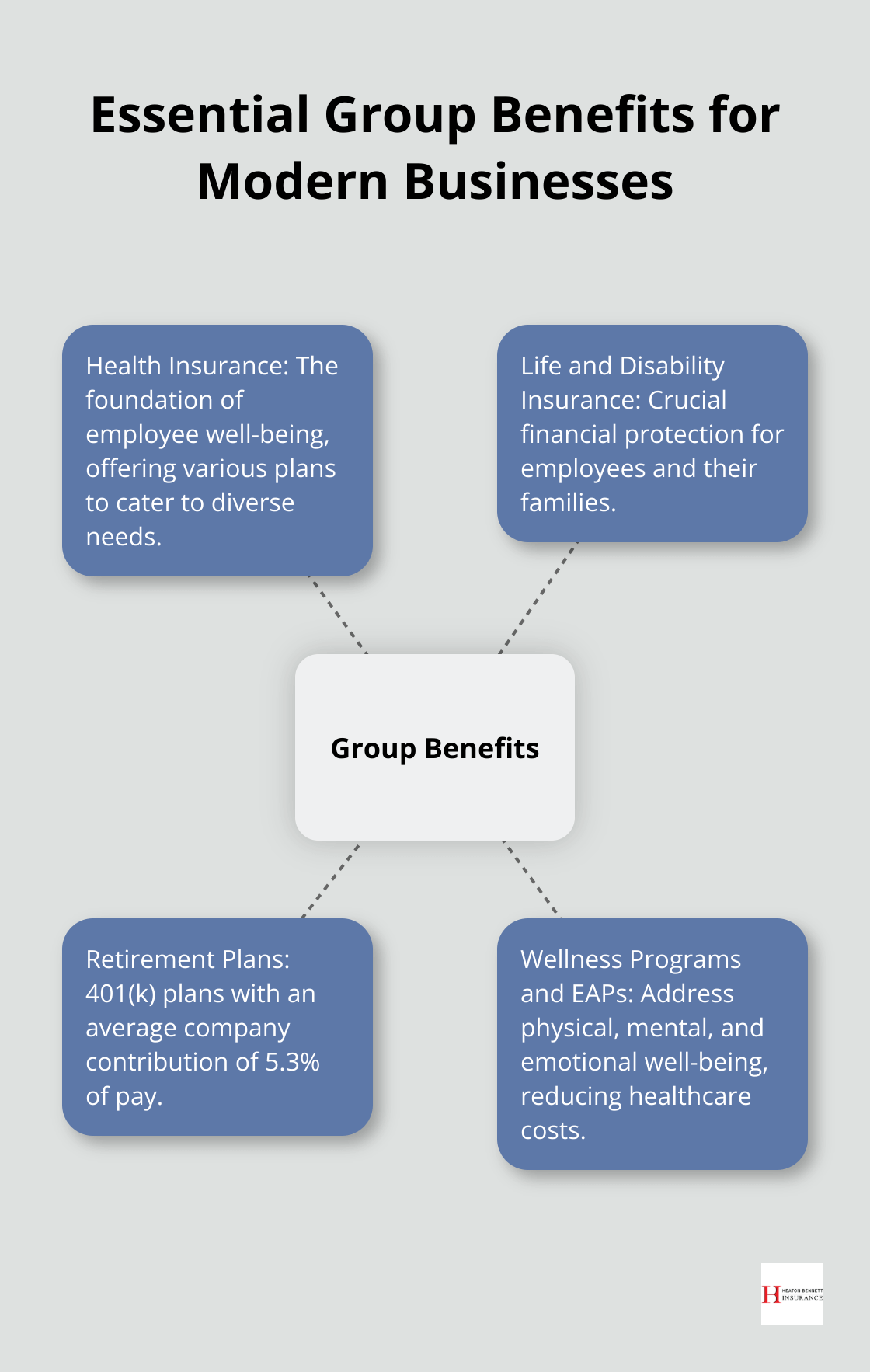
Health insurance remains the cornerstone of any robust benefits package. In 2025, employers offer a variety of plans to cater to diverse employee needs. Preferred Provider Organizations (PPOs) continue to be popular due to their flexibility, while Health Maintenance Organizations (HMOs) appeal to those seeking lower out-of-pocket costs. Health Savings Accounts (HSAs) paired with high-deductible health plans gain traction, allowing employees to save for medical expenses tax-free.
The Kaiser Family Foundation reports that 83% of covered workers have a general annual deductible for single coverage, with an average deductible of $1,763. This statistic highlights the importance of offering plans that balance coverage and cost-effectiveness.
Life and Disability Insurance: Protecting Employees’ Financial Future
Life and disability insurance provide crucial financial protection for employees and their families. Short-term and long-term disability insurance ensure income continuation during periods of inability to work due to illness or injury. The Social Security Administration reports that one in four 20-year-olds will become disabled before reaching retirement age, underscoring the importance of these benefits.
Group life insurance, often offered at low or no cost to employees, provides an additional layer of financial security. Many employers now offer supplemental life insurance options, allowing employees to increase their coverage at group rates.
Retirement Plans: Securing Long-term Financial Health
Retirement benefits play a pivotal role in attracting and retaining employees, especially as financial wellness becomes increasingly important. 401(k) plans remain the most common type of retirement benefit, with many employers offering matching contributions. The Plan Sponsor Council of America reports that the average company contribution to 401(k) plans is 5.3% of pay.
Some businesses reintroduce pension plans, albeit in modified forms such as cash balance plans (which combine elements of traditional pensions with 401(k)-style individual accounts). These hybrid options can particularly attract older workers or those seeking guaranteed income in retirement.
Wellness Programs and Employee Assistance Programs (EAPs)
Comprehensive wellness programs and EAPs have become essential components of modern benefits packages. These programs address physical, mental, and emotional well-being, contributing to reduced healthcare costs and improved productivity. A study by the American Journal of Health Promotion found that companies with comprehensive wellness programs experienced a 25% decrease in sick leave absenteeism and a 3.27:1 return on investment.
EAPs provide confidential counseling and support services for personal and work-related issues, helping employees navigate challenges that might otherwise impact their job performance. The International Employee Assistance Professionals Association reports that for every dollar invested in an EAP, employers can expect a return of $3 to $10.
As we transition to the next section, we’ll explore how these group benefits directly impact a company’s bottom line, from tax advantages to increased productivity and cost savings through group rates.
How Group Benefits Boost Your Bottom Line
Tax Advantages: A Financial Win for Employers and Employees
Group benefits offer significant tax advantages for businesses. The Internal Revenue Service allows employers to deduct 100% of health insurance premiums paid for employees. This results in substantial tax savings, particularly for small to medium-sized businesses. Employees also benefit by receiving these benefits tax-free, which increases their total compensation without raising their tax burden. This arrangement enables companies to offer more attractive compensation packages without incurring additional payroll taxes.
Productivity Gains: The ROI of Employee Well-being
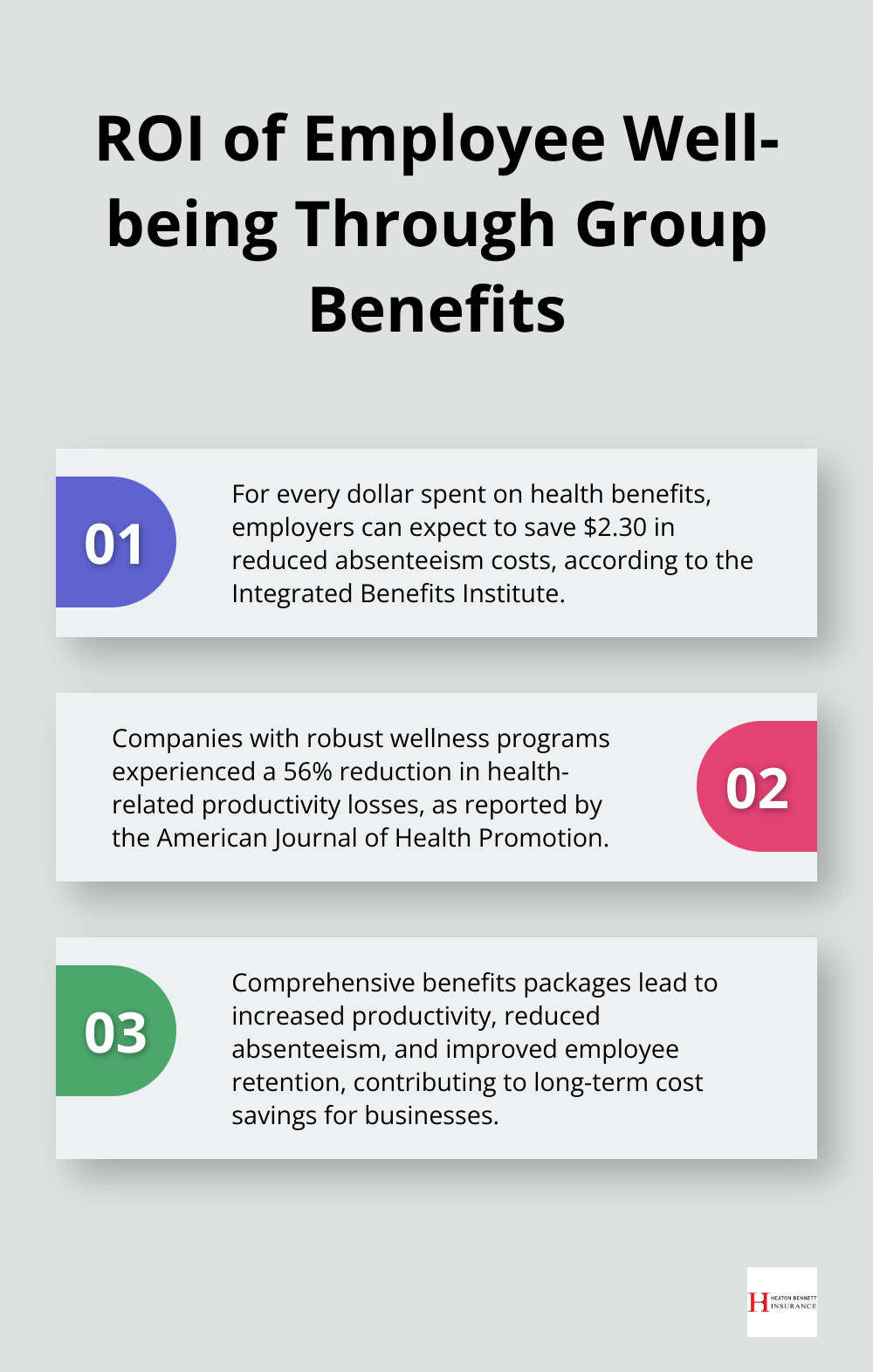
Companies that invest in employee health and well-being through comprehensive benefits packages see increased productivity and reduced absenteeism. A study by the American Journal of Health Promotion found that companies with robust wellness programs experienced a 56% reduction in health-related productivity losses. The Integrated Benefits Institute reports that for every dollar spent on health benefits, employers can expect to save $2.30 in reduced absenteeism costs. These figures demonstrate that the return on investment for group benefits extends far beyond direct healthcare savings.
Leveraging Group Rates: Cost-Effective Coverage
Group benefits allow businesses to access better rates and more comprehensive coverage than employees could obtain individually. The National Association of Insurance Commissioners reports that group health insurance plans typically cost 10-20% less than comparable individual plans. This cost advantage extends to other types of coverage as well. For instance, group life insurance rates can be up to 30% lower than individual policies (according to the Life Insurance Marketing and Research Association).
Enhanced Recruitment and Retention
Offering comprehensive group benefits packages significantly improves a company’s ability to attract and retain top talent. In today’s competitive job market, potential employees often consider benefits packages as important as salary when evaluating job offers. A robust benefits package can set a company apart from its competitors and help reduce turnover rates, which in turn lowers recruitment and training costs.
Long-term Cost Management
While implementing group benefits requires an initial investment, it often leads to long-term cost savings for businesses. Healthier employees (who have access to preventive care and wellness programs) tend to have fewer major health issues, which can help control healthcare costs over time. Additionally, group benefits can help reduce workers’ compensation claims and disability leave, further contributing to a company’s financial health.
Final Thoughts
Group benefits are essential for businesses in 2025 and beyond. They attract top talent, boost retention rates, increase productivity, and improve the bottom line. Companies that invest in employee well-being through health insurance, retirement plans, and wellness programs create a positive work environment that fosters loyalty and engagement.
The tax advantages and cost savings associated with group benefits make them a financially sound decision for businesses of all sizes. Companies can offer high-quality benefits at a fraction of the cost of individual plans (while enjoying significant tax deductions). Leveraging group rates and bargaining power allows businesses to provide comprehensive coverage efficiently.
Heaton Bennett Insurance helps businesses create tailored benefits packages that meet their unique needs and goals. We offer a wide range of options for group health insurance, life insurance, and other essential benefits. Partner with Heaton Bennett Insurance to develop a group benefits package that will set your company apart and drive long-term success.

