

Types of Auto Insurance Coverage Explained
At Heaton Bennett Insurance, we understand that navigating the world of auto insurance can be overwhelming.
With various types of auto insurance coverage available, it’s essential to know what each option offers and how it protects you on the road.
This guide will break down the different coverage types, helping you make informed decisions about your auto insurance policy.
What Is Liability Coverage in Auto Insurance?
Liability coverage forms the foundation of any auto insurance policy. It’s not just a legal requirement in most states; it serves as your financial shield against the costs of accidents you might cause.
Bodily Injury Liability: Protecting Others
Bodily injury liability covers medical expenses, lost wages, and legal fees if you injure someone in an auto accident. The Insurance Information Institute reports that the average bodily injury claim in 2022 was $20,235. This coverage is essential because medical costs can quickly escalate, especially in severe accidents.
Property Damage Liability: Covering What You Break
If you damage someone else’s property with your vehicle, property damage liability takes effect. This could be another car, a fence, or even a building. In 2022, the average property damage claim was $4,711 (according to the Insurance Information Institute). Without this coverage, you’d be personally responsible for these costs.
Beyond Minimum Requirements
While state minimums exist, they often fall short. For example, California only requires $15,000 per person for bodily injury liability, which wouldn’t cover even an average claim. Many insurance experts recommend coverage of at least $100,000 per person and $300,000 per accident for bodily injury, and $100,000 for property damage.

Tailoring Coverage to Your Situation
Liability coverage protects your assets. If you cause an accident and damages exceed your coverage limits, you could face a lawsuit for the difference. It’s important to customize your coverage to your specific situation, considering factors like your net worth and potential risks.
The Importance of Adequate Coverage
Inadequate liability coverage can leave you exposed to significant financial risk. Try to assess your personal assets and potential liability to determine the right amount of coverage for your situation. (This may involve consulting with a financial advisor or insurance professional.)
As we move forward, let’s explore other types of auto insurance coverage that complement liability protection and provide a more comprehensive shield for your vehicle and finances.
What Are Collision and Comprehensive Coverage?
Collision Coverage: Protection for Your Vehicle in Accidents
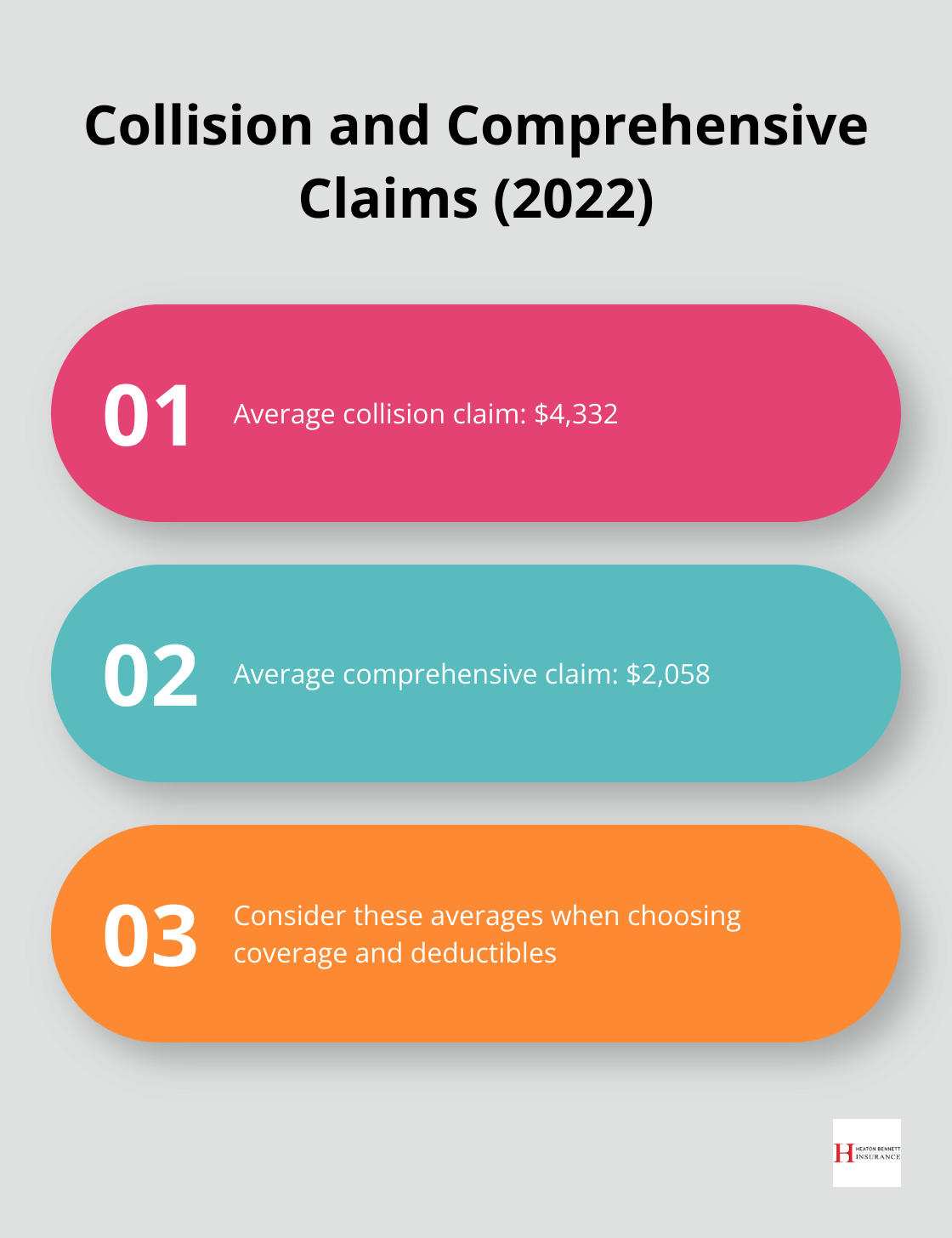
Collision coverage pays for damage to your car when you’re in an accident with another vehicle or object, regardless of fault. This includes situations like hitting a tree or rolling your car. The National Association of Insurance Commissioners reports that the average collision claim in 2022 was $4,332. This coverage proves particularly valuable for newer or more expensive vehicles where repair costs can be substantial.
Comprehensive Coverage: Guarding Against the Unexpected
Comprehensive coverage protects your car from non-collision related incidents. This includes theft, vandalism, fire, natural disasters, and even damage from animals. The Insurance Information Institute states that the average comprehensive claim in 2022 was $2,058. While less common than collision claims, these events can still result in significant financial loss without proper coverage.
Factors to Consider When Choosing Coverage
When deciding on collision and comprehensive coverage, consider your vehicle’s value and your financial situation. If your car is worth less than $4,000, the cost of these coverages might outweigh the potential payout. However, if you have a loan or lease on your vehicle, your lender will likely require both coverages.
Your deductible also plays a key role. A higher deductible lowers your premium but increases your out-of-pocket costs if you file a claim. For example, if you choose a $1,000 deductible instead of $500, you might save 10-20% on your premium (but you’ll pay more if you need to make a claim).
Evaluating Your Specific Situation
We recommend evaluating your specific situation. If you live in an area prone to natural disasters or have a high-value vehicle, comprehensive coverage becomes more important. Similarly, if you frequently drive in heavy traffic or areas with higher accident rates, collision coverage is a wise investment.
While these coverages aren’t legally required like liability insurance, they provide important financial protection. Without them, you’re responsible for all repair or replacement costs, which can be substantial. As your car ages, you might consider adjusting or dropping these coverages, but always weigh the potential savings against the risk you’re assuming.
Now that we’ve covered the basics of collision and comprehensive coverage, let’s explore additional auto insurance options that can further enhance your protection on the road.
What Additional Auto Insurance Options Should You Consider?
Personal Injury Protection and Medical Payments
Personal Injury Protection (PIP) and Medical Payments coverage offer financial protection for medical expenses for you and your passengers, regardless of fault in an accident. PIP also covers lost wages and essential services you might need during recovery.
The Insurance Information Institute reports that the average PIP claim in 2022 was $5,630. This coverage proves particularly valuable in no-fault states where it’s often required. Even in states where it’s optional, PIP can be a wise choice if you don’t have comprehensive health insurance or if you worry about potential lost wages after an accident.
Uninsured and Underinsured Motorist Coverage
Despite laws that require auto insurance, about 12.6% of motorists drive without insurance (according to the Insurance Research Council). Uninsured motorist coverage protects you if you’re in an accident with a driver who lacks insurance. Underinsured motorist coverage activates when the at-fault driver’s insurance doesn’t suffice to cover your expenses.
The average uninsured motorist claim for bodily injury reached $28,939 in 2022. This coverage becomes especially important in states with high rates of uninsured drivers. For instance, in Mississippi, nearly 30% of drivers operate without insurance.

Rental Car Coverage
Rental car coverage reimburses you for the cost of a rental car while your vehicle undergoes repairs after a covered accident. In 2022, the average rental reimbursement claim amounted to $1,533. This coverage can be particularly useful if you depend heavily on your vehicle for daily activities or work.
Roadside Assistance
Roadside assistance provides help if your car breaks down, covering services like towing, battery jumps, and locksmith services. While AAA reports the average cost of a tow at around $109, having this coverage can save you from unexpected expenses (and provide peace of mind during road trips or daily commutes).
Customizing Your Coverage
These additional coverages should be carefully considered based on your individual needs and circumstances. The right combination of coverages will ensure you’re well-protected on the road. An independent insurance agency can help you assess your risks and choose the most appropriate coverage options for your situation.
Final Thoughts
The various types of auto insurance coverage can overwhelm drivers. Your unique situation determines the right mix of coverages for you. Your vehicle’s value, driving habits, and financial circumstances all influence the ideal protection strategy.
An independent insurance agency like Heaton Bennett Insurance can help you navigate these choices. We compare options from multiple carriers to find the best coverage at competitive rates. Our team’s expertise in auto insurance coverage guides you through the decision-making process.
Life changes can impact your insurance needs. We recommend an annual review of your policy to ensure it aligns with your current circumstances. Our “Security Snapshot” process (a unique approach we use) helps assess your insurance needs comprehensively. This method creates a tailored insurance solution that provides peace of mind without tying you to a single carrier.

