
Franchise Restaurant Insurance: Consistency, Compliance, and Coverage
Running a franchise restaurant means juggling multiple locations, each with its own risks and regulatory demands. Franchise restaurant insurance isn’t optional-it’s the backbone of protecting your business from liability, property damage, and compliance violations.
At Heaton Bennett Insurance, we’ve seen firsthand how the right coverage strategy keeps franchise operations running smoothly while shielding owners from costly gaps. This guide walks you through the insurance requirements, coverage types, and loss prevention tactics that matter most for franchise success.
What Your Franchise Agreement Actually Requires
Franchise Agreement Minimums Set Your Coverage Floor
Franchise agreements spell out specific insurance minimums, and these aren’t suggestions. Your franchisor likely demands General Liability coverage starting at $1 million per occurrence, Commercial Property insurance covering buildings and equipment, and Workers’ Compensation at statutory limits for each state where you operate. The agreement typically requires you to name the franchisor as an Additional Insured on your General Liability policy, which protects them from vicarious liability if a customer gets injured at your location. This isn’t a paperwork formality-it’s a contractual obligation that, if violated, can trigger breaches and franchise termination.
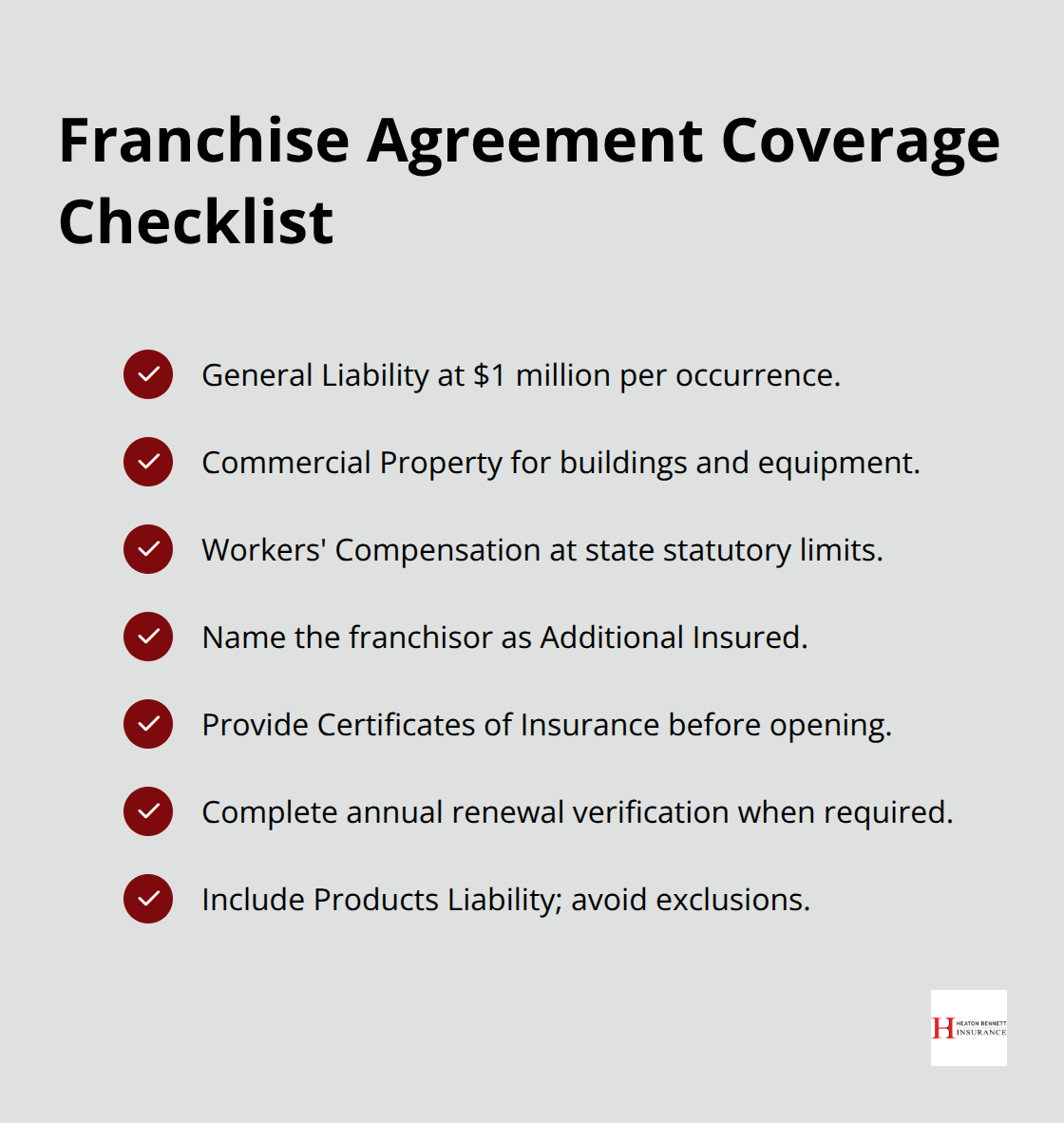
Many franchise agreements also require proof of coverage through Certificates of Insurance before you open, and some demand annual renewal verification. The problem we see constantly is that franchisees purchase cheap policies that technically meet minimums but exclude critical coverages like Products Liability, leaving dangerous gaps when a customer gets sick from food or a product defect causes harm. Your franchisor agreement is the first document you should pull out when shopping for coverage, because it defines your floor, not your ceiling.
State and Federal Regulations Add Mandatory Layers
Beyond the franchise agreement, state and federal regulations add another layer of requirements. Most states require Workers’ Compensation if you have employees, and many states impose strict Liquor Liability requirements if you serve alcohol-some jurisdictions hold you personally liable under dram shop laws if an intoxicated customer injures someone else. Food service operations face additional scrutiny from health departments and the FDA, meaning liability from foodborne illness outbreaks or contamination can reach six figures in medical expenses, recall costs, and legal defense.
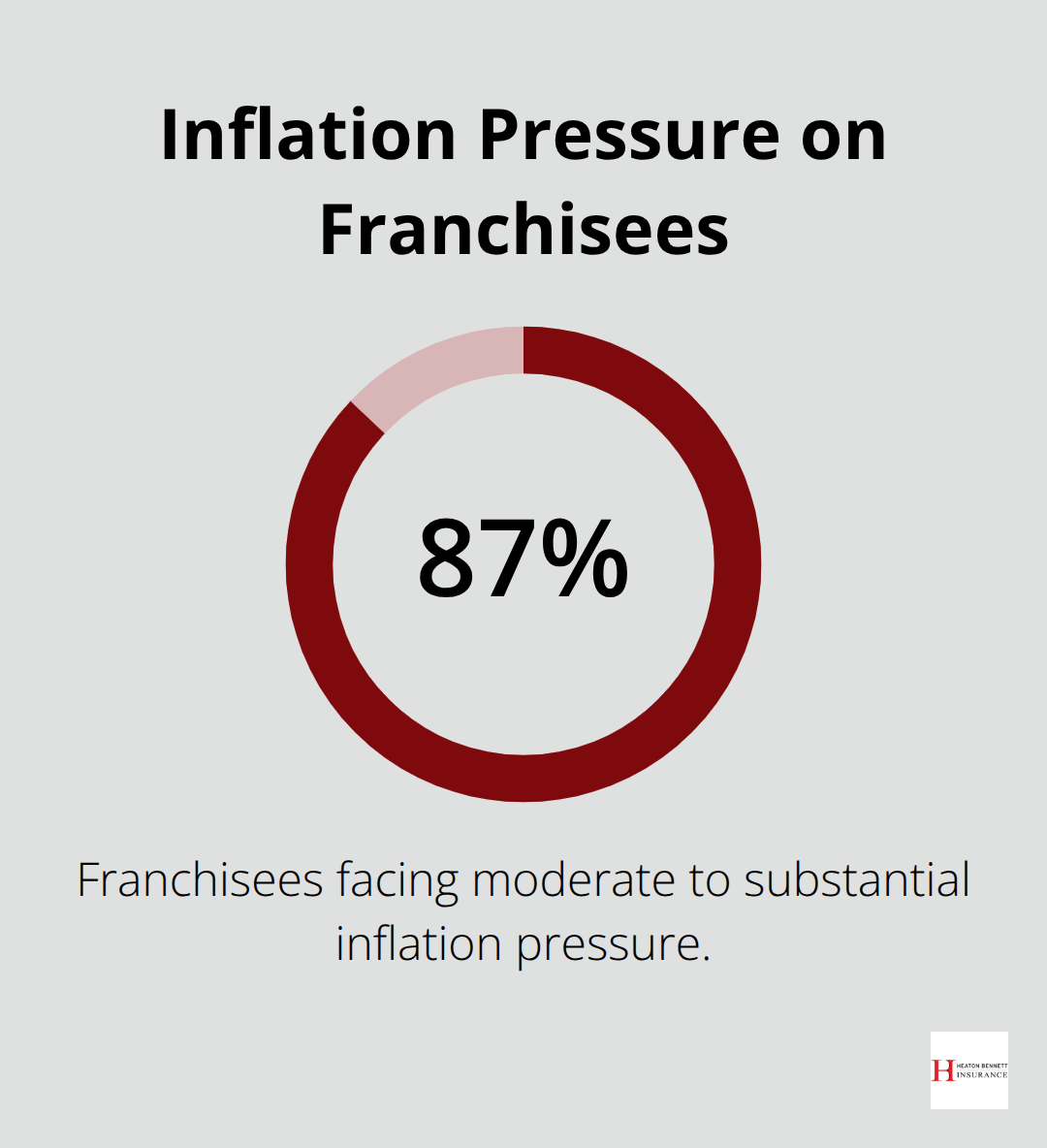
The International Franchise Association reports that 87 percent of franchisees face moderate to substantial inflation pressure, which means your property values and inventory climb, yet many owners renew old policies without adjusting limits upward. Federal tax requirements also apply if you’re structured as an S-Corp or LLC, and some states require specific coverage endorsements for delivery operations or outdoor seating.
Why Cheap Policies Create Expensive Problems
A policy that meets your franchise agreement’s minimum requirements doesn’t automatically protect your operation. Insurers often exclude Products Liability to reduce premiums, which violates franchisor requirements and exposes your brand to liability when a customer suffers harm from food or a defective product. These gaps don’t surface until a claim arrives, at which point denial letters and legal bills pile up faster than you can respond.
Your franchisor agreement is your starting point, but state regulations and operational realities often demand more coverage than the minimums state. When you work with an advisor who understands franchise restaurant operations, they catch these gaps before claims expose them. The next section covers the specific coverage types that protect your locations and your brand across multiple states.
Essential Coverage for Multi-Location Operations
General Liability Protects Against Customer Injury Claims
General Liability covers bodily injury and property damage claims that arise at any location, and this is where franchisees commonly underestimate their exposure. A customer slip-and-fall at one location can result in a $50,000 to $500,000+ settlement depending on injury severity and your state’s liability standards. Products Liability must be included in your General Liability policy, not excluded to save money, because food poisoning claims or product defect injuries can bankrupt a franchisee who thought their cheap policy covered everything. Your franchisor agreement likely mandates $1 million per occurrence, but try $2 million if you operate in high-density urban areas or serve alcohol, since jury awards trend upward in those markets.
Commercial Property and Blanket Coverage Protect Your Assets
Commercial Property insurance protects buildings, equipment, inventory, and furnishings against fire, theft, and equipment breakdown, and this coverage should reflect actual replacement cost, not the depreciated value insurers sometimes default to. Many franchise restaurants operate in leased spaces, so your property policy must cover tenant improvements and built-in equipment you’ve added-otherwise a kitchen fire destroys your custom ventilation system with no recovery. Blanket property coverage works better than itemized coverage for multi-location operations because inflation automatically adjusts your limits upward without annual renegotiation, protecting you when supply chain costs push equipment prices higher.
Workers’ Compensation and Employment Practices Liability Address Personnel Risks
Workers’ Compensation protects employees injured on the job and is mandatory in nearly every state, yet franchisees often purchase minimum coverage without accounting for payroll growth or hazardous roles like kitchen staff who handle hot equipment and sharp tools. Medical costs for a severe burn injury or cut requiring surgery can exceed $100,000, and wage replacement obligations compound the financial impact. Employment Practices Liability defends against wrongful termination, discrimination, harassment, and wage disputes, and restaurant operations face particular exposure because high turnover creates documentation gaps that invite claims.
Commercial Auto and Liquor Liability Complete Your Coverage Foundation
Commercial Auto insurance covers company vehicles used for deliveries, catering runs, or manager travel, and employee-owned vehicles used for business also need coverage under a hired and non-owned auto endorsement-otherwise a delivery driver in a fender-bender leaves your franchise exposed. Liquor Liability is non-negotiable if you serve alcohol, because dram shop laws in most states hold you personally liable if an intoxicated customer injures a third party, meaning a drunk patron who leaves your restaurant and causes a car accident can trigger a six-figure claim against your business. This coverage defends you in court and covers damages, making it separate from General Liability and worth the premium investment, typically $300 to $800 annually depending on sales volume and location risk profile.
These core coverages form the foundation of your protection, but multi-location operations introduce coordination challenges that single-unit franchisees never face. The next section shows how to implement loss prevention strategies that reduce claims across all your locations while keeping compliance consistent from one site to the next.
How to Lock Down Loss Prevention Across Multiple Locations
Written SOPs Create Your First Line of Defense
Standardized operating procedures across your franchise locations reduce insurance claims and protect your brand reputation. The National Restaurant Association reports that employee injuries-slips, burns, and repetitive strain-account for the largest portion of workers’ compensation claims in food service, yet most franchisees allow individual location managers to interpret safety standards differently. You need written, location-specific SOPs that address slip-and-fall hazards, kitchen safety protocols, food handling procedures, and cash management, then require every manager to sign off on them quarterly. These documents become evidence in your defense if a claim surfaces, showing insurers that you took reasonable precautions. When a customer slips on a wet floor and sues, your documented cleaning schedule and slip-prevention measures can mean the difference between a denied claim and a covered defense. Assign one person at each location responsibility for safety compliance and give them authority to shut down unsafe practices immediately-this person reports directly to your area supervisor, not the general manager, removing the conflict of interest that happens when managers minimize safety incidents to protect their bonus.
Employee Training Transforms Workers Into Loss Prevention Assets
Food safety certification protects your operation from foodborne illness liability. Require new hires to complete ServSafe or equivalent programs within their first 30 days, and document completion in a central database accessible to all locations-this proves due diligence to insurers and regulators. Train delivery drivers on vehicle safety, defensive driving techniques, and liability awareness before they operate company vehicles, because commercial auto claims spike when drivers lack proper instruction. Conduct quarterly safety refreshers focused on the three highest-risk incidents at each location, whether that’s burns in a high-volume kitchen or slips in a walk-in cooler, and tie safety performance to manager bonuses so leadership owns the results. For liquor service, require TIPS certification or equivalent training for all bartenders and servers, and keep renewal records current because regulators and insurers expect this documentation. What you can control is loss prevention through training programs and safety protocols that reduce injury claims and lower your premiums over time.
Automated Compliance Tracking Prevents Coverage Gaps
Implement a system that monitors when each franchisee’s policy renews, verifies the franchisor appears as Additional Insured, and alerts you 60 days before expiration so you have time to address gaps. This system should track Certificates of Insurance for vendors, landlords, and delivery partners, ensuring they maintain required coverage limits-a vendor injury at your location with inadequate insurance creates exposure your general liability policy won’t cover. Conduct annual loss audits at each location, reviewing incident reports, workers’ compensation claims, and near-miss documentation to identify patterns that predict future claims.
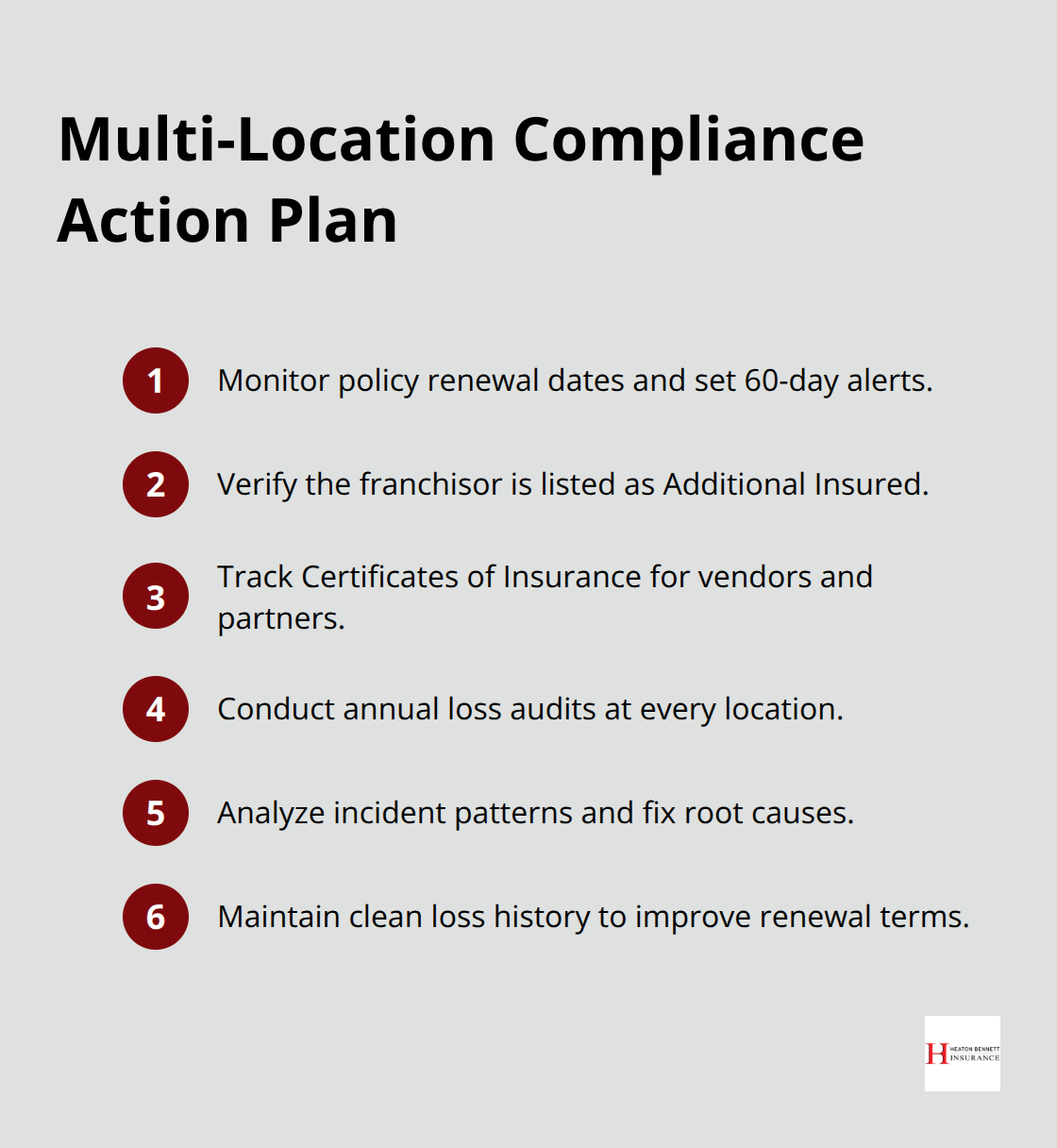
If you see three slip-and-fall incidents at one location in six months, that’s a signal to inspect flooring, review cleaning schedules, and potentially enhance your property maintenance. Insurers explicitly ask for loss history during renewals, and a clean record with documented prevention efforts translates directly to lower premiums and better coverage terms at renewal.
Final Thoughts
Franchise restaurant insurance succeeds when it aligns with your franchisor’s requirements, meets state regulations, and actually protects your operations across every location. The coverage types we’ve outlined-General Liability with Products coverage included, Commercial Property with blanket limits, Workers’ Compensation tailored to your payroll, and Liquor Liability if you serve alcohol-form the foundation that keeps claims from becoming catastrophic. Your written SOPs, employee training programs, and automated compliance tracking reduce incidents and demonstrate to insurers that you take risk seriously, which translates to better rates and terms at renewal.
The complexity of franchise restaurant insurance stems from coordinating coverage across multiple locations while maintaining consistency with franchisor mandates and state-specific regulations. A policy that works perfectly for one location may leave gaps at another due to local zoning, weather exposure, or delivery patterns, which is why working with an experienced insurance advisor makes the difference between adequate coverage and comprehensive protection. An advisor who understands franchise operations catches the exclusions that cheap policies hide, identifies gaps before claims expose them, and ensures your franchisor appears as Additional Insured on every policy so cancellations trigger immediate notification.
At Heaton Bennett Insurance, we build tailored coverage that fits your specific operation rather than forcing you into off-the-shelf solutions. Our team uses a Security Snapshot process to understand your locations, your risks, and your franchisor requirements, then access multiple carriers to find the right combination of coverage and cost. Contact Heaton Bennett Insurance to review your current coverage and identify where gaps might exist.
The information provided in this blog is for general informational purposes only and does not constitute legal, financial, or insurance advice. Coverage options, terms, and availability may vary. Please consult with a licensed professional for advice specific to your situation.

