

Comprehensive Liability Protection: Beyond the Basics
Most business owners think general liability insurance is enough. It’s not.
We at Heaton Bennett Insurance see companies every day that discover gaps in their coverage only after a claim happens. Comprehensive liability protection requires looking beyond the basics and understanding what your business actually faces.
What General Liability Insurance Actually Covers
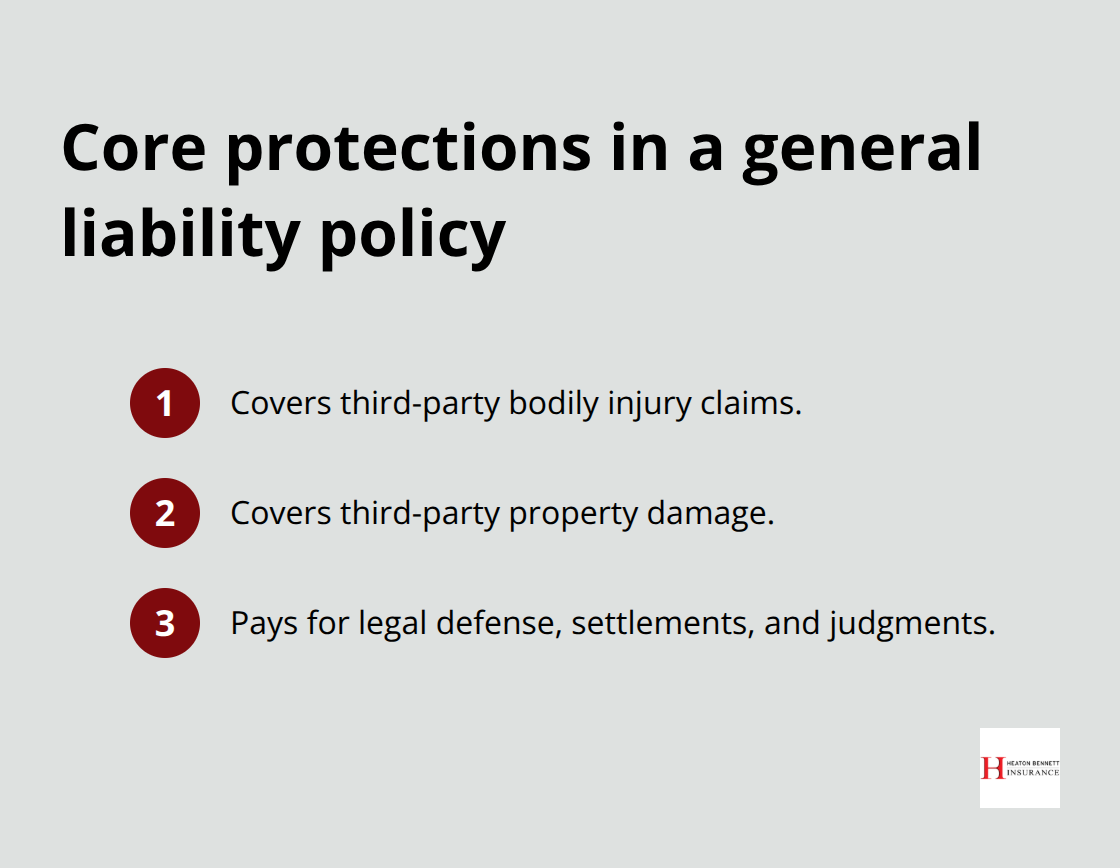
General liability insurance protects your business from claims that someone got hurt on your property or that you damaged someone else’s belongings. The National Association of Insurance Commissioners reports that general liability claims cost businesses an average of $15,000 to $300,000 depending on severity, which is why understanding your actual coverage matters. This policy pays for medical bills if a customer slips in your office, covers legal defense costs if you’re sued, and pays settlements or judgments if you lose. Most business owners misunderstand what their policy actually protects them against, thinking it’s broader than it really is.
Bodily injuries on your property
Your general liability policy covers medical expenses and lost wages when someone gets injured because of your business operations or on your premises. If a client trips over equipment in your warehouse and breaks their arm, your policy covers their hospital bills, follow-up care, and potentially their lost income during recovery. The policy also covers your legal defense costs, which can reach $5,000 to $15,000 just for initial representation in a minor injury case. Many policies include medical payment coverage up to $1,000 to $5,000 per person, which pays medical bills immediately without waiting for fault to be determined. This distinction matters because paying medical bills right away often prevents lawsuits before they start.
Property damage you cause to others
If your business operations damage someone else’s property, general liability covers the repair or replacement costs. A delivery truck backing into a client’s storefront, equipment that falls and damages a neighboring building, or damage caused during service calls on customer sites all fall under this coverage. The Council of Insurance Agents and Brokers found that property damage claims average between $10,000 and $50,000, making this protection essential for businesses that work on client locations or operate vehicles. Your policy typically covers the cost to repair or replace the damaged property, plus the liability investigation and legal defense if the property owner sues. Coverage limits usually range from $100,000 to $500,000 per occurrence, though businesses in higher-risk industries often need substantially more.
Legal defense costs that add up fast
Most business owners underestimate how quickly legal fees accumulate, even when claims don’t result in major payouts. Your general liability policy covers attorney fees, court costs, and expert witness expenses from the moment a claim is filed. A single lawsuit can cost $25,000 to $100,000 in legal fees alone before any settlement or judgment occurs. This coverage protects your business finances from the moment someone files a claim, not just if you lose in court. Understanding this protection helps you see why general liability is a foundation-but only a foundation-for real liability protection.
Common Gaps in Standard Liability Coverage
General liability insurance stops working the moment your business moves beyond basic property damage and bodily injury claims. Most businesses face devastating financial losses because they assumed one policy covers everything. The reality is stark: standard general liability policies have massive blind spots that affect most industries.
Professional Liability and Errors and Omissions
Professional liability claims cost businesses an average of $50,000 to $500,000 according to the Risk and Insurance Management Society, yet most general liability policies exclude them entirely. A consultant who gives bad advice, a contractor who installs something incorrectly, or an accountant who misses a tax deduction triggers claims that general liability simply won’t pay. These errors and omissions happen constantly in service-based businesses, and they remain completely uninsured under standard policies.
Cyber Liability and Data Breach Exposure
Cyber liability presents an even more dangerous gap. The 2024 IBM Data Breach Report found that the average cost of a data breach reached $4.88 million, yet most businesses carry zero cyber coverage in their general liability policies. If your business stores customer payment information, health records, or personal data and a hacker accesses it, your general liability policy will deny the claim. You’ll face ransom demands, notification costs, legal fees, and regulatory fines entirely out of pocket.
Employment Practices Liability Claims
Employment practices liability creates a third major exposure that catches business owners completely off guard. The Equal Employment Opportunity Commission received over 60,000 complaints in 2023, and defending against wrongful termination, discrimination, or harassment claims costs $100,000 to $500,000 in legal fees alone. General liability policies exclude employment-related claims, leaving your business exposed to settlements and judgments that can devastate cash flow.
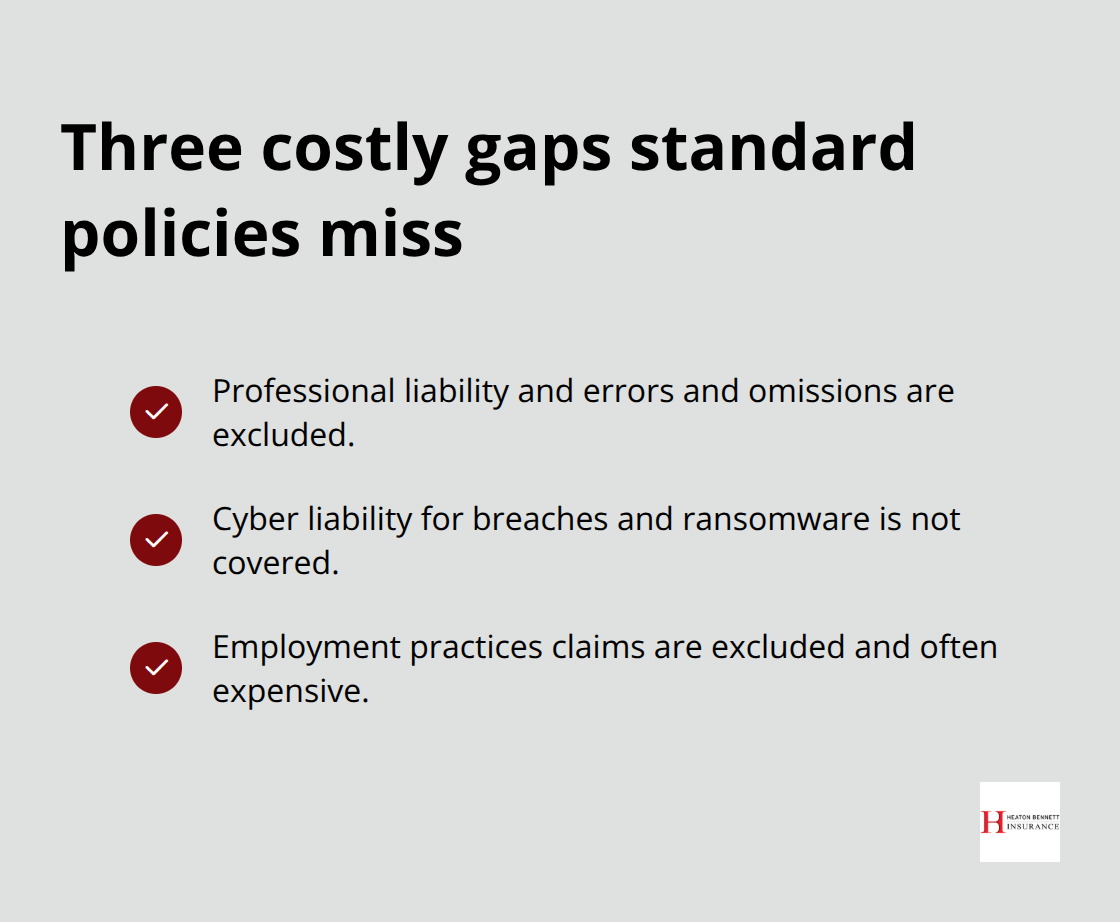
A single cyber claim, professional liability lawsuit, or employment practices case can exceed your general liability limits by tenfold. Business owners who wait until a claim happens to discover these gaps often face bankruptcy or forced asset sales to cover costs. These three gaps exist because general liability was designed for accidents and property damage, not the specific risks that actually threaten most modern businesses. The solution requires understanding that comprehensive protection means layering multiple policies designed for your actual business operations and industry-which is exactly what we’ll address next.
How to Build a Comprehensive Liability Strategy
Assess Your Industry-Specific Risks
Your industry determines what policies you actually need, and guessing wrong costs money. A contractor faces completely different risks than a marketing agency, yet most business owners buy the same generic coverage their competitors use. Start by mapping what could realistically hurt your business financially.
A construction company needs equipment liability and completed operations coverage because they work on client sites where accidents happen constantly. A tech startup needs cyber liability and professional liability because their actual risk comes from data breaches and failed software implementations. A medical practice needs errors and omissions plus employment practices liability because their claims come from patient care decisions and staff disputes.
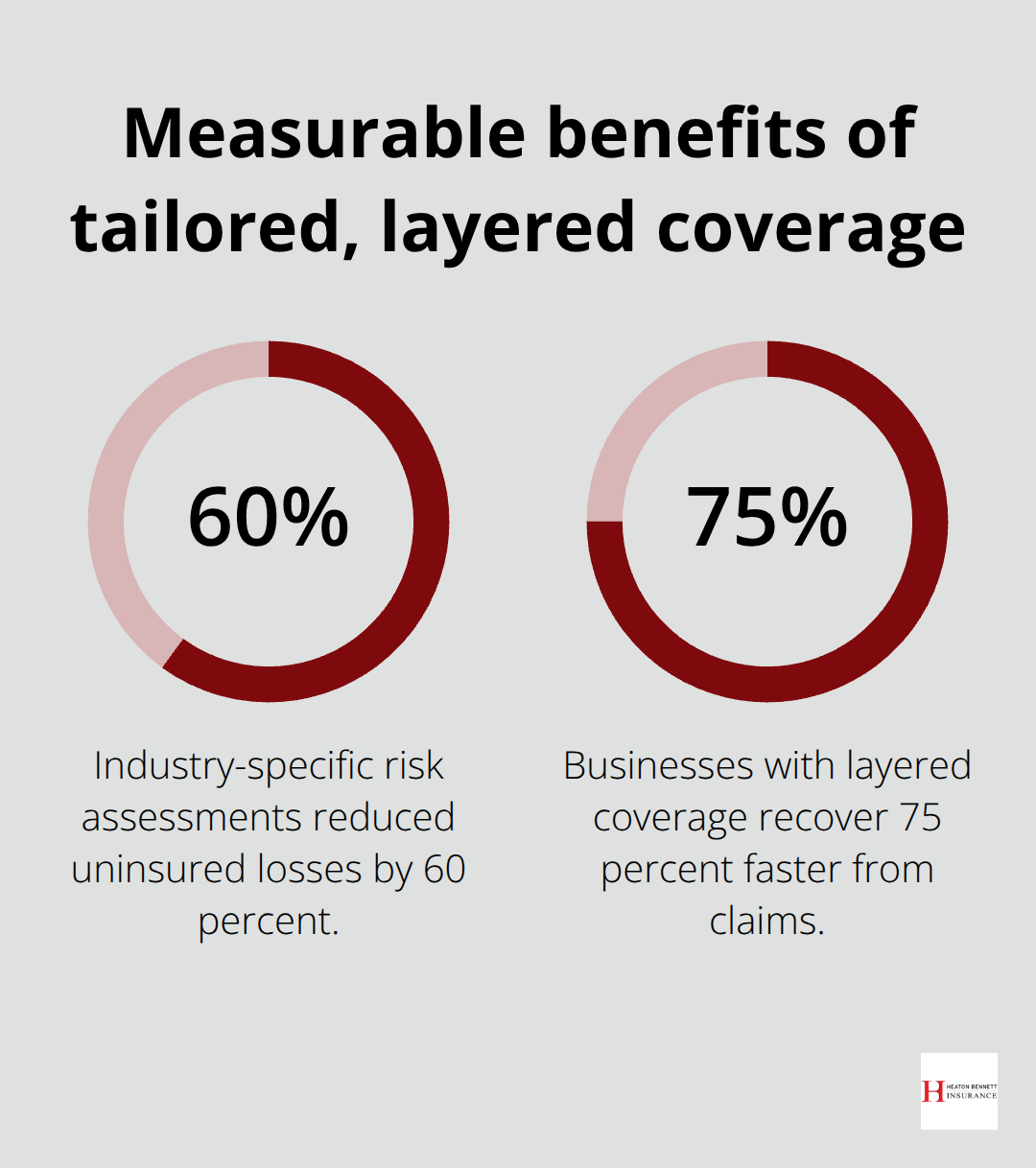
The Risk and Insurance Management Society found that businesses with industry-specific risk assessments reduced uninsured losses by 60 percent compared to those using standard policies. Spend time with someone who understands your specific operations, not someone selling a one-size-fits-all package. Document what your clients trust you with, what could go wrong in your daily operations, and what financial damage would actually threaten your business survival.
Layer Multiple Policies for Complete Protection
Once you understand your actual risks, you stop thinking about insurance as individual policies and start thinking about layering. General liability handles accidents and property damage, but professional liability covers your advice or work quality, cyber liability covers data and technology, and employment practices liability covers your team.
A business with three policies covering different exposures costs far less in the long run than one policy that doesn’t cover the claim that actually happens. The National Association of Insurance Commissioners data shows that businesses with layered coverage recover 75 percent faster from claims because they have actual coverage instead of fighting denials. Your coverage should reflect what your business actually does and what could actually hurt you financially, not what some insurance company decided was standard.
Work with an Independent Agent
An independent agent who represents multiple carriers can coordinate your policies so you have no gaps and no wasteful overlap. They understand how different policies work together and identify which specific policies match your operations. The businesses that survive major claims are the ones that had the right coverage in place before the problem occurred, not the ones hoping their general liability policy will somehow cover everything.
Final Thoughts
Basic liability coverage fails because it was designed for a world that no longer exists. General liability handles accidents and property damage, but it ignores the actual threats that destroy businesses today-a data breach costs millions, a professional mistake triggers six-figure lawsuits, and an employment dispute drains your legal budget before trial even starts. Business owners who rely solely on general liability discover these gaps only after losing money they cannot recover.
Comprehensive liability protection requires three concrete steps. First, stop guessing about your risks and map what could actually hurt your business financially (a contractor faces different exposures than a consultant, and a tech company faces different exposures than a medical practice). Second, layer multiple policies that address your specific industry and operations instead of buying generic coverage. Third, work with someone who understands how these policies coordinate and where gaps still exist.
We at Heaton Bennett Insurance help businesses build comprehensive liability protection that matches their actual operations. Our Security Snapshot process identifies your specific exposures and builds a strategy that covers them, rather than forcing you into standard packages that leave you exposed. Contact Heaton Bennett Insurance for a complete assessment of your liability exposures and the coverage you actually need.
The information provided in this blog is for general informational purposes only and does not constitute legal, financial, or insurance advice. Coverage options, terms, and availability may vary. Please consult with a licensed professional for advice specific to your situation.

