

Nonprofit Property Insurance: Protecting Your Community Assets
Nonprofits operate on tight budgets, which makes protecting your physical assets even more important. A single fire, theft, or storm can devastate your organization’s ability to serve your community.
At Heaton Bennett Insurance, we understand that nonprofit property insurance isn’t a luxury-it’s a necessity. This guide walks you through what coverage you need and how to build a policy that actually fits your mission.
What Your Nonprofit’s Property Insurance Actually Covers
Understanding What Property Insurance Protects
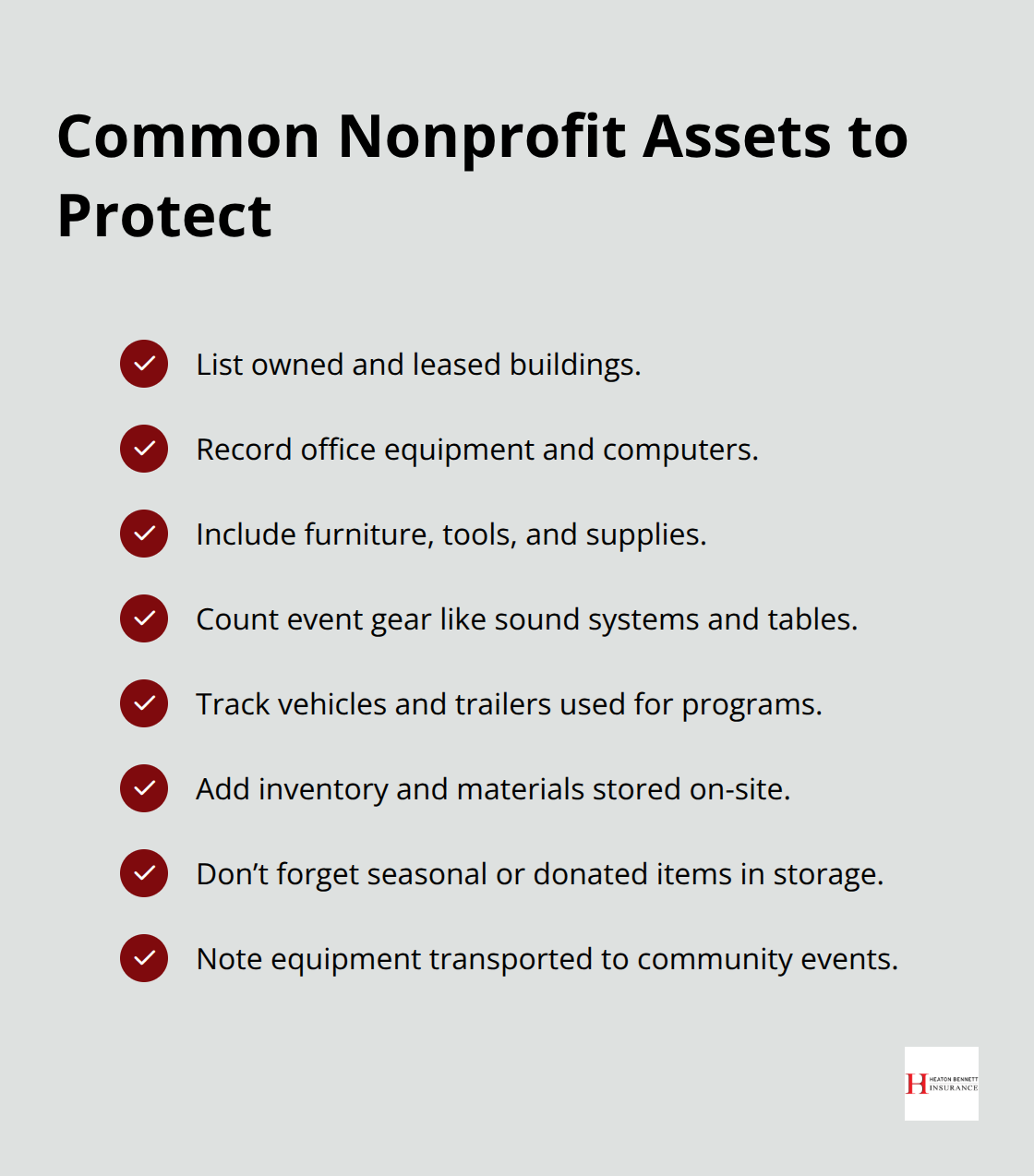
Nonprofit property insurance protects the physical assets your organization depends on to serve your community. This includes buildings you own or lease, office equipment, computers, furniture, tools, event gear like sound systems or tables, vehicles, inventory, and materials stored on-site. If your nonprofit runs a thrift shop, operates a community kitchen, maintains sports equipment, or houses donor materials, property coverage applies to all of it. The Hartford reports that nonprofit property policies average around $141 per month, though your actual cost depends on what you own, where you’re located, and your claims history. Property insurance reimburses you for repair or replacement costs when covered events damage or destroy your assets.
Why a Single Incident Demands More Than Just Property Coverage
A fire, flood, or break-in can cost thousands to recover from. Beyond the physical damage, your nonprofit faces lost time, disrupted programs, and ongoing expenses that don’t pause while you rebuild. Many nonprofits pair property coverage with business income insurance to cover rent, payroll, and utilities while operations resume. This combination protects both your assets and your ability to continue serving your community during recovery.
How Standard Commercial Insurance Falls Short for Nonprofits
Standard commercial insurance often fails nonprofits because it targets for-profit businesses with different risk profiles and operational patterns. Nonprofits typically operate with high volunteer turnover, unpredictable event schedules, diverse community activities, and fluctuating occupancy in their facilities. A general commercial policy may not account for your organization’s specific exposures, such as equipment used at community events, donated items stored temporarily, or seasonal variations in property usage. Many nonprofits also face coverage gaps because they underestimate what they actually own or fail to list newly acquired equipment in their policies.
The Hidden Risk of Uninsured New Equipment
When you add new computers, musical instruments, or event equipment during the year, those items may not be covered unless your policy explicitly includes them. Your organization’s assets change throughout the year as programs expand and needs shift. An insurance professional who understands nonprofit operations ensures your coverage matches your actual assets and activities, not a one-size-fits-all commercial template. This tailored approach prevents costly gaps that could leave your nonprofit vulnerable when you need protection most.
What Damage Actually Threatens Your Nonprofit’s Assets
Natural Disasters Strike Hard and Fast
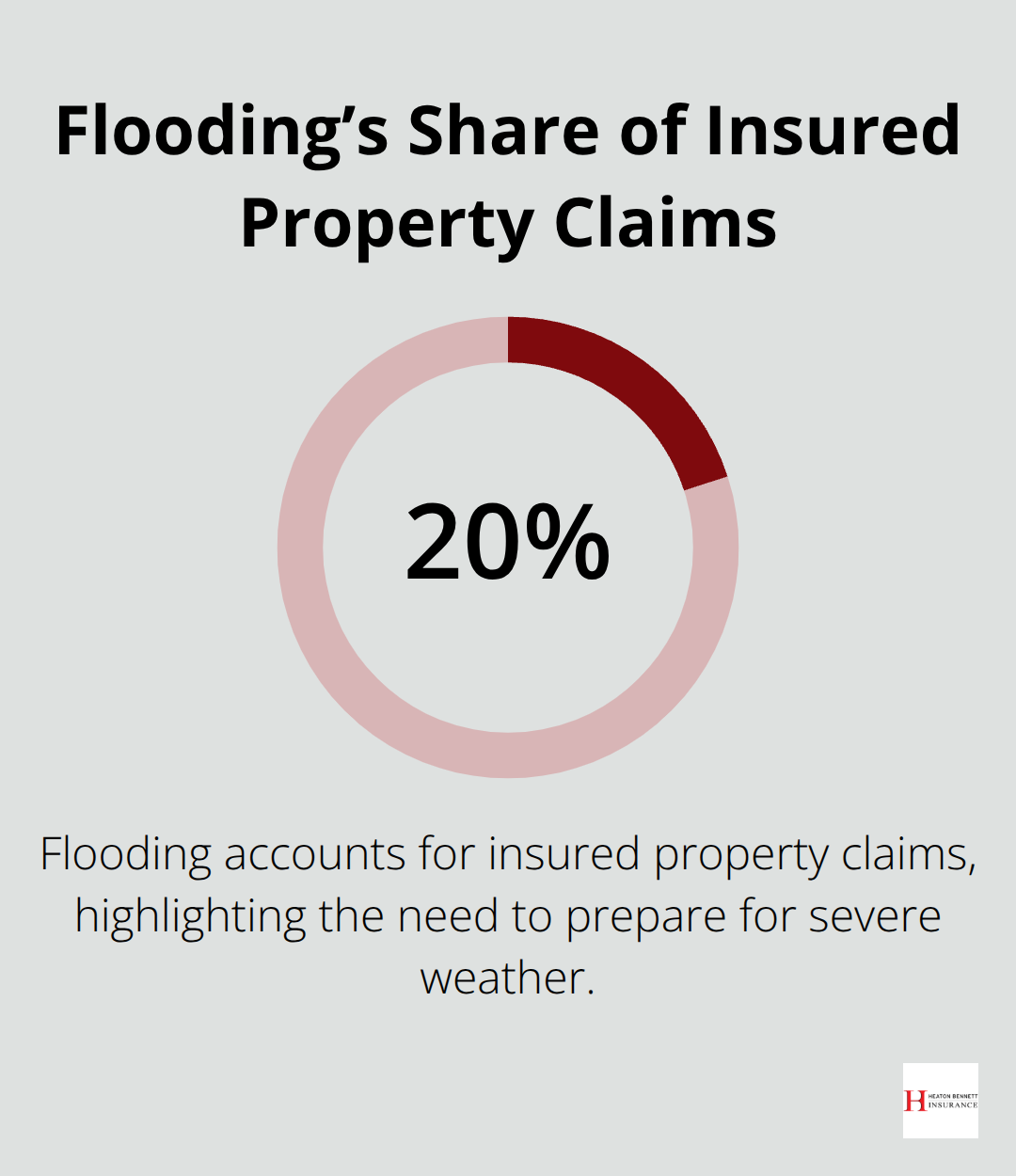
Nonprofits face distinct property risks that standard commercial policies often underestimate. Natural disasters hit hard in specific regions-flooding damages 20% of insured property claims according to industry data, while fires destroy buildings and equipment in seconds.
Weather-related incidents matter more to nonprofits because many operate in older buildings or temporary spaces. Ice storms, hail, and high winds damage roofs, windows, and outdoor equipment like playground structures or garden tools. Nonprofits that host events outdoors face additional exposure-a severe storm during a fundraiser can destroy tables, sound equipment, tents, and donated items, totaling tens of thousands in losses. Property insurance reimburses repair and replacement costs, allowing your organization to recover quickly rather than diverting program funds to rebuilding.
Theft and Vandalism Target Nonprofit Operations Differently
Vandalism and theft target nonprofits differently than retail businesses; thieves often target office equipment, donated goods, or event materials because nonprofits typically have lighter security. A break-in at a community center can cost $5,000 to $15,000 in repairs plus stolen items, but the real damage extends to lost program time and broken community trust. Your organization’s assets change throughout the year as programs expand and needs shift, which means new equipment arrives without adequate protection if your policy doesn’t account for these additions. Thieves know that nonprofits store valuable donated items, computers, and event gear in accessible locations, making your facility an attractive target.
Liability Claims From Property Damage Drain Budgets Unexpectedly
Beyond direct property damage, liability claims from property-related incidents drain nonprofit budgets in unexpected ways. If a visitor trips on damaged flooring in your facility and requires hospitalization, medical costs and legal defense can exceed $50,000 even without a settlement. Water damage from a burst pipe can harm someone’s personal belongings stored in your space, triggering property damage liability claims. Nonprofits that store equipment or materials for community members face heightened exposure here. A collapsed shelf in your storage area that damages donated items or volunteer equipment creates liability your nonprofit must defend. Property insurance works alongside general liability coverage to address these gaps-property coverage handles the physical damage to your assets, while liability coverage protects against claims when property damage harms others.
Staying Protected Requires Regular Policy Updates
Your nonprofit’s assets change seasonally and with program expansion, which means your coverage must change too. New equipment arrives, old items get replaced, and facility usage shifts throughout the year. Without regular updates to your policy, newly acquired property may sit uninsured, leaving your organization exposed exactly when you’ve invested in growth. An annual review of your coverage ensures that your protection matches your current operations and assets. This is where the next critical step matters-understanding how to assess your organization’s specific needs and build a policy that actually protects what you own.
Building a Property Insurance Policy That Matches Your Nonprofit’s Reality
Document Everything Your Nonprofit Actually Owns
Assessing what your nonprofit actually owns requires walking through your facilities and documenting everything. Start with your buildings-note whether you own or lease, the year constructed, square footage, and any recent renovations. Then inventory your equipment: computers, printers, copiers, servers, sound systems, projectors, kitchen equipment, furniture, and tools. Many nonprofits overlook seasonal items stored in closets or donated goods waiting for distribution. Event nonprofits must account for tables, chairs, tents, lighting, and staging equipment. Your policy must list these items with their replacement values, not depreciated values. Nonprofit insurance options must balance comprehensive coverage with tight budgets, and understanding your actual assets is the first step. Underestimating your assets leads to underinsurance-you might pay less upfront but face devastating gaps when you file a claim.
Create a spreadsheet documenting each asset, its replacement cost, and the year acquired. This inventory becomes your roadmap for coverage limits and prevents arguments with insurers about what should have been covered.
Compare Carriers on More Than Price Alone
Comparing carriers requires looking beyond price alone. Some insurers understand nonprofit operations better than others, which directly affects how smoothly claims get processed and whether your coverage actually reflects your needs. Request quotes from multiple carriers and ask specifically how they handle newly acquired property during the policy year-some allow additions with a simple phone call and endorsement, while others require waiting until renewal. Ask whether they cover property stored off-site or in transit to events, since many nonprofits transport equipment to community locations. Verify that vandalism and malicious mischief coverage is included, not optional.
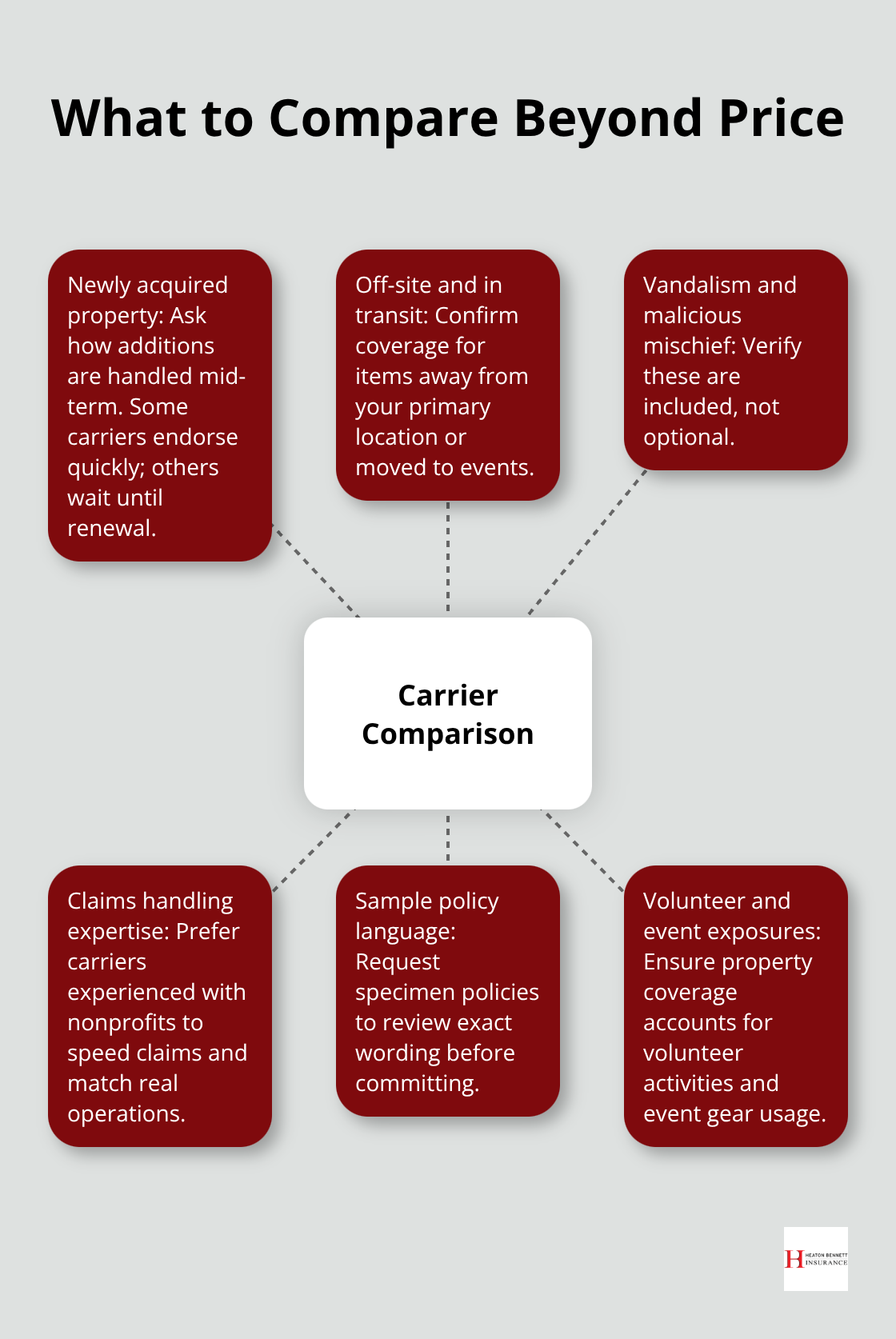
Request sample policies to review actual language before committing.
An insurance professional who specializes in nonprofits ensures your policy accounts for volunteer activities, event-related exposures, and seasonal variations in facility usage that standard commercial carriers often miss. These specialists understand how your organization actually operates, not forcing you into policies designed for retail businesses or manufacturers.
Schedule Annual Reviews to Prevent Coverage Gaps
Schedule an annual review with your broker to update coverage as your programs evolve and new equipment arrives. This prevents the costly gaps that emerge when organizations grow without updating their policies. Your nonprofit’s assets change seasonally and with program expansion, which means your coverage must change too. New equipment arrives, old items get replaced, and facility usage shifts throughout the year. Without regular updates to your policy, newly acquired property may sit uninsured, leaving your organization exposed exactly when you’ve invested in growth.
Final Thoughts
Nonprofit property insurance protects the physical foundation of your mission, allowing your organization to recover quickly when damage strikes instead of redirecting program funds toward rebuilding. A youth center with outdoor sports equipment faces different risks than a food bank storing inventory or a community theater managing sound and lighting systems, which means standard commercial policies miss these distinctions entirely. Start by documenting what you own-walk through your facilities and list every asset with its replacement cost, including seasonal equipment, donated items in storage, and materials transported to events.
Request quotes from multiple carriers and ask how they handle newly acquired property during the policy year, since some allow additions with a simple endorsement while others require waiting until renewal. An insurance professional who understands nonprofit operations ensures your policy accounts for volunteer activities, event exposures, and seasonal variations that standard carriers often overlook. Schedule an annual review with your broker to update coverage as your programs evolve and new equipment arrives.
At Heaton Bennett Insurance, we work with multiple carriers to build nonprofit property insurance coverage that actually fits your mission and budget. Contact Heaton Bennett Insurance to discuss your nonprofit’s specific protection needs and get started with a policy designed for how you actually operate.
The information provided in this blog is for general informational purposes only and does not constitute legal, financial, or insurance advice. Coverage options, terms, and availability may vary. Please consult with a licensed professional for advice specific to your situation.

